
Casino Sites That Accept BPAY in Australia: The Real List for 2026
 Available in AU
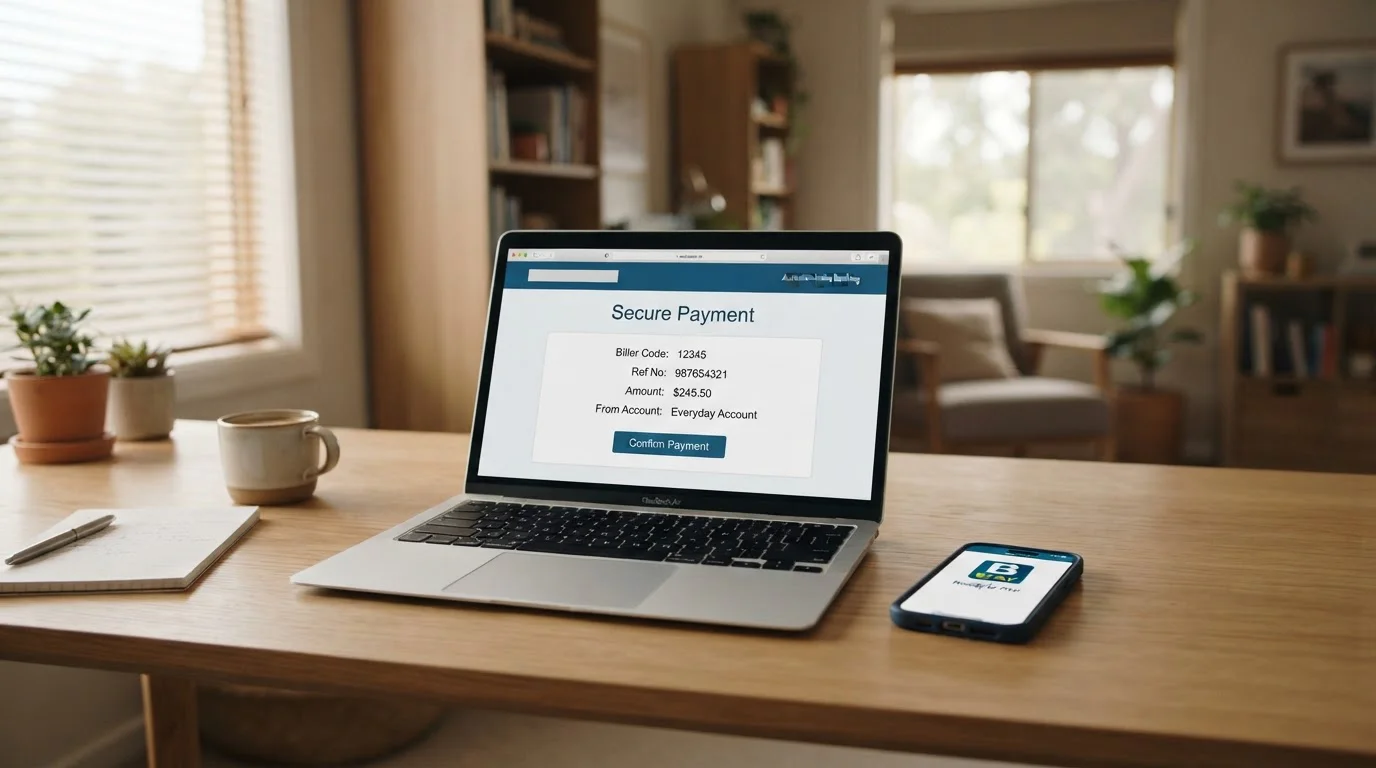
BPAY used to sit alongside credit cards and bank transfers as a standard casino deposit rail. Australians knew the drill — log into online banking, punch in a biller code and reference number, wait a business day or two, balance updated. The rail worked because it worked everywhere else: council rates, utility bills, credit card payments. Casinos were just another line item.
That was then. PayID arrived on the New Payments Platform in 2018, cut deposit settlement from two days to under a minute, and ate the market. By 2026, over 42% of Australian casino players use PayID for deposits. The rest split between cards, crypto, and e-wallets. BPAY didn’t disappear entirely, but it dropped off the priority list at most offshore operators. New launches in 2026 — WestAce, SkyCrown, Neospin — lead with PayID and crypto. BPAY gets a shrug or a “coming soon” that never arrives.
Four offshore casinos still list BPAY as a live deposit method as of September 2026. Not four hundred. Four. SpinBoss, Betandyou, 22Bet, and Bongo Casino. None holds an Australian license — online casino gaming is prohibited under the Interactive Gambling Act 2001, and ACMA issues no casino permits. All four operate under Curaçao offshore licensing, accept AUD accounts, and let you deposit via the same bill-payment system your bank uses for everything else. Withdrawals are a different story, and we’ll get to that.
The list here maps where BPAY still works, how the deposit process runs in 2026, why it takes two days when PayID takes sixty seconds, what happens when you try to withdraw, and whether there’s any rational reason to pick the slowest rail on the menu. The short version: BPAY is alive, barely, for players who want it. The long version follows.
Casino Sites That Accept BPAY in Australia — The 2026 List

The operators below confirmed BPAY acceptance through payment-method testing and cashier verification between August and September 2026. The table runs by topical relevance: casinos pairing BPAY deposits with fast crypto withdrawals first, then by minimum-deposit entry point.
| Operator | License | Minimum Deposit | Withdrawal Speed | Distinguishing Feature |
|---|---|---|---|---|
| SpinBoss | Curaçao (offshore) | A$30 | Crypto: hours; bank transfer: 3-7 days | BPAY + fast crypto cashouts, 4,500+ pokies |
| Betandyou | Curaçao (offshore) | €10 | Bank transfer: 3-7 days | Lowest entry point, 35x bonus-only wagering |
| 22Bet Casino | Curaçao (offshore) | €10 | Bank transfer: 3-7 days | International multi-market brand, 35x wagering |
| Bongo Casino | Curaçao (offshore) | €20 | Bank transfer: 3-7 days | Highest bonus (€1,000), highest wagering (50x) |
Which Australian online casinos still accept BPAY deposits in 2026?
Four offshore casinos confirmed BPAY support as of September 2026: SpinBoss, Betandyou, 22Bet Casino, and Bongo Casino. All operate under Curaçao licenses and accept AUD accounts. PayID has displaced BPAY at most AU-facing operators due to its 60-second settlement speed, making BPAY a legacy option for niche use cases.
SpinBoss — 350% Bonus with Crypto Cashouts
SpinBoss launched in 2022 under Blackrock Entertainment Ltd. with a Curaçao license and a 4,500-game pokies library. The casino lists BPAY explicitly in the cashier alongside PayID, cards, Neosurf, Bitcoin, and USDT. Minimum deposit sits at A$30 across all rails. The welcome package runs 350% up to €10,000 plus 500 free spins, with wagering set at 35x bonus only — not the combined deposit-plus-bonus total that inflates requirements elsewhere.
The pairing here is what matters. BPAY deposits take one to two business days to clear, but crypto withdrawals settle in hours. If you’re tolerant of slow incoming funds and urgent about fast outgoing payouts, this is the setup. BTC and USDT withdrawals are both available, with USDT on TRC-20 the cheaper on-chain option (network fees around A$1-3 vs Bitcoin’s A$5-20 depending on congestion). The casino charges nothing to cash out. SpinBoss is one of the few operators in 2026 where BPAY still appears in the payment menu without an asterisk.
Betandyou — Low Entry Point
Betandyou operates as an international sportsbook and casino under a Curaçao offshore license. The platform accepts Australian players and lists BPAY in the deposit options. Minimum entry is €10, the lowest threshold in this group. The welcome bonus runs 100% up to €300 plus 30 free spins, with 35x wagering applied to the bonus amount only.
The lower entry point makes Betandyou the cheapest test if you want to try BPAY before committing to larger deposits. Withdrawals process via standard bank transfer (three to seven business days) or card refunds where supported. The site lists multiple markets and currencies, so the AU-specific cashier experience can feel generic. BPAY acceptance was verified through the cashier in September 2026, though the rail isn’t prominently marketed compared to cards and e-wallets.
22Bet Casino — Established International Brand
22Bet runs a multi-market operation covering sports betting and casino under a Curaçao license. The brand has broader international presence than AU-only operators, with localized cashiers for dozens of countries. BPAY appears in the Australian deposit menu alongside cards, e-wallets, and crypto. Minimum deposit is €10, matching Betandyou. The welcome bonus is identical: 100% up to €300 plus 30 free spins, 35x wagering on bonus funds.
The advantage here is brand recognition and operational scale. 22Bet processes higher transaction volumes than niche AU operators, so banking infrastructure tends to be stable. The trade-off is less AU-specific optimization — support and promotional materials lean international rather than tailored to Australian banking quirks. Withdrawals default to bank transfer (three to seven days) unless you deposited via a two-way rail like crypto or e-wallets. BPAY was confirmed in the September 2026 cashier check.
Bongo Casino — Highest Bonus, Highest Wagering
Bongo Casino targets European and Australian markets with a Curaçao license. BPAY is listed in the AU cashier, though minimum deposit is €20 — the highest in this group. The welcome bonus scales to €1,000 plus 100 free spins, the largest headline figure among BPAY-accepting casinos. The catch sits in the wagering requirement: 50x bonus, significantly steeper than the 35x standard at SpinBoss, Betandyou, and 22Bet.
The higher wagering changes the real value of the bonus. A €1,000 bonus at 50x requires €50,000 in turnover before withdrawal. A €300 bonus at 35x requires €10,500. The larger number looks better in marketing copy, but clearing it takes three times the volume per euro. Bongo’s BPAY support was verified in September 2026, making it the fourth confirmed operator. Withdrawals run through bank transfer, with three to seven business days the stated window.
How BPAY Casino Deposits Work

BPAY is a bill-payment service created by four major Australian banks in the late 1990s and now managed by Australian Payments Plus. The system was designed for scheduled recurring payments — electricity, phone bills, council rates, credit cards — where settlement speed was secondary to reliability and wide bank coverage. Casinos co-opted the rail because it gave players a familiar deposit path without requiring new accounts or card details.
The technical flow runs like this. You select BPAY in the casino cashier. The casino generates a unique Biller Code (a five-digit identifier tying the payment to the casino or its payment processor) and a Customer Reference Number (CRN, a string of digits tying the payment to your specific player account). You log into your bank’s online banking portal, navigate to the BPAY section, enter the Biller Code and CRN, specify the deposit amount, and authorize the payment. Your bank queues the transaction in the legacy BECS (Bulk Electronic Clearing System) batch, which processes overnight or across business days. One to two business days later, the casino receives confirmation and credits your account.
Finding Your Biller Code and CRN
The Biller Code and CRN appear in the casino cashier after you select BPAY and enter your desired deposit amount. Some casinos display them immediately; others generate them after you click “Proceed” or “Generate Payment Details.” Copy both numbers exactly. Transposing a single digit sends your deposit to the wrong account or flags it as unmatched, delaying credit by days while the casino’s payment team manually reconciles.
BPAY View is a feature available at some Australian banks that auto-fills biller details from electronic bills. Casinos rarely issue BPAY View-compatible bills, so you’ll enter the numbers manually most of the time. Double-check before confirming the transaction. A mismatched CRN is the leading cause of delayed deposits, and fixing it requires contacting casino support with proof of payment.
Do I need to create a BPAY account to deposit at online casinos?
No separate BPAY account exists. BPAY is built into your bank’s online or mobile banking interface. If your Australian bank supports BPAY (most do), the option appears under bill payments. You log in, select BPAY, enter the casino’s Biller Code and your CRN, authorize the amount, and the bank handles the rest.
Step-by-Step Deposit Process
Log into the casino cashier and select BPAY from the deposit methods. Enter the amount you want to deposit (minimum typically A$10-20, maximum set by your bank’s daily BPAY limit, often A$10,000-50,000). The casino displays the Biller Code and CRN. Copy both.
Open your bank’s online or mobile banking app. Navigate to “Pay Bills” or “BPAY” (the exact label varies by bank). Select “Pay a New Biller” or “Enter Biller Code Manually.” Paste or type the Biller Code. Enter the CRN in the reference field. Specify the deposit amount (must match the amount you entered in the casino cashier). Review the details. Authorize the payment via your usual security method (password, app PIN, biometric). Your bank confirms the transaction is queued.
The payment enters the BECS overnight batch. Settlement takes one business day if processed before your bank’s cut-off time (usually 5pm AEST), two business days if after. Weekends and public holidays don’t count as business days. Once the casino’s bank receives the BECS confirmation, the casino credits your account. You receive an email or in-app notification when the balance updates.
What happens if I enter the wrong Biller Code or CRN for my casino deposit?
Wrong Biller Code sends your money to a different business or returns as undeliverable. Wrong CRN sends your money to the casino but leaves it unmatched to your player account. The casino’s payment team sees an unallocated BPAY deposit and waits for you to contact support with proof (bank transaction receipt showing Biller Code, CRN, amount, date). Manual reconciliation adds one to three business days. Prevention is simpler: copy-paste both numbers from the casino cashier directly into your bank’s BPAY form, then review before confirming.
BPAY View and Scheduled Deposits
BPAY View is an optional feature letting businesses send electronic bills directly to your bank’s BPAY interface with pre-filled Biller Code and CRN. Most casinos don’t use BPAY View, so manual entry is standard. Scheduled deposits work differently. BPAY allows you to set a future payment date when authorizing the transaction. You can schedule a casino deposit for next Friday, next month, or any future business day your bank supports. The payment queues in your bank’s system and executes on the chosen date. This is the one feature PayID and cards don’t offer — deliberate forward-dating of gambling deposits. Budgeting purists and harm-reduction advocates sometimes use scheduled BPAY deposits as a self-imposed friction mechanism, preventing impulsive top-ups while allowing planned bankroll refreshes.
Why BPAY Takes Two Days When PayID Takes Sixty Seconds
BPAY runs on BECS, a batch-clearing system from the 1980s designed for predictable, scheduled payments where timing wasn’t critical. Banks collect BPAY transactions during the day, bundle them into an overnight batch, send the batch to the Reserve Bank’s clearing house, and settle the next business day. If you submit after your bank’s daily cut-off (typically 5pm), the payment enters the following day’s batch, pushing settlement to day two.
PayID runs on the New Payments Platform (NPP), launched in 2018 as Australia’s first real-time payment infrastructure. NPP clears transactions in under ten seconds, 24/7, including weekends and holidays. The architectural difference is foundational: BECS was built when overnight batch processing was cutting-edge; NPP was built for instant consumer transfers in a mobile-first era. BPAY could technically migrate to NPP rails — the infrastructure exists — but the service hasn’t been upgraded because bill payments don’t demand instant settlement. Your electricity provider doesn’t care if payment arrives in sixty seconds or two days. Casinos care, players care, but BPAY’s governance body (Australian Payments Plus, owned by the banks) hasn’t prioritized the migration.
The result is a 60x speed gap between BPAY and PayID. One takes two business days, the other takes one minute. Both are free, both use your bank account, both are secure. The only difference is which rail your bank sends the transaction over. PayID won the casino market because two days is an eternity when you want to play now.
BPAY Withdrawals — Why They Don’t Exist and What You Get Instead

BPAY is a deposit-only rail for casino transactions. You can send money out via BPAY, but you can’t receive money back through it. The limitation is architectural, not a casino policy quirk.
Why BPAY Can’t Process Casino Payouts
BPAY’s technical design is unidirectional. Customers (you) initiate payments to billers (the casino or its payment processor) through the BPAY interface in their own bank’s system. Billers receive funds but have no mechanism to “push” money back through the same identifier. The CRN and Biller Code route money toward the casino; they don’t create a return path. The system was built for bill payments (you paying your phone company) and tax instalments (you paying the ATO), contexts where money flows one way.
Credit cards support refunds because the card network has a reversal protocol. E-wallets support payouts because they’re two-way accounts. Bank transfers and PayID can go both directions because they use account details (BSB, account number, or PayID identifier) that work for incoming and outgoing transfers. BPAY has none of that. It’s a one-way pipe, by design, from day one. Casinos didn’t choose to exclude BPAY withdrawals; BPAY can’t technically deliver them.
Can I withdraw my casino winnings via BPAY in Australia?
No. BPAY is deposit-only. Withdrawals from casinos accepting BPAY deposits go through bank transfer (EFT), cryptocurrency, or card refunds depending on what the operator supports. Bank transfers take three to seven business days, crypto typically clears in one to five hours, and card refunds process in three to five business days where available.
Your Actual Withdrawal Options (Bank Transfer, Crypto, Card Refunds)
Every BPAY-accepting casino offers at least one withdrawal alternative. Bank transfer (EFT) is universal: you provide your BSB and account number, the casino processes the payout, and funds arrive in three to seven business days. Fees vary by operator — some charge nothing, others levy A$10-35 per withdrawal. SpinBoss, Betandyou, 22Bet, and Bongo Casino all support standard bank transfers.
Cryptocurrency is faster. SpinBoss offers BTC and USDT withdrawals, clearing in hours once the casino approves the transaction. USDT on the TRC-20 network costs around A$1-3 in network fees; Bitcoin fees swing between A$5-20 depending on blockchain congestion. Once the casino sends the crypto, on-chain confirmation typically takes ten to thirty minutes, and the funds land in your wallet. If you want to convert back to AUD, you sell on a local exchange (CoinSpot, Swyftx, Independent Reserve) and transfer to your bank account, adding one more business day. Total elapsed time from casino approval to AUD in your bank account: same day to next day, versus three to seven for direct bank transfer.
Card refunds work at some offshore operators if your deposit came via credit or debit card. The casino processes the withdrawal as a refund to the original card. Settlement takes three to five business days. Not all banks accept gambling-related card refunds, and not all offshore operators support the method, so availability is inconsistent. If you deposited via BPAY, card refunds aren’t an option because the deposit didn’t originate from a card.
How long does a BPAY casino deposit take to appear in my account?
One to two business days. BPAY uses the legacy BECS batch-clearing system, which processes overnight. Deposits submitted before your bank’s daily cut-off (usually 5pm) settle the next business day. Deposits after the cut-off or on weekends settle two business days later. Weekends and public holidays don’t count as business days.
The table below compares withdrawal speeds across the methods BPAY casinos actually offer. BPAY itself is absent because it can’t process payouts.
| Withdrawal Method | Speed | Fees | Availability at BPAY Casinos |
|---|---|---|---|
| Cryptocurrency (BTC, USDT) | 1-5 hours after approval | Network fees A$1-20 | SpinBoss confirmed; others rare |
| Bank Transfer (EFT) | 3-7 business days | A$0-35 depending on operator | Universal (all 4 operators) |
| Card Refund | 3-5 business days | Typically free | Limited availability, not applicable if deposited via BPAY |
| PayID | 1-4 hours stated | Free | Rare for withdrawals (most operators convert to standard bank transfer despite accepting PayID deposits) |
The fastest payout at a BPAY casino is crypto, not a bank-to-bank rail. The ideal pairing for BPAY users is deposit via BPAY (tolerance for slow in) + withdraw via crypto (urgency for fast out). SpinBoss is the only operator in this group confirmed to support that combination as of September 2026. If you deposited via BPAY at Betandyou, 22Bet, or Bongo, expect your withdrawal to go through standard bank transfer with the three-to-seven-day window.
BPAY vs PayID vs Crypto — Why Pick the Slowest Option?

BPAY takes two business days to settle a casino deposit. PayID takes sixty seconds. Crypto takes ten to thirty minutes. Cards are instant. BPAY is objectively the slowest rail Australian players can use in 2026, yet four casinos still offer it and some players still choose it. The comparison below maps the speed gap, the rational use cases for BPAY, and when faster alternatives make more sense.
Speed Comparison (60 Seconds vs 2 Days)
| Payment Method | Deposit Speed | Withdrawal Speed | Fees | Best Use Case |
|---|---|---|---|---|
| PayID | 60 seconds | 1-4 hours stated (often processed as bank transfer, 1-3 days actual) | Free | Instant deposits, familiar bank-account flow |
| Cryptocurrency (BTC, USDT) | 10-30 minutes | 1-5 hours | Network fees A$1-20 | Fast deposits and fast withdrawals, avoid banking rails |
| Credit/Debit Card | Instant-5 minutes | 3-5 days (refunds, limited availability) | Often 2-5% deposit fee | Instant deposits when cards are accepted |
| BPAY | 1-2 business days | Not available | Free | Scheduled deposits, deliberate cooling-off period, bank compatibility issues |
| Bank Transfer (EFT) | 1-3 business days | 3-7 business days | A$0-35 withdrawal fee | Deposits when instant rails unavailable, universal withdrawal method |
PayID’s 60-second settlement is the headline number, but the actual user experience varies. Some casinos credit PayID deposits in under a minute; others hold them for “security checks” that stretch to ten or twenty minutes. Withdrawals are where the gap narrows. PayID withdrawals are stated at one to four hours, but most offshore operators process them as standard bank transfers through their payment processor, landing them in the three-day window regardless of the rail used. The instant-payout promise applies to deposits reliably, withdrawals inconsistently.
Crypto offers the most consistent speed on both ends. Bitcoin and USDT deposits confirm on-chain in ten to thirty minutes. Withdrawals leave the casino in one to five hours after approval, typically closer to one hour at operators prioritizing crypto cashouts like SpinBoss. Network fees fluctuate — USDT on TRC-20 is cheaper (A$1-3), Bitcoin is pricier (A$5-20 in high-congestion periods) — but both beat the multi-day wait of fiat rails.
BPAY sits at the bottom of the speed chart but the top of the familiarity chart. Australians have used BPAY for decades to pay bills. The flow is second nature: log into your bank, find the BPAY section, punch in a code and reference number, done. No new app, no cryptocurrency exchange account, no card details entered into an offshore site. The two-day wait is the price of that familiarity.
Why would I use BPAY instead of PayID when PayID is instant?
Three practical reasons: deliberate cooling-off period (the two-day delay prevents impulsive deposits), bank compatibility issues (some banks flag instant PayID transfers to offshore casinos but process BPAY without friction), and demographic familiarity (older players accustomed to bill payments find BPAY more intuitive than newer rails). BPAY’s slowness can function as harm-reduction friction for at-risk players.
The Case for Choosing BPAY in 2026
Rational use cases for BPAY exist, even in a market dominated by instant rails. First: deliberate friction. PayID and card deposits land in your casino balance in under a minute, enabling impulsive top-ups when you’re chasing losses or playing beyond your planned session. BPAY’s one-to-two-day settlement creates a built-in cooling-off period. You authorize the deposit Monday night, it arrives Wednesday morning. If Monday’s impulse fades by Tuesday, you’re already protected — the money is in transit, but you’ve had time to reconsider before it lands. Responsible gambling advocates sometimes frame slower deposit rails as harm-reduction tools. BPAY wasn’t designed for that purpose, but the delay works like one.
Second: scheduled deposits. BPAY lets you authorize a payment today that executes next week or next month. You can schedule your Friday-night bankroll refresh on Monday, locking in the amount and date without needing to remember it later. Cards don’t offer scheduling. PayID doesn’t offer scheduling. BPAY does, because it was built for recurring bills where forward-dating is standard. Budgeting-conscious players use this to separate the “funding decision” (Monday, sober, rational) from the “playing session” (Friday, social, recreational).
Third: bank compatibility quirks. Some Australian banks — particularly smaller regionals and credit unions — handle PayID transfers to offshore gambling sites inconsistently. Transactions get flagged for manual review, held for “security checks,” or declined outright under the bank’s own anti-scam policies. BPAY, being an older and more formal bill-payment system, often sails through the same compliance layer without friction. This isn’t universal, but players reporting PayID blocks at their bank sometimes find BPAY works where the instant rail didn’t.
Fourth: demographic familiarity. Older players who’ve used BPAY for two decades to pay electricity and phone bills understand the flow without needing to learn what PayID is, how to register a PayID identifier, or how to verify it worked. BPAY is boring, reliable, and requires no onboarding. That familiarity has value, especially when the alternative is explaining NPP identifiers and Osko settlement to someone who just wants to deposit fifty bucks and play pokies.
None of these reasons make BPAY faster. They make it *preferable in specific contexts* where speed isn’t the primary goal. If you want instant deposits, BPAY is the wrong rail. If you want scheduled deposits, cooling-off friction, or a payment method your bank doesn’t interrogate, BPAY becomes rational.
Is BPAY safer than PayID for online casino deposits?
Both are equally secure — they use your existing bank login and authorization, neither exposes card numbers, and both are covered by Australian bank fraud protections. BPAY’s two-day delay can function as a harm-reduction tool by creating cooling-off time, but it’s not “safer” in a fraud or scam sense. The security difference is negligible.
When PayID or Crypto Make More Sense
Choose PayID if speed matters. If you want to deposit and start playing within a minute, PayID is the rail. It’s free, instant, and uses your existing bank account. The downside is the lack of scheduling and the potential for impulsive deposits. PayID is optimal for players with stable bankroll discipline who value convenience over friction.
Choose crypto if you want fast deposits and fast withdrawals. USDT or Bitcoin deposits clear in ten to thirty minutes, withdrawals in one to five hours. Network fees apply, but total elapsed time from deposit to cashout is measured in hours, not days. Crypto also bypasses the Australian banking system entirely, sidestepping any potential 2027 enforcement targeting bank-to-casino transactions. The trade-off is complexity: you need a crypto exchange account, a wallet, and comfort with on-chain transfers. Crypto is optimal for players who prioritize withdrawal speed and don’t mind the technical overhead.
Choose cards if your bank accepts them for offshore gambling and the casino doesn’t charge a fee. Cards are instant for deposits, though withdrawals (if supported as refunds) take three to five days. Not all offshore operators accept cards from Australian banks, and some levy 2-5% fees, eroding the convenience. Cards are optimal when they work smoothly and you’re tolerant of fiat withdrawal speeds.
Avoid BPAY if you want instant access to deposited funds. The two-day wait is incompatible with spontaneous play. BPAY makes sense for scheduled, planned deposits or when you’re deliberately using the delay as a self-imposed limit. It doesn’t make sense if you’re funding a session that starts today.
BPAY Casino Deposits and Australian Law

Online casino gaming — pokies, table games, live dealer — is prohibited under the Interactive Gambling Act 2001 (IGA). Australian companies cannot offer real-money casino services to Australian residents, and ACMA (the Australian Communications and Media Authority) issues no casino licenses. The only legal online gambling in Australia is sports betting and lotteries, both requiring onshore licenses. Every casino accepting BPAY deposits from Australians operates under an offshore license (Curaçao, Anjouan, Kahnawake, Malta) without ACMA approval.
The IGA targets operators, not players. Playing at an offshore casino is not a criminal offense for an individual Australian. The law makes it illegal for a business to *provide* the service, not for a person to *use* it. No Australian has been prosecuted for depositing at an offshore casino. ACMA’s enforcement focuses on blocking operator domains, issuing fines, and pressuring payment service providers to cut off transaction flows.
The IGA Prohibition Explained
The IGA was drafted in 2001 to regulate online gambling as the internet began displacing physical venues. The Act distinguishes between “prohibited interactive gambling services” (casino games, in-play sports betting) and “exempt services” (pre-match sports betting, lotteries, wagering). Online casinos are prohibited. Offshore operators offering them to Australians are in breach of the Act. Australian-based companies cannot obtain a license to run them. Players using offshore casinos are not committing an offense under federal law.
State and territory gambling laws vary, but none create a criminal liability for the player. Every state prohibits *operating* unlicensed gambling services; none prohibit *using* them. The distinction is consistent across jurisdictions. The regulatory strategy is supply-side: cut off the operators, not the players. Whether that strategy works is a separate question. As of September 2026, hundreds of offshore casinos serve Australian players despite the IGA.
What Changes on 1 January 2027
New enforcement measures take effect on 1 January 2027, tightening the regulatory picture without changing the legal status of player activity. ACMA’s domain blocklist expands, requiring Australian ISPs to block access to listed offshore gambling sites at the DNS and URL level. The blocklist is public, updated continuously, and already contains thousands of entries. The 2027 expansion accelerates the update cycle and tightens compliance monitoring.
AFCA (the Australian Financial Complaints Authority) gained jurisdiction on 12 March 2026 over receiving-bank actions in scam-linked transfers, including gambling transactions. If your bank receives a deposit from an offshore casino and later reverses it as a scam or fraud without your authorization, AFCA can now hear the dispute. This doesn’t make the original casino deposit illegal, but it gives banks more latitude to scrutinize incoming transfers from offshore gambling operators.
AUSTRAC (the Australian Transaction Reports and Analysis Centre) established a named workstream within the Fintel Alliance targeting PayID-channelled illegal gambling. The workstream coordinates data from banks, payment service providers, and ACMA to identify transaction patterns associated with offshore casinos. PayID is the primary focus because it’s the dominant deposit rail — 42% market share as of 2026. The workstream’s goal is to disrupt transaction flows by identifying biller codes, PayID identifiers, and receiving accounts linked to offshore operators, then working with banks to block them.
From 1 January 2027, Australian banks may be instructed to block transactions to specific offshore gambling operators. The mechanism is administrative, not legislative — AUSTRAC and ACMA issue guidance, banks comply to avoid regulatory scrutiny. PayID transactions are easier to block in real time (NPP’s instant settlement gives banks milliseconds to intervene at the identifier level). BPAY transactions, being batch-processed overnight, are harder to block granularly but easier to blacklist by biller code.
Whether BPAY biller codes face the same blocking risk as PayID identifiers is unclear as of September 2026. AUSTRAC’s workstream names PayID specifically, not BPAY. Biller codes are static (one code per casino or payment processor) and publicly visible in the BPAY registry, making them easier to blacklist wholesale. PayID identifiers are dynamic (one identifier per player transaction) and harder to enumerate, but the NPP’s real-time clearing gives banks more control at the transaction level. The hypothesis is that biller-code blocks will come later, after PayID enforcement is established. The reality won’t be clear until 2027 enforcement data is public.
Is it legal to use BPAY for offshore casino deposits from Australia?
Using BPAY to deposit at an offshore casino is not a criminal offense under Australian federal or state law. The IGA prohibits Australian companies from *offering* online casino services, not individuals from *using* them. No player has been prosecuted for depositing or playing at an offshore casino. Enforcement targets operators, not players.
Player vs Operator Liability
The IGA’s Section 15 makes it an offense to provide an interactive gambling service to customers in Australia. Maximum penalty for a body corporate is A$2.75 million per day. The operator is liable, not the customer. Section 61 prohibits advertising illegal gambling services in Australia. Section 8 prohibits in-play sports betting. None of these sections create liability for the player.
State laws mirror this structure. Victoria’s Gambling Regulation Act 2003, NSW’s Betting and Racing Act 1998, Queensland’s Interactive Gambling (Player Protection) Act 1998 — all target service providers, not users. The Queensland Act is titled “Player Protection,” but its penalties apply to operators offering unlicensed services, not players using them.
The practical effect: depositing via BPAY at SpinBoss, Betandyou, 22Bet, or Bongo Casino does not expose you to criminal or civil liability under Australian law. The casinos themselves are in breach of the IGA by accepting Australian customers. Your bank may scrutinize or block the transaction under its own anti-money-laundering or anti-scam policies. AFCA may side with the bank if a dispute arises. But you are not breaking the law by sending the deposit or by playing with the credited balance.
The 2027 enforcement tightening changes the transaction environment (more blocks, more scrutiny) without changing player liability. Offshore casinos remain illegal to operate, not illegal to use.
BPAY Bonuses and Minimum Deposits
Welcome bonuses at BPAY casinos range from €300 to €10,000, with wagering requirements between 35x and 50x. Minimum deposits sit between €10 and A$30 depending on the operator. BPAY-specific bonus restrictions are rare — most casinos treat BPAY deposits the same as PayID or bank transfers for bonus eligibility.
SpinBoss offers 350% up to €10,000 plus 500 free spins, with 35x wagering applied to the bonus only (not the combined deposit and bonus, which inflates effective wagering at other operators). Minimum deposit is A$30 across all payment methods including BPAY. The bonus scales over multiple deposits, so smaller initial tests qualify.
Betandyou and 22Bet Casino both run 100% up to €300 plus 30 free spins, with 35x wagering on bonus funds. Minimum deposit is €10, the lowest entry point in this group. The lower bonus ceiling and lower minimum make these casinos cheaper to test. If you want to trial BPAY without committing to larger deposits, either works.
Bongo Casino advertises 100% up to €1,000 plus 100 free spins, the highest bonus in the BPAY group. Minimum deposit is €20. The catch is wagering: 50x bonus, compared to 35x elsewhere. A €1,000 bonus at 50x requires €50,000 in turnover. A €300 bonus at 35x requires €10,500. The larger headline figure costs more to clear per euro earned.
Are there fees for using BPAY at Australian online casinos?
Casinos charge no fees for BPAY deposits. BPAY itself is free. Your bank may impose daily transaction limits (typically A$10,000-50,000) but won’t charge a per-transaction fee for bill payments. Withdrawal fees vary by method: bank transfers can cost A$0-35 depending on the operator, crypto withdrawals carry network fees (A$1-20), and BPAY withdrawals don’t exist.
Bonus terms at BPAY casinos typically exclude maximum-bet rules while wagering (common cap: A$5-10 per spin during bonus clearing) and game-weighting restrictions (pokies contribute 100%, table games contribute 10-20% or are excluded). Read the specific terms before claiming. The 35x-vs-50x wagering gap between SpinBoss/Betandyou/22Bet (35x) and Bongo (50x) is the single largest differentiator in real bonus value.
Minimum deposits matter more for BPAY users because of the two-day settlement delay. If you deposit A$10 via PayID on Monday and regret it by Tuesday, you’re out ten dollars and a minute of time. If you deposit A$10 via BPAY on Monday and regret it Tuesday, the money is in transit and you can’t cancel it mid-flight. The lower minimums at Betandyou and 22Bet (€10) reduce that exposure. SpinBoss’s A$30 minimum and Bongo’s €20 are higher but still accessible.
New BPAY Casinos and Market Trends
BPAY adoption among Australian-facing casinos declined sharply between 2020 and 2026. PayID captured 42% of the deposit market by 2026, displacing BPAY as the preferred bank-to-casino rail. New offshore operators launching in 2026 — WestAce Casino (February), recent expansions by SkyCrown, RocketPlay, Neospin — emphasize PayID and cryptocurrency in their cashiers. BPAY is absent or listed as “coming soon” without a delivery date.
The four operators confirmed to accept BPAY in September 2026 (SpinBoss, Betandyou, 22Bet, Bongo) are all pre-2023 launches. No casino launched in 2025 or 2026 lists BPAY as a day-one payment method. The trend is clear: BPAY is a legacy rail maintained for existing users, not a priority for new market entrants.
Why the decline? Speed is the primary driver. Players who want to deposit and play immediately choose PayID (60 seconds) or crypto (10-30 minutes). BPAY’s one-to-two-day settlement is incompatible with spontaneous play, the dominant use case for offshore casino deposits. The demographic that remembers when two-day bank transfers were normal is aging out. Younger players entering the market in 2026 have grown up with instant payments — Osko, PayID, Zelle, Venmo — and treat two-day settlement as archaic.
Operator priorities shifted accordingly. Offshore casinos targeting the AU market in 2026 invest in PayID integrations, crypto wallet compatibility, and card-processing partnerships. BPAY integration costs time and maintenance for a rail that generates low deposit volume. Payment processors serving offshore operators (the intermediaries who connect casinos to banking rails) prioritize fast-clearing methods. BPAY support drops down the roadmap or disappears entirely.
Market share data isn’t published by individual rail, but the 42% PayID figure (cited in multiple industry reports through 2025-2026) is the anchor. Cards, crypto, and e-wallets split most of the remaining share. BPAY likely sits in low single digits as of 2026, a niche option rather than a mainstream deposit method.
The implication for players: BPAY-accepting casinos will remain available in 2026 and likely through 2027, but the list won’t grow. If your bank handles BPAY smoothly and you prefer the two-day delay for budgeting or harm-reduction reasons, the four confirmed operators still work. If you expect BPAY support to expand or new “BPAY casino” launches to appear, the market is moving the other direction.
Safer Gambling with BPAY Deposits

BPAY’s two-day settlement delay, typically framed as a disadvantage, can function as a harm-reduction tool. Instant deposit methods — PayID, cards, crypto — enable impulsive top-ups during active play. You’re down A$100, you deposit another A$100 via PayID, it lands in sixty seconds, you keep playing. The friction between “deciding to deposit” and “having the funds” is negligible. For players with impulse-control challenges or gambling harm risk, that instant access is a design flaw, not a feature.
BPAY reintroduces friction. You authorize a deposit Monday night. It arrives Wednesday morning. If Monday’s impulse was emotionally driven — chasing losses, playing beyond your limit — Tuesday’s cooler head has a chance to intervene before the money lands. You can’t cancel a BPAY transaction mid-flight, but the delay gives you time to reconsider before the funds are playable. The “cooling-off period” isn’t deliberate design by BPAY or the casino; it’s an emergent property of slow settlement. But the effect is real.
Scheduled deposits amplify this. BPAY lets you authorize a payment today that executes next Friday. You can lock in your weekly bankroll on Monday, knowing it will arrive Friday night for your planned session. The funding decision happens when you’re rational and sober. The session happens later, under different conditions. Separating these two moments creates accountability. You committed to A$50 for Friday. When Friday arrives, A$50 is what you have, and you planned it that way. Instant deposits collapse these moments into one — you fund and play simultaneously, often under emotional or social pressure.
Can I schedule a BPAY deposit for a future date at a casino?
Yes. BPAY allows future-dated payments when authorizing the transaction in your bank’s system. You can schedule a casino deposit for any future business day your bank supports, locking in the amount and date in advance. The payment executes on the scheduled date automatically, creating a built-in budgeting and harm-reduction tool unavailable with instant deposit methods.
Responsible gambling frameworks emphasize pre-commitment tools: setting limits before you play, not during. BPAY’s scheduling feature and two-day delay are crude versions of pre-commitment. You commit to the deposit amount and timing when you’re not actively gambling. The delay enforces the commitment by preventing instant revision. For at-risk players, this structure can help maintain boundaries.
None of this makes BPAY inherently safer than PayID or cards in a fraud or security sense. Bank-account-based payments are equally secure regardless of settlement speed. The safety angle is behavioral: slower deposits create natural pauses that can reduce impulsive gambling. If you’re using offshore casinos and recognize that instant deposits enable habits you’re trying to control, BPAY’s friction is a feature, not a bug.
Conversely, if you have stable bankroll discipline and gambling doesn’t escalate into harm, instant deposits are purely a convenience. The choice between BPAY and PayID is personal, driven by whether you value speed or deliberate delay.
National gambling helplines and support services in Australia:
- Gambling Help Online: 1800 858 858 (24/7) — free counseling and support for anyone affected by gambling harm
- Lifeline: 13 11 14 — crisis support and suicide prevention
- Beyond Blue: 1300 22 4636 — mental health support
If your gambling is causing financial stress, relationship problems, or emotional harm, reach out. Help is free, confidential, and available 24/7.
Casino Deposit Methods Australia 2026 — Full Comparison
Content created by the «Aussie Cashier» team