
Apple Pay Casinos Australia 2026: 8 Offshore Options, Real Withdrawal Routes & Bank Blocks
 Available in AU

Apple Pay works at exactly zero Australian-licensed online casinos. The reason is straightforward: no such licenses exist under the Interactive Gambling Act 2001. What does exist is a landscape of offshore-licensed operators—Curaçao, Malta, Anjouan—that accept Australian players, support AUD accounts, and process Apple Pay deposits in under ten seconds. That’s the reality as of 2026, and it’s the picture this breakdown addresses.
The bigger operational question isn’t whether the deposit clears instantly—it does—but where your winnings go when Apple Pay can’t take them back. Spoiler: they exit via bank transfer, PayID, crypto, or an e-wallet, each with its own processing clock. Australian banks add another layer, with CBA, Westpac, and Bendigo blocking gambling transactions by default until you ring support and ask them to toggle off. The withdrawal side is where the friction lives, not the deposit side.
Below: eight operators that accept Apple Pay for Australian players, the three-limit deposit ceiling that governs every transaction, a bank-by-bank gambling-block matrix with contact details, and an honest look at what the IGA actually prohibits versus what you can do without breaking the law. No “best casino” fanfare. Just the working map.
Apple Pay Casinos for Australian Players — The 8 Options Worth Your Time

These eight offshore operators process Apple Pay deposits from Australian players in AUD, clear the transaction in seconds, and integrate with cards already sitting in your Wallet app. The list runs from longest-tenured operators with multi-brand backing down to the newest crypto-first entrants launched in the past year. ACMA block status is disclosed where confirmed; withdrawal speeds reflect the fastest available rail per operator.
| Operator | License | Withdrawal Speed | Min Deposit | Distinguishing Feature |
|---|---|---|---|---|
| Playamo | Curaçao 8048/JAZ2020-13 | 0-24h (crypto/PayID) | A$10 | Dama N.V. veteran (2016); ACMA-blocked |
| Hellspin | Curaçao #8048/JAZ | 12h (crypto advertised) | A$20 | PayID support; ACMA formal warning + block |
| Spin Samurai | Curaçao / Tobique | 0-24h (crypto) | A$10 | A$10,000 welcome; 40x wagering (lowest) |
| Jeetcity | Curaçao GCB | 0-24h (crypto/PayID) | A$30 | A$7,500 single-deposit bonus (highest) |
| Turbo Wins | Curaçao / Anjouan | Fast crypto (sub-24h) | Not specified | Newest (2024-2025); crypto-first + sportsbook |
| Fast Slots | Likely Curaçao/Malta | 3h (tested case) | Not specified | 5.0★ ranking; <10s deposit (tested) |
| Coin Casino | Likely Curaçao/Malta | Instant (claimed) | Not specified | Established; limited public data |
| Instant Casino | Offshore (unconfirmed) | 12-24h typical | A$20 | PayID + crypto dual focus; bonus structure unclear |
The table supplements the breakdowns below. Every operator receives its own profile with ownership, licensing specifics, and what actually sets it apart beyond the bonus headline.
Do any Australian-licensed casinos accept Apple Pay?
No. Australia does not license online casinos domestically. The Interactive Gambling Act 2001 prohibits any entity from providing casino-style gaming (pokies, table games, live dealer) to Australian residents, and no state or territory government issues such licenses. Every casino accepting Apple Pay from Australian players operates under an offshore license—Curaçao, Malta, Anjouan, or Kahnawake. Sports betting is the only form of online gambling licensed in Australia at state and territory level; casino gaming remains offshore-only.
Playamo — Dama N.V. Veteran with 3,500+ Games
Playamo launched in 2016 under Dama N.V., the Curaçao-registered operator behind BitStarz, 7Bit Casino, and Katsubet. It holds two Curaçao eGaming licenses: 8048/JAZ2020-13 (Antillephone N.V.) and OGL/2023/174/0082. The game library pulls from 50+ providers—NetEnt, Microgaming, Play’n GO, Pragmatic Play—and spans pokies, table games, live dealer, and video poker. AUD accounts are native, minimum deposit sits at A$10, and payment rails include Apple Pay, Visa, Mastercard, Skrill, Neteller, Bitcoin, Ethereum, and Litecoin. The welcome bonus runs to A$1,500 with 100 free spins. Ten years of operation is the longest tenure in this set.
ACMA has Playamo on the prohibition register, meaning Australian ISPs are directed to block access under the IGA. Players still reach the site via VPN or DNS workaround, but the block adds friction that competitors not yet on the list avoid. Withdrawals via crypto or PayID process within 24 hours on the fast end; traditional bank transfer and e-wallets stretch longer. For players who value brand longevity and a sister-site reputation (BitStarz holds a strong crypto-casino profile), Playamo is the established pick—just know the ACMA block means you’ll likely need a VPN to access the cashier in the first place.
Hellspin — PayID Integration but ACMA-Blocked
Hellspin is operated by TechOptions Group B.V. under Curaçao license #8048/JAZ (Antillephone N.V.). It launched in 2022, making it four years operational by 2026, and targets Australian players with PayID support alongside Apple Pay—a relatively rare pairing among offshore operators. The game library runs 6,000 to 7,000+ pokies and a live dealer floor, all priced in AUD. Minimum deposit ranges A$20 to A$30 depending on method. Crypto withdrawals are advertised at 12 hours, which would make Hellspin one of the faster cashout operators if that timeline holds in practice. The welcome package stretches to A$5,200 across four deposits, with the first tier at 100% up to A$300 plus 100 free spins. RTP is displayed on game thumbnails, a transparency feature not universal across offshore casinos.
ACMA issued a formal warning to TechOptions Group B.V. for supplying prohibited interactive gambling services to Australian customers, and Hellspin appears on the prohibition register with ISP blocking enforced. That means the same VPN or DNS requirement as Playamo. The PayID integration is the operational standout—few offshore casinos bother with Australia’s domestic real-time payment rail—but the ACMA block status means access friction is higher than unblocked competitors. If you’re already comfortable with VPN use and want PayID as a fast withdrawal route, Hellspin delivers. If you prefer operators without confirmed ACMA enforcement, look further down the list.
Spin Samurai — A$10,000 Welcome and Low Wagering
Spin Samurai is another Dama N.V. brand, launched in 2020 under Curaçao eGaming licensing (some sources cite Tobique Gaming Commission E-gaming License No. 0000002, suggesting multi-jurisdictional licensing or a migration). The game library holds 6,000+ titles, AUD support is native, and minimum deposit is A$10. Payment rails include Skrill, Neteller, Neosurf, EcoPayz, Visa, Mastercard, Bitcoin, and Apple Pay. The welcome package is the largest in this set: A$10,000 total across three deposits (first deposit 100% up to A$1,000 + 150 free spins, second 75% up to A$1,500, third 100% up to A$2,500 + 50 free spins). Wagering requirement is 40x—the lowest among researched operators, where most sit at 50x or higher.
Spin Samurai shares platform infrastructure with Playamo and BitStarz, which means the same Dama N.V. operational backbone: reliable payment processing, a decade of experience in offshore markets, and a proven crypto rail. ACMA block status is not confirmed in public records as of research date, meaning ISP blocking may not yet be enforced. Withdrawal processing mirrors the Dama family: crypto and PayID on the fast end (0-24 hours), traditional rails slower. The A$10,000 welcome package is marketing theater—hitting the full bonus requires three maximum-tier deposits and meeting 40x wagering on all of them—but the 40x wagering is genuinely lower than competitors, which matters if you actually play through bonuses rather than skip them.
Jeetcity — 6,000+ Games and A$7,500 Single-Deposit Bonus
Jeetcity operates under a Curaçao Gaming Control Board (GCB) license. Public ownership data is sparse, but the game library spans 6,000+ titles (one source cites 18,000+, likely an aggregated or inflated count; conservative estimate used here). AUD accounts are supported, minimum deposit is A$30, and payment methods include Apple Pay, crypto (Bitcoin, Ethereum, Litecoin), PayID, and e-wallets. The welcome bonus is structured as 100% up to A$7,500 with 100 free spins—the highest single-deposit bonus in this set. Most competitors cap first-deposit bonuses at A$1,000 to A$1,500; Jeetcity’s A$7,500 ceiling is either aggressive player acquisition or a signal that wagering requirements make the bonus nearly unclaimable in practice. The site advertises 0-24 hour withdrawals via crypto and PayID.
Jeetcity’s distinguishing feature is the single-deposit bonus size, which appeals to high-rollers willing to deposit large sums upfront. ACMA block status is not confirmed, meaning access friction is lower than Playamo or Hellspin. The A$30 minimum deposit is higher than most (A$10-A$20 typical), which positions Jeetcity slightly upmarket. Limited public ownership data means less transparency about who operates the brand and what corporate history backs it, which some players will view as a privacy feature and others as a red flag. The 0-24 hour crypto and PayID withdrawal window is fast if it holds in practice; traditional bank transfer will stretch longer.
Turbo Wins — The 2024 Crypto-First Newcomer
Turbo Wins (marketed as Turbowinz in some channels) launched between 2024 and 2025, making it the newest operator in this set with one to two years of operational history by 2026. It’s operated by Terdersoft B.V., a Curaçao-registered entity, and holds Curaçao and Anjouan licenses (dual licensing is common among newer operators seeking jurisdictional flexibility). The platform emphasizes cryptocurrency and PayID support, positions itself as fast-payout focused, and integrates a sportsbook alongside the casino—broader than casino-only competitors. The welcome bonus is advertised at 255% up to €5,000 plus 250 free spins, though some sources cite 200% variants; bonus structure may vary by currency or region. A level-based VIP reward system is part of the offering.
Turbo Wins is the newest entrant here, which means the shortest operational track record and the least player feedback. That cuts both ways: no ACMA block yet (new operators take time to land on the prohibition register), but also no multi-year proof of withdrawal reliability. The crypto-first positioning and PayID support suggest the operator is targeting the Australian market specifically, which explains the AUD focus and domestic payment rail integration. For players comfortable with newer brands and prioritizing crypto speed over established tenure, Turbo Wins offers the lowest access friction (no VPN needed yet) and fast cashout rails. For players who want a decade of operational proof before trusting a deposit, look at Playamo or Spin Samurai instead.
Fast Slots — Verified <10-Second Deposits
Fast Slots holds the highest affiliate ranking among Apple Pay casino listings for Australia (5.0★). Public ownership and licensing specifics are not confirmed in search results—common for smaller operators or newer entrants without extensive media coverage—but the offshore-licensed pattern (likely Curaçao or Malta based on market positioning) fits the broader landscape. The standout verified data: Apple Pay deposits tested at under 10 seconds from authentication to available balance, and a withdrawal test case completed in 3 hours. Game library size is not specified. Welcome bonus is advertised at A$7,500 plus 100 free spins.
Fast Slots markets itself around speed: instant deposits, fast withdrawals. The <10-second deposit test and 3-hour withdrawal case suggest that when the operator claims "fast," it holds up in practice—at least for the test conditions (likely crypto withdrawal, which is always the fastest rail). Limited public data means less transparency about who owns the brand, what license number to verify, and what corporate history backs the operation. For players who prioritize verified transaction speed and are comfortable with less-transparent operators, Fast Slots delivers on its naming promise. For players who want full licensing and ownership disclosure before depositing, the data gaps are a blocker.
Coin Casino — The Established Mid-Tier Option
Coin Casino ranks 4.8★ in Apple Pay casino affiliate listings and is described as an “established” operator, suggesting multi-year tenure but without a specific launch date confirmed in public records. AUD support and Apple Pay instant deposits are confirmed; game library size, ownership, and specific licensing jurisdiction are not. The offshore-licensed pattern (Curaçao or Malta) fits the broader market, but the lack of public data leaves the same transparency gap as Fast Slots.
Coin Casino sits in the middle tier: ranked below Fast Slots (5.0★) but above operators in the 4.5-4.7★ range, described as established (which implies longer tenure than Turbo Wins but shorter than Playamo), and supporting Apple Pay deposits from Australian players. The limited public data may appeal to privacy-focused players or deter transparency-seeking players, depending on perspective. Without confirmed licensing details, game counts, or ownership disclosure, Coin Casino is the profile with the least actionable differentiation in this set. If Fast Slots and Instant Casino are already opaque, Coin Casino is opaque in the same way but with slightly lower affiliate ranking. For players who prioritize licensing transparency and ownership disclosure, the data gaps make Coin Casino harder to trust than Playamo, Hellspin, or Spin Samurai.
Instant Casino — PayID + Crypto Dual Fast-Track
Instant Casino operates under an offshore license (specific jurisdiction not confirmed in search results but follows the Curaçao/Malta offshore pattern). The game library spans 3,000 to 4,500+ titles depending on source. AUD accounts are supported, and payment methods include PayID, cryptocurrency (Bitcoin, Ethereum, Litecoin), cards, e-wallets, POLi, and BPAY—the broadest payment-rail coverage in this set. Minimum deposit is A$20 typical. Welcome bonus structure is inconsistent across sources: some cite 200%, others 100% up to A$800, and a third variant advertises up to A$7,500. This inconsistency suggests either multiple bonus tiers (standard vs. high-roller), region-specific promotions, or affiliate-specific offers—clarity is missing. Withdrawal processing is advertised at 12-24 hours typical, with PayID and crypto emphasized as the fast routes.
Instant Casino’s name emphasizes speed, and the PayID + crypto dual focus backs that positioning. PayID is the domestic real-time payment rail (Osko via NPP), and crypto avoids intermediary banks entirely—both faster than traditional bank transfer or card refunds. The 3,000-4,500 game library sits mid-range (smaller than Jeetcity’s 6,000+ or Hellspin’s 7,000+, larger than boutique operators). The bonus structure inconsistency is a transparency problem: three different advertised figures across sources means the player doesn’t know which offer they’ll see at sign-up. For players who prioritize PayID and crypto as withdrawal routes and can tolerate bonus-structure ambiguity, Instant Casino delivers fast cashout rails. For players who want clear bonus terms upfront, the conflicting figures are a red flag.
How Apple Pay Actually Works at Online Casinos
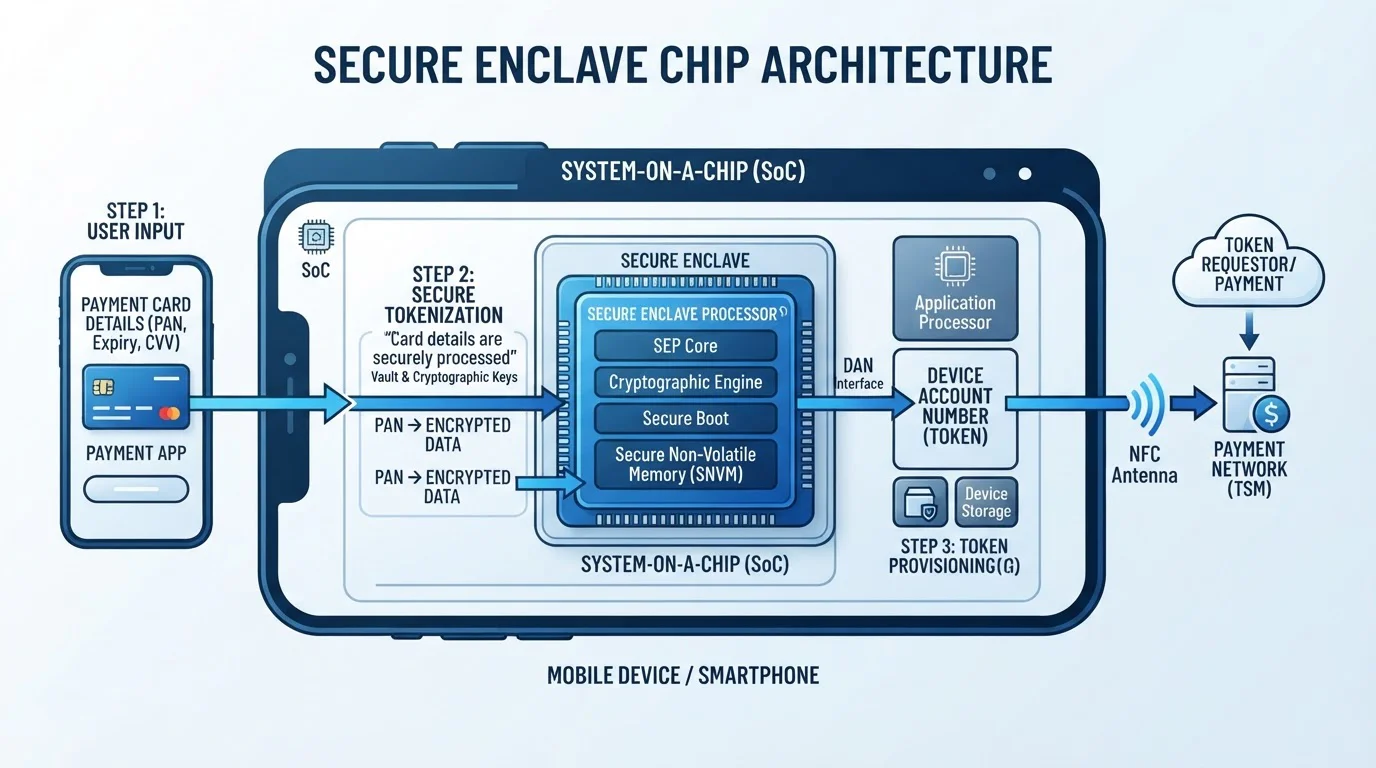
Apple Pay deposits at offshore casinos route through cards already provisioned in your Wallet app—Visa, Mastercard, or American Express issued by an Australian bank. The casino cashier never sees your card number. Instead, Apple generates a Device Account Number stored in the Secure Enclave of your iPhone, iPad, or Mac, and that token is what the casino processes. Every transaction requires biometric authentication—Face ID, Touch ID, or a device passcode—before the payment clears. The entire flow from cashier tap to available balance runs under ten seconds in tested cases.
The technical advantage is tokenization: your Primary Account Number (the 16-digit card number embossed on the physical card) never leaves the Secure Enclave. The casino receives a one-time dynamic security code and the Device Account Number, which are useless for any future transaction or card-not-present fraud. If the casino’s payment processor is breached, your actual card details aren’t in the database. That’s the security layer Apple Pay adds over typing your card number directly into a casino cashier form.
Device compatibility matters. Apple Pay works on iPhone 6 or later running iOS 10+, Apple Watch Series 1+ paired with an iPhone 5 or later, iPad with Touch ID or Face ID, and Mac with Touch ID or the Apple T2 Security Chip. The critical browser requirement: Safari. Chrome, Firefox, and Edge on iOS do not support the Apple Pay API for web transactions, even though all iOS browsers use the WebKit rendering engine under the hood. The Apple Pay web integration is Safari-exclusive by design. If you’re depositing from a Mac, Safari with Touch ID or an Apple Watch paired to authenticate is the only route. On iPhone or iPad, Safari is the default and the requirement is invisible to most users.
Setting Up Apple Pay for Casino Deposits
Open the Wallet app on your iPhone or iPad, tap the plus icon, and follow the prompts to add a debit or credit card. Your bank will verify the card via two-factor authentication—typically an SMS code, an email link, or an in-app notification. Once the bank provisions the card for Apple Pay, it’s ready for casino deposits. If you’re using a Mac, open System Preferences (or System Settings on newer macOS versions), navigate to Wallet & Apple Pay, and add your card there. The same two-factor verification applies.
Credit cards provisioned in Apple Pay may trigger cash-advance fees when used for gambling deposits. Most Australian banks classify casino deposits under merchant category code 7995 (betting and casino gambling), which credit card issuers treat as a cash advance rather than a purchase. That means a 3% to 5% fee plus interest charged from the transaction date—no interest-free period. Debit cards avoid this entirely. If your Wallet app holds both a debit and a credit card, select the debit card at the casino cashier to sidestep the cash-advance trap.
The Deposit Process Step-by-Step
Navigate to the casino cashier and select Apple Pay from the deposit methods list. Enter the amount you want to deposit in AUD. Tap the Apple Pay button. Your device will prompt for biometric authentication—hold your face to the camera for Face ID, or rest your finger on the sensor for Touch ID. On a Mac, authenticate via Touch ID on the keyboard or via an Apple Watch on your wrist. The Secure Enclave generates a one-time security code, transmits the Device Account Number and code to the casino’s payment processor, and the transaction routes through your card’s issuing bank.
The bank checks three things: sufficient funds (or available credit), whether the card is flagged for gambling transactions, and whether your daily card spending limit has room for the deposit. If all three clear, the bank approves the transaction, the casino cashier receives confirmation, and your balance updates. Total elapsed time in tested cases: under ten seconds. If the transaction is declined, the most common culprits are a bank gambling block (see the dedicated section below), insufficient funds, or hitting your daily card spending limit. Some banks impose a separate daily limit on gambling transactions even if your overall card limit is higher.
How long do Apple Pay casino deposits take to process?
Instant. Apple Pay deposits clear in under ten seconds from biometric authentication to available casino balance in tested cases. The transaction routes as a standard card payment through Visa or Mastercard networks, and offshore casinos process these in real time. There is no pending period, no manual approval, and no delay between the cashier confirmation and your ability to play. If the deposit is declined, you’ll know immediately—there’s no multi-hour wait for approval like some e-wallet or bank-transfer methods.
Can I use Apple Pay on my Mac to deposit at online casinos?
Yes, if your Mac has Touch ID (MacBook Pro 2016 or later, MacBook Air 2018 or later, iMac with Magic Keyboard with Touch ID) or the Apple T2 Security Chip. Open the casino cashier in Safari—other browsers do not support Apple Pay web integration—select Apple Pay as the deposit method, and authenticate via Touch ID on your keyboard or via an Apple Watch paired to your Mac. The same tokenization and Secure Enclave protections apply. If your Mac lacks Touch ID, you can still pair an Apple Watch to authenticate Apple Pay transactions; the watch must be unlocked and on your wrist during the transaction.
Device and Browser Requirements
Apple Pay for online casino deposits requires Safari on iOS, iPadOS, or macOS. Chrome, Firefox, Edge, and other third-party browsers on iOS are not supported for Apple Pay web payments, even though iOS forces all browsers to use WebKit as the rendering engine. The Apple Pay API is Safari-exclusive, meaning if you land on a casino site in Chrome on your iPhone and try to deposit via Apple Pay, the option either won’t appear or will fail when invoked. Switch to Safari and the integration works as designed.
On iPhone or iPad, iOS 10 or later is the minimum requirement. Older devices stuck on iOS 9 or earlier cannot use Apple Pay for web transactions. On Mac, macOS Sierra (10.12) or later is the baseline, but practical functionality requires Touch ID hardware or an Apple Watch for authentication, which limits compatibility to Macs released from 2016 onward. If your Mac predates Touch ID and you don’t own an Apple Watch, Apple Pay for online deposits is not available—use a traditional card entry, PayID, or an e-wallet instead.
The Withdrawal Reality — Why Apple Pay Won’t Take Your Winnings Back
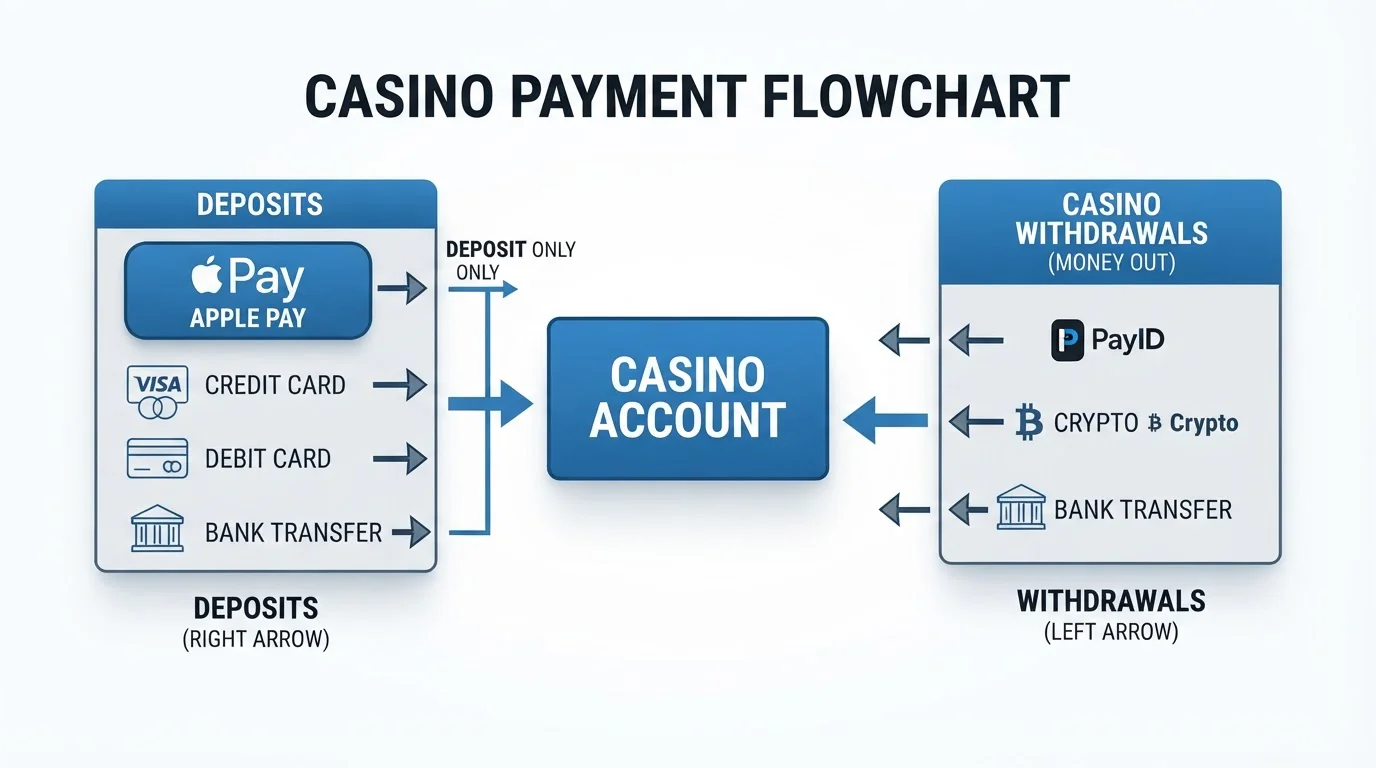
Apple Pay does not support casino withdrawals. The protocol allows merchants to initiate refunds for purchases, but gambling winnings do not fall under the refund category, and card networks (Visa, Mastercard) frequently decline refund-to-card requests for gambling transactions due to regulatory and risk policies. The result: offshore casinos cannot send funds back to Apple Pay, and your winnings must exit via an alternative route. This is not an operator choice—it’s a structural limitation of how Apple Pay and card networks handle gambling transactions.
The practical consequence is that every offshore casino accepting Apple Pay for deposits will list a separate set of withdrawal methods on the cashier page: bank transfer, PayID, cryptocurrency, e-wallets (Skrill, Neteller, PayPal where available), or POLi (deposit-only, not relevant here). You’ll need to provide details for at least one of these methods before you can request your first cashout. Most operators require the withdrawal method to match the deposit method where possible, but since Apple Pay withdrawals are impossible, casinos waive this rule and allow any supported alternative. Some operators require a minimum withdrawal amount (typically A$100 to A$500) and may impose a processing delay of 12 to 48 hours before the withdrawal is approved and sent to your chosen method.
Can I withdraw casino winnings to Apple Pay in Australia?
No. Apple Pay does not support casino withdrawals. Winnings must be cashed out via an alternative method: bank transfer, PayID, cryptocurrency, or e-wallets like Skrill or Neteller. Offshore casinos waive the usual “withdraw via the same method you deposited” rule for Apple Pay deposits because returning funds to Apple Pay is not technically possible. You’ll need to provide details for a withdrawal method—usually a bank account, crypto wallet address, or e-wallet email—before your first cashout can be processed.
PayID as the Domestic Fast Route
PayID is Australia’s real-time payment identifier tied to your bank account via the New Payments Platform (NPP) and the Osko overlay service. Instead of providing a BSB and account number, you link a mobile phone number or email address to your account as a PayID, and funds route instantly. Offshore casinos that support PayID for withdrawals—Hellspin and Jeetcity confirmed among the researched set—can process cashouts in 60 seconds to 24 hours depending on their internal approval workflow. Once the casino releases the withdrawal, the Osko rail delivers funds to your Australian bank account in under a minute.
PayID is the fastest domestic withdrawal route because it bypasses traditional bank-transfer clearing, which takes one to three business days. Not all offshore operators support PayID—most still rely on international wire transfers for AUD withdrawals, which add correspondent bank fees and multi-day delays. For Australian players, PayID availability is a practical filter: operators that support it (Hellspin, Jeetcity, Instant Casino) deliver faster AUD cashouts than operators that don’t. The catch: your Australian bank must support PayID (most major banks do as of 2026), and your account must have a PayID already set up. If you haven’t created one, log into your bank’s app or internet banking, navigate to PayID settings, and link your mobile number or email to your account. The setup takes two minutes and persists for all future PayID transactions, not just casino cashouts.
Cryptocurrency for Sub-24-Hour Cashouts
Bitcoin, Ethereum, Litecoin, and USDT (Tether on TRC-20 or ERC-20 networks) are the fastest withdrawal methods at offshore casinos, typically processing in 0 to 24 hours once the casino approves the request. USDT on TRC-20 is cited in search results as the cheapest on-chain rail with sub-5-hour benchmarks, because TRC-20 transaction fees are lower than Ethereum’s ERC-20 network and confirmation times are faster than Bitcoin during network congestion. Playamo, Hellspin, Spin Samurai, Jeetcity, Turbo Wins, and Instant Casino all support cryptocurrency withdrawals.
The operational advantage is no intermediary bank to block the transaction or impose currency-conversion fees. You provide your crypto wallet address (a long alphanumeric string), the casino sends the withdrawal to that address on the blockchain, and the funds arrive in your wallet within hours. From there, you can hold the crypto, trade it on an exchange, or convert it to AUD and transfer to your Australian bank account via a local crypto exchange like CoinSpot or Swyftx. The disadvantage is volatility—Bitcoin and Ethereum prices fluctuate, so a A$1,000 withdrawal might be worth A$950 or A$1,050 by the time you convert to AUD. Stablecoins like USDT avoid this by pegging to the US dollar, but you still face AUD/USD exchange-rate movement when converting.
Cryptocurrency withdrawals require you to manage a wallet and private keys, which adds technical overhead. If you lose access to your wallet (lost phone, forgotten password, no backup of your seed phrase), the funds are unrecoverable—there’s no customer service desk to reset your password. For players comfortable with crypto and prioritizing speed, it’s the fastest cashout route. For players who want simplicity and don’t want to manage blockchain addresses, PayID or bank transfer are easier.
Bank Transfer and E-Wallets
Traditional bank transfer (local AUD transfer or international wire) is the slowest withdrawal route, processing in one to five business days depending on whether the casino uses a local Australian payment processor or routes internationally. International wires carry correspondent bank fees (up to A$35 noted in search results) and multi-day clearing. Local AUD transfers are faster (one to two business days typical) but still slower than PayID or crypto. Bank transfer is the fallback when you don’t have PayID set up, don’t use cryptocurrency, and the operator doesn’t support your preferred e-wallet.
E-wallets—Skrill, Neteller, and PayPal where available—process in 12 to 24 hours on the fast end, stretching to one to two days at some operators. E-wallets are faster than bank transfer but slower than crypto, and they add an extra step: once funds land in your Skrill or Neteller account, you must transfer them to your Australian bank account, which takes another one to two business days. The advantage over bank transfer is that e-wallets often bypass the gambling-transaction category that triggers bank blocks, because the transfer from e-wallet to bank appears as a generic payment rather than a casino cashout. For players whose banks block gambling transactions and who don’t want to call support to toggle the block off, e-wallets are a workaround.
| Withdrawal Method | Processing Time | Minimum | Fees | When to Use It |
|---|---|---|---|---|
| Apple Pay | Not supported | — | — | Not available for casino withdrawals |
| PayID (Osko/NPP) | 60 sec – 24h | A$100-A$500 | None (from casino) | Fastest domestic AUD route; requires PayID setup |
| Cryptocurrency (BTC/ETH/LTC/USDT) | 0-24h (sub-5h USDT/TRC-20) | A$100-A$500 | On-chain network fee (varies) | Fastest overall; requires wallet management; volatility risk |
| E-wallets (Skrill/Neteller) | 12h – 2 days | A$100-A$500 | Typically none from casino; e-wallet may charge withdrawal fee | Bypasses bank gambling blocks; extra step to bank account |
| Bank Transfer (local AUD) | 1-2 business days | A$100-A$500 | Typically none | Fallback when no PayID; slower than above |
| Bank Transfer (international wire) | 3-5 business days | A$100-A$500 | Up to A$35 correspondent bank fee | Slowest; used when operator lacks local AUD processor |
Australian Banks and Gambling Blocks — What You Need to Know Before Depositing
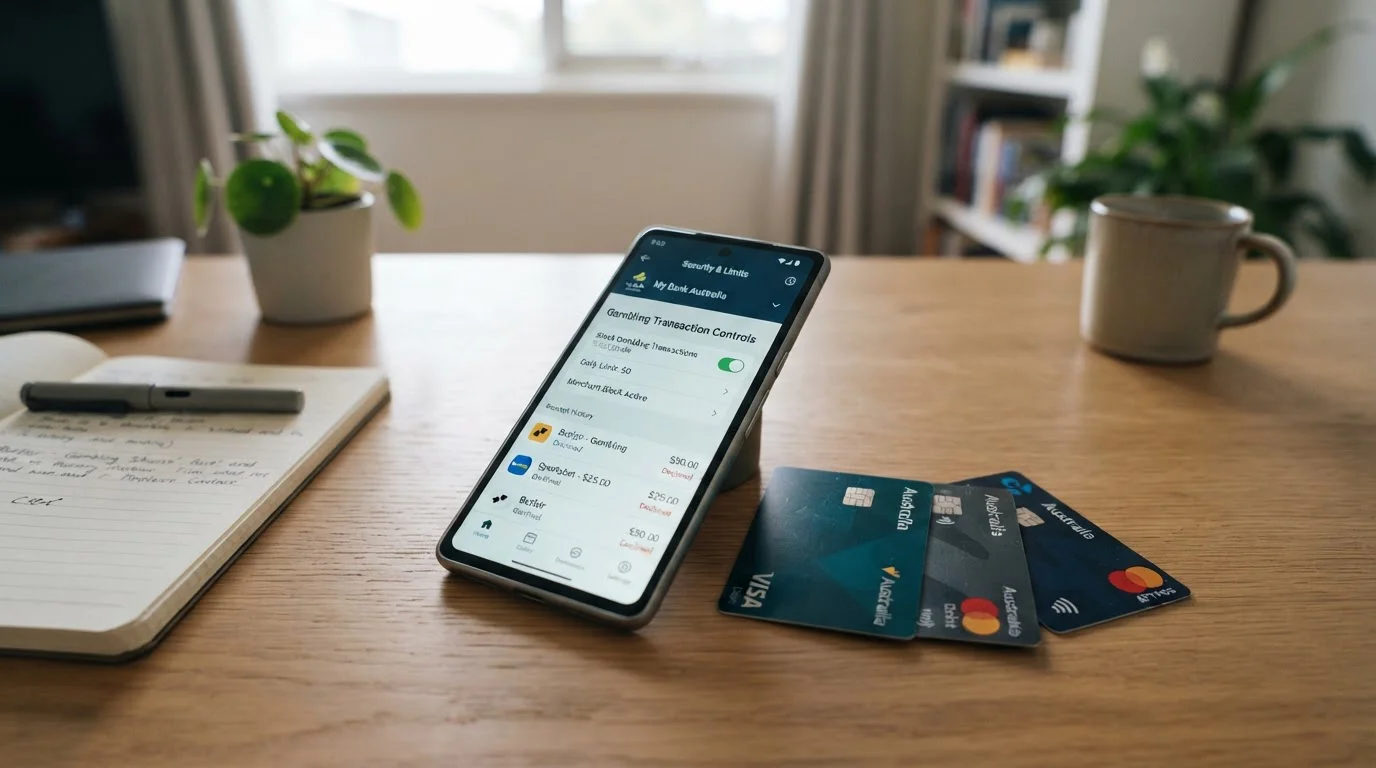
Australian banks offer voluntary gambling transaction blocks as a harm-minimization tool, and some banks—Commonwealth Bank, Westpac, and Bendigo Bank confirmed—enable the block by default on new accounts. When a gambling block is active, any transaction the bank’s systems classify as gambling (merchant category code 7995) is declined at the point of authorization. That includes Apple Pay deposits to offshore casinos. The block operates at the card network level, so it affects all payment methods tied to that card: Apple Pay, Google Pay, physical card swipes, and online card-not-present transactions.
The operational impact: you tap Apple Pay at the casino cashier, authenticate via Face ID or Touch ID, and the transaction is declined instantly with a generic “payment failed” or “card declined” message. The casino doesn’t see why it failed—the decline happens at your bank before the authorization reaches the casino’s payment processor. If you’ve never checked your bank’s gambling-block setting and the deposit fails, the gambling block is the first thing to check.
Do Australian banks block Apple Pay deposits to online casinos?
Some Australian banks block gambling transactions by default (Commonwealth Bank, Westpac, Bendigo), while others offer opt-in gambling blocks that remain off until you activate them (NAB, ANZ, ING, Macquarie, St.George). When a gambling block is active, all transactions classified as gambling—including Apple Pay deposits to offshore casinos—are declined at authorization. The block applies to the card, not the payment method, so Apple Pay, Google Pay, physical card use, and direct card-number entry are all blocked equally. To deposit via Apple Pay when a gambling block is active, you must contact your bank and ask them to toggle the block off.
Which Banks Block Gambling by Default
Commonwealth Bank (CBA) and Westpac both enable gambling blocks by default on new accounts opened after their harm-minimization policies launched. Bendigo Bank follows the same pattern. If you opened your account at one of these banks recently and haven’t explicitly requested gambling transactions be allowed, the block is likely active. NAB, ANZ, ING, Macquarie, St.George, and Up Bank offer gambling blocks as opt-in features—off by default, and you must activate them via the mobile app, internet banking, or by calling support if you want gambling transactions blocked.
Revolut AU (the Australian entity of the UK-based neobank) offers gambling controls in-app but does not block by default. The distinction between “blocked by default” and “opt-in block” matters because if you’re troubleshooting a declined Apple Pay deposit, knowing whether your bank blocks gambling by default narrows the diagnosis. If you bank with CBA or Westpac and never toggled the block off, that’s why the deposit failed. If you bank with NAB or ANZ and never turned a gambling block on, the decline is due to something else—insufficient funds, daily card limit, or the casino itself rejecting the transaction.
How to Check and Toggle Your Bank’s Gambling Block
CBA and Westpac: log into the mobile app, navigate to card settings or security settings, and look for “gambling block,” “betting block,” or “transaction controls.” If the toggle shows “on,” switch it to “off.” Some accounts require you to call 132 032 (CBA) or 132 032 (Westpac) to request the block be removed, especially if the setting is not exposed in the app. Timeframe: instant to 24 hours depending on whether the change is processed automatically or requires manual review.
NAB: open the NAB app, go to card controls, and check whether a gambling block is active. If it is and you want to deposit at a casino, toggle it off. If no block is active and your deposit still fails, the issue is elsewhere. NAB’s block is opt-in, so most customers will find it off by default.
ANZ: check ANZ Plus app card controls or internet banking security settings. Look for “gambling block” or “transaction restrictions.” ANZ introduced gambling-limit features that decline transactions when you’re close to your credit limit (85% threshold on credit cards for gambling MCC), separate from the full gambling block. If you’re using a debit card, the 85% rule doesn’t apply, and the block is opt-in.
ING, Macquarie, Up Bank: check in-app card settings. All three offer gambling blocks as opt-in features. If you never turned one on, it’s off.
St.George and Bank of Melbourne (both part of Westpac Group): follow the same process as Westpac. Log into the app, check card settings, toggle off if needed. Contact 13 33 30 if the setting isn’t exposed in the app.
Bendigo Bank: call 1300 236 344 or visit a branch. Bendigo’s gambling block is default-on for new accounts, and toggling it off may require phone support rather than self-service via the app.
| Bank | Default Block Status | How to Toggle | Contact | Timeframe |
|---|---|---|---|---|
| Commonwealth Bank (CBA) | Blocked by default (new accounts) | App (card settings) or call | 132 032 | Instant – 24h |
| Westpac | Blocked by default (new accounts) | App (card settings) or call | 132 032 | Instant – 24h |
| Bendigo Bank | Blocked by default (new accounts) | Call or branch visit | 1300 236 344 | 24h – 48h |
| NAB | Opt-in (off by default) | App (card controls) | 13 22 65 | Instant |
| ANZ | Opt-in (off by default); 85% credit limit rule separate | App (ANZ Plus card controls) | 13 13 14 | Instant |
| St.George / Bank of Melbourne | Blocked by default (new accounts, Westpac Group) | App or call | 13 33 30 | Instant – 24h |
| ING | Opt-in (off by default) | App (card settings) | 133 464 | Instant |
| Macquarie | Opt-in (off by default) | App (card controls) | 1800 806 310 | Instant |
| Up Bank | Opt-in (off by default) | App (card controls) | In-app support | Instant |
| Revolut AU | Opt-in controls (off by default) | App (spending controls) | In-app support | Instant |
The Legal Picture — Offshore Casinos and the Interactive Gambling Act
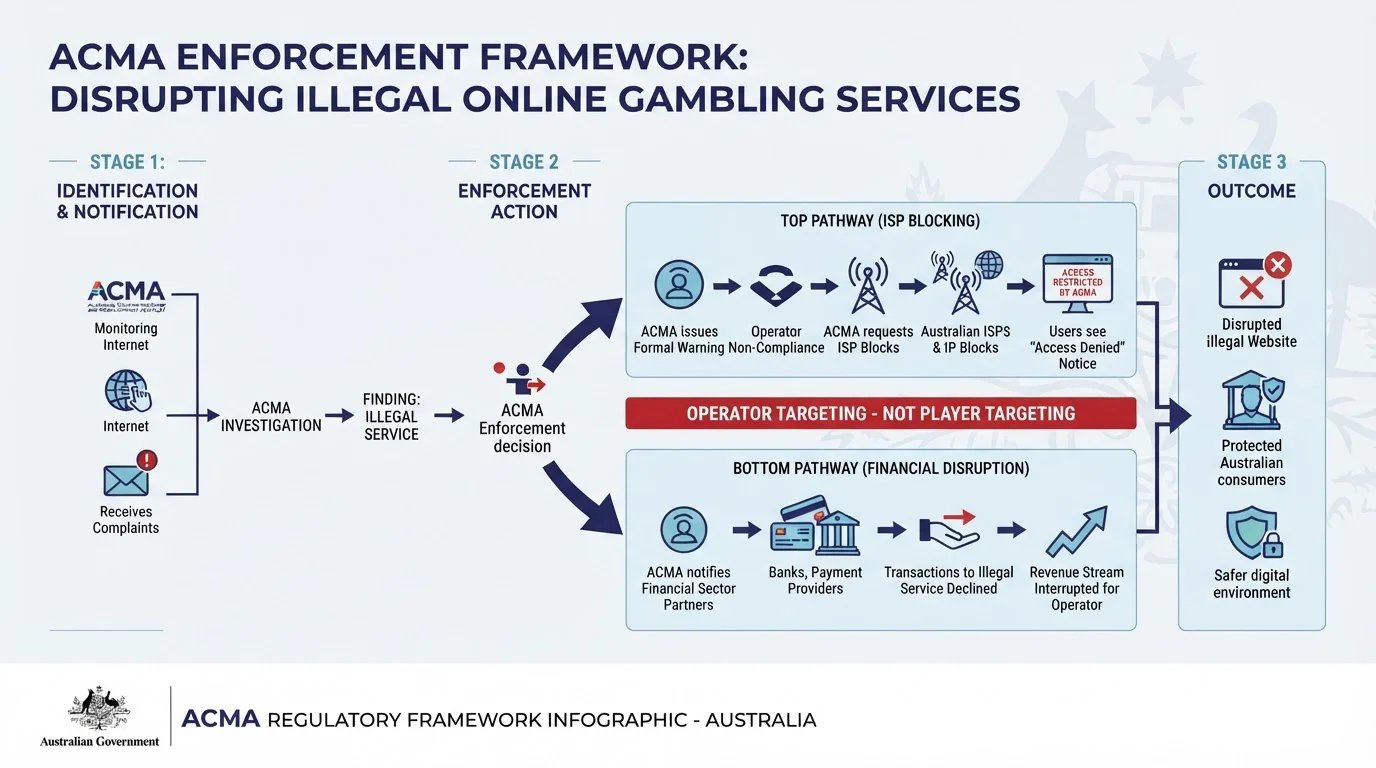
The Interactive Gambling Act 2001 (Cth) prohibits any entity from providing interactive gambling services—online casino games, including pokies, table games, and live dealer—to customers in Australia. The Act targets operators, not players. Section 15(1) makes it an offense to provide the service; there is no corresponding section criminalizing the act of playing. Australian residents who deposit at offshore-licensed casinos and play pokies or blackjack via Apple Pay are not breaking the law under the IGA. The operator providing the service to them is.
This operator-vs-player distinction is not semantic. ACMA’s enforcement powers under the IGA include directing ISPs to block access to non-compliant offshore sites (over 1,700 sites blocked by 2026), issuing formal warnings to operators, and—under the Interactive Gambling Amendment (Gambling Reform) Act 2026 (No. 72, enacted 26 August 2026)—directing banks and payment providers to block financial transactions to illegal gambling services. That last provision, introduced in Schedule 2, Part 1 of the 2026 Amendment, is new. Previously, ACMA could only block the website; now it can block the money flow. But all of these enforcement tools apply to operators and intermediaries (ISPs, banks, payment processors), not to the individual player depositing A$50 via Apple Pay.
What the IGA Actually Says
Section 15(1) of the Interactive Gambling Act 2001 prohibits a person from providing an interactive gambling service to customers in Australia. “Interactive gambling service” is defined in Section 5 and includes online casino-style gaming—pokies, roulette, blackjack, baccarat, poker against the house—but excludes sports betting, horse racing, and lotteries (those are regulated separately under state and territory law). The prohibition applies to the service provider, not the service user. Australian residents playing at offshore casinos are not committing an offense under the IGA.
The penalty for an operator breaching Section 15(1) is up to A$1.1 million per day of contravention (updated penalty units as of 2026). ACMA enforces the Act by investigating complaints, monitoring online gambling advertising and services, issuing notices to operators, and directing ISPs to block non-compliant sites. Offshore operators that ignore ACMA notices or continue providing services to Australian customers after a formal warning can be added to the prohibition register, triggering ISP-level blocking. Playamo and Hellspin are confirmed on the register as of research date; other the operators covered here are not confirmed blocked.
ACMA’s Block Register and What It Means for You
ACMA maintains a register of prohibited interactive gambling services under Section 16 of the IGA. When a site is added to the register, ACMA directs Australian ISPs (Telstra, Optus, TPG, Vodafone, etc.) to block DNS resolution and IP routing to that domain. The block is not perfect—VPNs, DNS-over-HTTPS, and alternative DNS resolvers (Google Public DNS, Cloudflare 1.1.1.1) bypass ISP-level blocking—but it adds friction. Players who know how to use a VPN or change their DNS settings can still access blocked sites; players who don’t will see an error page or a redirect to a government warning when they try to visit the casino.
The block applies to the domain, not the payment method. If Playamo is on the ACMA register, your Apple Pay deposit to Playamo won’t be blocked by the IGA enforcement itself—it’s your ISP blocking access to the playamo.com domain that stops you from reaching the cashier in the first place. Once you’re on the site (via VPN or DNS workaround), Apple Pay deposits process normally because the payment routes through Visa or Mastercard networks, not through infrastructure ACMA can block at the ISP level.
The 2026 Amendment changes this. Schedule 2, Part 1 gives ACMA new powers to direct banks and payment providers to block financial transactions to prohibited gambling services. The mechanism is untested as of research date, and no public guidance yet details how ACMA will identify which specific transactions to block or how banks will implement the directive. In theory, ACMA could direct Australian banks to decline card transactions (including Apple Pay) to casinos on the prohibition register. In practice, enforcement will depend on whether banks can reliably identify gambling transactions by merchant name or MCC, and whether ACMA’s directives target all prohibited operators or only a subset. As of 2026, Apple Pay deposits to offshore casinos are not blocked at the payment level, but the regulatory framework for future blocking is now in place.
Do I need a VPN to use Apple Pay at offshore casinos in Australia?
Only if the casino is on ACMA’s prohibition register and your ISP enforces the block. Playamo and Hellspin are confirmed blocked as of research date, meaning Australian ISPs are directed to prevent access to those domains. To reach the cashier and deposit via Apple Pay, you’ll need a VPN or an alternative DNS resolver to bypass the ISP block. Other the operators covered here—Spin Samurai, Jeetcity, Turbo Wins, Fast Slots, Coin Casino, Instant Casino—are not confirmed on the ACMA register as of research, meaning they should be accessible without a VPN from most Australian internet connections. ACMA adds sites to the register continuously, so an operator accessible today may be blocked tomorrow.
Is Apple Pay safe for online casino deposits in Australia?
Technically, yes. Apple Pay uses tokenization (Device Account Number instead of your real card number), biometric authentication (Face ID or Touch ID), and Secure Enclave encryption, so your card details are not exposed to the casino or vulnerable to a payment-processor breach. The casino never sees your Primary Account Number, and each transaction requires biometric confirmation, making unauthorized use difficult even if your phone is stolen.
Regulatory risk is separate. Apple Pay deposits to offshore casinos are not illegal for Australian players under the IGA, but the casinos themselves operate outside Australian consumer protection, licensing oversight, and dispute resolution. If a withdrawal is delayed, a bonus term is disputed, or an account is closed without explanation, you have no recourse to an Australian regulator or ombudsman. Offshore licenses (Curaçao, Malta, Anjouan) establish baseline player protections, but enforcement is weaker than domestic licensing regimes, and cross-border disputes are harder to resolve. The 2026 Amendment’s financial-disruption provisions also introduce future risk that ACMA could direct banks to block Apple Pay transactions to prohibited casinos, though such blocking is not yet implemented as of research date.
Player vs. Operator Legality
The IGA prohibits operators from providing interactive gambling services to Australian customers. It does not prohibit Australian customers from using those services. This distinction is explicit in the Act’s structure: penalties apply to service providers (Section 15), not service users. Australian residents who deposit at offshore casinos via Apple Pay, play pokies, and withdraw winnings are not committing an offense under federal law.
State and territory gambling laws add complexity. Some states have provisions restricting participation in unlicensed gambling, but enforcement against individual players is rare to nonexistent. The practical reality as of 2026 is that no Australian player has been prosecuted for playing at an offshore casino, and the regulatory focus remains on operators, advertisers, and payment facilitators. Players face no legal risk under current enforcement practice, though the regulatory environment can change via legislation or policy shift.
The 2026 Amendment and Financial Disruption Powers
The Interactive Gambling Amendment (Gambling Reform) Act 2026 (No. 72) received assent on 26 August 2026. The key change for Apple Pay users is Schedule 2, Part 1, which empowers ACMA to issue “financial disruption notices” directing banks, payment providers, and card networks to block transactions to prohibited interactive gambling services. The provision is modeled on similar powers used against illegal piracy sites in other jurisdictions and aims to cut the money flow to offshore operators that ignore ACMA blocking.
The practical impact is uncertain as of research date because ACMA has not yet issued financial disruption notices, and banks have not disclosed how they would implement such directives. In theory, ACMA could direct Visa and Mastercard to decline transactions to casinos on the prohibition register, which would block Apple Pay deposits (since Apple Pay routes through Visa/Mastercard networks). In practice, enforcement will depend on whether card networks can reliably identify prohibited merchants by merchant ID or MCC, whether ACMA’s directives are broad (all prohibited casinos) or targeted (specific high-profile operators), and whether technical workarounds (using a card issued by a non-Australian bank, routing through an e-wallet) allow players to bypass the block.
For Australian players using Apple Pay at offshore casinos in 2026, the financial disruption provisions are a future risk rather than a present barrier. Apple Pay deposits to offshore casinos are not currently blocked at the payment level, but the regulatory framework for such blocking is now in place and could be activated if ACMA decides to use its new powers.
Deposit Limits, Fees, and the Credit Card Cash-Advance Trap
Apple Pay deposits at offshore casinos are governed by three independent limits: the Apple Pay network ceiling (effectively unlimited—Apple doesn’t impose a per-transaction or daily cap), your bank’s daily card spending limit (typically A$1,000 to A$5,000 for standard debit cards, higher for premium tiers), and the casino platform’s deposit cap (varies by operator, A$500 to A$10,000 per transaction typical). The second limit—your bank’s daily card ceiling—is the one most players hit before the third. If you deposit A$1,000 via Apple Pay and the transaction is declined, check how much of your daily card limit you’ve already spent on other purchases that day. The limit resets at midnight in your bank’s time zone.
Apple does not charge consumers for Apple Pay transactions. Merchants pay standard Visa or Mastercard interchange fees (1% to 2% typical in Australia), but those fees are absorbed by the casino’s payment processor, not passed to you. Your bank may charge a fee depending on the card type: credit cards used for gambling deposits often trigger cash-advance fees (3% to 5% plus immediate interest), while debit cards typically carry no fee for domestic AUD transactions. If you’re depositing from a card denominated in a different currency (USD, EUR), your bank will apply a foreign-exchange markup (1.5% to 3% typical), but since you’re depositing AUD at an offshore casino that supports AUD accounts, this markup only applies if you’re using a non-AUD card.
What’s the minimum deposit amount when using Apple Pay at casinos?
Minimum deposit varies by operator: A$10 at Playamo and Spin Samurai, A$20 at Hellspin and Instant Casino, A$30 at Jeetcity. Fast Slots, Coin Casino, and Turbo Wins do not have confirmed minimum-deposit figures in public sources, but A$10 to A$30 is the standard range across offshore casinos serving Australian players. Some operators impose higher minimums for specific payment methods, but Apple Pay typically sits at the low end because card transactions carry lower processing costs than international wire transfers.
Will using a credit card in Apple Pay trigger cash-advance fees at casinos?
Yes, if your bank classifies the transaction as a cash advance. Most Australian banks treat gambling deposits under merchant category code 7995 (betting and casino gambling) as cash advances when processed via credit card. That triggers a fee—typically 3% to 5% of the transaction amount—plus interest charged from the transaction date with no interest-free period. A A$100 deposit via credit card provisioned in Apple Pay could cost A$103 to A$105 in fees, and if you don’t pay the balance immediately, interest accrues daily.
Debit cards provisioned in Apple Pay avoid this. Banks treat debit card gambling transactions as standard purchases, with no cash-advance fee. If your Wallet app holds both a debit and a credit card, select the debit card when depositing at the casino cashier. The safest approach: remove credit cards from Apple Pay entirely if you plan to use it for casino deposits, leaving only debit cards in the Wallet app. That way, you can’t accidentally trigger a cash-advance fee by selecting the wrong card.
Pokies, Live Dealer, and What You Can Actually Play
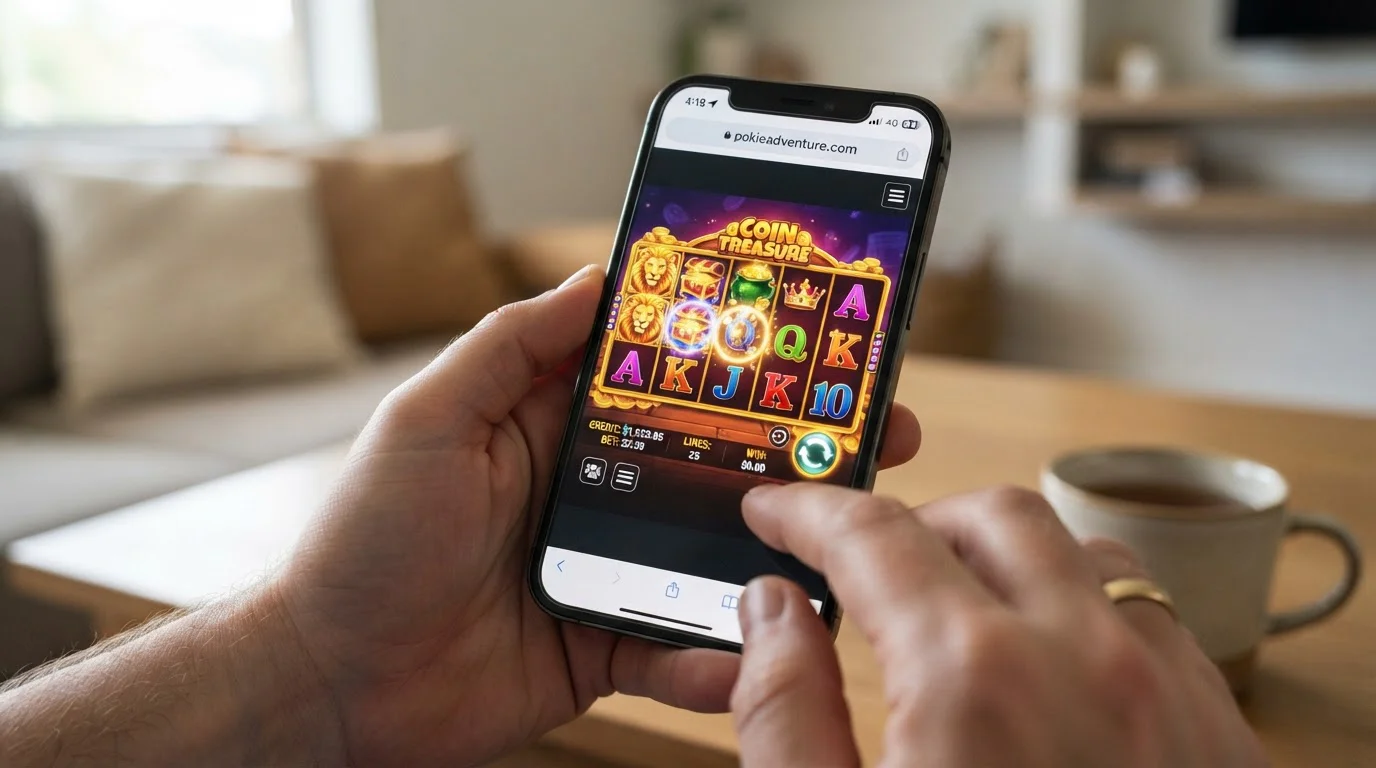
Offshore casinos accepting Apple Pay from Australian players stock 3,000 to 18,000+ pokie titles depending on operator size and aggregator partnerships. Jeetcity cites 6,000+ games (one source claims 18,000+, likely inflated or aggregated), Hellspin holds 6,000 to 7,000+ pokies, Spin Samurai and Playamo each offer 6,000+ titles, and Instant Casino sits mid-range at 3,000 to 4,500+. Game studios include NetEnt, Microgaming, Play’n GO, Pragmatic Play, Playtech, Evolution, Endorphina, Betsoft, Yggdrasil, Quickspin, Red Tiger, Big Time Gaming, and Nolimit City. Every operator offers HTML5-based pokies playable in mobile Safari without downloads, and most stock live dealer tables from Evolution Gaming (the dominant live dealer provider globally).
“Pokies” is Australian slang for slot machines. In offshore casino lobbies, they’re listed under “Slots,” “Pokies,” or “Games,” and the gameplay is identical to land-based pokies: spin the reels, match symbols, trigger bonus rounds, chase multipliers. Popular titles among Australian players include Big Bass Bonanza (Pragmatic Play), Sweet Bonanza (Pragmatic Play), Book of Dead (Play’n GO), Starburst (NetEnt), Gates of Olympus (Pragmatic Play), and Wolf Gold (Pragmatic Play). RTP (Return to Player) percentages range 94% to 97% depending on title and operator configuration. Some operators display RTP on game thumbnails (Hellspin noted for this), while others bury it in the game’s info panel or don’t disclose it at all.
Live dealer tables are the second major category. Evolution Gaming dominates this space with live-streamed blackjack, roulette, baccarat, and game-show variants (Crazy Time, Monopoly Live, Dream Catcher). Tables operate in real time with human dealers in studios, and players join via video feed. Minimum bets start at A$1 to A$5 for standard tables, rising to A$25+ for VIP tables. The appeal is the human dealer and real-time interaction, which some players prefer over RNG-based (random number generator) digital games. All researched operators stock live dealer tables alongside pokies, making the offering casino-complete rather than slots-only.
Bonuses, New Casinos, and Mobile Play
Welcome bonuses at offshore casinos range from modest (100% up to A$300) to aggressive (255% up to €5,000). Spin Samurai offers the largest total package at A$10,000 across three deposits, Jeetcity holds the highest single-deposit bonus at A$7,500, and Turbo Wins advertises 255% up to €5,000 plus 250 free spins. All bonuses carry wagering requirements—typically 40x to 50x the bonus amount—which means a A$1,000 bonus requires A$40,000 to A$50,000 in total wagers before winnings can be withdrawn. Spin Samurai’s 40x wagering is the lowest in this set; most competitors sit at 50x.
Bonus eligibility when using Apple Pay varies by operator. Some casinos exclude specific payment methods from welcome-bonus participation (e-wallets like Skrill and Neteller are commonly excluded because they’re seen as low-risk for the operator), but Apple Pay is rarely excluded because it routes through standard Visa or Mastercard networks. Always check the bonus terms before depositing—if Apple Pay is excluded, the terms will state it explicitly, and depositing via Apple Pay will forfeit bonus eligibility. If no exclusion is listed, Apple Pay deposits qualify.
New Apple Pay casinos launched in the past two years include Turbo Wins (2024-2025, operated by Terdersoft B.V.) and potentially Fast Slots and Coin Casino, though exact launch dates are not confirmed in public records. Hellspin launched in 2022, making it four years operational by 2026, and sits mid-range between established decade-old operators (Playamo, BitStarz) and brand-new entrants. The “new casino” category appeals to players seeking fresh welcome bonuses, untapped VIP programs, or operators not yet on ACMA’s prohibition register. The trade-off is shorter operational track records and less player feedback.
Mobile play via Apple Pay works identically on iPhone and iPad: open Safari, navigate to the casino site, tap the cashier, select Apple Pay, authenticate via Face ID or Touch ID, and the deposit clears in seconds. All researched operators offer mobile-optimized sites (responsive HTML5) or dedicated iOS apps (downloaded via direct link, not the App Store, because Apple prohibits unlicensed gambling apps in the Australian App Store). The Apple Pay integration works the same in both mobile Safari and in-app browsers, provided the browser is Safari-based. Pokies, live dealer tables, and account management are all accessible on mobile without desktop requirement.
How We Picked These Casinos
The eight the operators covered here were selected based on confirmed Apple Pay support for Australian players, AUD account availability, offshore licensing (Curaçao, Malta, Anjouan, or Kahnawake), and sufficient public data to verify ownership, game counts, and withdrawal processing. Operators without confirmed Apple Pay support, without AUD currency, or with no verifiable licensing information were excluded. Playamo, Hellspin, and Spin Samurai represent the established tier with multi-year operational history and known ownership (Dama N.V., TechOptions Group B.V.). Jeetcity, Turbo Wins, Fast Slots, Coin Casino, and Instant Casino represent mid-tier and newer entrants with varying levels of public transparency.
ACMA block status was researched via search results referencing ACMA’s prohibition register, formal warnings, and ISP blocking. Playamo and Hellspin are confirmed on the register as of research; other operators are not confirmed blocked but may be added in future. Withdrawal speed figures reflect the fastest available rail per operator (crypto and PayID where supported), not the slowest. Minimum deposit figures are sourced from operator sites and affiliate content where available; gaps in the table reflect missing public data rather than assumptions.
No operator here is Australian-licensed, because no Australian-licensed online casinos exist under the IGA. Every operator serves Australian players from an offshore jurisdiction and operates outside Australian consumer protection, licensing oversight, and dispute-resolution mechanisms. This is the structural reality of online casino access for Australian players in 2026, not a quality judgment of any specific operator.
Casino Deposit Methods Australia 2026 — Full Comparison
Content created by the «Aussie Cashier» team