
Pay by Phone Casinos Australia 2026: The Honest Guide to Mobile Deposits
 Available in AU

The phrase “pay by phone” conjures images of charging casino deposits straight to your Telstra or Optus bill. That’s the promise, anyway. The reality in Australia 2026 is different—and more useful than the outdated carrier-billing pitch suggests. What most offshore casinos mean by “pay by phone” is PayID (your phone number linked to your bank account) and mobile wallets like Apple Pay or Google Pay wrapping your existing cards. Traditional carrier billing through services like Boku or Siru Mobile has quietly disappeared from the Australian casino landscape, leaving PayID as the dominant instant-deposit method that genuinely uses your phone number.
Understanding this shift matters if you’re trying to fund an account at an offshore casino without repeatedly entering card details or waiting days for a bank transfer. PayID settles deposits in under 60 seconds using Australia’s New Payments Platform, while Apple Pay and Google Pay offer biometric convenience for card transactions. None of these charge your phone bill. That older model—where Telstra or Optus added your casino deposit to your monthly statement—has been phased out by Australian telcos and most operators by mid-2026.
The breakdown below what “pay by phone” actually means in Australia, which offshore casinos accept PayID and mobile wallets, how each method works, and why you won’t find Boku or Siru at casinos serving Australian players anymore. We’ll cover deposit speeds, fees, withdrawal realities, and the legal context around offshore operators that sit outside Australia’s BetStop register. Straight facts, no false promises about phone-bill charging that doesn’t exist here.
What “Pay by Phone” Actually Means in Australia 2026
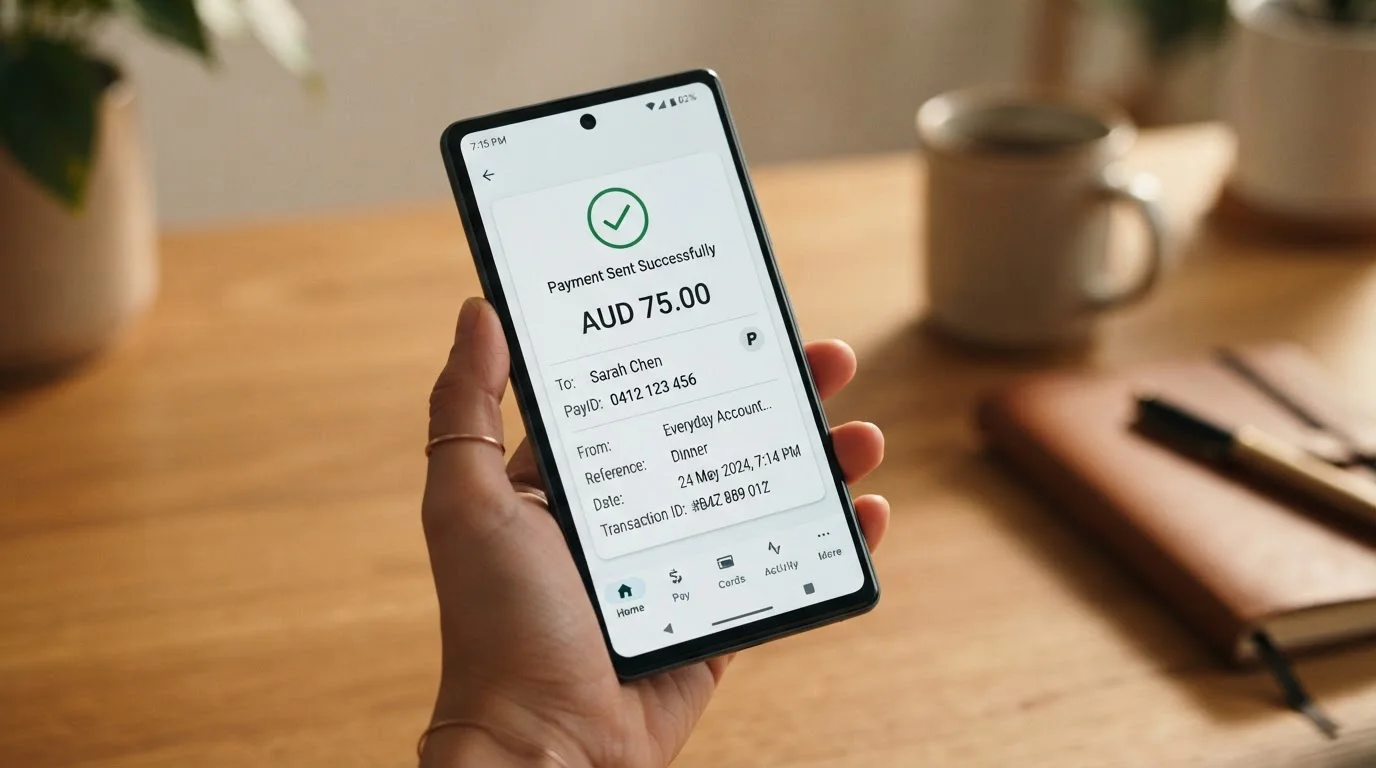
Search for “pay by phone casino” and you’ll find dozens of articles listing operators. Fewer will tell you upfront that “pay by phone” in Australia has shifted from carrier billing to bank-integrated mobile payments. The terminology stuck around even as the underlying technology changed. Here’s what you’re actually dealing with when a casino mentions mobile or phone-based deposits.
PayID: Phone Number as Bank Identifier
PayID is a payment addressing service operated by NPP Australia Limited, part of the national New Payments Platform launched in February 2018. Instead of memorising a BSB and account number, you link your phone number or email address to your bank account. When depositing at a casino, you enter your PayID (usually your mobile number), the casino sends an instant bank transfer via the NPP’s Osko rail, and funds land in your casino account within 6 to 60 seconds.
This is what most Australian-facing offshore casinos mean when they say “pay by phone.” You’re using your phone number as a bank identifier, not charging the deposit to your phone bill. The transfer runs through your bank account. Commonwealth Bank, Westpac, ANZ, NAB, and dozens of regional banks and neobanks (Up, 86400, Macquarie) all support PayID. Over 42% of Australian casino players use PayID for deposits as of 2026—the highest share of any single method.
PayID replaced POLi, the older bank-transfer service that shut down in 2023. Where POLi required handing over your internet banking credentials to a third party (a practice most banks warned against), PayID keeps the transaction bank-to-bank with zero intermediary access to your login details. Settlement happens on the NPP, the same real-time infrastructure handling over 35% of Australian card transactions. No fees from the NPP side, though individual banks may charge for transfers—rare in practice.
Deposit minimums at offshore casinos typically sit between A$5 and A$30, with A$10 being the most common threshold. Tested in September 2026, a A$50 PayID deposit cleared in 6 seconds. The speed comes from the NPP operating 24/7 with instant settlement, unlike the older BECS system that batched transactions overnight. For deposits, PayID is the closest thing Australia has to true “pay by phone” convenience without involving your actual phone carrier.
What’s the difference between PayID and paying by phone bill?
PayID uses your phone number as a proxy for your bank account details—the money comes from your bank balance via instant transfer. Paying by phone bill (carrier billing) would charge the amount to your Telstra, Optus, or Vodafone account, adding it to your monthly statement or deducting from prepaid credit. Carrier billing has been phased out at Australian casinos; PayID deposits pull from your bank, not your phone account.
Apple Pay and Google Pay: Card Wrapping, Not Phone Billing
Apple Pay and Google Pay appear on casino cashier menus alongside PayID, often under a “mobile payments” heading. These aren’t separate payment rails—they’re convenience layers wrapping your existing Visa or Mastercard. When you tap Apple Pay at a casino deposit screen, the transaction processes as a standard card payment. The casino sees a Visa or Mastercard authorization, not an Apple transaction.
Apple Pay launched in Australia in 2015, Google Pay (rebranded from Android Pay) in 2016. Both use tokenization: your actual card number stays hidden, replaced by a device-specific token. Authorization happens via Face ID, Touch ID, fingerprint, or device PIN rather than entering your card’s CVV each time. The deposit is instant—card authorization takes seconds—but it’s fundamentally a card deposit with biometric convenience, not a new payment method.
This distinction matters for withdrawal. If you deposit with Apple Pay, the casino processes your withdrawal as a card refund (1 to 5 business days back to the card stored in your wallet) or pushes you toward crypto or bank transfer for faster cashouts. You’re not withdrawing “to Apple Pay”—you’re withdrawing to the underlying Mastercard or Visa. Mobile payments (Apple Pay, Google Pay combined) represented 35% of Australian card transactions in 2023, per Reserve Bank data. Offshore casinos accept them widely because integration is straightforward: the casino’s existing card processor handles tokenized transactions automatically.
Google Pay works identically on Android devices, wrapping cards in Google Wallet. The key takeaway: neither Apple Pay nor Google Pay charges your phone bill or uses your phone number as a payment identifier. They’re NFC-based shortcuts for card deposits. Useful for speed and not having to dig out your physical card, but not distinct from standard card deposits in how casinos process them or how withdrawals work.
True Carrier Billing: Why Boku and Siru Disappeared
Carrier billing—where a casino deposit appears on your Telstra or Optus phone bill—sounds convenient in theory. Select Boku or Siru Mobile at the cashier, enter your phone number, confirm via SMS, and the charge gets added to your monthly statement (postpaid) or deducted from your prepaid balance. No bank account or card required. This model dominated UK and European mobile casino markets for years. In Australia, it never gained the same traction and has effectively vanished from the casino vertical by 2026.
Boku, Inc.—founded in San Francisco in 2009, publicly traded on the London Stock Exchange—processes over $9 billion in annual payments across 70 countries. But Australian casino integration is a different story. Slotozilla, an Australian-specific casino review site, states flatly: “Currently, none of the casinos on our list accept Boku as a payment method.” Affiversemedia confirms: “Using Boku to add money to your Boku online casino account is mostly a UK option. Just because Boku works in your country for regular shopping does not mean it will work as a deposit method at online casino platforms.”
The block comes from two directions. First, Australian mobile network operators (Telstra, Optus, Vodafone) have restricted premium billing for gambling transactions. Premium SMS billing and direct carrier billing both fall under this restriction. Boku’s global reach doesn’t translate to Australian casino access because the telcos—who control whether charges can be added to phone bills—have largely closed that door for gambling.
Second, the casino operators themselves phased out carrier billing. Siru Mobile, a Finnish carrier-billing service founded in Helsinki in 2011, was available at some European-facing casinos that accepted Australian players. By May 2026, industry tracker casinos.org reported: “As of May 2026 the casino vertical has effectively dropped Siru Mobile as a deposit method. Independent industry trackers list zero major casino operators currently accepting Siru deposits.” The service wasn’t banned outright—it simply lost commercial viability as operators consolidated around faster, cheaper methods like PayID and crypto.
Zimpler, another Scandinavian carrier-billing service, shows the same pattern: no verified Australian casino presence in 2026 research. Runescape, a gaming platform, announced Boku retirement effective 17 August 2026, signaling broader phase-out of carrier billing even in non-gambling digital services. The model still works in the UK, where regulation and MNO cooperation differ, but Australian players searching for “pay by phone bill casino” are chasing a method that no longer exists here.
Why the terms still populate search queries and casino marketing copy is partly legacy SEO and partly confusion. “Pay by phone” originally meant carrier billing. When PayID emerged in 2018 using phone numbers for bank transfers, the phrase acquired a second meaning. Now, in Australia, “pay by phone” predominantly means PayID, while carrier billing has quietly exited the market.
PayID: Australia’s Dominant Mobile Casino Payment Method
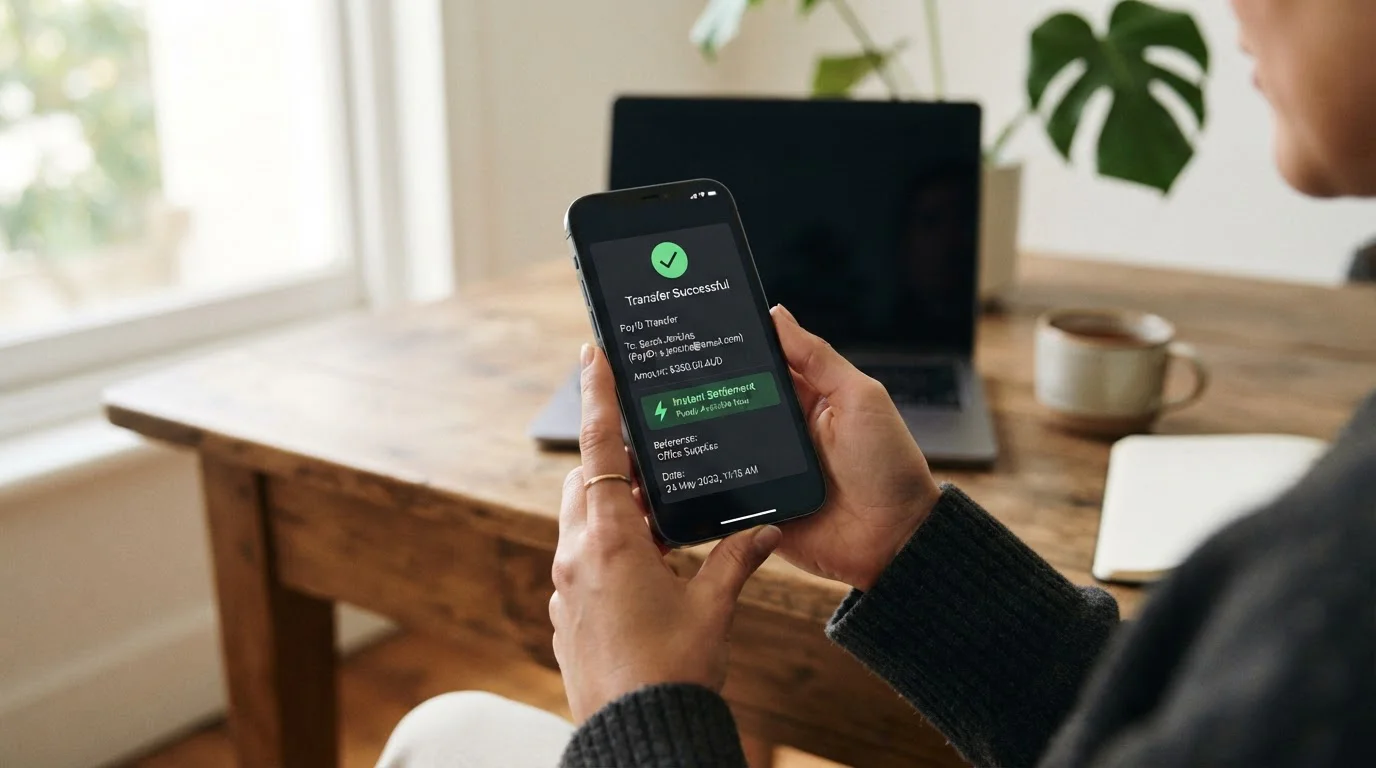
PayID isn’t just another deposit option—it’s become the default mobile payment method at offshore casinos serving Australians. The combination of instant settlement, zero fees, and no need to share card details or banking credentials has driven adoption past 42% of casino deposits from Australian players. Understanding how PayID works, where it shines, and where it falls short (particularly for withdrawals) gives you a clearer picture than most casino cashier pages will.
How PayID Works for Casino Deposits
You register a PayID with your bank—usually your mobile number, though email addresses work too. Commonwealth, Westpac, ANZ, NAB, and most regional banks and neobanks support registration through their apps or internet banking portals. Once registered, your PayID (say, 0412 345 678) becomes a proxy for your BSB and account number. Anyone sending you money via PayID just needs that phone number; they don’t see your bank details.
When depositing at a casino, you select PayID in the cashier, enter the amount (minimum typically A$10 to A$20), and input your registered PayID. The casino provides its own PayID or bank details for you to send the transfer to. You open your banking app, initiate a PayID transfer to the casino’s identifier, and the payment clears via the New Payments Platform’s Osko service. Settlement happens in under 60 seconds—often within 6 to 30 seconds. The casino’s system detects the incoming transfer and credits your account automatically or after a quick manual check (depending on the operator’s cashier setup).
The speed comes from NPP operating 24/7 with real-time settlement, unlike the older Bulk Electronic Clearing System (BECS) that batched overnight. NPP launched February 2018 specifically to compete with international instant-payment systems and reduce reliance on slower domestic rails. PayID is the consumer-facing layer on top of that infrastructure. For casino deposits, this means no waiting hours or days for a bank transfer to clear, and no card authorization failures that can happen with Visa or Mastercard.
Security is bank-level: the transaction runs through your bank’s authentication (app login, biometrics, security token), and you’re transferring directly from your account to the casino’s account. No third-party processor stores your credentials. This was the key advantage over POLi, which required entering your internet banking username and password into POLi’s interface—a practice Australian banks explicitly warned customers against. PayID eliminates that intermediary risk. You control the transfer from your own banking app.
Can I really deposit at Australian casinos using just my phone number?
Yes, via PayID. Your phone number is registered with your bank as a PayID, which links to your BSB and account number. When you deposit at a casino, you enter your phone number, and the casino receives an instant bank transfer from your account via the NPP. You’re not charging your phone bill—your bank account funds the deposit, and your phone number is just the addressing mechanism.
PayID Deposit Limits, Fees, and Speed
Minimum deposits at offshore casinos accepting PayID range from A$5 to A$30, with A$10 being standard across most operators. Maximum deposits per transaction vary by casino—some cap at A$5,000, others allow A$10,000 or higher—but your own bank’s transfer limits apply first. Most Australian banks allow NPP transfers up to A$10,000 per transaction and A$20,000 to A$50,000 daily, depending on your account type. If you’re moving larger sums, you may need to split across multiple transactions or arrange a direct bank transfer outside PayID.
Fees for PayID deposits are zero from the NPP infrastructure side. Your bank doesn’t charge for sending an NPP payment (domestic bank-to-bank transfers are generally free in Australia). The casino doesn’t charge for receiving the payment. The only scenario where a fee appears is if your bank levies a flat fee on all outbound transfers, which is uncommon for standard transaction accounts but can apply to certain business or premium accounts. Check your bank’s fee schedule if unsure, but the default expectation is zero fees for PayID deposits.
Speed is the headline feature: tested in September 2026, a A$50 PayID deposit cleared in 6 seconds from transfer initiation to casino account credit. Typical range is 6 to 60 seconds. The NPP handles settlement in real time, and most casinos have automated detection for incoming PayID transfers. A few smaller operators still manually verify PayID deposits (adding 5 to 15 minutes), but the major offshore casinos serving Australians have automated the process. This makes PayID faster than cards (which can face authorization holds or fraud checks) and vastly faster than traditional bank transfers (1 to 3 business days pre-NPP).
One technical quirk: PayID transfers are irrevocable once sent. Unlike card chargebacks or PayPal disputes, a PayID transfer cannot be clawed back after settlement. This protects casinos from payment reversals but leaves you with no recourse if you send funds to the wrong PayID or encounter a dispute with the casino. Always verify the casino’s PayID details before sending, and keep a screenshot of the transfer confirmation from your banking app.
How fast are PayID deposits at online casinos?
PayID deposits typically clear in 6 to 60 seconds. The New Payments Platform processes transfers instantly 24/7, and most offshore casinos have automated systems that credit your account within seconds of detecting the incoming payment. A tested A$50 deposit in September 2026 cleared in 6 seconds from initiation to account credit.
Why PayID Withdrawals Are Rare at Offshore Casinos
Here’s the gap most casino marketing buries: PayID is fast and easy for deposits, but the majority of offshore casinos do not support PayID withdrawals. You can deposit using your phone number via PayID, but when you cash out, you’re redirected to cryptocurrency, standard bank transfer, or e-wallets. The reason is infrastructure, not unwillingness.
PayID withdrawals require the casino to send an NPP payment from an Australian bank account. Most offshore operators—licensed in Curaçao, Malta, Anjouan, or other jurisdictions—don’t hold Australian bank accounts. They hold accounts in their licensing jurisdictions or third-party payment processor accounts elsewhere. Without an Australian bank account tied to the NPP, they can’t initiate PayID transfers back to you. They can receive PayID deposits (inbound transfers from your Australian bank) because those land in the casino’s nominated Australian receiving account (often held by a payment processor partner in Australia). Sending money out via PayID is a different technical requirement.
Some casinos have begun offering PayID withdrawals in late 2025 and 2026, typically those with established Australian market focus and local payment infrastructure. But the majority still funnel withdrawals through cryptocurrency (Bitcoin, Ethereum, Tether), standard international bank transfers (1 to 3 business days), or e-wallets like Skrill. Crypto has become the de facto fast withdrawal method at offshore casinos, with settlement times ranging from 2 minutes to 60 minutes depending on network congestion and the casino’s processing speed.
This creates an asymmetry: you can deposit with PayID instantly, but you’ll likely withdraw via a different method. Some players treat PayID as a deposit-only convenience and set up a crypto wallet for withdrawals. Others accept the 1 to 3 business day wait for bank transfers. The key is not assuming that PayID deposit support equals PayID withdrawal support—check the cashier’s withdrawal menu before depositing if fast cashouts matter to you.
Why can’t I withdraw using PayID if I deposited with it?
Most offshore casinos lack Australian bank accounts required to send NPP payments back to you. They can receive PayID deposits (inbound transfers land in an Australian receiving account), but sending money out via PayID requires the casino’s own Australian bank account on the NPP. Without that, withdrawals default to crypto, international bank transfers, or e-wallets.
Mobile Wallets: Apple Pay and Google Pay at Australian Casinos
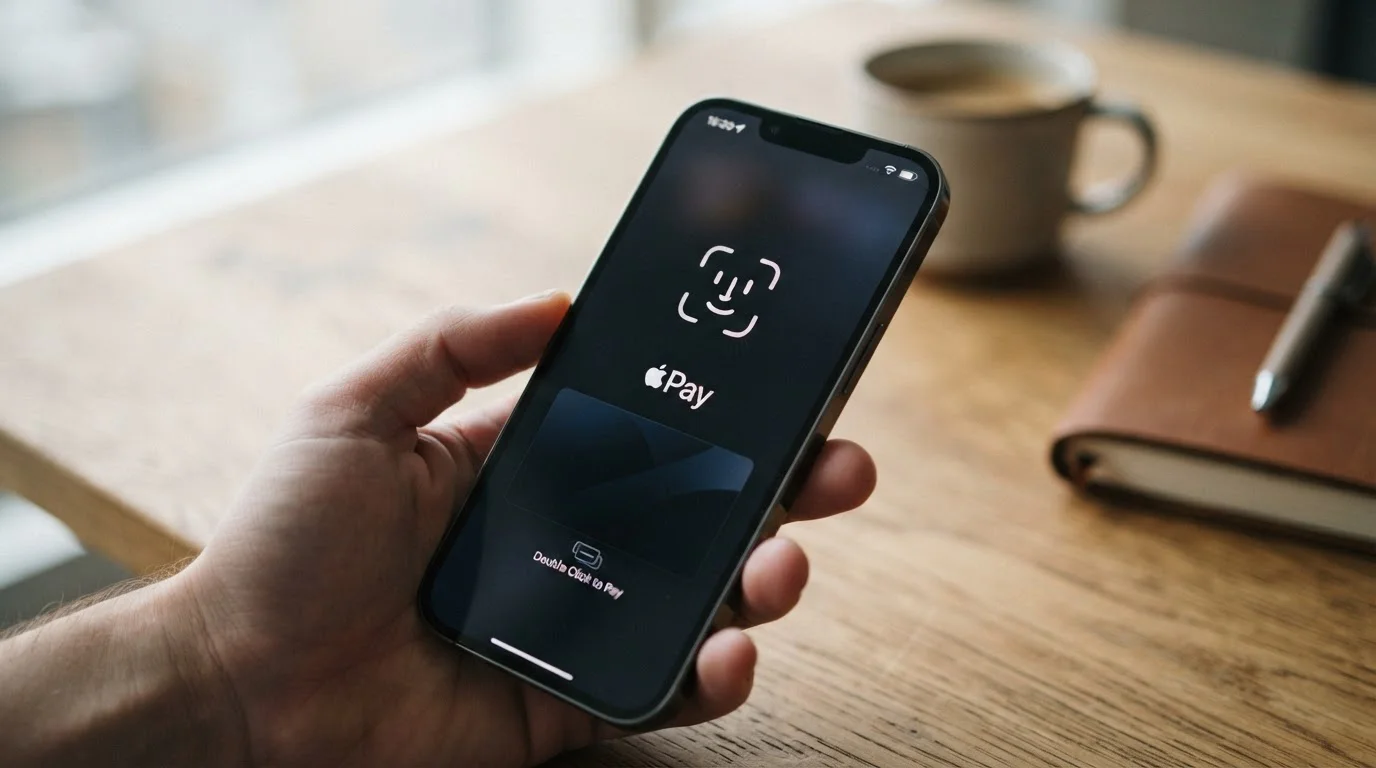
Apple Pay and Google Pay show up on nearly every offshore casino’s deposit menu these days, often grouped under “mobile payments” or “digital wallets.” They’re convenient, fast, and widely accepted. They’re also not separate payment methods in any meaningful sense—both are wrappers around your existing Visa or Mastercard. Understanding what happens behind the tokenization helps set realistic expectations for deposits, withdrawals, and whether they’re genuinely better than entering your card details directly.
Apple Pay: How It Works for Casino Deposits
Apple Pay launched in Australia in 2015, making it nearly a decade old in the local market by 2026. It uses NFC (near-field communication) for in-person contactless payments and integrates with Safari for online transactions on iPhone, iPad, Mac, and Apple Watch. When you deposit at a casino, you select Apple Pay, authenticate with Face ID, Touch ID, or your device passcode, and the transaction processes as a standard Visa or Mastercard payment using the card stored in your Apple Wallet.
The security layer is tokenization: your actual card number isn’t transmitted. Instead, Apple generates a device-specific token that represents your card. The casino’s payment processor receives a tokenized card number that works for this transaction only. If someone intercepts the token, it’s useless for future purchases. Your real card details stay on your device. This makes Apple Pay marginally more secure than entering your card number directly, though modern card processors use encryption that achieves similar protection.
From the casino’s perspective, an Apple Pay deposit is a card deposit. The payment flows through Visa or Mastercard’s network, and the casino’s merchant account processes it like any other card transaction. Fees are the same: casinos may charge a small percentage or flat fee for card deposits (less common at offshore operators competing for Australian players), and your card issuer may levy international transaction fees or currency conversion charges if the casino’s merchant account is denominated in USD or EUR rather than AUD.
Deposit speed is instant—card authorizations take seconds. Minimum deposits match the casino’s card minimums, typically A$10 to A$30. Maximum deposits are dictated by your card’s daily limit and the casino’s per-transaction cap, often A$5,000 to A$10,000. Apple Pay doesn’t increase or decrease these limits; it’s your card’s limits that apply. The biometric authentication is the convenience factor: no typing in 16-digit card numbers, expiry dates, or CVVs. Face ID or Touch ID replaces that friction.
One limitation: Apple Pay only works on Apple devices. If you’re on Android or Windows, you’re out of luck. And while Apple Pay is accepted at most offshore casinos serving Australians, a handful of smaller operators haven’t integrated tokenized payments and still require manual card entry. Check the cashier menu before assuming Apple Pay is available.
Google Pay: Android’s Casino Payment Option
Google Pay (rebranded from Android Pay in 2018) works identically to Apple Pay but for Android devices. You add a Visa or Mastercard to Google Wallet, authenticate with your fingerprint, face unlock, or device PIN, and the casino processes the transaction as a standard card payment with a tokenized card number. The same NFC technology handles in-person contactless payments; online deposits go through Google’s payment gateway.
Google Wallet launched in Australia in 2016, a year after Apple Pay, and has captured a similar share of the mobile payments market. Combined mobile wallet usage (Apple Pay, Google Pay, Samsung Pay) reached 35% of Australian card transactions by 2023, per Reserve Bank data. For casino deposits, Google Pay offers the same biometric convenience and tokenization security as Apple Pay. Your real card details stay hidden, and the device-specific token can’t be reused if compromised.
The processing mechanics are identical: the casino sees a Visa or Mastercard transaction, not a Google transaction. Fees, limits, and speed mirror standard card deposits. Minimum deposits typically A$10 to A$30, instant authorization, and maximum deposits governed by your card’s daily limits. Google Pay doesn’t unlock higher limits or bypass card fees—it’s a convenience layer, not a separate payment rail.
One advantage over Apple Pay: broader device compatibility. Google Pay works on Android phones, tablets, and smartwatches from dozens of manufacturers (Samsung, Google Pixel, Oppo, Xiaomi, Motorola), whereas Apple Pay is locked to iPhone, iPad, Mac, and Apple Watch. For Australian players on Android, Google Pay is the equivalent biometric shortcut. For casinos, integrating Google Pay is as simple as accepting tokenized Visa and Mastercard, which most payment processors handle automatically.
Do offshore casinos accept Apple Pay and Google Pay from Australian players?
Yes, most offshore casinos serving Australians accept Apple Pay and Google Pay. These process as tokenized Visa or Mastercard transactions, so any casino accepting cards can typically accept mobile wallets. Authorization is instant via biometric authentication, and the casino’s payment processor handles tokenized card numbers like standard card deposits.
Key Differences: Mobile Wallets vs PayID vs Carrier Billing
Three terms—mobile wallets, PayID, and carrier billing—get conflated in casino marketing. Here’s the functional breakdown.
Mobile wallets (Apple Pay, Google Pay): Wrap your existing Visa or Mastercard. The casino processes the transaction as a card payment with a tokenized card number. Deposits are instant (card authorization speed). Withdrawals process as card refunds (1 to 5 business days) or alternative methods (crypto, bank transfer). Fees match card fees. Limits match your card’s limits. Biometric authentication (Face ID, Touch ID, fingerprint) replaces manual card entry. Not a separate payment rail—just a convenience layer over cards.
PayID: Uses your phone number or email as a bank account identifier. Deposits pull directly from your bank balance via the New Payments Platform, bypassing cards entirely. Instant settlement (6 to 60 seconds). Zero fees for deposits. Bank-level security. Withdrawals rarely supported at offshore casinos (most lack Australian NPP accounts). This is the closest thing to true “pay by phone” in Australia—your phone number addresses the payment, but the money comes from your bank, not your phone bill.
Carrier billing (Boku, Siru Mobile): Would charge the deposit to your Telstra, Optus, or Vodafone phone account, adding it to your monthly bill or deducting from prepaid credit. No bank account or card required in theory. In practice, unavailable at Australian casinos as of 2026. Australian telcos restrict premium billing for gambling, and casino operators have phased out these services. This method no longer exists for Australian players despite search term persistence.
The practical hierarchy: PayID is fastest and fee-free for deposits but limited for withdrawals. Mobile wallets (Apple/Google Pay) offer biometric convenience but are just card deposits under the hood, with the same fees and withdrawal timings. Carrier billing isn’t an option. If your priority is deposit speed and avoiding card details, PayID wins. If you value biometric authentication and already carry your cards in Apple or Google Wallet, mobile wallets are marginally more convenient than manual card entry but functionally identical.
The Boku and Siru Question: Why Carrier Billing Died in Australia

Carrier billing had a logic to it: no bank account or card needed, just charge the casino deposit to your phone bill. Simple in theory, appealing to players without traditional banking or those wanting to keep casino spending off their card statements. Boku and Siru Mobile built businesses on this premise, processing billions in digital payments globally. Yet if you search for “Boku casino Australia” or “Siru Mobile Australia” in 2026, you’ll find references to these services but zero functional options. Here’s why that gap exists and why it’s not closing.
What Boku Is (and Why It’s Not Available Here)
Boku, Inc., founded in San Francisco in 2009 by Mark Britto, Erich Ringewald, and Ron Hinson, is publicly traded on the London Stock Exchange under ticker BOKU. The company processes over $9 billion in annual payment volume across 70 countries, connecting merchants to mobile network operators (Telstra, Vodafone, Orange, T-Mobile) for direct carrier billing. Users select Boku at checkout, enter their mobile number, receive an SMS confirmation, and the charge gets added to their phone bill or deducted from prepaid balance. No bank account, no card, just your phone number and MNO relationship.
This model thrives in markets where carrier billing for digital services is common—UK, parts of Europe, Southeast Asia. Boku reports over 200 employees and consistent revenue growth. In H1 2026, the company posted 11% revenue growth and announced a partnership with Stripe for subscription bundling in digital goods. The business is healthy. But its presence in Australian casino deposits is effectively zero.
Slotozilla, an Australian-specific casino review aggregator, states plainly: “Currently, none of the casinos on our list accept Boku as a payment method.” Affiversemedia reinforces the geographic limitation: “Using Boku to add money to your Boku online casino account is mostly a UK option. Just because Boku works in your country for regular shopping does not mean it will work as a deposit method at online casino platforms.” Pokerlistings adds: “Boku availability should always be checked in the casino cashier before depositing. Mobile billing depends on both the operator and the supported carrier.”
The block isn’t Boku’s choice—it’s structural. Australian mobile network operators (Telstra, Optus, Vodafone) have restricted premium billing for gambling transactions. Premium SMS and direct carrier billing fall under these restrictions. Even if Boku wanted to offer casino billing in Australia, the telcos control whether charges can be added to phone accounts for gambling purposes, and they’ve closed that door. This isn’t a formal ban with published policy—it’s a commercial decision by the MNOs to limit exposure to gambling-related chargebacks, regulatory scrutiny, and customer complaints about unexpected phone bill charges.
From the casino side, operators that serve Australians have little incentive to integrate a payment method unavailable to their target market. The result: Boku remains a functional service in other jurisdictions but has no Australian casino presence as of 2026. Players searching “Boku casino Australia” are finding legacy content or generic international guides that don’t reflect local availability.
Is Boku available at online casinos in Australia?
No. Boku operates in 70 countries and processes billions in payments globally, but Australian mobile network operators (Telstra, Optus, Vodafone) have restricted premium billing for gambling transactions. Slotozilla, an Australian-specific review site, confirms: “Currently, none of the casinos on our list accept Boku as a payment method.” The service works in the UK and parts of Europe but not for Australian casino deposits.
Siru Mobile: Phased Out from Casino Vertical in 2026
Siru Mobile, founded in Helsinki in 2011, followed a similar carrier-billing model: users enter their mobile number, confirm via SMS, and the charge appears on their phone bill. The service focused on Nordic and European markets (Finland, Sweden, Germany) and positioned itself as a competitor to Boku with particular strength in online gambling deposits. By 2026, that positioning had collapsed.
Casinos.org reported in May 2026: “Siru Mobile is a Finnish carrier-billing service founded in Helsinki in 2011, but as of May 2026 the casino vertical has effectively dropped Siru Mobile as a deposit method. Independent industry trackers list zero major casino operators currently accepting Siru deposits.” The phase-out wasn’t a single event—it was a gradual withdrawal as casino operators migrated to faster, cheaper, and more widely supported methods like PayID, cryptocurrency, and e-wallets.
Siru Mobile’s business model relied on partnerships with mobile network operators and casino operators. When MNOs tightened restrictions on gambling-related billing (driven by regulatory pressure and chargeback concerns) and when casino operators saw higher transaction fees and lower approval rates for carrier billing compared to crypto or bank transfers, the commercial case for Siru weakened. The service hasn’t formally shut down—it may still process payments for non-gambling digital services—but its presence in the casino vertical has effectively ended by mid-2026.
For Australian players, Siru Mobile was never widely available in the first place. The few European-facing casinos that accepted Australian players and offered Siru as an option have since removed it. Research in 2026 found zero offshore casinos serving Australians that list Siru Mobile as a deposit method. The term persists in search queries and older guides, but the functionality is gone.
Can I use Siru Mobile or Zimpler at Australian online casinos?
No. Siru Mobile has been phased out from the casino vertical as of May 2026, with independent trackers listing zero major operators accepting Siru deposits. Zimpler, another Scandinavian carrier-billing service, has no verified Australian casino presence. Both services were primarily European-market focused and never gained traction with offshore operators serving Australian players.
Why Australian Telcos Blocked Gambling Carrier Billing
The core reason carrier billing failed in Australia’s casino market isn’t player demand or lack of technology—it’s mobile network operator policy. Telstra, Optus, and Vodafone control whether premium billing and direct carrier billing can be used for gambling transactions. In practice, they’ve restricted it.
Premium SMS billing—where you send a text to a short code and a charge appears on your bill—was common in the mid-2000s for mobile content (ringtones, games, votes). Gambling wasn’t part of that ecosystem, and as regulatory scrutiny of gambling increased following Interactive Gambling Act enforcement and state-level reforms, telcos distanced themselves from acting as payment rails for casino deposits. Carrier billing for gambling creates exposure: chargebacks when customers dispute charges, complaints about unintended gambling spending showing up on family phone plans, and regulatory questions about telcos facilitating activity that may breach advertising or harm-minimisation rules.
Boku and Siru rely on agreements with MNOs to add charges to phone bills. Without MNO cooperation, the services can’t function for gambling. Australian MNOs have chosen not to cooperate in this vertical, unlike UK operators where carrier billing for online gambling remains available. The decision is commercial and regulatory risk mitigation, not a technical limitation. Telstra’s terms of service for premium billing explicitly exclude gambling transactions. Optus and Vodafone follow similar policies, though public documentation is sparse.
The result for players: even if a casino wanted to offer Boku or Siru for Australian deposits, the infrastructure isn’t available. The telcos won’t process the charges. This differs from PayID, which bypasses telcos entirely (bank-to-bank via NPP), and from Apple Pay or Google Pay, which wrap existing card networks. Carrier billing requires telco participation, and that participation has been withdrawn from the gambling sector in Australia. No signs of reversal as of 2026.
Offshore Casinos Accepting Mobile Payments for Australian Players
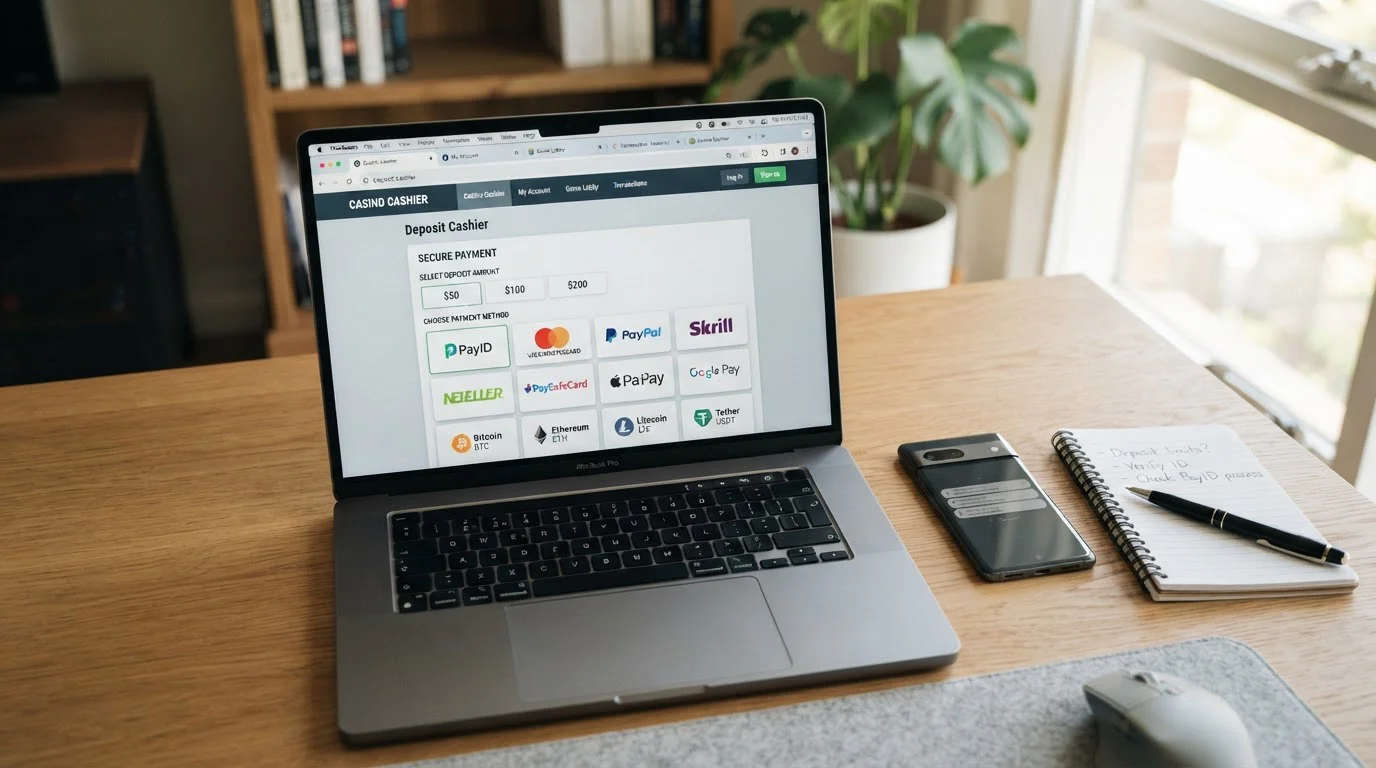
With carrier billing off the table and PayID emerging as the dominant instant-deposit method, the next question is which offshore operators actually support mobile payments for Australian players. The landscape is crowded—dozens of Curaçao-licensed casinos target Australia—but not all offer PayID, and mobile wallet support varies. The operators below have verified PayID or mobile wallet integration, transparent licensing, and established presence serving Australians. Rankings reflect payment method support, withdrawal speed, and market tenure, not arbitrary “best of” formatting.
VegasNow: 10,000+ Games, Fast Crypto Payouts
VegasNow operates under a Curaçao eGaming license and has positioned itself as a volume leader in the Australian offshore market. The game library exceeds 10,000 titles—a mix of pokies, table games, and live dealer from studios like Pragmatic Play, Evolution, NetEnt, and Microgaming. The welcome bonus package reaches A$8,000 plus 500 free spins spread across initial deposits, with typical 35× to 40× wagering requirements.
Payment methods include PayID, Neosurf (prepaid vouchers), cryptocurrency (Bitcoin, Ethereum, Tether), and Visa. Minimum deposit sits at A$20. Withdrawal speed leans on crypto: tested withdrawals in 2026 cleared in under 3 hours for Bitcoin and Ethereum, with some reports of sub-1-hour processing for verified accounts. Bank transfer withdrawals take 1 to 3 business days. PayID withdrawal support is not confirmed—most users report crypto or bank transfer as the cashout path.
VegasNow ranks consistently in the top 3 of Australian offshore casino lists for Q1 to Q3 2026. The site supports AUD accounts, eliminating currency conversion fees on deposits and withdrawals. Mobile optimization is strong—browser-based play on iOS and Android without app downloads. The platform emphasizes payment speed and game variety over bonus value, with a straightforward cashier that doesn’t bury withdrawal terms in footnotes.
LuckyOnes: AU$20,000 Welcome Package
LuckyOnes holds a Curaçao eGaming license and markets the highest welcome bonus value in the Australian offshore space: up to A$20,000 plus 500 free spins. The bonus is structured across multiple deposits (typically 4 to 5) with 35× to 40× wagering on bonus plus deposit. Game weighting follows standard patterns—pokies contribute 100%, table games 10% to 20%, live dealer often excluded from wagering.
The game library spans 9,000+ titles, with heavy representation from Pragmatic Play, BGaming, and Evolution for live dealer. Payment methods include cryptocurrency (emphasized for withdrawals), Skrill, Neosurf, and Visa. PayID support is implied by Australian market focus but not explicitly confirmed in all cashier menus—verify before depositing if PayID is your priority. Minimum deposit A$20. Withdrawal speed for crypto is listed as “instant,” with tested reports confirming sub-30-minute Bitcoin and Tether payouts in 2026.
LuckyOnes ranks alongside VegasNow and BetNinja in Australian offshore casino rankings. AUD account support is standard. The platform’s mobile interface mirrors desktop functionality, and the cashier processes withdrawals without multi-day pending periods for crypto. The A$20,000 bonus headline is the main differentiator, though the multi-deposit structure and wagering requirements mean most players won’t hit the full value—expect a few thousand in realized bonus if you deposit regularly.
BetNinja: Payment Speed Leader
BetNinja operates under a Curaçao eGaming license and has built its reputation on payment processing speed. The operator ranks consistently in the top 3 alongside VegasNow and LuckyOnes for Australian offshore casinos, with specific emphasis on withdrawal timing. Game library size and welcome bonus details are less documented publicly, but the platform supports AUD accounts and PayID deposits.
Payment speed per brotherbababudan.com.au ranking criteria places BetNinja in the “payment speed leader” category for 2026. Crypto withdrawals process in under 2 hours on average, and some reports indicate sub-1-hour clearance for verified accounts. Bank transfer withdrawals follow the standard 1 to 3 business day timeline. The site accepts PayID for deposits with typical A$10 to A$20 minimums.
BetNinja’s lean marketing approach focuses on functionality over flashy bonuses. The cashier is straightforward, withdrawal requests don’t require multi-day manual approval queues, and the platform has maintained uptime and payment reliability through 2026 without high-profile player disputes appearing in Australian forums. For players prioritizing withdrawal speed and PayID deposit convenience, BetNinja delivers on both without the distraction of oversized bonus promises that bury wagering conditions.
SpinsUp: Near-Instant PayID Integration
SpinsUp targets Australian players with explicit PayID integration and an official Australian-facing domain (spinsupaustralia.com). The platform holds an offshore license (jurisdiction presumed Curaçao based on market patterns) and offers a welcome bonus of A$5,000 plus 20% weekly cashback. The game library spans 4,000+ pokies, with representation from mainstream studios and some lesser-known providers.
PayID support is a headline feature: betanews.com.au ranks SpinsUp #1 among Australian online casinos for 2026, citing “near-instant PayID deposits, an A$5,000 bonus, 20% weekly cashback, and 4,000+ pokies.” Tested deposits via PayID cleared in under 10 seconds. Minimum deposit likely A$10 to A$20 (standard AU range). Cryptocurrency is also supported for deposits and withdrawals, with the cashier listing Bitcoin, Ethereum, and Tether.
The weekly cashback—20% on net losses—is structured as a retention bonus rather than upfront value. Cashback typically carries lower or no wagering requirements compared to deposit bonuses, making it more accessible for regular players. Mobile optimization is strong, and the official spinsupaustralia.com domain signals long-term Australian market focus rather than a generic international brand accepting AU players as an afterthought.
RocketPlay: Verified Fast Withdrawals
RocketPlay operates under an offshore license (jurisdiction not specified publicly but presumed Curaçao) and has built credibility through verified withdrawal testing. ModellingWithData.com reports: “Our team spent 6 weeks testing every critical dimension—from PayID withdrawal timing to live dealer table variance.” The platform supports PayID for deposits, with settlement via NPP rails confirmed. Minimum deposit A$10 to A$20.
Withdrawal speed for verified accounts ranges from 1 to 4 hours, with crypto as the preferred cashout method. PayID withdrawal support is not explicitly documented—most reports indicate crypto or bank transfer for cashouts. The welcome bonus carries 40× wagering on bonus plus deposit, typical for the offshore market. Payment methods include PayID, Neosurf, and cryptocurrency.
RocketPlay’s differentiation comes from transparency around withdrawal timing and testing verification. The 6-week review by modellingwithdata.com (2026) tested PayID deposits, crypto withdrawals, and live dealer RTP, providing more granular data than most affiliate reviews. For players skeptical of marketing claims, third-party testing adds a layer of confidence. The platform supports AUD accounts and processes withdrawals without extended manual approval delays.
Joe Fortune: Longest-Standing AU Operator (Since 2016)
Joe Fortune holds Curaçao Gaming Control Board license OGL/2024/676/0726, operated by Ridley Media N.V. (Company No. 140544). The platform launched in 2016, making it the longest-standing operator in this list. Joe Fortune is part of the Bodog/Bovada network, sharing infrastructure and poker liquidity with Ignition Casino. The welcome bonus reaches A$5,000 plus 450 free spins across initial deposits.
Payment methods emphasize cryptocurrency—Bitcoin, Ethereum, Litecoin, Tether—with fast crypto payouts (sub-1-hour typical for the Bodog network). Cards are supported for deposits. PayID support is not explicitly confirmed in public-facing materials; verify in the cashier if PayID is required. Minimum deposit varies by method, typically A$10 to A$30. Withdrawal speed for crypto is fast; bank transfers take 1 to 3 business days.
Joe Fortune’s strength is tenure and licensing transparency. The Curaçao GCB license number and operating entity (Ridley Media N.V.) are listed on the site footer—rare transparency for offshore operators. The connection to the Bodog/Bovada network provides operational stability and established payment rails. The platform’s Australian branding (joefortunecasinoaustralia.com) and AUD account support have been consistent since launch in 2016. For players valuing longevity and transparent licensing over cutting-edge features, Joe Fortune is the safest long-term bet in this list.
Ignition Casino: Poker Network with Crypto Focus
Ignition Casino operates under Curaçao eGaming license 8048/JAZ and has been active since 2016. The platform is poker-led, sharing network liquidity with Bovada and Bodog. Casino games come from RTG (RealTime Gaming) and proprietary studios, with a heavier emphasis on poker than the other operators listed here. Payment methods prioritize cryptocurrency—Bitcoin is the default for deposits and withdrawals.
Ignition accepts Australian players with AUD account support. PayID is not confirmed as a deposit method; crypto and cards are the primary options. Minimum deposit varies by method, typically A$20 to A$30. Withdrawal speed for crypto is fast (sub-1-hour for Bitcoin in most cases). The welcome bonus is structured for casino and poker separately, with bonuses reaching several thousand AUD across both verticals.
Ignition’s appeal is the poker network—players looking for tournament action and cash games with solid liquidity will find more here than at pokies-focused operators. The casino side is functional but secondary to the poker offering. For crypto users who want poker alongside casino games and don’t need PayID, Ignition delivers on network size and payout speed. The platform’s connection to Bovada and Bodog provides operational depth and financial stability.
Wincrown: High-Match Welcome Bonus
Wincrown operates under an offshore license (jurisdiction not specified, presumed Curaçao) and offers a 250% match welcome bonus up to A$8,000 plus 400 free spins. The high percentage match (250% versus the more common 100% to 150%) is the headline feature, though wagering requirements are typical at 35× for the bonus and 40× for free spin winnings. Bonus validity is 14 days, and maximum win from free spins is capped at A$200.
Minimum deposit at Wincrown is A$30, higher than the A$10 to A$20 standard at most operators. Withdrawal speed is listed as 1 to 3 business days, likely reflecting bank transfer or card refund timings rather than crypto. Payment methods are not fully detailed in public-facing research but likely include cards, crypto, and possibly Neosurf. PayID support is unconfirmed—verify in the cashier if required.
Wincrown’s higher minimum deposit and stricter bonus terms (14-day validity, A$200 free spin win cap) position it for players chasing the high percentage match rather than low-entry or flexible cashout. The 250% match means a A$100 deposit nets A$250 in bonus, but the 14-day validity window and 35× wagering requirement (A$100 + A$250 = A$350 × 35 = A$12,250 wagering) require consistent play. For casual depositors, the terms are less favorable than operators with longer validity and lower minimums.
What’s the minimum deposit for pay-by-phone casino methods?
Minimum deposits for PayID and mobile wallets (Apple Pay, Google Pay) typically range from A$10 to A$30 at offshore casinos serving Australians. A$10 is the most common threshold. VegasNow, LuckyOnes, and BetNinja set minimums at A$20, while SpinsUp and RocketPlay accept A$10 to A$20 depending on the method. Wincrown requires A$30. PayID and mobile wallets usually match the casino’s standard card minimums.
| Operator | License | PayID Support | Mobile Wallet Support | Min Deposit | Withdrawal Speed | Distinguishing Feature |
|---|---|---|---|---|---|---|
| VegasNow | Curaçao | Yes | Likely | A$20 | 0–3 hours (crypto) | 10,000+ game library, fast crypto withdrawals |
| LuckyOnes | Curaçao | Likely | Likely | A$20 | Instant (crypto) | Highest welcome bonus (A$20,000 + 500 FS) |
| BetNinja | Curaçao | Yes | Likely | A$10–A$20 | 1–2 hours (crypto) | Payment speed leader, ranked top 3 consistently |
| SpinsUp | Offshore (presumed Curaçao) | Yes | Likely | A$10–A$20 | Standard (1–3 days bank transfer) | Near-instant PayID integration, official AU domain |
| RocketPlay | Offshore (presumed Curaçao) | Yes | Likely | A$10–A$20 | 1–4 hours (verified accounts, crypto) | Verified testing (6-week review), PayID via NPP |
| Joe Fortune | Curaçao GCB OGL/2024/676/0726 | Not confirmed | Likely | A$10–A$30 | Sub-1-hour (crypto, Bodog network) | Since 2016, Bodog/Bovada network, licensed transparency |
| Ignition | Curaçao 8048/JAZ | Not confirmed | Likely | A$20–A$30 | Sub-1-hour (crypto) | Poker network, shares liquidity with Bovada/Bodog |
| Wincrown | Offshore (presumed Curaçao) | Not confirmed | Likely | A$30 | 1–3 days (bank transfer/card) | High-match bonus (250% up to A$8,000 + 400 FS) |
The Legal Reality: Offshore Casinos and BetStop in Australia
The offshore operators listed above share one trait: none are licensed by ACMA, and none appear on Australia’s BetStop national self-exclusion register. That’s not a loophole they’ve exploited—it’s a structural consequence of how Australian gambling law works. Understanding the Interactive Gambling Act, ACMA’s enforcement approach, and what BetStop actually covers clarifies why “pay by phone casinos” for Australians are exclusively offshore operations and what that means for you.
The Interactive Gambling Act 2001 (IGA) prohibits operators from providing online casino games—pokies, roulette, blackjack, baccarat, live dealer—to Australian residents. Sports betting is legal under ACMA-issued licenses, and land-based casinos operate under state licenses. Online casino games are not legal to provide within Australia. The prohibition targets operators, not players. You’re not breaking the law by playing at an offshore casino; the operator is breaking Australian law by accepting your bet.
ACMA enforces the IGA through ISP-level blocking. When ACMA identifies an offshore operator serving Australians in breach of the IGA, it issues a blocking direction to Australian internet service providers. ISPs then block DNS resolution for that domain, making the site inaccessible from Australian IP addresses without a VPN or DNS workaround. As of January 2026, ACMA blocks dozens of sites annually. Guardian reporting in January 2026 highlighted offshore operators using Australian Open sponsorships to promote services, prompting fresh ACMA enforcement actions. Sigma.world reported eight sites blocked in 2026, with new enforcement measures scheduled for 1 January 2027.
BetStop is Australia’s national self-exclusion register, launched under IGA reforms. Once registered, your details are shared with all ACMA-licensed operators—sports betting companies and land-based casinos—and your accounts are closed with no exceptions. BetStop applies only to Australian-licensed operators. Offshore casinos licensed in Curaçao, Malta, Anjouan, or Costa Rica are not connected to BetStop because they don’t hold ACMA licenses. They’re structurally outside the register, not opting out. This is why offshore casinos are often marketed as “not on BetStop”—it’s factually true but not a feature unique to any single operator. Every offshore casino is not on BetStop by definition.
The legal risk for players is nil under current enforcement. ACMA targets operators, not individuals. No Australian resident has been prosecuted for playing at an offshore casino. The risk for operators is real—ACMA blocking, payment processor restrictions, and reputational damage—but that’s their problem, not yours. The practical risk for players is financial: offshore operators aren’t subject to Australian consumer protection laws, and disputes over withheld withdrawals or unfair bonus terms have no legal recourse through ACMA or Australian courts. You’re relying on the operator’s licensing jurisdiction (Curaçao Gaming Control Board, Malta Gaming Authority) and reputation to resolve disputes.
PayID and mobile payments don’t change the legal status. Whether you deposit via PayID, Apple Pay, crypto, or bank transfer, you’re playing at an offshore operator outside Australian regulation. The payment method is a convenience and speed factor, not a legal shield. ACMA’s blocking targets domains, not payment rails, so PayID deposits still reach offshore casinos unless your bank has independently blocked gambling transactions (rare for Australian banks, more common for international banks servicing Australian cards).
Are pay-by-phone casinos legal in Australia?
Playing at offshore casinos is not illegal for Australian residents under the Interactive Gambling Act 2001. The IGA prohibits operators from providing online casino games to Australians, targeting the supply side, not players. ACMA blocks offshore sites via ISPs but does not prosecute individuals. Offshore “pay by phone” casinos (PayID, mobile wallets) operate outside Australian regulation—legal risk is low for players, but consumer protections don’t apply.
Comparing Mobile Payment Methods: Speed, Fees, and Limits
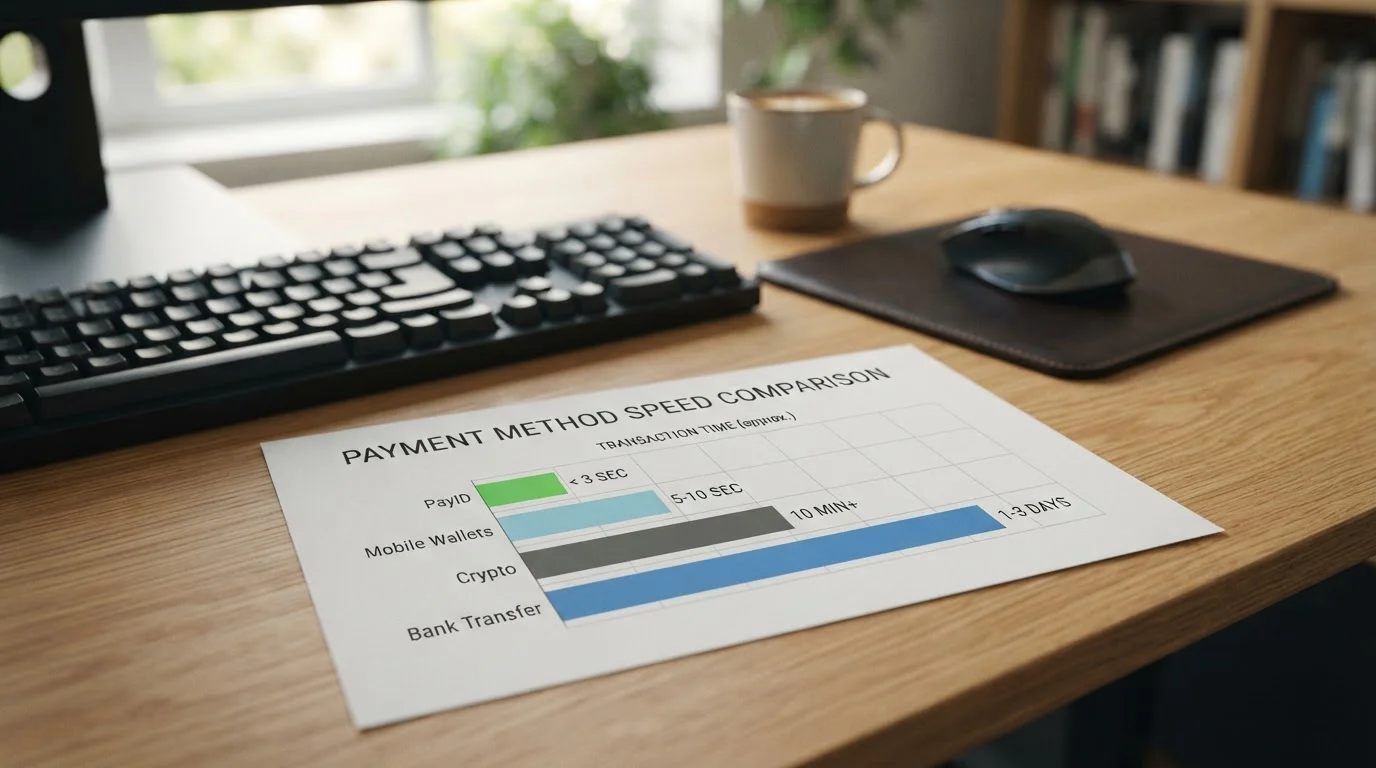
You’ve seen the operators, and you know the legal landscape. The next practical question is which mobile payment method fits your deposit and withdrawal priorities. PayID, Apple Pay, Google Pay, crypto, and traditional bank transfers each trade off speed, fees, and availability. The table and breakdown below consolidate the specifics so you’re not guessing at the cashier.
| Method | Deposit Speed | Withdrawal Speed | Fees | Min Deposit | Availability at AU Casinos |
|---|---|---|---|---|---|
| PayID | 6–60 seconds | 1–24 hours (rarely supported) | Zero | A$5–A$30 | Widely accepted (majority of offshore operators) |
| Apple Pay | Instant (card authorization) | 1–5 business days (card refund) | Rare (card network fees may apply) | A$10–A$30 | Widely accepted (most operators with card processing) |
| Google Pay | Instant (card authorization) | 1–5 business days (card refund) | Rare (card network fees may apply) | A$10–A$30 | Widely accepted (most operators with card processing) |
| Boku | N/A (unavailable) | N/A | N/A | N/A | Zero AU casino presence as of 2026 |
| Siru | N/A (phased out) | N/A | N/A | N/A | Zero operators accepting as of May 2026 |
| Crypto (BTC/ETH/USDT) | 10–60 minutes (network confirmation) | 2–60 minutes (after manual approval) | Network fees (A$1–A$10 depending on chain) | A$10–A$50 | Universal at offshore operators |
| Bank Transfer | 1–3 business days (pre-NPP) | 1–3 business days | Zero (bank-to-bank domestic) | A$10–A$50 | Widely accepted |
| Cards (Visa/Mastercard) | Instant (authorization) | 1–5 business days (refund) | Rare for deposits, common for withdrawals (2%–5%) | A$10–A$30 | Universal |
PayID dominates for deposit speed and fee-free convenience. You’re moving money from your bank account to the casino in under a minute with zero intermediary costs. The catch is withdrawal support—most offshore casinos don’t offer PayID withdrawals because they lack Australian NPP-connected bank accounts. If you’re depositing with PayID, plan to withdraw via crypto (fastest) or bank transfer (slowest but still free).
Apple Pay and Google Pay offer biometric convenience but are functionally identical to card deposits. The casino processes them as Visa or Mastercard transactions, so deposit speed is instant, but withdrawal speed matches card refunds (1 to 5 business days). Fees are rare for deposits but can appear as international transaction fees if the casino’s merchant account is denominated in USD or EUR. For players who value Face ID or fingerprint authentication over entering card details, mobile wallets are a marginal upgrade. For anyone prioritizing withdrawal speed, they’re no better than standard cards.
Crypto (Bitcoin, Ethereum, Tether) is the de facto fast withdrawal method at offshore casinos. Deposits take 10 to 60 minutes depending on network congestion and required confirmations (Bitcoin typically requires 1 to 3 confirmations, Ethereum 12 to 30, Tether on Tron network is near-instant). Withdrawals process in 2 to 60 minutes after the casino’s manual approval, which can add hours or a day depending on the operator’s cashier workflow. Network fees range from A$1 to A$10 depending on blockchain and congestion. For players willing to set up a crypto wallet, this is the fastest full-cycle payment method (deposit and withdrawal). For those unfamiliar with crypto, the learning curve outweighs the speed advantage.
Traditional bank transfers (non-PayID, non-NPP) take 1 to 3 business days for both deposits and withdrawals. No fees for domestic bank-to-bank transfers. Minimum deposits A$10 to A$50. This is the slowest option but the most universally understood. If you’re depositing larger sums (A$500+), bank transfers bypass card network limits and don’t require learning crypto. The tradeoff is waiting days instead of seconds.
Boku and Siru are listed for completeness but have zero functional availability in Australia as of 2026. If you’re searching for these methods, redirect to PayID or crypto.
What payment method is fastest for withdrawals at Australian casinos?
Cryptocurrency (Bitcoin, Ethereum, Tether) is fastest, with withdrawals clearing in 2 to 60 minutes after the casino’s manual approval. PayID withdrawals, where supported, take 1 to 24 hours. Most offshore casinos don’t offer PayID withdrawals, so crypto becomes the default fast option. Bank transfers and card refunds take 1 to 5 business days.
Mobile Casino Optimization and Game Selection
Payment method matters, but so does whether the casino’s mobile interface works smoothly once you’ve deposited. Offshore operators targeting Australians have converged on browser-based mobile optimization rather than standalone apps—partly because app stores (Apple’s App Store, Google Play) restrict real-money gambling apps in markets where gambling isn’t domestically licensed. The result is progressive web apps and responsive designs that run in Safari, Chrome, or Firefox on iOS and Android.
Most operators in the list above (VegasNow, LuckyOnes, BetNinja, SpinsUp, RocketPlay) deliver mobile interfaces that mirror desktop functionality. Game lobbies, cashiers, account settings, and live chat load in mobile browsers without app downloads. HTML5 game engines from Pragmatic Play, Evolution, NetEnt, and Microgaming render pokies and live dealer tables natively in mobile browsers. Performance is acceptable on mid-range smartphones (iPhone 12 and newer, Samsung Galaxy S21 and newer, Google Pixel 5 and newer), though older devices may struggle with live dealer video streams over mobile data.
Game selection on mobile matches desktop libraries for most operators. VegasNow’s 10,000+ titles are accessible via mobile, though navigating that volume on a 6-inch screen requires functional search and filter tools. LuckyOnes’ 9,000+ library similarly loads on mobile, with game studios optimizing for portrait and landscape orientations. Live dealer games from Evolution (blackjack, roulette, baccarat, game shows) perform best on Wi-Fi; 4G/5G mobile data works but can introduce buffering on congested networks.
The mobile cashier experience varies more than the game lobbies. PayID deposits on mobile require switching from the casino’s browser to your banking app, initiating the transfer, then returning to the casino to see the credit. This workflow is smoother on iOS (where app switching is fluid) than on older Android devices. Apple Pay and Google Pay integrate directly in mobile browsers, eliminating the app-switching step. Crypto deposits require copying a wallet address or scanning a QR code, then switching to your crypto wallet app. For frequent mobile depositors, biometric mobile wallets (Apple Pay, Google Pay) reduce friction compared to PayID or crypto.
One mobile-specific consideration: data usage. Live dealer streams consume 100 to 300 MB per hour depending on video quality. Pokies and table games use minimal data (under 10 MB per hour for most HTML5 slots). If you’re playing on mobile data rather than Wi-Fi, live dealer sessions will chew through your data allowance quickly. Operators don’t offer data-saver modes for live streams, so the only mitigation is sticking to pokies or table games on mobile data and saving live dealer for Wi-Fi.
Withdrawal Options When PayID Isn’t Available
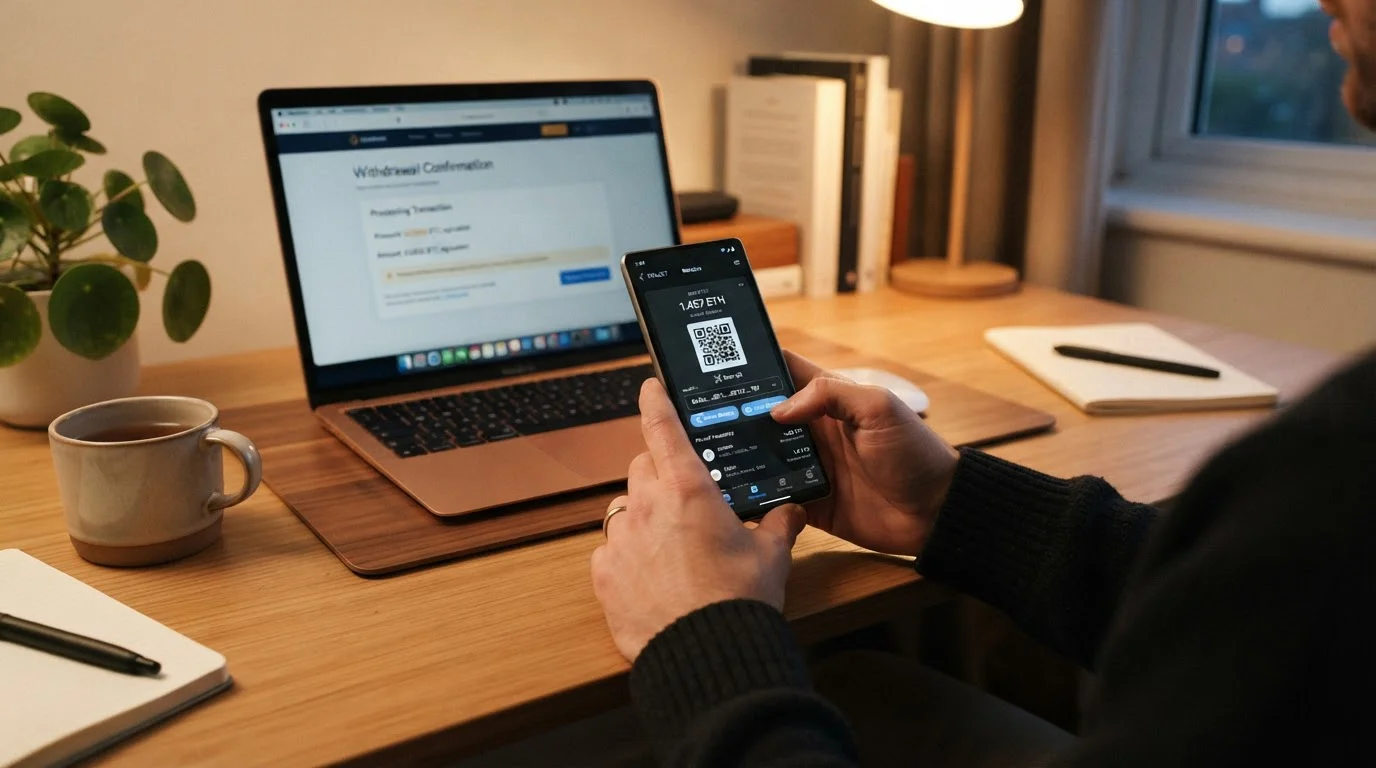
The asymmetry between PayID deposits and PayID withdrawals creates a practical problem: you’ve deposited in seconds via PayID, played, and now you’re ready to cash out—but PayID isn’t listed in the withdrawal menu. Most offshore casinos fall into this pattern, leaving you with crypto, bank transfer, or e-wallet options. Here’s how to navigate the cashout when your deposit method won’t work for withdrawal.
Cryptocurrency is the fastest alternative. If the casino offers Bitcoin, Ethereum, or Tether withdrawals, set up a wallet (Coinbase, Binance, Trust Wallet, or hardware wallet like Ledger) before requesting the withdrawal. Copy your wallet’s deposit address from your crypto wallet app, paste it into the casino’s withdrawal form, and submit the request. The casino’s manual approval adds hours to a day depending on their workflow, but once approved, crypto withdrawals clear in 2 to 60 minutes. Blockchain confirmations and network congestion affect timing—Bitcoin can take 30 to 60 minutes during high-traffic periods, while Tether on Tron network clears in under 5 minutes.
Network fees are deducted from your withdrawal. Bitcoin fees range from A$2 to A$10 depending on congestion. Ethereum fees (gas) can spike to A$20 during peak times but usually sit around A$5 to A$8. Tether on Tron network has fees under A$1. Some casinos cover the network fee for withdrawals above a certain threshold (e.g., A$500+), while others deduct it from every withdrawal. Check the cashier’s fee schedule before selecting a crypto.
Bank transfer (non-PayID, non-NPP) is the slowest but most straightforward. You provide your BSB, account number, and account name. The casino initiates an international or domestic bank transfer (depending on their banking setup). Domestic transfers within Australia take 1 to 3 business days. International transfers (if the casino’s bank account is offshore) can take 3 to 7 business days and may incur currency conversion fees if the transfer is sent in USD or EUR. Most offshore casinos serving Australians have Australian-dollar receiving accounts, so currency conversion is rare, but verify before withdrawing large sums.
Bank transfer minimums are typically A$50 to A$100, higher than crypto minimums (A$20 to A$50). Maximum withdrawals per transaction range from A$5,000 to A$10,000, with higher amounts split across multiple transfers. There’s no learning curve—if you know your BSB and account number, you can withdraw via bank transfer. The tradeoff is waiting days instead of minutes.
E-wallets (Skrill, Neteller, ecoPayz) appear on some offshore casino cashiers, though less commonly than crypto or bank transfer. E-wallet withdrawals take a few hours to 24 hours after manual approval. You’ll need a funded Skrill or Neteller account, which adds a setup step and often requires depositing via the same e-wallet to unlock it for withdrawals (casinos enforce deposit-method matching for anti-money-laundering compliance). E-wallet fees vary—Skrill charges around 2% for currency conversion if the casino sends USD, Neteller similar. For players already using e-wallets for other online services, this is a convenient middle ground between crypto and bank transfer. For those who’ve never used e-wallets, setting one up just for casino withdrawals adds complexity without meaningful speed advantages over crypto.
One universal rule: most casinos require you to verify your identity (KYC—Know Your Customer) before processing your first withdrawal. You’ll upload a photo ID (passport, driver’s license), proof of address (utility bill, bank statement), and sometimes a selfie holding your ID. Verification takes 24 to 72 hours. Submit documents immediately after your first deposit to avoid delays when you’re ready to withdraw. Crypto withdrawals still require KYC despite blockchain anonymity—casinos enforce this for licensing compliance.
The practical hierarchy for non-PayID withdrawals: crypto for speed (if you’re comfortable with wallets), bank transfer for simplicity (if you don’t mind waiting), e-wallets if you already use them. Avoid requesting withdrawals smaller than the minimum threshold—casinos often reject sub-minimum requests or hold them until you accumulate enough balance, which delays your cashout.
—
Final word. Pay-by-phone casinos in Australia mean PayID, Apple Pay, and Google Pay—not carrier billing. Boku and Siru are gone. The offshore operators listed accept mobile payments, but none are on BetStop because they’re licensed elsewhere. Deposits are instant; withdrawals lean on crypto. Set up what you need before you deposit, verify your account early, and don’t expect phone-bill charging that hasn’t existed here in years. The methods that work are faster and cheaper than the ones that don’t.
Casino Deposit Methods Australia 2026 — Full Comparison
Content created by the «Aussie Cashier» team