
Anonymous Crypto Casinos for Australians: The Honest Map to Offshore No-KYC Play 2026
 Available in AU

Australia banned online casinos two decades ago. The law hasn’t changed. The casinos moved offshore, took crypto payments, and marketed themselves as “anonymous” — a claim that deserves unpacking before you send Bitcoin anywhere.
Offshore crypto casinos accept Australian punters through a regulatory gap: the Interactive Gambling Act targets operators, not players. You won’t be prosecuted for placing bets. You also won’t be protected when things go sideways. What you get is access to a global grey market where “no-KYC” usually means “no-KYC until we decide otherwise,” withdrawal speed depends on whether you trigger a manual review, and trustworthiness boils down to how long a site has operated without vanishing overnight.
The list here maps ten offshore crypto casinos operating in 2026 that accept Australians, explains what “anonymous” actually delivers in practice, breaks down which cryptocurrencies preserve privacy and which don’t, and clarifies the legal position so you understand exactly what regulatory protection you’re walking away from when you bypass Australian banks with blockchain rails.
What Makes a Crypto Casino “Anonymous” in 2026
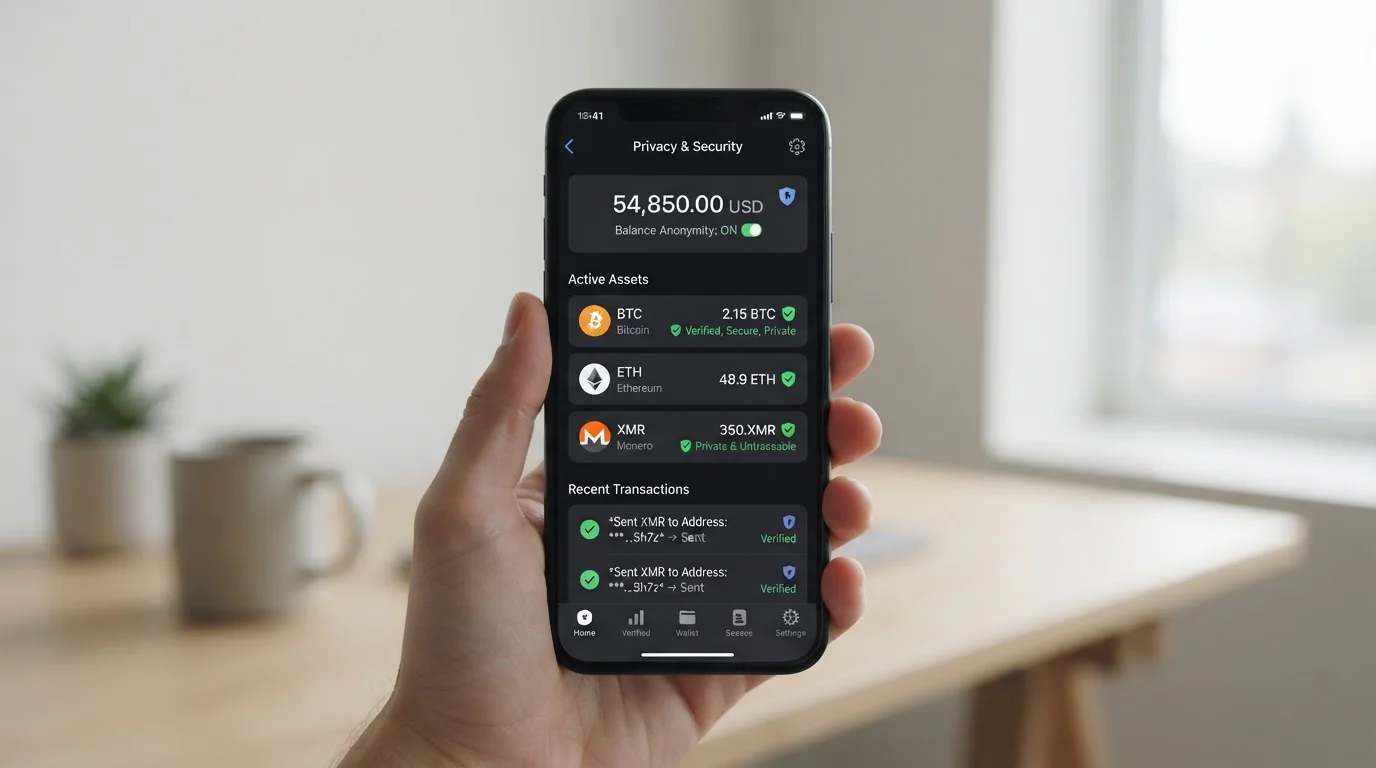
Anonymous crypto gambling sounds straightforward until you examine how it works. Most offshore casinos market “no-KYC” as if identity verification never happens. The reality is tiered: small deposits and withdrawals fly under the radar, larger amounts trigger manual reviews, and every operator reserves the right to demand documents whenever their risk algorithm flags your account.
The KYC Threshold Reality: What “No Verification” Actually Means
No major offshore casino operates with zero KYC forever. What they offer is delayed verification — you sign up with an email, deposit crypto, play, and withdraw small amounts without uploading a passport. The moment you cross an internal threshold, the documents request appears.
Stake.com auto-triggers verification around $2,000 in cumulative withdrawals. BC.Game follows a similar pattern, with some users reporting smooth sub-$2,000 cashouts and others hitting manual review walls at $1,500. GoldenCrown and Skycrown documentation is sparse, but the standard Curaçao model suggests triggers between $1,000 and $2,000. Past $10,000 in total withdrawals, almost every operator demands source-of-funds documentation — bank statements, crypto exchange records, proof of income — to satisfy nominal anti-money-laundering compliance.
The stated threshold is one thing. Behavioural flags are another. Rapid deposit-withdrawal cycles, bonus abuse patterns, VPN detection, and large single wins can all trigger manual review regardless of amount. One verified BC.Game user reported a four-minute Lightning withdrawal on a $300 cashout, then a 48-hour document hold on the next $800 withdrawal after switching wallets. The algorithm saw a pattern. The “instant” payout stopped.
Calling these casinos “truly anonymous” is marketing. They’re low-friction until they’re not. If you’re cashing out grocery money, you’ll likely never see a KYC request. If you hit a $15,000 pokie win, expect to upload your driver’s licence.
Which Cryptocurrencies Are Truly Private (Bitcoin vs Monero vs USDT)
Not all crypto is created equal for anonymity. Bitcoin is pseudonymous, not anonymous. Every transaction lives on a public blockchain. If you bought your Bitcoin through Coinbase or Binance — which demanded your ID, address, and bank details — that BTC is linked to your identity the moment it hits your wallet. When you deposit to a casino, that deposit is traceable on-chain. When you withdraw, same story. Chain analysis firms can follow the flow.
Monero is the exception. Transactions are private by default: sender, receiver, and amount are hidden through ring signatures and stealth addresses. If a casino accepts Monero, your deposit and withdrawal are opaque to outside observers. Few casinos accept it — regulatory pressure from payment processors and licensing bodies makes XMR support rare. BC.Game supported Monero until mid-2024, then quietly dropped it. As of 2026, finding an offshore casino that takes XMR and serves Australians is harder than finding one that takes Bitcoin.
Ethereum and USDT are as transparent as Bitcoin, with the added visibility of smart contract interactions. If you deposit USDT bought via a KYC exchange, every step is traceable: your exchange account → your wallet → the casino’s deposit address → your withdrawal wallet. Stablecoins are convenient for avoiding Bitcoin volatility, but they offer zero anonymity improvement.
| Cryptocurrency | Privacy Level | Traceability | Blockchain Visibility | Casino Acceptance | Best For |
|---|---|---|---|---|---|
| Monero (XMR) | High | None (private by default) | Hidden sender/receiver/amount | Rare in 2026 | True anonymity |
| Bitcoin (BTC) | Low | High if bought via KYC | Public addresses and amounts | Universal | Speed over privacy |
| Ethereum (ETH) | Low | High if bought via KYC | Public plus smart contract data | Common | DeFi integrations |
| USDT (Tether) | Low | Very high | Public ledger + exchange links | Very common | Stable value, not privacy |
How to Preserve Anonymity: The Practical Workflow
If you’re chasing actual anonymity, the workflow matters more than the casino.
Buy crypto without KYC. Peer-to-peer exchanges, Bitcoin ATMs, or privacy-focused swap services let you acquire crypto without handing over ID. You’ll pay a premium — P2P rates run 5-10% above spot. The trade-off is no paper trail linking your name to the funds.
Use a self-custody wallet. Exchange wallets are custodial — the exchange controls the keys and knows every transaction. A self-custody wallet (Electrum, Wasabi, Samourai for Bitcoin; Cake Wallet or Monerujo for Monero) keeps transactions off third-party servers.
Deposit with a fresh address each time. Reusing the same wallet address links all your casino activity together. Generate a new deposit address for each session. When you withdraw, send to a fresh address, not the one you deposited from.
Accept that VPNs complicate things. Casinos flag VPN use. Not because VPNs are banned, but because rapid geo-hopping looks like multi-accounting or bonus abuse. If you connect from Sydney one day and a Singapore VPN exit node the next, expect a manual review. Some operators explicitly allow VPNs; others trigger KYC the moment they detect one. Australia isn’t geo-blocked by most offshore crypto casinos, so a VPN adds friction without clear benefit unless you’re masking your IP from your ISP.
Which cryptocurrency is the most anonymous for casino gambling?
Monero offers true anonymity — transactions are private by default, with hidden sender, receiver, and amount. Bitcoin is pseudonymous and traceable if bought via KYC exchanges. Ethereum and USDT are even more transparent. Few casinos accept Monero in 2026 due to regulatory pressure, making privacy a trade-off against convenience.
Top 10 Anonymous Crypto Casinos for Australians in 2026

These ten offshore operators accept Australian players, process crypto deposits and withdrawals, and market themselves as no-KYC or low-KYC platforms. None are licensed in Australia. All operate under Curaçao or unregulated jurisdictions. Trustworthiness comes from track record, not regulatory oversight.
BC.Game — Broadest Crypto Support, Fast Lightning Withdrawals
BC.Game has operated since 2017 under BlockDance B.V., holding a Curaçao Gaming Control Board license (OGL/2023/159/0076). It’s one of the largest crypto gambling platforms globally, with over 10,000 games spanning pokies, live dealer, and Provably Fair originals, plus a full sportsbook. The platform accepts more than 100 cryptocurrencies — BTC, ETH, USDT, DOGE, LTC, SOL, TRX, XRP, and dozens of altcoins most Aussies have never heard of. AUD isn’t supported; it’s crypto-only.
What sets BC.Game apart is speed and breadth. Lightning Network BTC withdrawals clock in around four minutes on average, one of the fastest in the industry. The gamified rewards economy — wager to earn $BC tokens, stake them for yield — adds a layer most competitors skip. BC.Game sponsors Australian sports teams, including Essendon Football Club, which lends a veneer of legitimacy rare for offshore operators.
Track record cuts both ways. Operating since 2017 means longevity, but also documented legal disputes. Curaçao court records from 2020-2021 show player funds frozen during regulatory wrangling, later released. Trustpilot reviews sit at 4.1/5, with common complaints around strict KYC on large wins. The platform auto-triggers verification around $2,000 cumulative withdrawals, and mandatory source-of-funds checks kick in past $10,000. VPN use is flagged and can trigger instant document requests. “Anonymous” here means anonymous until you’re not.
For Australian punters chasing variety and speed on small-to-mid stakes, BC.Game delivers. For large cashouts, expect friction.
Stake.com — Household Name, But KYC Triggers at $2,000
Stake.com is the Drake-endorsed, UFC-sponsored behemoth of crypto gambling. Operated by Medium Rare N.V. under a Curaçao eGaming license, Stake has run since around 2017 and commands massive brand recognition. The platform offers 6,000+ games, a full sportsbook, and accepts 22+ cryptocurrencies including BTC, ETH, DOGE, LTC, and USDT. Local fiat integration exists via MoonPay, but Australian banks block it, making crypto the only practical rail.
Stake’s marketing presence is unmatched — UFC broadcasts, Formula 1 team sponsorships, Drake partnership deals. That visibility comes with scrutiny. Publicly documented player disputes centre on KYC and account freezes, particularly on five- and six-figure wins. Verification is mandatory for withdrawals and auto-triggers around $2,000. Source-of-funds checks past $10,000 are standard. Some users report balances frozen under “sole discretion” AML clauses, with resolution timelines stretching weeks.
Stake is fast for verified accounts and small withdrawals. The Provably Fair originals (Plinko, Dice, Crash) are slick. But calling Stake “anonymous” is a stretch. It operates a delayed-KYC model where small players slip through and large winners get the full compliance treatment. The household name buys trust; the KYC threshold buys the operator legal cover.
GoldenCrown — Aussie-Focused, Combines Crypto + PayID
GoldenCrown launched in 2020 and relaunched under new management in late 2022, operated by Hollycorn N.V. with a Curaçao Gaming Control Board license (OGL/2023/176/0136). The platform explicitly targets the Australian market, offering AUD currency support alongside crypto (BTC, ETH, LTC, USDT, DOGE, XRP, BCH) and — unusually for an offshore operator — PayID for AUD deposits.
The game library ranges from 4,000 to 10,000 titles depending on the source, with a heavy pokies focus and live dealer tables from Evolution and Ezugi. The welcome bonus scales up to A$10,000-$15,000 across four deposits plus 100-300 free spins, competitive for the offshore tier. Crypto cashouts are cited at 2-4 hours, faster than the 12-24 hour industry average but slower than BC.Game’s Lightning rails.
GoldenCrown shares a parent entity with Skycrown (Hollycorn N.V.), suggesting shared operational infrastructure. Community reputation is mixed — newer operations attract both praise for speed and complaints about delayed payouts. The platform markets “no verification for everyday play,” likely triggering KYC at $1,000-$2,000 withdrawals or on manual review flags. The Aussie focus — AUD support, PayID integration, local payment method familiarity — makes onboarding smoother than pure crypto-only platforms, but don’t mistake convenience for anonymity. The PayID rail links directly to your Australian bank account, obliterating any privacy crypto might offer.
Skycrown — Sister Site to GoldenCrown, 24-Hour Crypto Cashouts
Skycrown launched between 2022 and 2023 under SkyCrown Gaming N.V. or the same Hollycorn parent as GoldenCrown (sources are inconsistent). The platform holds a Curaçao Gaming Authority license (No. 365/JAZ or 8048/JAZ). Like its sister site, Skycrown targets Australians with AUD currency, PayID support, and crypto rails (BTC, ETH, LTC, USDT, DOGE).
The game count sits above 5,000, pokies-heavy, with live dealer options from Evolution. Welcome bonuses range from A$3,000 to $8,000 plus free spins. Skycrown markets 24-hour crypto cashouts, slower than GoldenCrown’s cited 2-4 hours but still within the fast tier for offshore operators.
Being newer (2022-2023) means limited independent track record. Watchdog sites flag alleged RTP reductions on some slots, though verification is sparse. Community sentiment skews mixed — affiliate rankings place Skycrown near the top, but independent player reviews are thin. The shared Hollycorn infrastructure with GoldenCrown suggests operational stability, but also that both platforms likely share KYC thresholds and compliance triggers. Expect “no upfront KYC” marketing with verification kicking in at $1,000-$2,000 withdrawals or on manual flags.
Skycrown is a solid mid-tier option for Aussies comfortable with a newer operation. Just don’t confuse a 2022 launch date with the battle-tested longevity of BC.Game or Stake.
Hellspin — Mid-Tier Operator, 1-3 Hour Crypto Withdrawals
Hellspin entered the market around 2021 under a Curaçao-registered entity (license specifics vary by source, typical of light-touch Curaçao regulation). The platform offers 3,000-7,000+ games with a pokies focus, AUD support, crypto rails (BTC, ETH, LTC), and PayID for AUD deposits. Live dealer tables come from Evolution and Pragmatic Play. The welcome bonus ranges from A$450 to $1,200 plus 100-500 free spins, modest compared to GoldenCrown or BC.Game. A VIP program with 4-12 tiers adds loyalty structure.
Hellspin markets fast crypto withdrawals, cited at 1-3 hours in some sources and up to 12 hours in others. Measured timings likely depend on withdrawal amount and account status — small cashouts process faster, larger amounts hit manual review queues. The mid-tier positioning means less brand recognition than Stake but more operational history than Skycrown or Crownplay.
KYC thresholds aren’t publicly specified, suggesting the standard Curaçao model: no upfront verification, triggers at $500-$2,000 withdrawal depending on the operator’s risk appetite. Hellspin has operated long enough (since 2021) to avoid the “new and untested” label, but not long enough to build the reputation cushion of a 2017-era platform. For Australian punters seeking a middle ground between household names and emerging operators, Hellspin fits. Just manage expectations: mid-tier operators often run tighter margins, which can translate to slower support and stricter withdrawal scrutiny when something goes sideways.
LuckyOnes — High Affiliate Rating, Limited Public Track Record
LuckyOnes appears near the top of Australian affiliate rankings, often rated 9.9/10. The platform operates as an offshore crypto casino, likely under a Curaçao license (standard for this tier). Game library size, exact crypto support, and operational specifics are sparse in independent sources.
High affiliate ratings signal strong commission structures for referrers, not necessarily strong player experience. LuckyOnes pays affiliates well, which buys top placement in “best crypto casinos for Aussies” listicles. Independent verification of withdrawal speeds, KYC thresholds, and dispute resolution is minimal. The platform likely accepts BTC, ETH, and major altcoins, follows the standard Curaçao no-upfront-KYC model, and triggers verification somewhere between $500 and $2,000.
Affiliate-driven prominence without matching community reputation is a yellow flag, not a red one. LuckyOnes might be perfectly functional. Or it might prioritise affiliate payouts over player cashouts. Without verified operational history, it’s a gamble on top of a gamble. If you’re testing LuckyOnes, keep initial deposits small and withdraw early to test cashout speed before committing larger amounts.
CrazyTower — Emerging Operator, Crypto-First
CrazyTower sits at 9.8/10 in affiliate rankings, another offshore crypto casino with limited public information. The platform likely holds a Curaçao license and follows the crypto-first model common to this tier. Game library, supported cryptocurrencies, and operational details are sparse outside affiliate-generated content.
Like LuckyOnes, CrazyTower’s high affiliate rating reflects referral commissions, not independently verified player satisfaction. The “emerging operator” label means minimal track record — no documented history of how the platform handles disputes, large withdrawals, or KYC triggers. The standard Curaçao model likely applies: no upfront verification, tiered KYC at $500-$2,000, manual review on flags.
Emerging operators can be legitimate. They can also vanish overnight. CrazyTower’s sparse public footprint makes due diligence difficult. Approach with caution, test with small amounts, and treat early cashouts as reconnaissance. If the platform processes a $200 withdrawal smoothly, it’s a better signal than any affiliate ranking.
Crownplay — Affiliate Favorite, Sparse Independent Verification
Crownplay ranks at 9.7/10 in affiliate lists, likely operating under a Curaçao license with crypto support. Independent verification of the platform’s operational details — game library, supported coins, withdrawal speeds, KYC thresholds — is minimal. The pattern repeats: high affiliate placement, sparse community reputation, limited public track record.
The name “Crownplay” invites confusion with GoldenCrown and Skycrown (both under Hollycorn N.V.), but no verified connection exists. If Crownplay shares infrastructure with the Hollycorn pair, it would inherit their operational characteristics. Without confirmation, treat it as a separate entity.
Affiliate-driven rankings are not inherently dishonest, but they measure affiliate revenue, not player outcomes. Crownplay might deliver smooth crypto cashouts and low-friction play. It might also delay withdrawals, trigger unexpected KYC, or impose terms-and-conditions clauses that weren’t visible at signup. Test small, withdraw early, and escalate deposits only after confirming the platform honours its stated processes.
Cashed — Newer Platform, Crypto Support
Cashed ranks at 9.6/10 in affiliate lists, another offshore crypto casino with minimal independent verification. The platform likely operates under a Curaçao license, accepts major cryptocurrencies, and follows the standard no-upfront-KYC model. Specifics on game library, withdrawal speeds, and KYC thresholds are sparse.
Being newer means limited dispute history — which could signal clean operations or simply that not enough players have tested the platform at scale. Affiliate prominence without matching community reviews is the same pattern as LuckyOnes, CrazyTower, and Crownplay. These platforms pay well for referrals, which buys visibility. Player experience is less documented.
Cashed’s lower affiliate rating (9.6/10 versus 9.9/10 for LuckyOnes) might reflect commission differences, not operational quality. Or it might reflect early negative feedback filtering into affiliate assessments. Without verified data, it’s speculation. The advice remains: small deposits, early withdrawals, and scepticism toward marketing claims until you’ve confirmed the platform’s actual behaviour.
CoinPoker — Poker Specialist, Not a Traditional Casino
CoinPoker launched in 2018 under Cake Entertainment N.V. with a Curaçao Gaming Control Board license. Unlike the previous nine, CoinPoker is a poker room, not a casino. It offers Texas Hold’em, Omaha, and tournaments — player-versus-player games, not house-edge pokies or table games. The platform is crypto-only (BTC, ETH, USDT, plus a native CHP token) and uses blockchain-verified shuffle for Provably Fair RNG.
Poker rooms have different KYC dynamics than casinos. Collusion and bot detection drive stricter identity verification. CoinPoker’s crypto-only model may delay KYC triggers compared to fiat poker sites, but specifics aren’t publicly documented. The 2018 launch date provides a longer track record than most of the affiliate-driven newcomers.
CoinPoker appears on “anonymous crypto casino” lists because it accepts crypto and Australian players, but it’s not a casino in the traditional sense. If you’re chasing pokies, live dealer, or table games, CoinPoker won’t deliver. If you’re a poker player seeking crypto-native action with blockchain-verified fairness, it’s one of the few options serving Australians.
| Operator | License | KYC Threshold | Top Cryptos | Withdrawal Speed | Welcome Bonus | Years Operating | Trust Signal |
|---|---|---|---|---|---|---|---|
| BC.Game | Curaçao OGL/2023/159/0076 | ~$2,000 cumulative | 100+ (BTC, ETH, LTC, DOGE, SOL, TRX, XRP) | 4min (Lightning BTC) | Up to 5 BTC or A$30k equiv | 2017+ (8 years) | AFL sponsor, Trustpilot 4.1/5 |
| Stake.com | Curaçao eGaming | ~$2,000 (auto-trigger) | 22+ (BTC, ETH, DOGE, LTC, USDT) | Fast (verified accounts) | Varies | 2017+ (8 years) | UFC/F1 sponsor, Drake partnership |
| GoldenCrown | Curaçao OGL/2023/176/0136 | ~$1,000-$2,000 | BTC, ETH, LTC, USDT, DOGE, XRP, BCH | 2-4 hours | A$10k-15k + spins | 2020/relaunch 2022 | Hollycorn N.V., PayID support |
| Skycrown | Curaçao 365/JAZ | ~$1,000-$2,000 | BTC, ETH, LTC, USDT, DOGE | 24 hours | A$3k-8k + spins | 2022-2023 | Sister to GoldenCrown |
| Hellspin | Curaçao (license varies) | ~$500-$2,000 | BTC, ETH, LTC | 1-12 hours | A$450-1,200 + spins | 2021+ (4 years) | Mid-tier, VIP 4-12 tiers |
| LuckyOnes | Likely Curaçao | Not specified | Likely BTC, ETH, majors | Not specified | Not specified | Unknown | Affiliate 9.9/10, sparse public data |
| CrazyTower | Likely Curaçao | Not specified | Likely BTC, ETH, majors | Not specified | Not specified | Unknown | Affiliate 9.8/10, emerging |
| Crownplay | Likely Curaçao | Not specified | Likely BTC, ETH, majors | Not specified | Not specified | Unknown | Affiliate 9.7/10, no verified connection to Hollycorn |
| Cashed | Likely Curaçao | Not specified | Likely BTC, ETH, majors | Not specified | Not specified | Unknown | Affiliate 9.6/10, newer platform |
| CoinPoker | Curaçao | Not specified | BTC, ETH, USDT, CHP token | Not specified | Poker room bonuses | 2018+ (7 years) | Provably Fair poker, blockchain-verified RNG |
Do no-KYC casinos really never ask for ID verification?
No. “No-KYC” means no upfront verification at signup, not zero verification forever. Most offshore casinos trigger ID checks at withdrawal thresholds between $500 and $2,000, with mandatory source-of-funds documentation past $10,000. Behavioural flags — VPN use, rapid cashouts, large wins — can trigger manual review regardless of amount.
How Fast Are Crypto Withdrawals Really? (Instant vs Reality)

“Instant withdrawals” is the offshore casino industry’s favourite lie. Some cashouts process in minutes. Others take days. The difference comes down to internal approval queues, blockchain confirmation times, and whether your account triggers a manual review.
What “Instant” Actually Means: Casino Approval vs Blockchain Confirmations
Casino withdrawal speed has two components: internal processing and blockchain settlement. When you request a cashout, the casino’s system queues the transaction for approval. Automated systems process small, routine withdrawals immediately. Larger amounts, first-time cashouts, or flagged accounts hit a manual review queue where a compliance officer checks for bonus abuse, multi-accounting, or AML red flags. That review can take minutes or days.
Once approved, the casino broadcasts the transaction to the blockchain. Settlement time depends on the cryptocurrency. Bitcoin takes 10-60 minutes for 1-6 confirmations. Ethereum settles in 1-5 minutes for 12-30 confirmations. USDT on Tron’s TRC-20 network is fastest among stablecoins at 1-3 minutes. Bitcoin’s Lightning Network — a layer-two solution — settles in seconds, making it the fastest option when supported.
“Instant” in marketing materials usually means “processed immediately by our system,” not “funds in your wallet in seconds.” The blockchain doesn’t care about marketing. Physics — or in this case, distributed consensus algorithms — impose minimum settlement times. A casino can’t make Bitcoin confirmations faster than the Bitcoin network allows.
Measured Withdrawal Times: BC.Game, Stake, GoldenCrown Compared
BC.Game delivers measured four-minute average withdrawals via Bitcoin Lightning Network. Standard BTC withdrawals (on-chain) take 10-60 minutes depending on network congestion and the casino’s fee settings. Small amounts under $500 process automatically. Larger cashouts sometimes hit manual review, extending timelines to hours or overnight.
Stake.com processes withdrawals quickly for verified accounts in good standing. Users report sub-10-minute cashouts for BTC, ETH, and USDT once past initial KYC. First withdrawals take longer — expect 1-4 hours as the system flags new cashout requests for review. Unverified accounts attempting withdrawals over $2,000 get stuck in compliance limbo until documents are uploaded and approved, which can stretch days.
GoldenCrown cites 2-4 hour crypto cashouts, slower than BC.Game but faster than the industry’s 12-24 hour average. Measured experience varies: some users report smooth 2-hour cashouts, others encounter 12+ hour delays on first withdrawals or amounts above $1,000. The Hollycorn N.V. infrastructure appears to batch process withdrawals rather than streaming them individually, creating predictable windows (morning and evening Australian time) where cashouts move fastest.
Hellspin’s cited 1-3 hours lands between GoldenCrown and BC.Game, though some sources report up to 12 hours for larger amounts. Skycrown’s 24-hour window is conservative — likely an upper bound covering manual review worst-cases rather than typical processing time.
Affiliate-driven platforms (LuckyOnes, CrazyTower, Crownplay, Cashed) lack verified withdrawal timing data. Treat marketing claims with scepticism until you’ve tested a cashout yourself.
Why Your First Withdrawal Is Always Slower
First withdrawals trigger manual review at almost every offshore casino. The compliance team checks that the withdrawal wallet differs from known exchange hot wallets (which would suggest you’re using the casino as a mixer), that your play patterns don’t match bonus abuse scripts, and that your account hasn’t been flagged for multi-accounting. This review takes 1-24 hours depending on queue depth and time zone.
Subsequent withdrawals process faster because your account has cleared initial scrutiny. Automated systems handle repeat cashouts to the same wallet. Change wallets, switch cryptocurrencies, or suddenly withdraw ten times your usual amount, and you’re back in the manual review queue.
The lesson: test withdrawal speed with a small amount first. If you deposit $500 and immediately withdraw $450 to verify the casino honours cashouts, you’ve learned the most important thing about that platform — whether it actually pays. Marketing promises are cheap. A confirmed withdrawal in your wallet is data.
How fast are crypto withdrawals at anonymous casinos?
Fastest measured: 2-10 minutes via Bitcoin Lightning Network (BC.Game). Typical fast: 1-4 hours for BTC, ETH, USDT on established platforms (Stake, GoldenCrown, Hellspin). First withdrawals always take longer due to manual review. Blockchain confirmation times — BTC 10-60min, ETH 1-5min, USDT-TRC20 1-3min — set the physical floor. Casinos can delay, but can’t beat the blockchain.
The Australian Legal Reality: Playing at Offshore Crypto Casinos in 2026

Australia doesn’t license online casinos for residents. The Interactive Gambling Act 2001 prohibits operators from offering casino games to people physically in Australia. It does not prohibit Australians from playing. That distinction creates a regulatory gap where offshore casinos serve Australian punters, the Commonwealth has no practical enforcement mechanism against individual players, and consumer protection is zero.
What the Interactive Gambling Act 2001 Actually Says
Section 15 of the IGA prohibits providing interactive gambling services — defined as online casino games, pokies, and in-play sports betting — to persons physically in Australia. The Act targets service providers (the casinos), not service users (the punters). No Australian has been prosecuted for placing bets at an offshore casino. Enforcement focuses on ISP-level domain blocking and financial transaction disruption.
The 2026 Amendment (Gambling Reform Act No. 72, assented 26 August 2026) strengthened ACMA’s blocking powers and introduced stricter advertising restrictions, effective 1 January 2027. It did not create a licensing pathway for online casinos, expand the prohibition to players, or establish a legal framework for regulating offshore operators. Australian law still treats online casino operation as prohibited and online casino play as not-prohibited-but-not-protected.
Why Australia Has No Licensed Online Casinos
The IGA’s prohibition reflects a policy choice from 2001: permit land-based casinos (heavily taxed, state-regulated) and licensed sportsbooks, but ban online casino games and pokies to limit gambling harm. States issue licences for sports betting (TAB, Sportsbet, Ladbrokes) and land-based casino operations (Crown, Star, SkyCity). No state or territory has authority to license online casinos for Australian residents under the federal IGA framework.
Lobbying for reform comes from two directions: brick-and-mortar casino operators seeking online expansion, and offshore operators seeking legitimacy. Neither has succeeded. The federal government’s position — reflected in the 2026 Amendment — is harm minimisation through prohibition, not harm minimisation through regulation. That stance leaves Australian punters with a binary choice: obey the intended spirit of the law and avoid online casinos entirely, or use offshore operators in a legal grey zone with zero recourse.
The Player vs Operator Distinction: Why You Won’t Be Prosecuted
The IGA’s drafting makes prosecution of individual players impractical. Section 15 prohibits “providing” interactive gambling services, not “receiving” them. No provision criminalises an Australian placing a bet at an offshore website. ACMA enforcement targets operators — blocking domains, disrupting payment rails, and (rarely) pursuing foreign operators in their home jurisdictions.
Federal Police resources focus on serious organised crime: match-fixing syndicates, money laundering through gambling platforms, and offshore operators specifically targeting Australians through misleading advertising. A Sydney resident depositing $200 at BC.Game and playing pokies doesn’t register as a law enforcement priority. Not because it’s legal, but because it’s practically unenforceable and politically unpopular to prosecute individual punters for victimless offences.
The distinction matters for understanding risk. You won’t face criminal charges for playing at offshore crypto casinos. You will face zero consumer protection when disputes arise. Australian courts won’t enforce a Curaçao operator’s terms and conditions. ACMA won’t help you recover funds from a rogue platform. The trade-off is access for autonomy: you can play wherever you want, but you’re on your own when things go wrong.
What “Zero Consumer Protection” Means in Practice
Offshore casinos operate outside Australian regulatory oversight. If Stake freezes your account, GoldenCrown refuses a withdrawal, or CrazyTower vanishes overnight with player funds, you have no Australian regulator to file a complaint with. Curaçao eGaming, the licensing body for most offshore operators, offers a dispute resolution process in theory. In practice, it rarely sides with players against licensees. Licensing fees fund the regulator; economic incentives align with operators, not punters.
Your remedies are limited: escalate through the casino’s internal dispute process (often futile), post on community forums to damage reputation (marginally effective for established operators, useless for fly-by-night platforms), or write off the loss. Chargeback mechanisms don’t exist for cryptocurrency transactions — blockchain settlement is final. No Australian consumer protection law, no ACCC enforcement, no ombudsman.
The practical implication: treat offshore casinos as high-trust environments where reputation is the only enforcement mechanism. Established operators (BC.Game, Stake) with years of operation, public sponsorships, and active communities are safer bets than affiliate-driven newcomers with no verified track record. But “safer” is relative. Even household names freeze accounts, delay payouts, and impose terms you didn’t read at signup.
AUSTRAC, Crypto Regulation, and Gambling (Why They’re Separate)
AUSTRAC — the Australian Transaction Reports and Analysis Centre — regulates anti-money-laundering and counter-terrorism financing. As of 1 July 2026, expanded AML/CTF rules cover Virtual Asset Service Providers (VASPs): cryptocurrency exchanges, custody platforms, and crypto-to-crypto swap services. Registration was mandatory by 29 July 2026. These rules apply to exchanges where you buy crypto, not offshore casinos where you spend it.
When you buy Bitcoin through an Australian exchange (CoinSpot, Swyftx, Independent Reserve), that exchange operates under AUSTRAC oversight. They collect your ID, report large transactions, and flag suspicious activity. Once you withdraw BTC to a self-custody wallet, AUSTRAC’s visibility ends. Your subsequent deposit to an offshore casino happens on-chain, peer-to-peer, outside Australian regulatory reach.
Offshore crypto casinos aren’t AUSTRAC-registered, don’t report to Australian authorities, and operate beyond AML/CTF enforcement. That’s part of the appeal — no Australian government entity tracks your gambling activity. It’s also part of the risk — no Australian government entity intervenes when an offshore operator exhibits signs of insolvency or fraud.
Are anonymous crypto casinos legal in Australia in 2026?
Playing at offshore crypto casinos is not illegal for Australians under the Interactive Gambling Act — the law targets operators, not players. No Australian has been prosecuted for placing bets. But these casinos operate illegally by offering services to Australians, giving you zero regulatory protection. Disputes are resolved in foreign jurisdictions with no ACCC or ombudsman recourse. Legal to play, illegal to offer, unprotected either way.
Why Aussies Use Crypto Casinos: The Banking Backstory
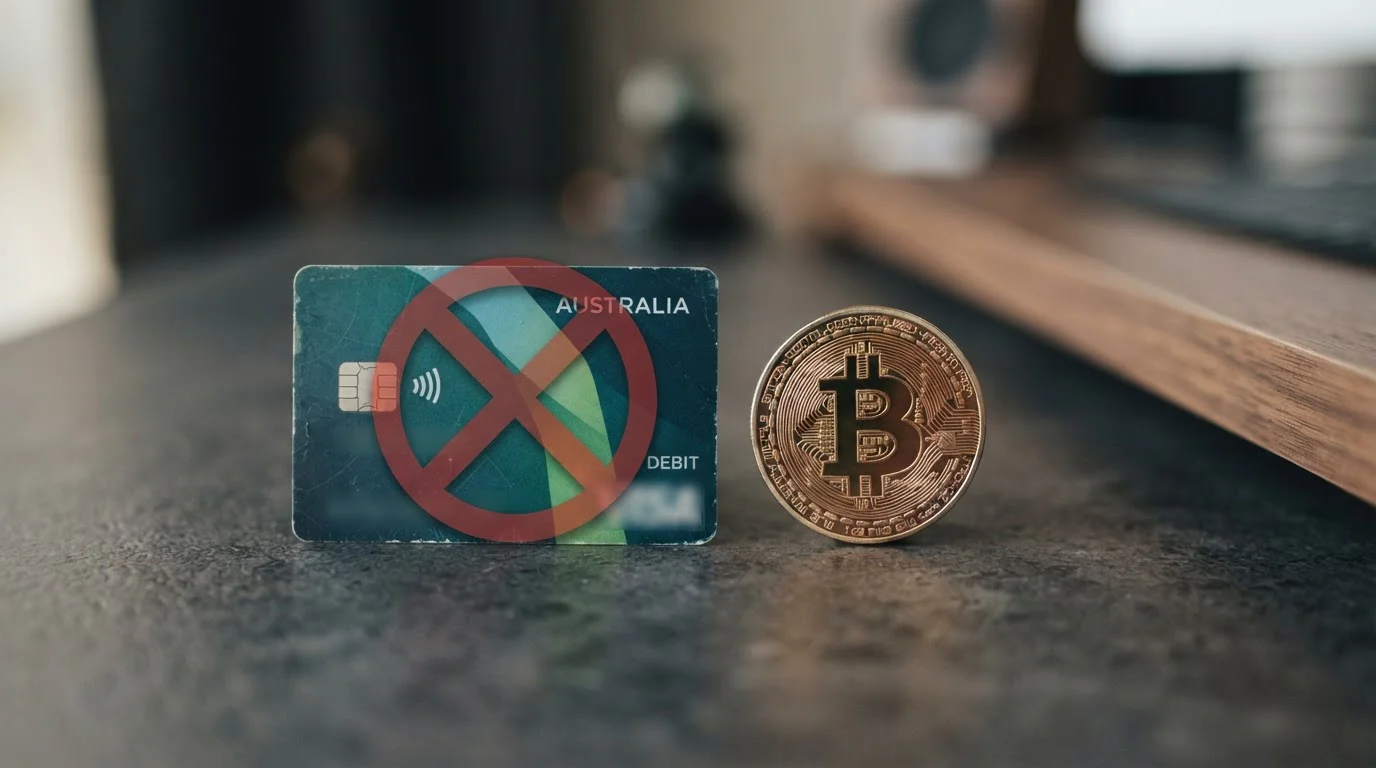
Crypto casinos aren’t just about anonymity. For many Australian punters, cryptocurrency is the only payment rail that reaches offshore operators after domestic banks cut off fiat channels. Understanding why requires unpacking three years of tightening restrictions.
The June 2024 Credit Card Ban
In June 2024, Australia’s major banks prohibited credit card transactions to online gambling platforms following government pressure. The ban targeted harm minimisation — preventing punters from gambling with borrowed money. Debit cards still work for Australian-licensed sportsbooks (TAB, Sportsbet), but offshore casinos were excluded from domestic payment networks entirely.
The restriction isn’t encoded in law. It’s a voluntary industry standard adopted by Commonwealth Bank, NAB, Westpac, and ANZ under implicit regulatory threat. Payment processors followed: Visa and Mastercard transactions flagged as gambling-related to offshore merchants are declined at Australian issuing banks.
For offshore casinos targeting Australians, credit card revenue evaporated overnight. Operators that relied on fiat deposit rails had two choices: exit the Australian market or pivot to crypto. Most pivoted.
Why PayID Only Works at Licensed Sportsbooks
PayID is Australia’s instant bank transfer system, built on the New Payments Platform. It’s the slickest deposit method for Australian punters — no cards, no forms, just a phone number or email linked to your bank account and real-time AUD settlement. Sportsbet, TAB, and other licensed sportsbooks integrated PayID in 2022-2023.
Offshore casinos can’t access PayID. The New Payments Platform requires an Australian banking relationship. Offshore operators — licensed in Curaçao, registered in Cyprus, servers in Malta — don’t hold Australian bank accounts. Even if they did, Australian banks wouldn’t service gambling operators violating the IGA. PayID remains a walled garden for licensed domestic operators only.
GoldenCrown and Skycrown claim PayID support, unusual for offshore operators. Verification is murky: if real, they’re routing through a third-party Australian payment processor willing to skirt the IGA (high regulatory risk). If marketing bluff, the “PayID” label masks a different rail (POLi, bank transfer) behind familiar branding. Either way, PayID is not a reliable offshore deposit method for the typical Aussie punter.
How Banks Block Offshore Casino Transactions
Australian banks block offshore gambling transactions through merchant category code (MCC) filtering. When you swipe a card or initiate a bank transfer, payment networks attach an MCC identifying the merchant type. Gambling operators use MCC 7995 (betting) or 7801 (internet gambling). Banks flag these codes and decline transactions to merchants not on domestic whitelist.
Card transactions to offshore casinos trigger automatic declines. Bank transfers depend on the receiving bank’s jurisdiction: transfers to Maltese or Cypriot IBANs raise AML flags, and Australian banks scrutinise or delay them under “fraud prevention” pretexts. E-wallet services (Skrill, Neteller) that historically bridged the gap saw Australian banks block transactions to those platforms too, cutting off another fiat rail.
The squeeze is intentional. Without criminalising individual play (politically unpalatable), the Commonwealth and banks collaborate to make offshore gambling inconvenient. Blocking payment rails is enforcement-by-friction: technically legal play becomes practically inaccessible unless you find an alternative.
Crypto as the Bypass: Peer-to-Peer, No Bank Middleman
Cryptocurrency transactions bypass banks entirely. When you send Bitcoin to a casino’s deposit address, settlement happens on the blockchain through miner consensus. No bank sees the transaction, no MCC identifies the recipient, no payment processor enforces geographic restrictions.
Australian banks can’t block a blockchain transaction. They can block fiat on-ramps — buying crypto with AUD — but once you hold BTC in a self-custody wallet, moving it to an offshore casino is permissionless. The bank sees AUD leaving your account to buy crypto at an exchange. They don’t see where that crypto goes afterward.
This is why offshore casinos pivoted hard to crypto post-2024. It’s not just privacy. It’s the only payment rail Australian banks haven’t successfully choked. Crypto transformed from a niche option for privacy-conscious punters into the default deposit method for any Australian accessing offshore operators. The anonymity is a bonus. The accessibility is the necessity.
Can Australian banks block crypto deposits to offshore casinos?
No. Once you hold cryptocurrency in a self-custody wallet, banks have no visibility into where you send it. Blockchain transactions bypass payment networks, MCCs, and bank controls entirely. Banks can block fiat on-ramps (buying crypto with AUD), but can’t stop you from moving already-held crypto to a casino’s deposit address. Crypto is peer-to-peer; banks are cut out of the transaction.
Bonuses at No-KYC Crypto Casinos: What to Expect
Offshore crypto casinos compete on bonuses. Lacking regulatory oversight or brand trust, they front-load value to acquire players. Welcome packages routinely hit $10,000-$30,000 or multi-Bitcoin equivalents across several deposits. Read the terms before you claim. That “free” money comes with wagering requirements, maximum bet limits, and game restrictions that make bonus balance harder to clear than your own deposits.
| Operator | Welcome Bonus | Wagering Requirement | Max Bet During Wagering | Validity Period | Crypto Deposit Boost |
|---|---|---|---|---|---|
| BC.Game | Up to 5 BTC or ~A$30k equiv across 4 deposits | 40x bonus | $5-10 per spin | 30 days | Native $BC token staking rewards |
| Stake.com | Varies (reload bonuses, rakeback) | Varies by promo | Varies | Varies | Crypto-only, no fiat bonus |
| GoldenCrown | A$10,000-$15,000 + 100-300 free spins across 4 deposits | 35-40x bonus | A$5-7 per spin | 30 days | Crypto and AUD bonuses separate |
| Skycrown | A$3,000-$8,000 + free spins | 35-40x bonus | A$5-7 per spin | 30 days | Crypto and AUD bonuses separate |
| Hellspin | A$450-$1,200 + 100-500 free spins | 35x bonus | A$5 per spin | 21-30 days | Modest compared to competitors |
| LuckyOnes | Not specified | Not specified | Not specified | Not specified | Affiliate-driven, terms opaque |
| CrazyTower | Not specified | Not specified | Not specified | Not specified | Affiliate-driven, terms opaque |
| Crownplay | Not specified | Not specified | Not specified | Not specified | Affiliate-driven, terms opaque |
| Cashed | Not specified | Not specified | Not specified | Not specified | Affiliate-driven, terms opaque |
| CoinPoker | Poker rakeback, tournament tickets | N/A (poker room) | N/A | N/A | Crypto-only poker rewards |
Wagering requirements multiply the bonus amount by 35-40x. A $1,000 bonus at 40x wagering means you must wager $40,000 before converting bonus balance to withdrawable cash. Maximum bet limits (typically $5-10 per spin) slow progress. High-RTP games (blackjack, video poker) are often excluded, forcing you into pokies. Validity periods (21-30 days) create time pressure. Miss the deadline, and uncleared bonus balance vanishes.
Crypto-specific bonuses sometimes offer better terms. BC.Game’s native $BC token economy rewards wagering with stakeable tokens that generate yield outside the bonus system. Stake’s rakeback model returns a percentage of house edge as cashback, claimable without wagering requirements. These structures favour regular players over one-time bonus chasers.
The offshore bonus ecosystem is an arms race. Casinos offer unsustainable promotions to acquire players, hoping enough lose their deposits quickly to offset the bonus cost. You’re not being “gifted” $10,000. You’re being loaned $10,000 of house money with a 40x repayment obligation and a three-week deadline. Some punters clear bonuses profitably. Most don’t. Treat bonuses as extended playtime, not free money.
Games, Pokies, and Provably Fair: What You’ll Actually Play

Offshore crypto casinos stock 3,000-10,000+ titles from 30-60 providers. The library skews heavily toward pokies (slots) because Australians are pokies-obsessed. Live dealer gets a section. Table games (blackjack, roulette, baccarat) fill out the roster. Crypto-native platforms add Provably Fair originals — simple games with blockchain-verified RNG.
Pokies (Slots) — The Core of Every AU Crypto Casino
Pokies dominate because Aussies play them. Pragmatic Play, NetEnt, Microgaming, Betsoft, Hacksaw Gaming, and Nolimit City supply the bulk of offshore libraries. Titles you’d recognise from land-based venues (Buffalo, Lightning Link, Queen of the Nile) appear as online clones or spiritual successors. High-volatility slots (big wins, long dry spells) attract crypto punters comfortable with variance.
RTP — return to player — typically sits at 94-97% for offshore pokies, slightly below the 97-99% Australian land-based standard but higher than many jurisdictions. Game fairness is unverified. Curaçao licensing doesn’t mandate independent RTP audits. Offshore operators self-report payout percentages, and players have no practical recourse if actual RTP is lower.
Provably Fair pokies solve this through blockchain-verifiable RNG. BC.Game, Stake, and crypto-native platforms offer originals (Plinko, Crash, Dice, Mines) where every bet’s outcome is cryptographically provable. You can verify that the platform didn’t manipulate the result after seeing your wager. Provably Fair doesn’t guarantee better odds — house edge remains — but it guarantees honest RNG.
Live Dealer Games: Evolution, Ezugi, Pragmatic Play Live
Live dealer tables stream real croupiers dealing real cards or spinning real roulette wheels. Evolution Gaming dominates, supplying blackjack, roulette, baccarat, and game-show hybrids (Crazy Time, Monopoly Live) to almost every offshore operator. Ezugi and Pragmatic Play Live offer cheaper alternatives for mid-tier casinos.
Live dealer is slower than RNG slots and less profitable for casinos (higher operating costs), but it delivers the land-based experience remote punters crave. Minimum bets run $1-10 AUD-equivalent, higher than pokies’ $0.10-1 spins but accessible for casual players. VIP tables start at $100-500 per hand.
Australians chasing social interaction or skeptical of RNG fairness gravitate to live dealer. The transparency — watching a human shuffle physical cards — feels safer than trusting a random number generator you can’t inspect. It’s an illusion of control, but a comforting one.
Provably Fair Originals: Blockchain-Verified RNG
Provably Fair is crypto gambling’s native innovation. Traditional RNG is a black box: the casino generates random numbers via an algorithm, you trust the process is honest, regulators (theoretically) audit. Provably Fair makes RNG transparent: before each bet, the casino commits to a hashed seed, you provide a client seed, and the combination determines the outcome cryptographically. After the round, the server reveals its seed, and you verify the result matched the pre-committed hash.
If the casino cheated — altered the outcome after seeing your bet — the revealed seed wouldn’t match the original hash. Blockchain immutability ensures the casino can’t rewrite history. You can independently verify every Provably Fair bet you’ve ever placed.
Stake, BC.Game, and crypto-native platforms offer Provably Fair games: Plinko (drop a ball through pegs), Crash (bet on a multiplier before it crashes), Dice (guess high or low), Mines (click tiles without hitting mines). Simple mechanics, instant rounds, verifiable fairness. House edge remains (typically 1-2%), but you know the edge is honest.
New Anonymous Casinos vs Established Operators: Which to Trust?
Offshore crypto casinos span the trust spectrum. BC.Game and Stake have operated since 2017 with public sponsorships and millions in player volume. LuckyOnes and CrazyTower launched recently with affiliate backing and no verified track record. Picking between them is a bet on reputation versus novelty.
Longevity is the strongest trust signal. A casino operating since 2017 has processed billions in wagers, survived regulatory changes, and built community reputation. If BC.Game intended to rug-pull, it would have done so during 2020-2021 liquidity crunches when regulatory disputes froze assets. It didn’t. Stake faced public KYC controversies and account freezes but kept paying withdrawals. Years operating without catastrophic failure matter more than any marketing claim.
Public sponsorships are reputational hostages. Stake sponsors UFC and F1 teams. BC.Game sponsors Australian football clubs. These deals cost millions and hinge on brand reputation. A rug-pull would trigger immediate sponsorship termination and public scandal. Not foolproof — sports sponsorships don’t prevent selective scamming or slow-rolling big winners — but they signal the operator values long-term reputation over short-term theft.
Community reputation is messier but revealing. Reddit, Bitcointalk, and Trustpilot reviews span from glowing praise to scam accusations. The pattern matters more than individual reviews. If complaints cluster around specific issues (delayed KYC, terms disputes) rather than outright non-payment, the operator is likely legitimate but litigious. If withdrawal complaints outnumber deposits 10:1 and the operator ghosts support requests, that’s a red flag.
New casinos offer better bonuses, aggressive promotions, and sometimes smoother UX. They also offer zero operational history. A 2024 launch means no verified data on how the platform handles disputes, large withdrawals, or economic downturns. You’re the guinea pig. Some new operators are fronts for established infrastructure (Skycrown sharing Hollycorn with GoldenCrown). Others are solo ventures by operators you’ve never heard of, operating from jurisdictions you can’t verify.
Curaçao licenses are ubiquitous and meaningless. The licensing body collects fees, issues permits, and provides legal cover. It doesn’t audit RNG, enforce payout ratios, or mediate disputes effectively. A Curaçao license proves the operator paid the licensing fee. It doesn’t prove trustworthiness. Track record does.
Is it safe to deposit large amounts at offshore crypto casinos?
Risk scales with amount and operator. Established platforms (BC.Game, Stake) with 8+ years operating, public sponsorships, and active communities are safer for deposits under $10,000. Past that threshold, expect strict KYC and source-of-funds checks. New platforms (LuckyOnes, CrazyTower, Cashed) lack verified track records — test with small amounts first. No offshore casino is “safe” by Australian regulatory standards; you’re trading consumer protection for access.
VPNs, Geo-Blocking, and Account Safety
Most offshore crypto casinos don’t geo-block Australia. The IGA prohibits them from serving Aussies, but enforcement is ACMA domain blocking, not operator self-restriction. Casinos welcome Australian traffic; they just won’t advertise it loudly. VPNs add complexity without clear benefit for Australian punters.
VPN use triggers casino compliance systems. Rapid geo-hopping — Sydney one day, Singapore the next — looks like multi-accounting or bonus abuse. Some operators explicitly allow VPNs; others flag accounts for manual review. BC.Game’s terms permit VPNs but warn that suspicious patterns trigger KYC. Stake’s terms are vaguer, and user reports suggest VPN detection leads to withdrawal delays.
Australia isn’t geo-restricted at most offshore crypto casinos, so a VPN’s primary purpose — bypassing geo-blocks — is irrelevant. The secondary purpose — masking your IP from your ISP or government — is marginal. Australian authorities don’t prosecute individual players. Your ISP doesn’t report casino visits to federal police. The threat model doesn’t justify the friction.
VPNs make sense if you’re using public Wi-Fi or distrust your ISP’s data handling. They make less sense if you’re triggering casino compliance systems that delay withdrawals. Each use case is individual. Test without a VPN first. If the casino blocks access, then deploy one. Adding a VPN preemptively introduces a variable that complicates troubleshooting when withdrawals hit snags.
Do I need a VPN to access anonymous crypto casinos from Australia?
No. Most offshore crypto casinos don’t geo-block Australia. Using a VPN can trigger compliance flags — casinos interpret IP-hopping as multi-accounting or bonus abuse, potentially delaying withdrawals. VPNs add privacy from your ISP but friction with the casino. Since Australian authorities don’t prosecute individual players, the threat model doesn’t justify the trade-off. Use a VPN only if the casino blocks Australian IPs.
Selection Criteria: How We Ranked These Casinos
These ten casinos were selected for operational presence in the Australian market (accepting AUD or crypto from Aussie IPs), documented crypto deposit and withdrawal support, and verifiable track record or affiliate prominence. Rankings prioritise longevity (years operating), trust signals (sponsorships, community reputation), and measured withdrawal speeds over bonus size or game count.
BC.Game and Stake rank highest due to 2017 launch dates, public sponsorships, and extensive community feedback. GoldenCrown, Skycrown, and Hellspin follow as mid-tier operators with 2020-2021+ operating history and measurable Australian market presence. LuckyOnes, CrazyTower, Crownplay, and Cashed appear based on affiliate prominence despite limited independent verification — they’re included because Aussies encounter them in search results, but flagged for sparse track records. CoinPoker is listed as a poker specialist, not a traditional casino.
Criteria weighted:
- Longevity — platforms operating 5+ years earn higher trust
- License transparency — verifiable Curaçao license numbers, known legal entities
- Measured withdrawal speed — documented cashout times from community sources
- Crypto breadth — number and variety of accepted cryptocurrencies
- KYC threshold transparency — documented trigger points, not vague “no-KYC” claims
- Community reputation — Trustpilot, Reddit, and forum feedback
- Australian market focus — AUD support, PayID integration, pokies-heavy libraries
Not weighted: bonus size (unsustainable promotions are marketing, not value), game count (10,000 titles with 95% filler isn’t better than 3,000 curated), or Curaçao license existence (ubiquitous and non-differentiating).
Responsible Gambling at Anonymous Casinos

Offshore casinos market anonymity and instant access. Neither protects you from gambling harm. No KYC means no verification of age, income, or gambling history. No Australian regulatory oversight means no mandatory harm-minimisation tools, self-exclusion registries, or intervention when spending patterns indicate problem gambling.
Responsible gambling at offshore casinos is self-imposed. Set deposit limits before you play. Use separate wallets for gambling funds — never deposit from your primary savings wallet. Withdraw winnings immediately rather than leaving balances in casino accounts. Treat crypto gambling as entertainment spending, not income generation.
Australian harm-minimisation resources apply regardless of where you play. Gambling Help Online (1800 858 858) offers 24/7 phone and webchat support. Financial counselling services through the National Debt Helpline (1800 007 007) assist with gambling-related debt. Self-exclusion from land-based venues (via state regulators) doesn’t block offshore casinos, but registering intent with a counsellor creates accountability.
Offshore casinos profit when you lose. The house edge guarantees it. Bonuses, VIP programs, and rakeback are retention mechanisms, not generosity. If gambling stops being entertainment and starts being a way to recover losses, you’ve crossed into harm. Australian-licensed operators are legally required to detect and intervene. Offshore operators aren’t. The responsibility is yours.
Crypto Casinos Australia 2026 — Bitcoin, Ethereum, USDT, Solana
Content created by the «Aussie Cashier» team