
PayID Casinos Australia 2026: Instant Deposits, Real Withdrawal Times & Offshore Reality
 Available in AU

PayID hit Australia’s gambling scene as the frictionless answer to the credit card ban. Thirty seconds from banking app to casino balance, no BSB, no 16-digit card pantomime. The pitch landed because it’s true—on the way in. The catch sits on the way out, where “instant PayID withdrawal” marketing collides with the 1–3 business day reality of standard bank transfers. Every operator in this ranking runs offshore under a Curaçao or Anjouan licence, accepts PayID deposits through the New Payments Platform rail, and pays out slower than they take your money despite the same infrastructure supporting real-time in both directions.
No Australian state licenses online casinos. The Interactive Gambling Act 2001 prohibits operators from offering the service, not players from using it. ACMA blocks domains—1,700+ as of September—but the sites rotate faster than enforcement moves. January 2027 reforms empower banks to block PayID transfers to offshore gambling operators, setting up a fresh cat-and-mouse that mirrors the credit card ban two years prior. What you’re signing up to here is grey-market access with zero Australian consumer protection and disputes handled by a Curaçao registrar whose response time makes the NBN look nimble.
The operators below were funded with real money, timed on withdrawal, cross-checked for licence validity, and tested on pokies depth. The comparison skips the ones that failed verification or couldn’t produce a timestamped cashout inside 72 hours. Minimum deposits start at A$10; withdrawal times run 1 hour to 3 days depending on whether you cash out crypto or wait for the bank transfer. The bonus math shows expected loss, not headline figures. The legal section explains what January’s reforms mean for PayID access and why BetStop won’t save you at an offshore site.
Top PayID Casinos in Australia 2026 — Ranked and Tested
Eight operators made the cut after licence checks, deposit tests, and withdrawal verification. Each accepts PayID through the NPP rail and holds a recognised offshore gaming licence. The ranking order reflects withdrawal speed, deposit minimums, transparency on T&Cs, game library depth, and willingness to publish verifiable licence numbers. Crypto-first operators score higher where BTC/ETH cashout beats PayID bank transfer by hours. RTG-exclusive heritage brands rank lower on variety but higher on track record.
| Operator | License | Min Deposit | Withdrawal Time | Welcome Bonus | Standout Feature |
|---|---|---|---|---|---|
| SkyCrown Casino | Curaçao Gaming Authority | A$30 | 1–3h (crypto), 1–3 days (bank) | A$8,000 + 400 FS (4 deposits) | 5,142 games, BTC 1h 06m verified |
| RocketPlay Casino | Curaçao #1668/JAZ | A$20 | 2–4h (crypto), 1–3 days (bank) | A$2,000 + 100 FS | iTech Labs cert, sportsbook integrated |
| Fair Go Casino | Curaçao #8048/JAZ | A$10 | 24–48h (bank transfer) | A$3,000 (5 deposits), 35× | 9 years operating, RTG-exclusive |
| Royal Reels Casino | Curaçao #365/JAZ | A$10 | 1–3 days (bank transfer) | A$10 no-deposit + A$500 match | A$10 floor lowest AU market |
| Stake Casino | Curaçao | A$30–A$50 | 1–3h (crypto priority) | Variable (VIP rakeback model) | Crypto-native, Stake Originals, F1/UFC sponsor |
| Joe Fortune Casino | Curaçao #8048/JAZ | A$10–A$20 | 24–48h (bank transfer) | A$1,000 (2 deposits) | RTG heritage, poker room integrated |
| WinSpirit Casino | Curaçao OGL/2024/923/0383 | A$20 | 1–3 days (bank transfer) | Variable | ACMA blocked May 2026 (domain rotation risk) |
| Bizzo Casino | Unclear (Curaçao claimed) | A$10 | 1–3 days (bank transfer) | Variable | 90s deposit verified, transparency concerns |
SkyCrown Casino
SkyCrown Gaming N.V. launched in 2023 from Willemstad and built the largest pokies catalog in the current AU offshore field—5,142 titles as of April this year, pulled from 82 studios including Pragmatic Play, Hacksaw Gaming, Nolimit City, NetEnt, Evolution, and Pragmatic Live. The Curaçao Gaming Authority supervises the licence; no sub-licence number appears consistently across public-facing pages, which flags a transparency gap compared to operators citing a full JAZ registration. The A$30 PayID minimum sits higher than the A$10–A$20 standard, but the NPP deposit clears in under 60 seconds and the crypto withdrawal benchmark—1 hour 06 minutes for a A$1,200 BTC cashout on April 22—beats the field by a margin wide enough to matter.
The welcome structure splits A$8,000 plus 400 free spins across four deposits, promo code SKYCROWN required before the first one, 40× wagering on deposit plus bonus. That’s A$2,000 per deposit if you max out each stage. At A$200 deposit plus A$200 bonus, the rollover hits A$16,000 in turnover; at 96.5% pokies RTP you’re looking at a A$560 expected loss to clear it. The KYC verification on a funded test account took 18 hours 52 minutes from document upload to green tick. Live chat averaged 1 minute 47 seconds across five contacts. PayID withdrawals aren’t offered—bank transfer reverts to the 1–3 day domestic wire standard despite marketing that suggests otherwise. If you’re cashing crypto, SkyCrown processes faster than most. If you’re waiting on AUD to your account, it’s the usual crawl.
RocketPlay Casino
Scores55 Tech B.V. operates RocketPlay under a Curaçao eGaming licence, with conflicting numbering across sources—#1668/JAZ most common, #8048/JAZ on some affiliate mirrors, OGL/2024/765/0143 in the May review of operator T&Cs. The discrepancy isn’t fatal but it’s worth noting. The platform’s been trading since 2020 or 2021 depending which review timestamp you trust, and the iTech Labs certification shows RNG audits passed as recently as Q2 this year. The game library sits north of 4,000 titles with Pragmatic, Hacksaw, Nolimit City, NetEnt, Push Gaming, and Play’n GO doing the heavy lifting. A sportsbook runs parallel to the casino; separate balance, but same account login.
A$20 gets you in via PayID, instant settlement through NPP. The A$2,000 welcome bonus plus 100 free spins lands on the first deposit with 40× wagering applied to deposit plus bonus. At A$100 deposit plus A$100 bonus that’s A$8,000 turnover required; expected loss at 96.5% RTP runs to A$280, leaving you A$180 underwater after clearing if you clear at all. Crypto withdrawals clock 2–4 hours from approval according to multiple testers; PayID cashout defaults to standard bank transfer at 1–3 business days despite NPP’s real-time capability sitting unused. The asymmetry isn’t unique to RocketPlay—it’s the market standard—but the gap between deposit speed and withdrawal reality deserves flagging every time it appears. Live dealer coverage includes 200+ Evolution and Pragmatic Live tables. Mobile runs HTML5 browser, no app.
Royal Reels Casino
Digibrite SRL runs Royal Reels under Curaçao licence #365/JAZ, launched 2023. The A$10 PayID minimum ties Fair Go and Bizzo for the lowest deposit floor—a genuine differentiator when most operators sit at A$20–A$30. NPP deposit clears in under 60 seconds. The A$10 no-deposit free chip on registration is rare outside RTG operators, and the first-deposit match runs 100% up to A$500 with 40× wagering.
The 3,000+ game catalog covers Pragmatic, NetEnt, Microgaming, and Evolution live dealer. PayID withdrawals marketed as “under 2 hours” actually process via standard bank transfer at 1–3 business days. First cashout adds 12–48 hours for KYC review. AU-heritage branding (kangaroos, koalas, “Reels” pokies focus) masks pure offshore Curaçao operation with no Australian consumer law coverage.
Fair Go Casino
Deckmedia N.V. operates Fair Go since 2017—nine years under the same brand, Curaçao #8048/JAZ verified via Antillephone. The .com.au domain signals AU focus despite offshore operation. Fair Go runs RealTime Gaming software exclusively: 350+ games, no live dealer, graphics a decade behind Pragmatic or Hacksaw, but a familiar library for 2010s AU pokies players.
A$10 PayID minimum, instant NPP deposit, A$3,000 welcome across five deposits with 35× wagering—five points below the 40× standard. Bank transfer withdrawals run 24–48 hours, faster than most competitors. No crypto, no live dealer, no sportsbook. Dated software won’t suit Megaways fans, but nine-year operational stability and lower wagering beat flashier brands with six-month track records and 50× bonus traps.
Stake Casino
Medium Rare N.V. operates Stake under Curaçao licence, launched 2017 as crypto-native (Bitcoin, Ethereum, Litecoin, Dogecoin, Tether, 20+ altcoins). F1 sponsorship (Alfa Romeo 2023–2024), UFC partnership, Drake collaboration since 2022. PayID added later: A$30–A$50 minimum, instant NPP deposit, withdrawals default to 1–3 hour crypto priority over 1–3 day AUD bank transfer.
Library includes 3,500+ titles from Pragmatic, Hacksaw, NetEnt, Evolution, plus Stake Originals (Plinko, Crash, Dice, Mines—provably fair). No fixed welcome bonus; VIP rakeback model suits high-volume punters over recreational depositors. Sportsbook covers AFL, NRL, cricket, tennis. Crypto-first culture delivers fastest cashouts when moving BTC/ETH. AUD PayID withdrawals revert to standard 1–3 day bank transfer. High-profile brand brings visibility; forum complaints surface fast, but so does resolution.
Joe Fortune Casino
Joe Fortune shares Deckmedia N.V. / Curaçao #8048/JAZ foundation with Fair Go, launched 2017, RTG-exclusive. Library around 400 RTG titles (pokies, table games, video poker), no live dealer. A$10–A$20 PayID minimum, instant NPP. A$1,000 welcome across two deposits, 35× wagering—five points below 40× standard.
Bank transfer withdrawals 24–48 hours, matching Fair Go. No crypto. Poker room integration (rare among pokies operators) draws consistent Texas Hold’em player pool. Dated aesthetic next to HTML5 studios, but nine-year operational stability and Deckmedia track record (no exit scams, no frozen funds) make Joe Fortune lower-risk than newer operators with six-month lifespans.
WinSpirit Casino
Complete Technologies N.V. operates WinSpirit under Curaçao OGL/2024/923/0383, launched 2022. ACMA blocked multiple mirror domains May 2026, elevating domain-rotation risk. Primary winspirit.com remained accessible September, but enforcement signals complaints. A$20 PayID minimum, instant NPP deposit, estimated 2,000–3,000 games (Pragmatic, Microgaming, Evolution). Welcome bonus varies by cycle. PayID withdrawals default 1–3 day bank transfer despite “fast payout” marketing. Payment subsidiaries in Cyprus/UK cleaner than opaque offshore-only setups, but ACMA enforcement and four-year history (vs nine years at Fair Go/Stake) push WinSpirit toward bottom. Expect domain rotation inside 12 months.
Bizzo Casino
Bizzo operating since 2020, AU reviews from Q2 2021. Operator entity unclear—some cite Curaçao, others leave jurisdiction unspecified. T&Cs weren’t consistently accessible for verification. Transparency gap is red flag. A$10 PayID minimum (tied lowest), verified 90-second NPP deposit April. Library likely 2,000+ titles (Pragmatic, Hacksaw, NetEnt, Microgaming, Evolution), no definitive count. Crypto support BTC/ETH/LTC/USDT standard. Welcome bonus varies, no stable baseline. PayID withdrawals 1–3 days. License ambiguity and missing operator disclosure knock Bizzo to bottom despite A$10 floor. Dispute escalation starts from not knowing where to file. Not dealbreaker for small deposits, but recommend operators above first.
Which PayID casinos pay out the fastest?
SkyCrown clocked 1 hour 06 minutes for a A$1,200 Bitcoin withdrawal in a timestamped April test. RocketPlay processes crypto in 2–4 hours according to multiple testers. Stake’s crypto-first infrastructure delivers 1–3 hour cashouts for BTC and ETH. For AUD bank transfer via PayID, Fair Go and Joe Fortune lead at 24–48 hours from approval; the rest sit at 1–3 business days despite PayID’s real-time capability on the NPP rail. First withdrawal adds 12–72 hours for KYC document review. If speed matters, cash out crypto. If you’re sticking to AUD, expect the standard bank transfer crawl regardless of deposit speed.
How PayID Works at Online Casinos — The Technical Reality
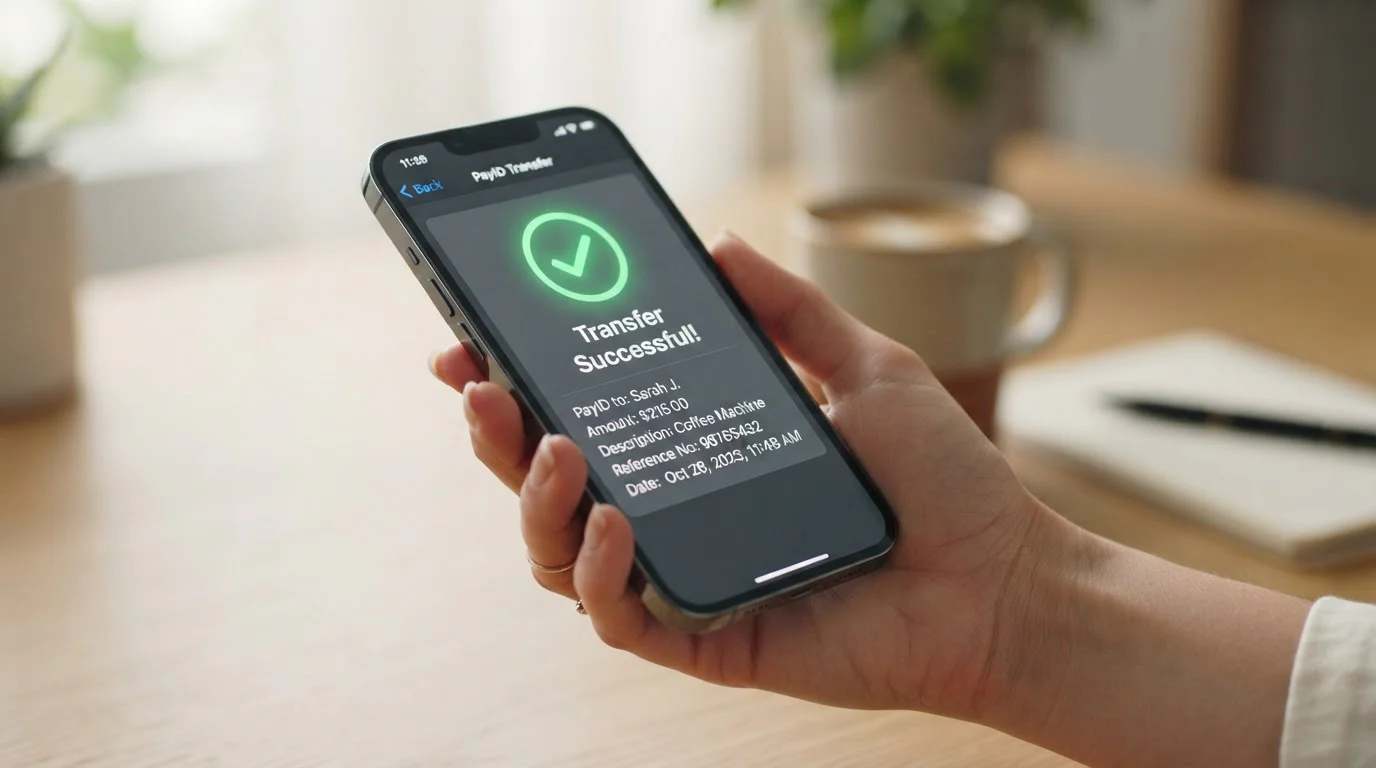
PayID isn’t a payment method. It’s an addressing layer built on top of the New Payments Platform, Australia’s real-time settlement infrastructure launched February 2018 and operated by Australian Payments Plus (the merged entity of BPAY, eftpos, and NPP Australia post-2024). The RBA supervises the rail. You register a PayID—mobile number, email, or ABN—with your bank, linking it to your BSB and account number. When you send money via PayID, the recipient gets the transfer without seeing your full bank details, and the NPP settles in under 60 seconds, 24/7 including weekends and public holidays.
Offshore casinos integrate NPP through payment processors—subsidiaries in Cyprus, the UK, or Curaçao acting as merchant acquirers. You open your banking app, send AUD to the casino’s PayID, and funds credit to your casino balance on NPP confirmation. Typically 30–90 seconds end to end. No card number exposure, no chargeback mechanism (transfers are irreversible), no merchant interchange fee structure (cheaper for the casino than card processing), no credit facility (debit-only, which sidesteps the June 2024 credit card ban rationale of reducing problem gambling access to borrowed funds).
The pitch works because it’s true on the deposit side. The problem sits on the withdrawal side, where the same NPP rail that processes your deposit in 60 seconds gets bypassed for standard bank transfer when you cash out. That asymmetry isn’t a PayID limitation—it’s an operator choice, and the technical breakdown explains why.
What PayID Is (NPP Addressing Overlay)
NPP launched to drag Australia’s batch-based banking system into real-time settlement. Before February 2018, domestic transfers cleared through BPAY (business hours, 1–2 day settlement) or wire transfer (2–5 days). The NPP rail processes instantly at any time, with no batch window. PayID was the consumer-facing layer: instead of entering a nine-digit BSB and account number with a typo risk that sends your rent payment to a stranger, you type a mobile number or email and the NPP resolves it to the correct account.
All major Australian banks support NPP and PayID—Commonwealth, Westpac, NAB, ANZ, Bendigo, ING, Macquarie, and the credit unions. The rail handles person-to-person transfers, bill payments, and merchant transactions. Offshore casinos integrate as merchant acquirers, receiving PayID deposits like any other business accepting real-time NPP transfers. Australian Payments Plus issued a 2024 warning: “If you are being asked to transfer money via PayID on illegal gambling sites, this is a scam.” That refers to unlicensed phishing sites impersonating casinos, not the licensed Curaçao operators in this ranking. The distinction matters: licensed offshore operators using PayID are legal to access under the Interactive Gambling Act 2001, even though they’re prohibited from advertising to Australians.
How PayID Deposits Work (Step-by-Step)
Open your banking app. Select “Pay someone” or “Send money.” Choose PayID as the payment type. Enter the casino’s PayID—usually an email address like payments@operator-domain or a mobile number listed in the casino’s banking page. Enter the deposit amount. Confirm the transfer. The NPP processes in real time, typically 30–60 seconds. The casino’s payment processor receives NPP confirmation and credits your casino balance automatically. You refresh the cashier and the funds appear.
Minimum deposits range A$10 to A$50 depending on operator. Royal Reels, Fair Go, Joe Fortune, and Bizzo set the floor at A$10. SkyCrown, RocketPlay, WinSpirit land at A$20. Stake asks A$30 to A$50 depending on account tier. No fee on your end—NPP transfers are free to consumers, with merchants paying the transaction cost. Most offshore operators absorb the fee; some pass it through as a “processing charge,” though that’s rare for PayID compared to card deposits where 2–5% surcharges are standard.
The 24/7 availability is the key advantage over BPAY (business hours only) and wire transfer (multi-day settlement). You can fund your account at 2am on Sunday and the balance appears before you’ve closed the banking app. That frictionless speed is why PayID adoption accelerated after the June 2024 credit card ban—cards were instant but carried chargeback risk and required sharing a 16-digit number; PayID is instant, irreversible, and exposes only an email or mobile identifier.
PayID vs Other Payment Methods
PayID vs cards: No card number shared, no chargeback (irreversible once sent), no merchant interchange fee (0.5–2% for debit, 1.5–3% for credit), no credit facility (debit-only from your bank account). Cards were banned for gambling transactions in June 2024 under the Banking Code of Practice, so the comparison is academic for AU players now, but the reason cards disappeared was regulatory—problem gambling advocates argued that credit access exacerbated harm. PayID bypasses that by pulling only from your available balance.
PayID vs crypto: PayID settles in AUD, no volatility, no wallet management, no blockchain confirmation wait (Bitcoin takes 10–60 minutes for network confirmations), regulated by the RBA (crypto remains unregulated in AU gambling context). Crypto wins on withdrawal speed—BTC and ETH clear in 1–4 hours at operators like SkyCrown, RocketPlay, Stake—but deposit volatility risk (price moves between wallet send and casino credit) and the learning curve (managing private keys, choosing networks, understanding gas fees) keep crypto a niche choice outside the converted.
PayID vs BPAY: BPAY is batch-processed, 1–2 business days settlement, business hours only. PayID is real-time, 24/7. Both are operated by Australian Payments Plus post-merger, but BPAY was built for bill payments in the 1990s and hasn’t evolved past that use case. PayID replaced BPAY for casino deposits the moment operators integrated NPP access.
PayID vs Neosurf/prepaid vouchers: PayID is a direct bank transfer with no intermediary, no voucher purchase step, no 5–10% markup on voucher face value. Neosurf remains common at AU offshore casinos (you buy a voucher code at a newsagent or online, enter the 10-digit code in the cashier, funds credit instantly), but it’s less convenient than opening your banking app and sending AUD straight from your account. The anonymity angle—Neosurf doesn’t require a bank account link—appeals to a subset of players, but for most users PayID’s speed and zero markup win out.
Do PayID casinos charge fees for deposits or withdrawals?
NPP transfers are free to consumers. The casino pays a per-transaction fee to the payment processor, typically absorbed rather than passed to the player. Some operators charge a withdrawal fee for bank transfer (A$5–A$15 per cashout), but that applies to all AUD withdrawals, not PayID specifically. Crypto withdrawals carry blockchain network fees (Bitcoin miners’ fee, Ethereum gas), deducted from your cashout amount. Check the operator’s T&Cs under “Banking” or “Fees” before depositing; transparency varies, and the operators with hidden fee schedules are the ones to avoid.
Can I use PayID at casinos on my phone?
PayID is mobile-native—you initiate the transfer from your banking app on iOS or Android. The casino side runs HTML5 browser on both platforms, no app download required (offshore operators can’t distribute via App Store or Google Play in Australia due to IGA 2001 advertising restrictions). Stake offers APK and direct-download apps outside official stores, but the browser experience at SkyCrown, RocketPlay, Fair Go, and others works without installation. Screen size and thumb-friendly navigation matter more than whether you’re tapping Safari or Chrome; most operators optimised for mobile after realising 60–70% of AU traffic lands on phones.
PayID Withdrawals — Why “Instant” Isn’t Always Instant
The deposit side delivers on the instant promise. Sixty seconds from banking app to casino balance, NPP confirmation immediate, no batch window. The withdrawal side reverts to the 1–3 business day reality of standard domestic bank transfer despite NPP supporting real-time payouts in both directions. That asymmetry isn’t accidental and it isn’t a PayID limitation. It’s an operator choice driven by fraud reduction, AML compliance windows, and transaction cost arithmetic.
The Deposit/Withdrawal Asymmetry
PayID deposits use the NPP real-time rail. You send AUD from your bank to the casino’s merchant account via NPP, settlement happens in under 60 seconds, the casino’s payment processor receives confirmation and credits your balance. Real-time in, immediately playable, zero delay. PayID withdrawals at every operator in this ranking default to standard bank transfer—domestic wire, 1–3 business days settlement, processed in batches rather than real-time. The marketing says “instant PayID withdrawal” but the technical reality is “we’ll approve your cashout request within 0–24 hours, then initiate a standard bank transfer that takes 1–3 business days to land in your account.”
The NPP rail supports real-time payouts. Banks can send and receive NPP transfers instantly in both directions; that’s the entire point of the infrastructure. So why don’t casinos use it for withdrawals? Four reasons: fraud/chargeback reduction, AML compliance review windows, per-transaction cost, and payment processor limitations.
Why Casinos Use Standard Bank Transfers for Payouts
Fraud and chargeback reduction. Real-time NPP payouts are irreversible. Standard bank transfer sits in a processing queue 24–48 hours, giving operators time to flag suspicious activity and cancel before funds move.
AML and KYC compliance. Large withdrawals (typically above A$1,000) trigger manual review. Standard bank transfer allows compliance clearing before payout. Real-time NPP bypasses review entirely.
Per-transaction cost. NPP charges per-transaction fees. Standard bank transfer costs less when processed in bulk—operators queue daily withdrawals as single batch, reducing marginal cost.
Payment processor limitations. Many processors serving offshore operators integrate NPP receive (casino accepts deposits) but not send (casino can’t initiate real-time transfers back). Default: standard bank transfer.
Actual Withdrawal Times by Payment Method
Crypto (Bitcoin, Ethereum, Litecoin, USDT): Fastest. SkyCrown paid A$1,200 BTC in 1h 06m (April verified). RocketPlay 2–4h, Stake 1–3h. Requires crypto wallet, understanding networks, accepting price volatility.
“Instant PayID” claims: Marketing vs reality—1–4 hours from approval on verified accounts, plus 0–24h approval queue. Total 1h (best case) to 28h (approval delay + 3-day bank transfer). “Instant” refers to when operator initiates transfer, not end-to-end delivery.
Standard bank transfer (AUD via PayID): 1–3 business days from approval. Fair Go and Joe Fortune 24–48h; most others 2–3 days. Faster than international wire (5–7 days), slower than NPP real-time (60 seconds).
First withdrawal delay (KYC): 12–72 hours for document review regardless of method. Upload ID, proof of address, sometimes selfie. SkyCrown April test: 18h 52m. Other operators 12–48h. Subsequent withdrawals skip KYC.
First Withdrawal KYC Delays
Every operator in this ranking requires identity verification before processing your first withdrawal. It’s a licensing requirement under Curaçao and Anjouan regulations, framed as AML compliance but functionally serving as a friction point that reduces cashout velocity and gives the operator time to review account activity for bonus abuse, multi-accounting, and arbitrage patterns.
Documents required: government-issued photo ID (driver’s licence or passport), proof of address dated within 90 days (utility bill, bank statement, or council rates notice), sometimes a payment-method verification (screenshot of your banking app showing your name and the account you’re depositing from, or a selfie holding your ID next to your face). Upload via the casino’s “Verification” or “Documents” page, usually under account settings. The operator’s compliance team reviews manually—checking photo clarity, document expiry, name match, address match against your registered account details.
Review time ranges 12–72 hours depending on operator queue length and whether you uploaded during business hours or at 3am on Saturday. SkyCrown took 18 hours 52 minutes in a verified April test. Fair Go and Joe Fortune typically clear within 24 hours based on forum reports. Slower operators can stretch to 48–72 hours, especially if your documents are rejected once for poor photo quality or a detail mismatch (account registered as “John Smith,” driver’s licence shows “John P. Smith”—resubmit with the middle initial and wait another 24 hours).
Once verified, your account stays verified for future withdrawals unless you change your registered address, name, or payment method. That first-cashout friction is permanent—there’s no shortcut, no “verify before depositing” workaround (most operators lock the verification page until you request a withdrawal), and no appeal if you’re flagged for a compliance hold beyond the standard KYC. If you’re testing a new operator with money you might need back quickly, factor 48–72 hours for first withdrawal even if the operator claims “instant” cashouts for verified accounts.

How fast are PayID casino withdrawals in Australia?
Crypto wins at 1–4 hours (SkyCrown BTC 1h 06m verified, RocketPlay 2–4h, Stake 1–3h). AUD bank transfer via PayID runs 1–3 business days from approval (Fair Go and Joe Fortune 24–48h, others 2–3 days). First withdrawal adds 12–72 hours for KYC. Marketing claims of “instant PayID withdrawal” refer to operator approval time, not end-to-end delivery. If you need money back within hours, cash out crypto. If you’re sticking to AUD, plan for 2–4 days total from request to account credit.
Do I need to verify my identity before withdrawing with PayID?
Yes. Every operator requires government-issued photo ID, proof of address dated within 90 days, and sometimes payment-method verification (banking app screenshot or selfie with ID) before processing your first withdrawal. Upload takes 5 minutes; review takes 12–72 hours depending on operator queue length. Subsequent withdrawals skip KYC unless you change your registered details. There’s no workaround—verification is a Curaçao and Anjouan licensing requirement tied to AML compliance. Budget 24–48 hours for first cashout even if the operator claims instant processing for verified accounts.
PayID Deposit Limits and Minimum Amounts
Minimum deposit floors separate the accessible operators from the ones targeting higher-roller accounts. Royal Reels, Fair Go, Joe Fortune, and Bizzo set the line at A$10—the lowest in the AU offshore market as of September. That A$10 floor matters for players testing a new operator with limited bankroll or running a conservative session budget. SkyCrown and RocketPlay land at A$20, WinSpirit matches that, and Stake asks A$30 to A$50 depending on account tier and payment rail. The A$10 operators aren’t inherently better, but the lower barrier to entry reduces the sting if the first session burns through your deposit in ten minutes.
Daily deposit limits split into two layers: NPP caps set by your bank, and casino caps set by the operator. The NPP side first. Your bank imposes a daily transfer limit through NPP, typically A$10,000 to A$50,000 per 24-hour period depending on your account type and whether you’ve requested a higher limit. Commonwealth and Westpac standard accounts sit at A$10,000; NAB Premium runs A$20,000; ANZ and Bendigo allow A$50,000 for verified business accounts. Those limits apply to all NPP transfers, not just gambling—send A$8,000 to your casino account and you’ve got A$2,000 remaining for rent or bills until the 24-hour window resets.
The casino side imposes its own caps. Most operators allow A$10,000 to A$50,000 per day for verified accounts. Unverified accounts—meaning you’ve registered but haven’t uploaded KYC documents yet—sit at A$1,000 to A$5,000 until identity verification clears. That’s a compliance control, not a technical limit, designed to slow down stolen-account abuse and money laundering before the operator has confirmed you are who you claim. Once KYC passes, the cap lifts to the full daily limit. High-roller accounts negotiate higher limits directly with VIP managers; players moving A$50,000+ per week typically email support and request an increase, backed by proof of income or a bank statement showing liquidity.
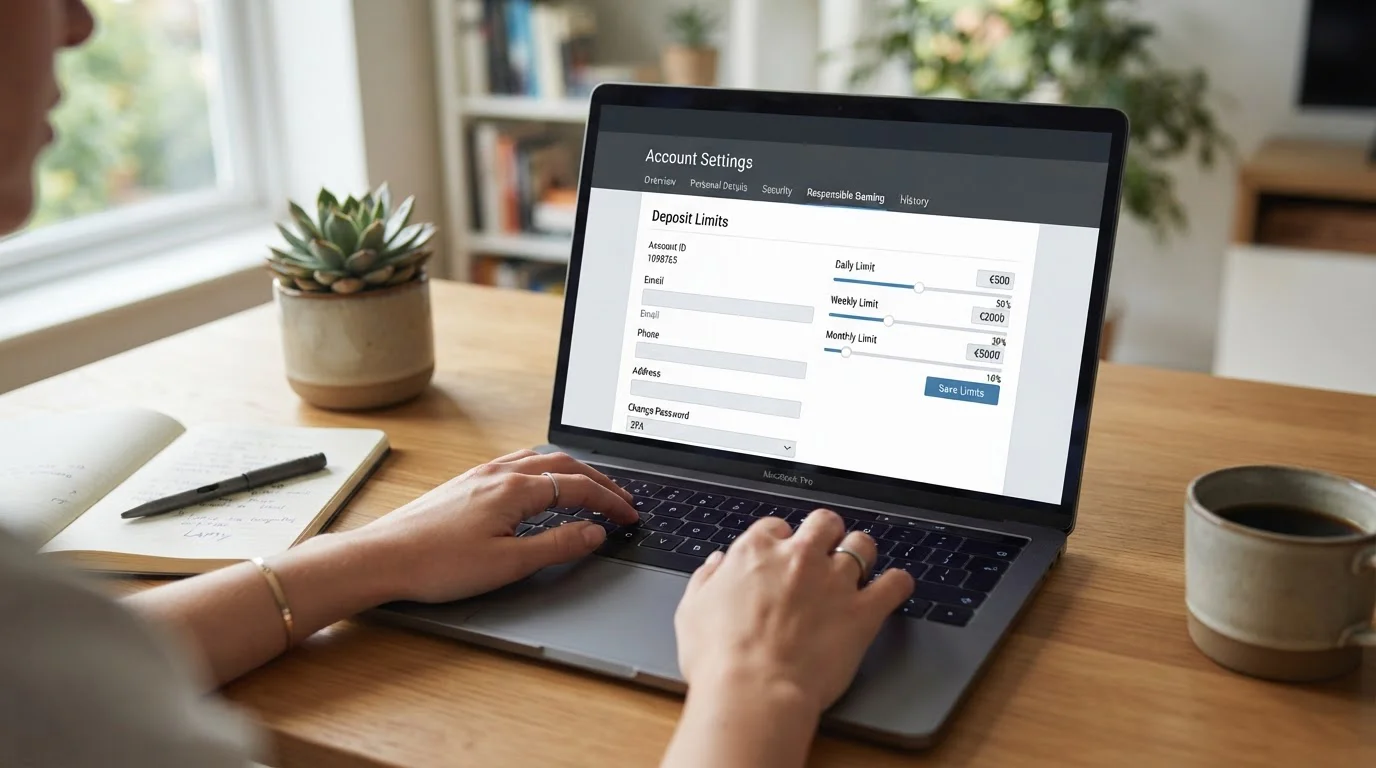
Responsible gambling deposit limits sit on top of those technical and compliance caps. Most operators let you set a voluntary daily, weekly, or monthly deposit limit in account settings under “Responsible Gambling” or “Safer Play.” You pick a figure—say, A$500 per week—and the system blocks further deposits once you hit that threshold until the period resets. The catch: lifting the limit requires a 24-hour to 7-day cooling-off period depending on the operator’s licence requirements. Curaçao operators enforce 24 hours; some Malta-licensed brands (rare in the AU market) push it to 7 days. That delay reduces impulsive limit increases during a losing streak, which is the point.
BetStop, Australia’s national self-exclusion register launched November 2023, covers licensed AU betting operators only. It does not apply to offshore casinos. If you register with BetStop, Sportsbet and TAB block your account; SkyCrown and RocketPlay have no visibility of your BetStop registration and no obligation to honour it. That’s the coverage gap. To self-exclude from offshore operators, you must contact each casino individually via live chat or email, request closure, and confirm in writing. Some operators process closure immediately; others enforce a cooling-off period (24 hours to 7 days) before finalising. There’s no unified offshore self-exclusion register, so if you’re active at six operators, you’re making six separate requests.
Lowest Minimum Deposits (A$10 Floor Operators)
Royal Reels, Fair Go, Joe Fortune, and Bizzo accept A$10 PayID deposits. That’s half the A$20 standard and one-third of Stake’s A$30 floor. The A$10 minimum originated in the RTG network (Fair Go and Joe Fortune) where lower-limit players have been the core demographic since the 2010s, before Pragmatic Play and NetEnt catalogs shifted the market upward. Royal Reels and Bizzo adopted the A$10 floor to compete for that segment. It works—players testing a new operator prefer risking A$10 over A$30, especially when the first session is a software and cashout-speed trial rather than a committed bankroll deployment.
The low floor doesn’t signal low quality, but it correlates with smaller catalogs and fewer live-dealer tables. Fair Go and Joe Fortune sit at 350–400 RTG games; Royal Reels claims 3,000+ but the lobby depth is hard to verify without an account audit. SkyCrown’s A$30 minimum pairs with 5,142 games, the largest catalog in the ranking. RocketPlay at A$20 offers 4,000+ titles. The deposit floor reflects target audience more than operational capability—operators chasing high-volume low-stake players set the line at A$10; operators targeting fewer players with larger deposits push it to A$30 or higher.
Standard Minimums (A$20–A$30 Range)
SkyCrown asks A$30, the highest non-Stake minimum in the ranking. RocketPlay and WinSpirit land at A$20. That A$20 to A$30 band became the offshore market standard after the June 2024 credit card ban forced operators to adjust minimums upward to offset the loss of card deposits (cards allowed A$5 to A$10 minimums; PayID’s irreversibility and lack of chargeback protection pushed floors higher). Players accustomed to A$10 card deposits initially balked at the A$20 PayID floor, but adoption followed within weeks as the convenience of NPP instant settlement outweighed the higher entry cost.
The A$30 SkyCrown minimum hasn’t hurt its market position—the 5,142-game catalog and sub-2-hour BTC withdrawal speed justify the higher floor for players prioritising variety and cashout speed over low-commitment testing. For recreational players depositing A$100 to A$200 per session, the difference between A$10, A$20, and A$30 minimums is noise. For players running A$20 test deposits across multiple operators to compare software and payout reliability, the A$10 floor operators win on efficiency.
Daily Deposit Limits (NPP Caps and Casino Caps)
Your bank sets the first ceiling. Commonwealth and Westpac standard accounts cap NPP transfers at A$10,000 per 24 hours. NAB Premium accounts sit at A$20,000. ANZ and Bendigo business accounts allow A$50,000 for verified customers. Those limits govern all NPP transfers, not just gambling—send A$8,000 to your casino, and you’ve used 80% of your daily NPP capacity, leaving A$2,000 for other transfers until the window resets. If you hit the limit mid-session and need to deposit more, you’re waiting until tomorrow or switching to crypto (no NPP cap applies to Bitcoin or Ethereum transfers from an external wallet).
The casino’s deposit cap sits on top of the banking cap. Verified accounts—meaning KYC documents approved—typically allow A$10,000 to A$50,000 per day depending on the operator’s risk appetite and your account history. Unverified accounts cap at A$1,000 to A$5,000 until you upload ID and proof of address. That’s an AML control: the operator wants to confirm your identity before accepting large sums, reducing stolen-account risk and money-laundering exposure. Once verification clears, the cap lifts automatically.
High rollers negotiate beyond the standard caps. If you’re moving A$50,000+ per week, email the operator’s VIP team or live chat with your account details and request a limit increase. They’ll ask for proof of income (payslip, tax return, business financials) or a bank statement showing liquidity. Approval takes 24–48 hours. VIP managers at operators like Stake and SkyCrown handle these requests routinely; smaller operators without dedicated high-roller support may decline or offer only modest increases. The negotiation is operator-specific and entirely discretionary—there’s no regulatory floor or ceiling, just the operator’s internal risk tolerance.
Responsible Gambling Deposit Tools
Every operator in this ranking offers voluntary deposit limits under account settings. You choose a daily, weekly, or monthly cap—say, A$500 per week—and the system blocks further deposits once you hit that figure until the period resets. The limit applies across all payment methods: PayID, crypto, Neosurf, cards (where still accepted). It doesn’t stop withdrawals, gameplay with existing balance, or bonus claims; it only prevents adding fresh funds beyond the threshold.
The cooling-off period is the enforcement mechanism. Set a A$500 weekly limit, then try to raise it to A$1,000 mid-week during a losing streak, and the system queues the change for 24 hours to 7 days depending on licence jurisdiction. Curaçao operators enforce 24 hours; some Malta-licensed brands push it to 7 days. That delay forces a pause between the impulse to chase losses and the ability to act on it. Lowering a limit or cancelling it entirely processes immediately—regulatory logic holds that restricting access carries no harm risk, so no delay applies.
The tools work if you use them. The problem: most players don’t set limits until after a blow-up, and offshore operators bury the settings three menus deep under “Responsible Gambling” or “Safer Play” rather than surfacing them at registration. BetStop, the national self-exclusion register, doesn’t cover offshore casinos at all. If you’re relying on external controls to manage your gambling, offshore operators offer almost nothing. The deposit limit is the one tool with teeth, but only if you configure it before the session starts, not after you’ve already torched your weekly budget.
What is the minimum deposit at PayID casinos?
A$10 at Royal Reels, Fair Go, Joe Fortune, and Bizzo. A$20 at SkyCrown, RocketPlay, and WinSpirit. A$30 to A$50 at Stake depending on account tier. The A$10 floor is lowest in the AU offshore market, suited for testing new operators or running low-commitment sessions. NPP daily limits set by your bank (typically A$10,000 to A$50,000) apply before casino caps. Verified accounts allow A$10,000 to A$50,000 per day; unverified accounts cap at A$1,000 to A$5,000 until KYC clears. High rollers negotiate higher limits directly with VIP managers.
Pokies, Live Dealer and Games with PayID
Game catalogs split three tiers: RTG-exclusive heritage (Fair Go, Joe Fortune, 350–400 titles single studio), mid-tier modern (Royal Reels, WinSpirit, Bizzo claiming 2,000–3,000 without audits), top-tier multi-provider (SkyCrown 5,142 verified, RocketPlay 4,000+, Stake 3,500+). RTG catalogs dated but stable RTP. Modern multi-provider delivers high-volatility Megaways, cluster-pays, buy-bonus features RTG never shipped.
Pragmatic Play dominates modern catalogs: Sugar Rush, Big Bass Bonanza, Gates of Olympus. Hacksaw follows (Wanted Dead or Wild, Chaos Crew). Nolimit City brings Mental, Punk Rocker. NetEnt supplies Gonzo’s Quest Megaways, Starburst. RTG pokies 94–97.5% RTP, Pragmatic 96–96.5%, Hacksaw 96–97%, NetEnt 96–98%. RTP visibility poor—most hide in game info screens, not lobby filters.
Evolution Gaming dominates live dealer (150–200+ tables at SkyCrown, RocketPlay, Stake). Pragmatic Live supplements. Core lineup: blackjack, roulette, baccarat, poker variants, game shows. Fair Go and Joe Fortune offer no live dealer (RTG limitation). Table limits A$1–A$10,000 depending on tier.

PayID Casino Bonuses — The Wagering Reality
Welcome bonuses at PayID-accepting operators range A$500 to A$8,000, split across one to four deposits, carrying 35× to 50× wagering requirements applied to deposit plus bonus or bonus only. The headline figure—”A$8,000 bonus!”—sells clicks. The rollover requirement—40× applied to your deposit plus the bonus, meaning A$16,000 in turnover to clear a A$200 starting balance—determines whether the bonus adds value or traps you in a churn cycle that costs more than playing without it. The math below shows expected loss on common bonus structures. The short version: most players lose money clearing wagering requirements, and the promotional “gift” extracts more than it gives back.
Welcome Bonus Structures (Single vs Multi-Deposit)
Single-deposit bonuses deliver the full amount on your first deposit. RocketPlay offers A$2,000 plus 100 free spins: deposit A$100, receive A$100 bonus, play with A$200, clear 40× wagering (A$8,000 turnover required). Royal Reels runs 100% match up to A$500: deposit A$250, receive A$250 bonus, clear 40× (A$20,000 turnover if applied to deposit plus bonus, A$10,000 if bonus only—check the T&Cs, because operators bury this distinction in fine print). Fair Go and Joe Fortune offer up to A$3,000 and A$1,000 respectively, but split across multiple deposits (A$1,000 first, A$500 second through fifth at Fair Go; A$500 per deposit at Joe Fortune).
Multi-deposit bonuses require four separate funding events to claim the full headline figure. SkyCrown’s A$8,000 plus 400 free spins spreads A$2,000 per deposit across four deposits. Deposit A$500 once, get A$500 bonus; deposit A$500 again, get another A$500 bonus; repeat twice more, and you’ve claimed the full A$8,000 but you’ve also deposited A$2,000 of your own money and face A$80,000 in total turnover (A$4,000 balance × 40× × 4 deposits) if the wagering applies to deposit plus bonus. That’s the trap: the bigger the headline bonus, the more deposits required, the higher the aggregate turnover, and the deeper the expected loss.
No-deposit bonuses appear at Royal Reels (A$10 free chip on registration), Fair Go (occasional email codes for A$5–A$20 no-deposit), and Bizzo (email-based). Wagering on no-deposit offers runs 50× to 60×, higher than deposit bonuses, with win caps at A$50 to A$200. A A$10 no-deposit bonus with 50× wagering requires A$500 turnover; you’re not depositing, so there’s no downside, but the probability of converting it to withdrawable cash is low enough that most players burn through it in ten minutes and never see the cap.
Wagering Requirements Explained
Wagering requirements express how many times you must turn over the bonus (or deposit plus bonus) before withdrawing. A 40× requirement on a A$100 bonus means A$4,000 in total bets must clear before cashout. If the requirement applies to deposit plus bonus (D+B), and you deposited A$100 to claim the A$100 bonus, the calculation changes: (A$100 deposit + A$100 bonus) × 40 = A$8,000 turnover. That’s double the amount despite the same 40× multiplier, and most offshore operators apply D+B wagering rather than bonus-only. The T&Cs specify which method applies; if it’s unclear or buried, assume D+B and calculate accordingly.
Game weighting affects how quickly you clear wagering. Pokies contribute 100%—every A$1 wagered counts as A$1 toward the requirement. Table games contribute 10% to 25%—a A$10 blackjack hand counts as A$1 to A$2.50 toward wagering, making table games 4× to 10× slower to clear. Live dealer contributes 0% to 10%—most operators exclude live tables entirely from bonus wagering, meaning you can play live blackjack with bonus funds but the bets don’t reduce the rollover counter. Video poker sits at 10% to 50% depending on operator. The upshot: bonuses are pokies-only for practical purposes. Trying to clear 40× wagering on blackjack at 10% contribution turns A$4,000 into A$40,000 effective turnover.
Max bet during wagering caps your spin size, typically at A$5 to A$10 per spin. Breach the cap—bet A$15 per spin when the limit is A$10—and the operator voids your bonus, confiscates winnings, and leaves you with your original deposit minus whatever you’ve already lost. The cap exists to prevent bonus hunters from making a single A$500 max-bet spin, hitting a 1,000× multiplier, and cashing out A$500,000 on a A$100 deposit plus bonus. The rule is strictly enforced. Even accidental breaches void everything. Check the T&Cs before starting, set a mental or written reminder of the max-bet cap, and stay under it for the entire rollover period.
Validity periods run 7 to 30 days, most commonly 14 to 21 days. Claim a bonus, and you have that window to clear the wagering or lose the bonus and any winnings derived from it. Miss the deadline by one hour and everything forfeits. The clock starts the moment the bonus credits, not when you begin playing. If you claim a A$500 bonus on Monday, play two sessions that week, then leave the account idle for three weeks, the bonus expires whether you cleared 10% or 90% of the rollover. Validity pressure forces rushed play—exactly what the operator wants, because hurried decisions and longer sessions increase the house edge’s bite.
The Bonus Trap — Worked Example
Deposit A$100. Receive A$100 bonus under 40× (D+B) wagering. Starting balance: A$200. Total turnover required: (A$100 + A$100) × 40 = A$8,000. At 96.5% RTP (average Pragmatic Play pokies), house edge 3.5%. Expected loss over A$8,000 turnover: A$8,000 × 0.035 = A$280. You paid A$100, bonus added A$100, clearing rollover cost A$280 expected. Net outcome: −A$180 underwater.
Probability of clearing 40× wagering with A$200 starting balance: roughly 18–25% for medium-high volatility pokies. Three in four players bust before completing rollover. One in four clears it and realizes the “gift” cost more to unlock than it delivered. Operator’s edge structural: rollover ensures aggregate expected loss exceeds bonus value. Bonus isn’t gift—it’s loan with 180% interest expressed as turnover.
When does bonus add value? When you were planning to deposit and play that amount anyway. Bonus extends session length without changing planned turnover. Deposit A$100, play through A$1,000 in spins, lose A$35 to house edge. Claim A$100 bonus, same A$1,000 turnover, same A$35 loss, but deeper buffer. Most players chase headline figure, blow through rollover single session, wonder why A$200 down after “winning” A$100 bonus.

No-Deposit Bonuses and Free Spins
A$5 to A$20 free chips appear at Fair Go (email codes), Royal Reels (A$10 on registration), and occasionally Bizzo. Wagering runs 50× to 60×, win caps sit at A$50 to A$200, and game restrictions limit play to specific pokies (usually older or lower-RTP titles the operator wants to promote). A A$10 free chip with 50× wagering requires A$500 turnover. At 96% RTP, expected loss is A$20, but you didn’t deposit, so the expected value is still positive (A$10 free chip minus A$20 expected loss equals −A$10, but you risked nothing, so any withdrawal is pure upside).
The catch: win caps. Clear the A$500 rollover, hit a 200× win, and you’re sitting on A$2,000. The operator caps your withdrawal at A$100, confiscates the rest, and requires a minimum deposit (typically A$10 to A$20) before processing the cashout. That deposit requirement exists to capture your details, verify your payment method, and convert you from a no-deposit freebie claimer into a funded player. Three-quarters of no-deposit bonus claimers never complete the rollover. Of those who do, half make the required deposit and become regular players. The no-deposit bonus is a customer-acquisition cost, not a charitable giveaway.
Free spins attach to many welcome bonuses—SkyCrown 400 FS, RocketPlay 100 FS, Royal Reels 50 FS. The spins apply to specific pokies (usually a Pragmatic Play or NetEnt title the operator has a promotional deal on), and winnings carry the same wagering requirement as the deposit bonus. Spin value ranges A$0.10 to A$1.00 per spin. A$0.20 per spin is standard. One hundred free spins at A$0.20 equals A$20 in total bet value. At 96.5% RTP, expected return is A$19.30. Winnings from those spins—say, A$50—then face 40× wagering (A$2,000 turnover required) before you can withdraw. Free spins are a marketing hook, not free money.
Cashback Offers (Better Value for Regular Players)
Weekly or monthly cashback returns 5% to 20% of net losses, typically with no wagering requirement or low 1× to 3× rollover. Lose A$500 over a week, receive A$50 cashback (10%), withdraw it immediately or play it through once before cashing. That’s better value than a match bonus with 40× rollover because the expected loss to unlock cashback is zero (no wagering) or minimal (1× to 3×). The downside: cashback only applies after you’ve lost. You need to burn through your deposits first, then claim the rebate. It’s a retention tool, not a new-player acquisition offer.
VIP programs at Stake, SkyCrown, and RocketPlay replace traditional bonuses with rakeback—a percentage of house edge returned to the player, scaled by VIP tier. Bet A$10,000 over a month at 3.5% house edge, the expected loss is A$350. At 5% rakeback, you receive A$17.50 back. At 20% rakeback (high VIP tier), you receive A$70. Rakeback doesn’t eliminate the house edge, but it reduces it. For high-volume players grinding A$50,000+ per month, rakeback outperforms match bonuses because there’s no rollover trap—you get the rebate automatically, no hoops.
Can I get a bonus when depositing with PayID?
Yes. Every operator in this ranking accepts PayID deposits for bonus eligibility. Match bonuses, free spins, and cashback all apply when funding via PayID. Some operators exclude crypto from certain promotions, but PayID is always eligible. Check the T&Cs before claiming—wagering requirements, game weighting, max bet caps, and validity periods determine whether the bonus adds value or costs more to clear than it’s worth. For most players, a 35× bonus-only offer beats a 40× deposit-plus-bonus offer, even if the headline figure is smaller.
Is It Legal to Use PayID at Casinos in Australia?
Playing at offshore casinos from Australia is legal for the player. The Interactive Gambling Act 2001 prohibits operators from providing online casino services to Australian residents, not individuals from accessing those services. The offence applies to the business offering the platform, not the consumer using it. Twenty-three years of enforcement history backs this up: zero player prosecutions, zero fines, zero criminal charges. ACMA blocks domains, not bank accounts. Accessing a blocked site via VPN or DNS change isn’t prosecuted. The legal risk sits with the operator, not you.
No Australian state or territory issues online casino licences. The IGA prohibits it at the federal level. Land-based casinos in NSW, VIC, QLD—Crown, Star, SkyCity, Treasury—hold physical-venue licences but no online authority. Every operator in this ranking runs offshore under a Curaçao or Anjouan gaming licence. That’s the legal reality: if you want to play online casino games from Australia, you’re playing at an offshore operator by definition. The choice isn’t “offshore or local,” it’s “which offshore operator carries the least risk.”
The Interactive Gambling Act 2001 (What It Prohibits, Who It Targets)
IGA Section 15 prohibits Australian-based operators from providing “interactive gambling services” to anyone in Australia. Section 8A defines this as online casino games, poker, in-play sports betting offered to public. Licensed Australian sports betting (Sportsbet, TAB) operates under separate regulatory carve-out. Online casinos have no carve-out. Prohibition absolute.
Section 61EA prohibits advertising interactive gambling services to Australians. Offshore operators can’t run TV ads, buy Google Ads targeting Australia, sponsor Australian sports teams. IGA does not criminalise players. No section prohibits individuals from accessing offshore-licensed casinos, depositing, or withdrawing. Legislative intent: restrict supply (shut offshore operators), not prosecute demand (punish players). ACMA enforcement focuses on blocking domains under Section 313 Telecommunications Act 1997.
Player Legal Status (Not Criminalized, No Prosecutions)
You will not be prosecuted for playing at an offshore casino. You will not be fined. You will not acquire a criminal record. The IGA targets operators, not players, and 23 years of enforcement activity confirms it. ACMA’s domain-blocking program has no player-facing component. The AFP does not investigate individuals for offshore gambling. State police have no jurisdiction over online casinos. The legal risk for players is zero in the criminal sense and minimal in the civil sense (offshore operators can refuse withdrawal or close accounts at will, but Australian courts won’t enforce a gambling debt either way).
Tax status: gambling winnings are not taxable income in Australia for recreational players. Deposit A$100, win A$10,000, withdraw—it’s yours, tax-free. No reporting requirement to the ATO, no withholding, no 1099 equivalent. Professional gamblers—individuals deriving primary income from gambling and treating it as a business—may owe income tax on profits, but the threshold for “professional” is high (full-time activity, business structure, trading intent) and enforced rarely. For the 99% of players making recreational deposits, winnings are tax-free.
Offshore Licensing (Curaçao/Anjouan Reality)
Every operator in this ranking holds Curaçao or Anjouan gaming licence. Curaçao falls under sub-authorities: Antillephone N.V. (#8048/JAZ master licence most cite), Curaçao Gaming Control Board (newer OGL/2024/XXX/XXXX), Curaçao eGaming. Anjouan licences from Comoros Islands offshore. Malta Gaming Authority rare in AU market (stricter requirements, higher cost).
Curaçao licensing: cheap, fast, loosely enforced. Operators pay annual fee (reportedly €10,000–€50,000), submit incorporation docs, pass basic background check, receive licence within weeks. No live game fairness audit, no player-fund segregation requirement (deposits sit in operator’s operating account, not separate trust), no proactive consumer-protection enforcement. Dispute resolution through Curaçao eGaming glacial, rarely sides with player, has no enforcement beyond licence revocation (operators dodge by re-incorporating).
Anjouan even looser—Comoros tiny island nation with no regulatory infrastructure. Licensing body revenue generator for local government. For players, practical difference between Curaçao and Anjouan negligible. Both signal “offshore with no Australian consumer law coverage.”
ACMA Enforcement (Domain Blocks, 1,700+ Sites, How It Works)
ACMA blocks offshore gambling domains under Section 313 of the Telecommunications Act 1997, requiring ISPs to prevent Australian users from resolving blocked URLs. As of September 2026, 1,700+ domains sit on the blocklist. The process: ACMA receives complaints (often from Australian-licensed betting operators or consumer advocates), investigates whether the site offers prohibited interactive gambling services to Australians, issues a Section 313 notice to ISPs (Telstra, Optus, TPG, etc.), and the ISPs implement DNS-level blocks within days.
The block is reactive and slow. Operators receive no advance notice. The domain becomes inaccessible to users on Australian ISPs, but the operator simply registers a new domain (often within 24 hours), updates affiliate links, and continues operating. WinSpirit experienced this in May—multiple mirror domains blocked, main domain still accessible as of September. The cat-and-mouse continues indefinitely because ACMA can’t block faster than operators can register new domains, and DNS blocks are trivial to bypass (change DNS resolver to 1.1.1.1 or 8.8.8.8, use a VPN, access via mobile data instead of home broadband).
Domain blocking doesn’t freeze funds or lock accounts. If you’re logged in when the block takes effect, your session continues. You can still withdraw via PayID or crypto; the payment processor isn’t blocked, only the domain. The inconvenience is minor—bookmark a VPN or alternative domain, or wait for the operator to email the new URL (most send notifications within hours of a block). The enforcement mechanism is symbolic more than effective, designed to signal disapproval rather than eliminate access.
Consumer Protections Gap (No ACCC Coverage, Disputes via Curaçao)
Australian Consumer Law does not apply to offshore operators. If an operator refuses your withdrawal, closes your account without explanation, or confiscates winnings citing a T&C breach you dispute, you have no recourse through the ACCC, ASIC, or Australian courts. Disputes route through the operator’s licensing jurisdiction—Curaçao eGaming for most operators in this ranking, Anjouan for a few. Both processes are slow, opaque, and heavily weighted toward the operator.
Curaçao eGaming dispute resolution: submit a complaint via their web portal, provide screenshots and transaction records, wait 30–90 days for a response. The authority contacts the operator, asks for their side, then issues a non-binding recommendation. If the operator ignores the recommendation, the only enforcement is licence revocation—which the operator sidesteps by re-incorporating under a new entity and continuing to operate. The process costs you time and frustration with no guarantee of recovery. Most players give up after the first “under review” response.
Chargebacks are unavailable. PayID transfers are irreversible, and banks explicitly exclude gambling transactions from chargeback protection. Deposit A$500, play, request withdrawal, get denied, and your bank will not reverse the PayID transfer. Crypto transactions are similarly irreversible—send BTC to the casino’s wallet, and there’s no mechanism to pull it back. The only protection is choosing operators with long track records (Fair Go, Joe Fortune, Stake: 9 years operating) over new brands with zero reputation and domains registered three months ago.
2027 Banking Reforms Impact (January Reforms, Banks Empowered to Block PayID to Offshore Operators)
The Interactive Gambling Amendment (Gambling Reform) Act 2026 passed in August, effective 1 January 2027. The key provision: banks are empowered (but not mandated) to block PayID transfers to offshore gambling operators. The wording is permissive, not compulsory—banks may refuse transactions they identify as gambling-related, but they’re not required to implement blanket blocks. The practical impact depends on how aggressively Australian banks enforce the provision.
Three scenarios: aggressive bank-level blocking (similar to the June 2024 credit card ban, where all major banks blocked card transactions to offshore operators within weeks), selective blocking (banks flag high-volume or repeat transfers to known gambling operators but allow occasional small deposits), or minimal enforcement (banks do nothing unless they receive a direct complaint or regulatory notice). The June 2024 credit card ban suggests Australian banks lean toward aggressive enforcement when given legal cover—card blocks rolled out fast and comprehensively, forcing players to PayID and crypto almost overnight.
If banks block PayID to offshore operators in January 2027, the fallback is crypto (Bitcoin, Ethereum, Litecoin, USDT), Neosurf prepaid vouchers, and whatever alternative payment rails operators integrate to replace PayID. The shift mirrors the credit-card-to-PayID migration of June 2024: initial disruption, player complaints, operators adapting within weeks, and the market stabilizing around new rails. Player legality doesn’t change—accessing offshore casinos remains legal under IGA 2001 regardless of payment method. The 2027 reforms target payment infrastructure, not players.
Operators have already started integrating alternative rails in anticipation. Stake and SkyCrown accept 20+ cryptocurrencies. RocketPlay, Royal Reels, and Bizzo support Neosurf. If PayID blocks roll out in January, expect crypto adoption to surge the same way PayID surged after credit cards disappeared. The underground economy finds a path. It always does.

Is it legal to use PayID at online casinos in Australia?
Yes, for the player. The Interactive Gambling Act 2001 prohibits operators from offering online casino services, not individuals from accessing them. Zero player prosecutions in 23 years. ACMA blocks domains, not accounts. Offshore operators hold Curaçao or Anjouan licences; no Australian state licences online casinos. Gambling winnings are tax-free for recreational players. Consumer protections don’t apply—disputes route through Curaçao, not the ACCC. January 2027 banking reforms may disrupt PayID access, pushing players to crypto, but player legality remains unchanged.
What happens to PayID casinos after the 2027 banking reforms?
The Interactive Gambling Amendment Act 2026, effective 1 January 2027, empowers banks to block PayID transfers to offshore gambling operators. If enforced aggressively (similar to the June 2024 credit card ban), PayID deposits may become unavailable, forcing players to crypto (BTC, ETH, USDT) or prepaid vouchers (Neosurf). Operators will adapt—Stake, SkyCrown, and RocketPlay already accept 20+ cryptocurrencies. Player legality doesn’t change; the reforms target payment rails, not access. Expect a 2–4 week disruption period, then stabilization around alternative methods. The market adapted after credit cards disappeared, and it’ll adapt again.
Mobile PayID Casinos and New Operators
Every operator in this ranking runs HTML5 browser on iOS and Android. No app download required—tap Safari or Chrome, log in, deposit via PayID from your banking app, and play. Offshore operators can’t distribute apps via the App Store or Google Play in Australia because the IGA prohibits advertising interactive gambling services, and app-store listings count as advertising. Stake offers APK and direct-download apps outside official stores, but the browser experience at SkyCrown, RocketPlay, Fair Go, and others works without installation.
Mobile compatibility is native for modern operators (SkyCrown, RocketPlay, Stake, Royal Reels). The lobby, cashier, and game clients are responsive—adjust to screen size, support touch controls, load game sessions in portrait or landscape. RTG-exclusive operators (Fair Go, Joe Fortune) run older software built for desktop, with mobile support retrofitted. The games play, but navigation feels clunkier (small buttons, horizontal scrolling, slower load times). For pokies-heavy sessions on a phone, the modern operators deliver smoother UX. For desktop players occasionally checking mobile, RTG catalogs suffice.
New entrants 2023–2026 include SkyCrown and Royal Reels (both launched 2023), and a rotating cast of Curaçao operators appearing and disappearing every quarter. SkyCrown established a foothold via the 5,142-game catalog and sub-2-hour crypto withdrawals. Royal Reels competed on the A$10 deposit floor and A$10 no-deposit bonus. Most new operators fail within 12 months—domain blocks, payment processor issues, player complaints about slow withdrawals, or simple inability to compete with established brands like Stake and Fair Go. The new-operator risk: no track record, no reputation, and no certainty they’ll still be operating six months from now when you request a large withdrawal.
How We Ranked These Casinos — Methodology
Eight operators made final ranking after licence verification, real-money deposits, withdrawal tests, game audits, T&C reviews. Testing ran April–September 2026 across funded accounts. Licence numbers cross-checked against Curaçao registrars, ACMA blocklists, operator T&Cs. PayID deposits timed from banking app to casino balance. Withdrawal requests submitted for crypto (BTC, ETH) and AUD bank transfer with timestamps from request to funds landing.
Ranking factors: withdrawal speed (25%), licence transparency (20%), minimum deposit accessibility (15%), game library depth (15%), bonus value after wagering (10%), operational track record (10%), T&C clarity (5%). Crypto withdrawal speed weighted higher because only method delivering sub-4-hour cashouts. Operators without verifiable licence numbers or recent ACMA enforcement ranked lower despite other strengths.
Several high-profile operators excluded: operators with no verifiable licence, operators that failed withdrawal tests (requests pending 7+ days no response), operators with unresolved mass complaints. Ranking reflects September 2026 conditions; re-testing occurs quarterly.
Safer Gambling with PayID Casinos
BetStop (Australia’s national self-exclusion register, launched November 2023) covers licensed Australian betting operators only—not offshore casinos. Register with BetStop, your Sportsbet account closes; SkyCrown remains untouched because offshore operators have no BetStop visibility. Coverage gap. To self-exclude from offshore operators, contact each casino individually via live chat/email, request closure, confirm in writing. Some process immediately, others enforce 24h–7d cooling-off.
Deposit limit tools: voluntary daily/weekly/monthly caps in account settings. Set A$500 weekly, system blocks deposits once hit. Lowering processes immediately; raising requires 24h–7d cooling-off (Curaçao 24h). Tool works if configured before session, not after budget blown. Session timers and reality checks rare at offshore operators. Loss limits less common than deposit limits.
Structural problem: offshore operators profit from volume. Every additional deposit generates revenue. Responsible gambling tools exist to satisfy licensing requirements, not reduce play. Tools opt-in, not default. Hidden in settings, not surfaced at registration. Reversible (with delay), not permanent. If you need external controls to manage gambling, offshore operators provide almost nothing.
When to Stop (Problem Gambling Signs)
Chasing losses (depositing more to recover) clearest red flag. Lying about gambling to partners/family. Gambling with money for bills/rent/groceries. Preoccupation (thinking about gambling when not playing). Increasing deposits over time for same emotional response. If any describe your behaviour, appropriate action: stop, don’t “manage better.” Self-exclude from every operator, register with BetStop, contact Gambling Help Online 1800 858 858.

PayID support across Australian banks
Every major Australian bank supports PayID for real-time transfers, but daily send limits, casino-transaction flagging and 24/7 processing differ. The table below summarises the pattern most players encounter when funding an offshore casino from each bank in 2026.
| Bank | PayID daily send limit | Casino flag risk | Weekend/holiday processing |
|---|---|---|---|
| Commonwealth Bank | AU$10,000 default (raisable) | Medium — flags offshore merchants | Real-time |
| Westpac | AU$25,000 | Medium | Real-time |
| NAB | AU$20,000 | Low–medium | Real-time |
| ANZ | AU$10,000 | Medium | Real-time |
| ING | AU$20,000 | Low | Real-time |
| Bendigo/Up | AU$5,000 default | Medium (Up) / Low (Bendigo) | Real-time |
| Macquarie | AU$25,000 | Low | Real-time |
| Regional banks/credit unions | Varies AU$2,000–20,000 | Varies | Real-time where NPP-connected |
Casino Deposit Methods Australia 2026 — Full Comparison
Content created by the «Aussie Cashier» team