
Best Online Casino Payment Methods for Australian Players: Speed, Fees, and Withdrawal Reality 2026
 Available in AU

PayID lands your deposit in eleven seconds. USDT on TRC-20 pulls your winnings out in twenty minutes. A bank transfer takes five business days and charges thirty-five dollars for the trouble. The payment method you pick determines whether your money moves in minutes or sits in limbo through the week.
Australian casino players in 2026 work with offshore operators — the Interactive Gambling Act prohibits domestic online casino licences — which means your banking experience depends entirely on which rail you choose. Some methods deposit instantly but can’t withdraw at all. Others bypass Australian banks entirely, a detail that matters more after January 2027 when banks gain authority to block offshore casino payments.
The breakdown here covers fifteen payment methods available to Australian players: PayID and bank transfers, Visa and Mastercard, Bitcoin and three other cryptocurrencies, three e-wallets, two mobile wallets, and two prepaid vouchers. Each section answers the same questions — how fast it deposits, whether it supports withdrawals, what it costs, and which operators accept it. The master comparison table in the speed section shows every method side by side.
The legal context sits at the front because it shapes every choice you make. The fastest method won’t help if your bank blocks it in three months.
How Australian Casino Payments Work in 2026
Online casino games — pokies, table games, live dealer — are prohibited under the Interactive Gambling Act 2001. No Australian entity holds a licence to offer them. Sports betting operates under state licences (most issued by the Northern Territory Racing Commission), but casino games do not.
Every casino serving Australian players operates offshore. Curaçao Gaming Control Board licences dominate, with Anjouan, Costa Rica, and Malta filling the edges. The IGA makes it illegal for an unlicensed operator to provide services to Australians, but it does not criminalize playing. Enforcement targets operators, not players.
Payment methods exist in that gap. Australian banks, card networks, and payment processors connect to offshore cashiers every day. Some methods — PayID, cards, bank transfers — route through Australian financial infrastructure and face increasing scrutiny. Others — cryptocurrency, e-wallets funded from non-bank sources, prepaid vouchers purchased with cash — bypass domestic banking entirely.
June 2024 brought the first major restriction: credit cards, credit-funded e-wallets, and cryptocurrency were banned from licensed wagering (sports betting). The ban applies to Northern Territory licensees and state-licensed operators. Offshore casinos remain unaffected by the law itself, but Australian banks have responded by blocking credit card transactions to known offshore gambling domains at the network level. Debit cards still process, though acceptance varies by issuing bank.
January 2027 brings the second wave. The Interactive Gambling Amendment (Gambling Reform) Act 2026, which commenced 26 August 2026, grants banks authority to block payments to offshore gambling operators. The mechanics remain unclear — whether blocks will target specific merchants, entire payment types, or operate through domain filtering — but the effect is predictable. Bank-linked methods (PayID, cards, direct bank transfers) face disruption. Methods that bypass banks (crypto, e-wallets loaded from exchanges or other non-bank sources, cash-purchased vouchers) remain harder to intercept.
The smart move is knowing which methods depend on Australian banking rails and which don’t. If your deposit clears through your Commonwealth or NAB account today, assume that path may not exist in six months. If your crypto wallet connects to a Curaçao cashier with no Australian intermediary, the January restrictions don’t touch it.
Are credit cards still accepted at online casinos in Australia after the June 2024 ban?
Offshore casinos still list credit cards in their cashiers, but Australian banks increasingly decline the transactions. The June 2024 ban applies to licensed sports betting operators, not offshore casino sites, but banks treat the distinction as irrelevant and block both. Debit cards process more reliably. If your credit card declines, try a debit card from the same issuer or switch to a method that doesn’t route through card networks.
PayID and Bank Transfers
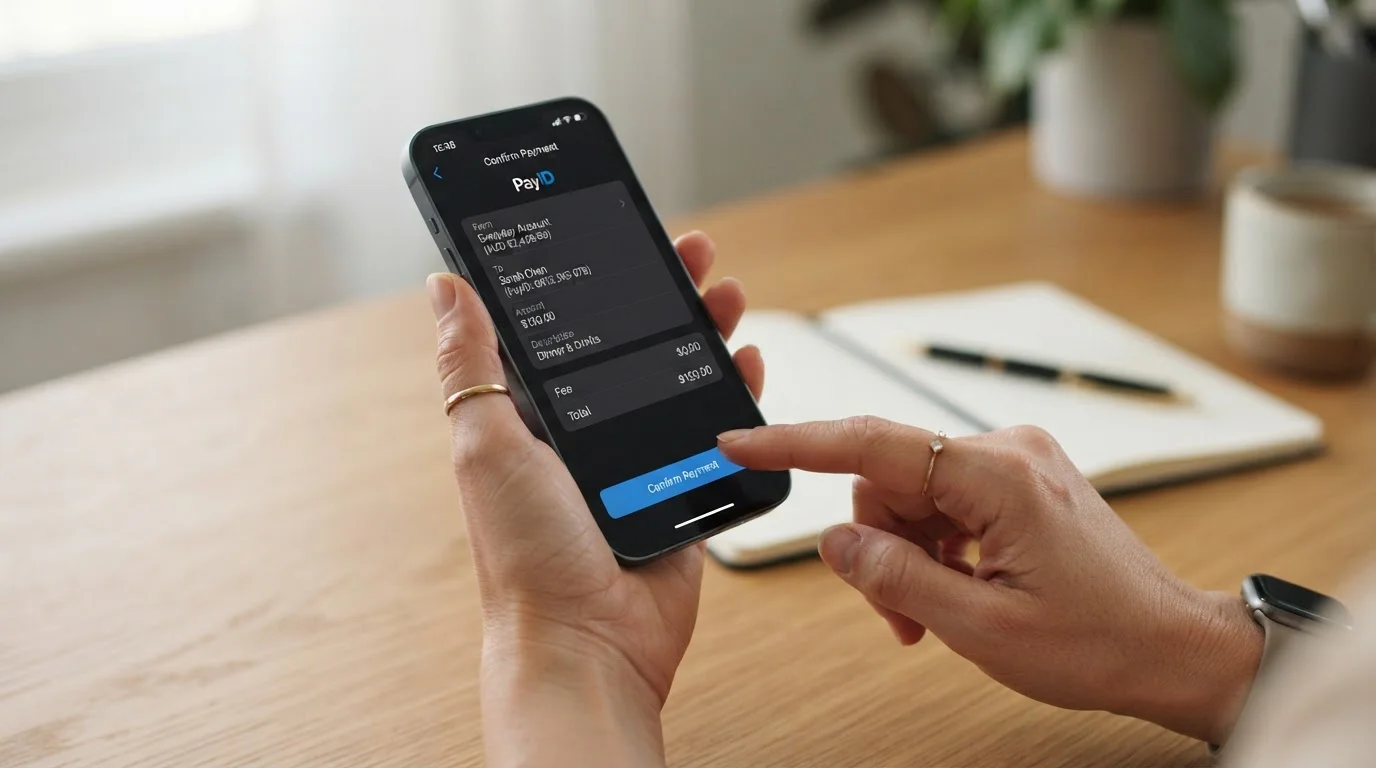
POLi shut down in September 2023, and PayID absorbed its market share within weeks. Forty-two percent of Australian casino players now use PayID for deposits — the fastest way to move money from an Australian bank without sharing card details or setting up a third-party wallet.
Bank transfers remain the universal fallback. Slower, more expensive, but accepted everywhere.
| Method | Deposit Speed | Withdrawal Support | Typical Fees | Minimum Withdrawal |
|---|---|---|---|---|
| PayID | Under 60 seconds | Yes (where operator supports; 1–4 hours) | Free | A$50–A$100 |
| Bank transfer | 1–3 business days (deposit) | Yes (3–7 business days) | A$0–A$35 | A$50–A$100 |
PayID
PayID is not a company or a separate payment service. It is the NPP Addressing Service — a layer that sits on top of Australia’s New Payments Platform and lets you link a payment identifier (mobile number, email, ABN) to your bank account. When you deposit via PayID, you authorize a real-time payment from your banking app using that identifier. The casino’s bank receives the funds in under sixty seconds, and your balance updates.
The deposit flow looks like this: you enter the amount in the casino cashier, the site displays a PayID (usually an email or alphanumeric string linked to the operator’s Australian receiving account), you open your banking app, initiate a PayID transfer to that identifier, and the deposit clears before you close the app. No third-party account, no card details shared, no two-factor authentication beyond your bank’s existing login. The Osko instant-settlement layer on the NPP handles the transfer.
Withdrawals are where PayID adoption varies. Not all offshore operators support PayID payouts — the rail technically allows it, but setting up an Australian bank account to send from is more complex than maintaining a receive-only account. Operators that do support PayID withdrawals process them in one to four hours once the request is approved. The delay is casino-side processing (verification checks, internal approval), not the payment network. The NPP itself settles in under sixty seconds, same direction as deposits.
The advantage over cards and e-wallets is zero intermediary friction. No chargebacks, no disputes, no third-party KYC. The trade-off is transparency: every PayID transfer appears on your bank statement with the recipient’s name.
The January 2027 risk is real. PayID routes through Australian banks. If the banking block targets NPP transfers to known offshore gambling merchants, PayID stops working overnight. The technical mechanism likely involves flagging recipient identifiers or account names tied to offshore operators. Once a block is active, your transfer either declines at authorization or bounces back after initiation. Crypto and e-wallets funded from non-bank sources bypass that layer entirely.
Bank Transfer
Traditional bank transfer is the method you use when nothing else works. Deposits take one to three business days. Withdrawals take three to seven. SWIFT transfers from Malta or Curaçao typically land in five business days.
Fees vary by operator: A$0–A$35. Minimum withdrawals sit at A$50–A$100. Bank transfer’s advantage is simplicity — no wallet, no blockchain, no exchange account. The price is time.
The January 2027 threat applies here too. If banks gain authority to block offshore gambling payments and they choose to filter outgoing transfers by recipient name or account descriptor, your bank transfer to “Casino Holdings NV” might decline. The block could be implemented at initiation (your bank refuses the transfer when you submit it) or at the casino’s receiving bank (the Australian correspondent bank rejects the incoming wire). Either way, the method stops working until the operator moves to a new receiving account that isn’t flagged yet.
Can I use PayID to withdraw casino winnings, or is it deposit-only?
PayID supports withdrawals at operators that maintain an Australian sending account, but not all do. Check the cashier’s withdrawal page before depositing. If PayID appears in the withdrawal methods list, it works. If only crypto, e-wallets, and bank transfer appear, assume PayID is deposit-only at that operator. Where supported, PayID withdrawals process in one to four hours.
Why is PayID so popular with Australian casino players?
Speed, simplicity, and the POLi shutdown. PayID deposits clear in under sixty seconds with no third-party account and no card details shared. When POLi closed in September 2023, players needed a replacement for instant bank deposits, and PayID was already integrated across offshore cashiers. Adoption jumped from under 20 percent to 42 percent within months. It’s now the default method for players who want instant deposits straight from their bank.
Cryptocurrency

Crypto is the fastest way to pull money out of an offshore casino. Not the fastest to deposit — PayID beats Bitcoin by thirty seconds — but the fastest from “withdrawal requested” to “money in your wallet.” Two to sixty minutes after the operator approves your payout, the transaction confirms on-chain and the funds are yours. No intermediary, no bank, no three-business-day clearing window.
The trade-off is setup friction. You need a wallet (self-custody or an exchange account), you need to buy crypto with AUD (via an Australian exchange like Independent Reserve, BTC Markets, CoinSpot, or an international platform like Binance or Coinbase), and you need to understand which blockchain and which token the casino supports. Get the network wrong — send Bitcoin on the wrong chain, or send USDT to an address expecting Ethereum — and the deposit vanishes.
But once you’re past setup, crypto does what no other method can: it moves your winnings in under an hour, costs less than two dollars in fees (if you pick the right coin), and bypasses Australian banks entirely. The January 2027 restrictions don’t touch it. A blockchain transaction from a Curaçao-operated casino to your Binance account never enters the Australian banking system, so there’s nothing for a bank to block.
| Coin | Chain | Network Fee | Withdrawal Speed | Stablecoin or Volatile |
|---|---|---|---|---|
| Bitcoin (BTC) | Bitcoin (on-chain), Lightning | A$1–A$10+ (on-chain), near-zero (Lightning) | 10–30 min (on-chain), under 5 min (Lightning) | Volatile |
| USDT (Tether) | TRC-20 (Tron), ERC-20 (Ethereum), others | Under A$1 (TRC-20), A$5–A$50+ (ERC-20) | 5–20 min (TRC-20) | Stablecoin (pegged to USD) |
| Ethereum (ETH) | Ethereum | A$5–A$50+ (depends on gas) | 10–30 min | Volatile |
| Litecoin (LTC) | Litecoin | Under A$1 | 5–15 min | Volatile |
Four coins dominate Australian casino cashiers: Bitcoin, USDT, Ethereum, and Litecoin. Others appear — Dogecoin, Bitcoin Cash, Cardano, BNB, TRX, XRP — but those four cover 90 percent of crypto transactions at offshore operators serving AU players.
The master withdrawal comparison later here shows crypto against fiat methods. The short version: crypto clears in under five hours (median), bank transfer takes three to seven days, e-wallets take zero to two hours, and PayID (where supported) takes one to four hours. If speed matters, pick crypto. If you want to avoid setup, pick PayID or an e-wallet.
Bitcoin
Bitcoin is the most widely accepted cryptocurrency at offshore casinos. On-chain Bitcoin and Lightning Network Bitcoin both work, though not all operators support Lightning yet. On-chain is the standard: you generate a receiving address from your wallet or exchange, paste it into the casino cashier, the casino broadcasts the transaction to the Bitcoin network, miners confirm it in two to six blocks (ten to sixty minutes), and the deposit appears in your balance.
Withdrawals work the same direction. The operator asks for your Bitcoin address, you provide one from your wallet or exchange, the operator broadcasts the payout, and the transaction confirms in ten to thirty minutes. Median withdrawal time across tested operators in 2026 is under five hours from request submission to funds in wallet, though that figure includes the casino’s internal approval window (zero to four hours depending on account verification status). The blockchain itself settles in under an hour.
Network fees vary. When the Bitcoin network is congested — lots of transactions competing for block space — fees climb to A$10, A$20, occasionally higher. When activity is low, fees drop to A$1–A$2. The operator usually covers the deposit fee. You pay the withdrawal fee, either deducted from your payout or charged separately. If you’re withdrawing A$100 and the network fee is A$8, you receive A$92.
Lightning Network Bitcoin is faster and cheaper. Lightning is a second-layer network that settles transactions off-chain, then batches them onto the Bitcoin blockchain later. A Lightning deposit or withdrawal confirms in under five minutes and costs a fraction of a cent in fees. The downside is limited operator support — as of late 2026, fewer than 30 percent of offshore casinos serving Australia accept Lightning. If your operator supports it, use it. If not, fall back to on-chain.
Bitcoin’s advantage over USDT is universal acceptance. Every crypto-friendly casino takes Bitcoin. Many take USDT too, but Bitcoin is the baseline. The disadvantage is price volatility. If you request a withdrawal of 0.015 BTC when Bitcoin is trading at A$95,000, you expect to receive A$1,425. If Bitcoin drops to A$90,000 by the time you sell at your exchange, you receive A$1,350. USDT avoids that problem by pegging to the US dollar.
Bitcoin operates outside Australian banking rails, outside card networks, outside e-wallet intermediaries. A transaction from a Curaçao casino to your Binance account doesn’t touch an Australian bank at any point. The January 2027 restrictions can’t intercept it. That’s the structural advantage: no matter what regulators or banks decide, a blockchain transaction clears according to blockchain rules, not domestic policy.
USDT (Tether)
USDT is a stablecoin — a cryptocurrency pegged one-to-one to the US dollar. One USDT always equals one USD, give or take a fraction of a cent. When you withdraw 500 USDT, you receive the equivalent of 500 USD, which converts to AUD at the day’s exchange rate (around A$770 at 2026 mid-year rates, depending on AUD/USD). No price swings between withdrawal and sell.
USDT operates on multiple blockchains. The three most common at Australian-facing casinos are TRC-20 (Tron), ERC-20 (Ethereum), and BEP-20 (Binance Smart Chain). TRC-20 is the cheapest and fastest. Network fees on Tron sit under A$1, often under fifty cents. Withdrawals confirm in five to twenty minutes. ERC-20 USDT uses the Ethereum network, which means the same high gas fees as Ethereum itself — A$5 to A$50+ depending on network congestion. BEP-20 is a middle ground: faster and cheaper than Ethereum, slightly more expensive than Tron.
Most operators that accept USDT specify TRC-20 as the preferred network. Some accept all three. A few accept only one. The critical step is matching the network between the casino’s withdrawal address and your receiving wallet. If the casino sends USDT on TRC-20 and you provide an ERC-20 address, the transaction either fails or the funds become unrecoverable. Exchanges like Binance and Independent Reserve support multiple networks and display them clearly during deposit. Always confirm the network before finalizing the withdrawal.
USDT’s advantage over Bitcoin is predictable value. You withdraw 500 USDT, you sell 500 USDT, you receive the AUD equivalent of 500 USD. No exposure to Bitcoin’s price swings. The advantage over Litecoin and Ethereum is cost. TRC-20 USDT is the cheapest on-chain rail for casino withdrawals, beating even Litecoin by a small margin.
The disadvantage is setup complexity. You need an exchange account or wallet that supports TRC-20 USDT, you need to select the correct network when providing your receiving address, and if you make a mistake, the money is gone. Bitcoin’s simpler — one chain, one address format, harder to mess up.
USDT bypasses Australian banks the same way Bitcoin does. A Tron blockchain transaction from a casino in Curaçao to your Binance account never involves an Australian financial institution. The January 2027 restrictions don’t apply. If you’re choosing a crypto for long-term reliability after the banking block, USDT on TRC-20 and Bitcoin are the safest picks.
Ethereum
Ethereum is the second most accepted cryptocurrency at offshore casinos. It’s slower than Bitcoin (though not by much — confirmations take ten to thirty minutes), and it’s far more expensive. Gas fees on the Ethereum network fluctuate wildly depending on activity. A withdrawal during low congestion might cost A$5. A withdrawal during high congestion — when a popular NFT drop or DeFi protocol is active — can cost A$30, A$50, occasionally more.
That fee structure makes Ethereum a poor choice for small withdrawals. If you’re pulling out A$200 and the network fee is A$40, you lose 20 percent to gas. If you’re pulling out A$2,000, the A$40 fee is negligible. Ethereum works better for high rollers than casual players.
Ethereum’s advantage is that it supports the ERC-20 token standard, which includes USDT and hundreds of other tokens. If a casino supports ERC-20 USDT, it’s using the Ethereum network to settle the transaction. That means Ethereum and ERC-20 USDT share the same fee structure and speed. The practical takeaway: if your casino offers both Ethereum and USDT on ERC-20, pick USDT — same network, same speed, but USDT’s stablecoin peg removes price risk.
Ethereum withdrawals confirm in ten to thirty minutes once the transaction is broadcast. The casino’s approval window — zero to four hours depending on your account status — adds to that. Median time from request to wallet is under five hours, identical to Bitcoin.
Ethereum’s acceptance at offshore casinos is wide but not universal. Most operators that accept crypto take Bitcoin first, Ethereum second, then Litecoin and USDT. If your operator supports Ethereum but also supports USDT on TRC-20, pick USDT — you’ll pay a tenth of the fee for the same withdrawal speed.
Litecoin
Litecoin is Bitcoin’s faster, cheaper sibling. It’s a fork of Bitcoin’s codebase with shorter block times (2.5 minutes vs Bitcoin’s 10 minutes) and lower network fees (typically under A$0.50 per transaction). Withdrawals confirm in five to fifteen minutes, and the fee is negligible even for small payouts.
Acceptance is broad but not universal. Most offshore casinos that accept Bitcoin also accept Litecoin, but not all. Litecoin sits behind Bitcoin and Ethereum in operator support, ahead of altcoins like Dogecoin and Bitcoin Cash. If your operator offers Litecoin, it’s one of the better choices for speed and cost. If your operator offers Litecoin and USDT on TRC-20, the comparison is close — TRC-20 is slightly cheaper, Litecoin is slightly faster, both clear in under twenty minutes and cost under a dollar.
Litecoin shares Bitcoin’s volatility. The price fluctuates, so the AUD value of your withdrawal changes between request and sale at your exchange. If price stability matters, USDT is the better pick. If you’re withdrawing and selling the same day, Litecoin’s volatility is noise.
Litecoin bypasses Australian banks the same way every other cryptocurrency does. A Litecoin transaction from a Curaçao operator to your CoinSpot account doesn’t involve an Australian financial institution, so the January 2027 banking block doesn’t affect it.
Which crypto is cheapest for casino withdrawals — Bitcoin, Ethereum, or USDT?
USDT on TRC-20 is cheapest — fees under A$1, usually under fifty cents. Litecoin is second (under A$1). Bitcoin on-chain is third (A$1–A$10+ depending on network congestion; Lightning Network Bitcoin is near-zero but not widely supported). Ethereum is most expensive (A$5–A$50+ depending on gas). For small withdrawals, avoid Ethereum. For anything over A$500, the fee difference is marginal and acceptance matters more than cost.
Credit and Debit Cards
Cards are the payment methods players try first. The reality in 2026 is messier. Credit cards face restrictions, debit cards process inconsistently, and withdrawals almost never work.
June 2024 brought a credit card ban on licensed wagering. Offshore casinos remain unaffected by the statute, but Australian banks decline credit card transactions to offshore gambling merchants at the network level. The block isn’t universal — Commonwealth might approve what Westpac declines.
Debit cards process more reliably. Banks treat debit gambling transactions with less scrutiny. If your credit card declines, try debit first.
| Card Type | Deposit Acceptance | Credit vs Debit | Withdrawal Support | Typical Fees |
|---|---|---|---|---|
| Visa | High (debit), declining (credit) | Debit widely accepted; credit blocked by AU banks | Rare | Free (deposit), A$10–A$25 (withdrawal, rarely offered) |
| Mastercard | High (debit), declining (credit) | Debit widely accepted; credit blocked by AU banks | Rare | Free (deposit), A$10–A$25 (withdrawal, rarely offered) |
Visa
Visa deposits process instantly when approved. The friction is approval — if your bank flags the transaction, it declines. 3D Secure authentication is mandatory. Debit Visa works better than credit in 2026.
Withdrawals to Visa are rare. When available, processing takes three to five business days. Many operators cap card withdrawals at the total deposited. Card withdrawals are rare because of chargeback risk — operators route withdrawals through crypto, e-wallets, or bank transfer instead.
Visa’s future under January 2027 restrictions is uncertain. If banks implement the block at the card-network level (flagging merchant category codes or specific acquiring banks), Visa deposits will decline the same way they decline now for credit cards. If the block targets only domestic banking rails (PayID, bank transfer), cards might continue processing because the transaction routes through international card networks. The safe assumption is that bank-issued Visa debit faces the same risk as any other bank-linked method.
Mastercard
Mastercard runs parallel to Visa. Same processing, same restrictions. Debit Mastercard is the version to use. Withdrawals to Mastercard are even rarer than Visa. Both cards share the same January 2027 exposure.
E-Wallets

E-wallets sit between bank transfers and cryptocurrency: faster than fiat, simpler than crypto. You fund an intermediate account (Neteller, Skrill, MuchBetter), deposit from that account into the casino, and withdraw back to the same account when you cash out. The e-wallet becomes the buffer between your bank and the operator.
The advantage is speed and privacy. E-wallet withdrawals process in zero to two hours after operator approval, much faster than bank transfer’s three to seven days. The casino never sees your bank details, and your bank statement shows a transfer to “Neteller” rather than “CryptoGames Malta Limited.” If you’re concerned about gambling transactions appearing on your banking history, an e-wallet scrubs that trail.
The trade-offs are setup friction, fees, and bonus eligibility. You need to create an e-wallet account, verify your identity (KYC at the e-wallet level, separate from the casino’s KYC), link your bank or card to fund the wallet, and manage balances across multiple accounts. Some e-wallets charge fees — Neteller and Skrill levy up to 1 percent on certain transactions. Many casinos exclude e-wallet deposits from bonus eligibility, meaning a A$500 deposit via Skrill won’t unlock the matched welcome offer.
Three e-wallets dominate Australian casino cashiers: Neteller, Skrill, and MuchBetter. Others appear (MiFinity, Jeton, EcoPayz/Payz), but those three account for most e-wallet volume at offshore operators serving AU players.
| E-Wallet | Withdrawal Speed | Fees | KYC Required | Bonus Eligibility |
|---|---|---|---|---|
| Neteller | 0–1 hour | Up to 1% on some transactions | Yes (at Neteller level) | Often excluded |
| Skrill | 0–1 hour | Up to 1% on some transactions | Yes (at Skrill level) | Often excluded |
| MuchBetter | 1–2 hours | Varies; gamification cashback available | Yes (at MuchBetter level) | Often excluded |
Neteller
Neteller is the oldest and most widely accepted e-wallet in online gambling. It launched in 1999, predates most offshore operators still active today, and remains the baseline: if a casino accepts e-wallets, it accepts Neteller. Roughly 2.5 million active users globally, support for 28-plus currencies including AUD, and integration with hundreds of operators.
Deposits are instant. You fund your Neteller account from your Australian bank (via bank transfer or card), then transfer from Neteller to the casino. The casino balance updates within seconds. Withdrawals process in zero to one hour after the operator approves the request. The money lands in your Neteller account, then you withdraw from Neteller to your bank (one to three business days) or leave the balance in Neteller for future deposits.
Fees sit at up to 1 percent on certain transactions. Neteller doesn’t charge for deposits into the e-wallet from most Australian banks, but it charges a currency conversion fee if you fund the account in AUD and the casino operates in EUR or USD. Withdrawals from Neteller to your bank may incur a flat fee (typically A$5–A$10) or a percentage. The fee structure changes occasionally, so check Neteller’s current rates before moving large amounts.
KYC is mandatory. Neteller requires photo ID, proof of address, and proof of payment method (a bank statement or card image) before you can deposit into a casino. This is separate from the casino’s KYC. You verify twice — once with Neteller, once with the operator. The upside is that Neteller’s verification is typically faster and less intrusive than some casino verification processes.
Bonus eligibility is the main downside. Many offshore casinos exclude Neteller deposits from welcome bonuses and reload offers. The terms usually say something like “deposits via Skrill and Neteller do not qualify for this promotion.” So the “free” welcome package you were promised quietly evaporates the moment you fund with the wrong wallet. A casino is not a charity, and the fine print is where it reminds you. The reason is bonus abuse: players used to deposit via Neteller, claim the bonus, withdraw to Neteller, then chargeback or dispute the original funding transaction at their bank. Operators responded by excluding e-wallets. If bonus eligibility matters, check the terms before depositing.
Neteller’s January 2027 exposure depends on how you fund the account. If you load Neteller from your Australian bank, that initial bank transfer could face the same blocks as PayID or direct bank deposits. If you load Neteller from a crypto exchange or another non-bank source, the connection to Australian banking is severed, and the restriction doesn’t apply. The withdrawal from Neteller back to your bank would still route through domestic rails, but by then the money is in your Neteller account, not the casino’s, and the transaction reads as “Neteller withdrawal” rather than “offshore gambling payout.”
Skrill
Skrill is Neteller’s sister brand. Same parent company (Paysafe Group), same functionality, same fee structure, same near-universal acceptance at offshore casinos. The only meaningful difference is the logo. Some players prefer Skrill’s interface; others prefer Neteller’s. Operationally, they’re identical.
Deposits are instant. Withdrawals process in zero to one hour. Fees up to 1 percent on some transactions, particularly currency conversions. KYC required at the Skrill level. Bonus exclusions common.
Skrill and Neteller sometimes appear in the same cashier as separate options. You can hold accounts with both and use whichever offers a better promotion or lower fee at a given operator, but there’s no practical reason to use both simultaneously for the same casino. Pick one, verify it, and stick with it.
Skrill’s regulatory standing in Australia is identical to Neteller’s: Paysafe Group operates under UK FCA regulation, and Skrill’s Australian operations fall under the same payment services framework. E-wallets face no direct legal restriction under Australian gambling law — the June 2024 ban targeted credit-funded e-wallets (where the e-wallet balance is loaded from a credit card), but debit-funded and bank-funded e-wallets remain unaffected.
Skrill’s January 2027 risk is identical to Neteller’s: if you fund Skrill from your Australian bank, the initial load is vulnerable to banking blocks. If you fund from crypto or another non-bank source, the casino-to-Skrill leg bypasses Australian banking entirely.
MuchBetter
MuchBetter is a mobile-first e-wallet launched in 2017. It requires the iOS or Android app — no desktop web interface — and focuses on mobile payment flows and gamification features (cashback, loyalty rewards, referral bonuses). It’s younger than Neteller and Skrill, but acceptance has grown fast. Most offshore operators serving Australia added MuchBetter to their cashiers between 2020 and 2023.
Deposits are instant once the MuchBetter account is funded. Withdrawals process in one to two hours, slightly slower than Neteller and Skrill but still faster than bank transfers and comparable to crypto. MuchBetter’s gamification means some users earn cashback on deposits and withdrawals, effectively reducing the cost below Neteller and Skrill’s up-to-1-percent fees.
MuchBetter holds a Malta Gaming Authority payment institution licence. That’s the same regulatory framework as many of the casinos themselves — MGA-licensed operators and MGA-licensed payment institutions. KYC is required, though MuchBetter’s process is mobile-native and often completes in under ten minutes (photo ID via smartphone camera, selfie, address verification).
MuchBetter’s bonus exclusion is less universal than Neteller and Skrill’s. Some operators exclude all e-wallets, others exclude Neteller and Skrill but allow MuchBetter. Check the terms. The reason for the inconsistency is MuchBetter’s relative youth and smaller user base — it hasn’t yet accumulated the same history of bonus abuse that prompted operators to blacklist Neteller and Skrill.
MuchBetter’s January 2027 exposure is the same as every other e-wallet: if you load it from an Australian bank, the initial funding transaction is vulnerable to blocks. If you load from crypto or a non-bank source, the casino-to-MuchBetter withdrawal bypasses Australian banking.
Do I need a separate account to use Neteller or Skrill at an online casino?
Yes. Neteller and Skrill are intermediate accounts — you create an account with the e-wallet provider, verify your identity, fund the account from your bank or card, then deposit from the e-wallet into the casino. The casino sees Neteller or Skrill as the funding source, not your bank. You also need to complete KYC at the e-wallet level, separate from the casino’s verification process.
Mobile Wallets
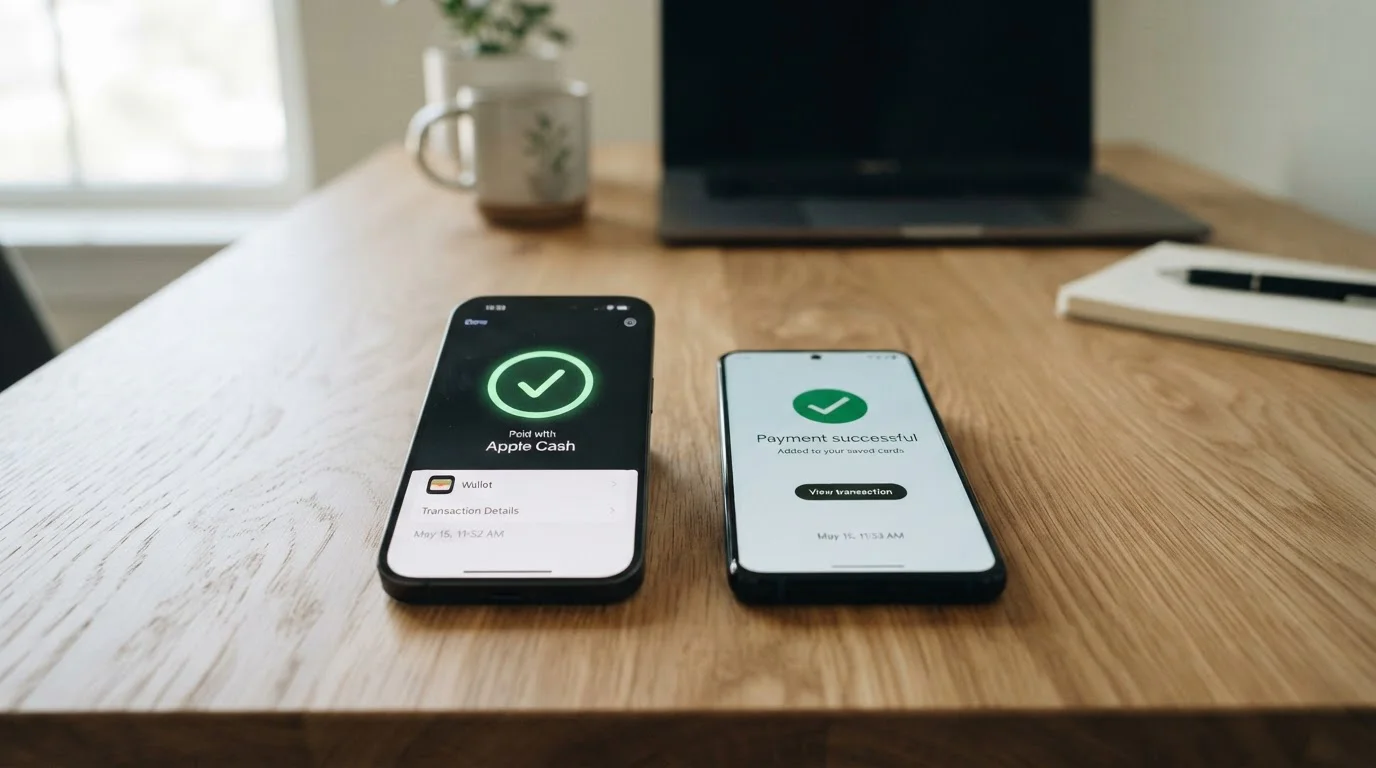
Apple Pay and Google Pay are not payment methods. They’re tokenization layers that sit on top of your existing Visa or Mastercard. When you deposit via Apple Pay, the transaction ultimately processes through the card stored in your Apple Wallet, but the casino never sees your card number. Apple Pay generates a one-time token for each transaction, passes that token to the card network, and the payment clears against your card. The advantage is convenience and security. The disadvantage is that you inherit the card’s limitations — if your card doesn’t support casino withdrawals, neither does Apple Pay.
Mobile wallets are deposit-only at every offshore operator tested in 2026. The reason is technical: a withdrawal via Apple Pay would require the casino to push a refund back to the tokenized card, which in turn requires Apple to support merchant-initiated refunds through the Wallet infrastructure. Apple Pay supports refunds for merchant purchases (you buy something online, you return it, the merchant refunds your Apple Pay transaction), but it doesn’t support arbitrary payouts from a third party. The casino can’t send you money through Apple Pay; it can only refund a payment you already made.
That means if you deposit A$500 via Apple Pay and win A$2,000, the A$500 might refund to your card (though most operators don’t offer card refunds at all), and the A$1,500 in winnings must exit via another method — crypto, e-wallet, or bank transfer.
| Mobile Wallet | Device Compatibility | Deposit Speed | Withdrawal Support | Security Features |
|---|---|---|---|---|
| Apple Pay | iPhone, iPad, Apple Watch, Mac (Safari) | Instant | No | Face ID / Touch ID, tokenization |
| Google Pay | Android, web browsers | Instant | No | Fingerprint / PIN, tokenization |
Apple Pay
Apple Pay works on iPhone, iPad, Apple Watch, and Mac (via Safari). You add your Visa or Mastercard to the Wallet app, then authorize payments with Face ID, Touch ID, or your device passcode. The casino receives a tokenized card number that’s valid for one transaction and useless if intercepted. Your actual card number never leaves Apple’s secure element.
Deposits process instantly. You select Apple Pay in the cashier, choose the amount, authenticate on your device, and the balance updates within seconds. The underlying card transaction clears through the same Visa or Mastercard network, so if your bank blocks offshore gambling transactions on that card, the Apple Pay deposit will decline too. Apple Pay doesn’t bypass card network restrictions — it streamlines the authorization flow.
Withdrawals aren’t supported. The technical constraint is Apple Pay’s refund model: it supports merchant-initiated refunds for purchases you made, but it doesn’t support arbitrary payouts. The casino can’t push A$1,000 to your Apple Wallet unless that A$1,000 is a refund of a payment you authorized. Even then, most casinos don’t offer card refunds because of chargeback risk.
Apple Pay’s advantage over entering your card details directly is security and speed. Your card number stays in the Wallet app, the tokenization layer means a compromised casino database can’t leak your card, and authentication takes one second with Face ID. The disadvantage is that you’re still using a card, which means you face the same bank-side blocks and the same deposit-only limitation.
Apple Pay’s January 2027 risk is identical to the underlying card’s risk. If banks block offshore gambling transactions at the card-network level, Apple Pay deposits will decline. If banks allow card transactions but block PayID and bank transfers, Apple Pay continues working. The method inherits the card’s fate.
Google Pay
Google Pay is Apple Pay for Android devices and web browsers. You add your Visa or Mastercard to Google Pay, authenticate with your fingerprint or PIN, and the payment tokenizes the same way Apple Pay does. The casino receives a one-time token, your card number stays protected, and the transaction clears through Visa or Mastercard.
Deposits are instant. Withdrawals aren’t supported. The reason is identical to Apple Pay: Google Pay supports merchant-initiated refunds, not arbitrary payouts. The casino can’t send you money through Google Pay; it can only refund a payment you already made, and even that requires the casino to support card refunds, which most don’t.
Google Pay’s advantage over Apple Pay is device compatibility. It works on Android phones, Android tablets, and web browsers (Chrome, Firefox, Edge on desktop). Apple Pay is locked to Apple hardware. If you use an Android device or prefer a web browser over an app, Google Pay is the mobile wallet option.
Google Pay’s fee structure is identical to the underlying card’s fees: usually zero for deposits, and A$10–A$25 for withdrawals when supported (which is rare). The security model is identical: tokenization protects your card, but the transaction still routes through Visa or Mastercard, so bank-side blocks apply.
Google Pay’s January 2027 risk is the same as Apple Pay’s and the same as the card you’ve tokenized. If the bank blocks the card, Google Pay fails. If the card works, Google Pay works.
Can I use Apple Pay or Google Pay to withdraw casino winnings?
No. Apple Pay and Google Pay are deposit-only. They support merchant-initiated refunds — if the casino refunds a deposit you made via Apple Pay, that refund can land back on your card — but they don’t support arbitrary payouts. You can deposit A$500 via Apple Pay, but if you win A$2,000, the A$1,500 in winnings must exit via another method (crypto, e-wallet, or bank transfer). Most casinos don’t support card refunds at all, so even the original A$500 usually can’t withdraw via Apple Pay.
Prepaid Vouchers
Prepaid vouchers — Neosurf and Paysafecard — are deposit-only payment methods for players who want to fund a casino account without linking a bank, card, or wallet. You buy a voucher at a retail location (newsagent, service station, convenience store) with cash or EFTPOS, receive a PIN, and redeem that PIN in the casino cashier. The deposit clears instantly, no bank connection required, no identity disclosed to the operator beyond what the casino’s own KYC demands.
The privacy advantage is real. Your bank statement shows a purchase at 7-Eleven or a newsagent, not a gambling deposit. The casino receives a voucher redemption, not a traceable bank transaction. If you’re concerned about gambling transactions appearing in your financial history, a prepaid voucher scrubs that link.
The limitations are equally real. Vouchers are deposit-only — you can’t withdraw to a Neosurf or Paysafecard PIN. You need a second payment method (crypto, e-wallet, bank transfer) ready before you win anything. Daily limits cap deposits at A$1,000 for Neosurf. Denominations max out at A$250 per voucher, so funding a larger deposit requires buying multiple vouchers. And once you redeem a PIN, the balance is gone — if you deposit A$100 and lose it, the voucher doesn’t refund.
| Voucher | Denominations | Daily Limit | Retail Availability | AU Casino Acceptance |
|---|---|---|---|---|
| Neosurf | A$10, A$20, A$50, A$100, A$250 | A$1,000 | Newsagents, service stations, convenience stores | High (most offshore operators) |
| Paysafecard | A$10, A$20, A$50, A$100 (varies by retailer) | Varies | Newsagents, service stations (declining availability) | Declining |
Neosurf
Neosurf is the dominant prepaid voucher in the Australian casino market. It uses a ten-digit PIN. You buy a voucher for A$10, A$20, A$50, A$100, or A$250 at a participating retailer (over 1,500 locations across Australia, including major chains like 7-Eleven, newsagents, and independent service stations), scratch off the panel to reveal the PIN, then enter that PIN in the casino cashier. The deposit clears instantly.
The daily limit is A$1,000 across all Neosurf deposits. If you deposit A$250 at 9am and A$500 at 3pm, you have A$250 remaining for the day. The limit resets at midnight Australian Eastern Time. Some casinos impose their own lower limits on voucher deposits, typically A$500 or A$750.
Neosurf vouchers don’t expire for twelve months after purchase. If you buy a A$100 voucher and redeem A$60, the remaining A$40 stays on the PIN and can be used at another operator or saved for a future deposit. The casino doesn’t see the remaining balance — you enter the PIN, the system deducts the deposit amount, and the PIN retains whatever’s left.
Neosurf’s acceptance at offshore casinos serving Australia is high. Most operators that accept prepaid vouchers accept Neosurf. Some accept only Neosurf (Paysafecard acceptance has declined). A few operators charge a small fee (2–5 percent) on voucher deposits to cover processing costs, though most don’t.
Neosurf’s privacy advantage is complete. You buy the voucher with cash or EFTPOS, your bank sees “7-Eleven” or “Newsagent” on the statement, the casino sees a Neosurf redemption with no personal information attached. You still need to complete KYC at the casino level (photo ID, proof of address) before you can withdraw winnings, but the payment method itself reveals nothing.
Neosurf’s limitation is that it’s deposit-only. Every Neosurf deposit requires a second method ready for withdrawal. Most players pair Neosurf with crypto (fast, no bank link) or an e-wallet (faster than bank transfer, some privacy). If you deposit A$200 via Neosurf and win A$1,500, the A$1,500 exits via your chosen withdrawal method, not back to the voucher.
Neosurf’s January 2027 exposure is zero. You buy the voucher with cash or a debit card at a retail location, redeem the PIN at the casino, and no Australian bank touches the gambling transaction. The only vulnerable step is if you buy the voucher with a debit card and your bank starts blocking card purchases of Neosurf vouchers at known gambling-related retailers. That’s a theoretical risk but not one observed in practice through late 2026.
Paysafecard
Paysafecard is the second prepaid voucher option, though its Australian casino acceptance has declined over the past two years. It uses a sixteen-digit PIN and operates the same way as Neosurf: buy a voucher at a retailer, scratch off the PIN, redeem in the casino cashier. Denominations are A$10, A$20, A$50, and A$100, though not all retailers stock all denominations.
Retail availability has shrunk. Paysafecard used to be widely available at newsagents and service stations; by late 2026, many retailers stopped stocking it. The reasons are unclear — likely a combination of lower demand (players migrated to Neosurf and crypto) and Paysafe Group’s strategic focus on Neteller and Skrill over voucher products. You can still find Paysafecard at some locations, but Neosurf is easier to source.
Casino acceptance has also declined. Operators that used to accept both Neosurf and Paysafecard have dropped Paysafecard from their cashiers. As of late 2026, fewer than half the offshore casinos serving Australia that accept vouchers still list Paysafecard. If you hold a Paysafecard voucher, check the cashier before assuming it’s accepted.
Paysafecard’s fee structure and limits vary. Some operators charge a deposit fee (2–5 percent), others don’t. Daily limits depend on the operator, typically A$500–A$1,000. Paysafecard itself doesn’t publish a universal daily cap for Australia the way Neosurf does.
Paysafecard shares Neosurf’s privacy advantage — cash or EFTPOS purchase, PIN redemption, no bank link to the casino — and the same deposit-only limitation. You need a second method for withdrawals.
Paysafecard’s January 2027 exposure is zero for the same reason as Neosurf: the transaction doesn’t route through Australian banking. If you already hold Paysafecard vouchers or prefer the brand, it works. If you’re choosing between Neosurf and Paysafecard for new purchases, Neosurf’s wider retail availability and higher operator acceptance make it the better pick.
Is Neosurf or Paysafecard better for anonymous casino deposits?
Neosurf. It’s more widely accepted at Australian-facing casinos, easier to find at retail locations, and has a clear A$1,000 daily limit. Paysafecard’s acceptance has declined, and retail availability is spottier. Both offer the same privacy advantage (cash purchase, PIN redemption, no bank link), but Neosurf works at more operators.
Payment Speed and Withdrawal Comparison
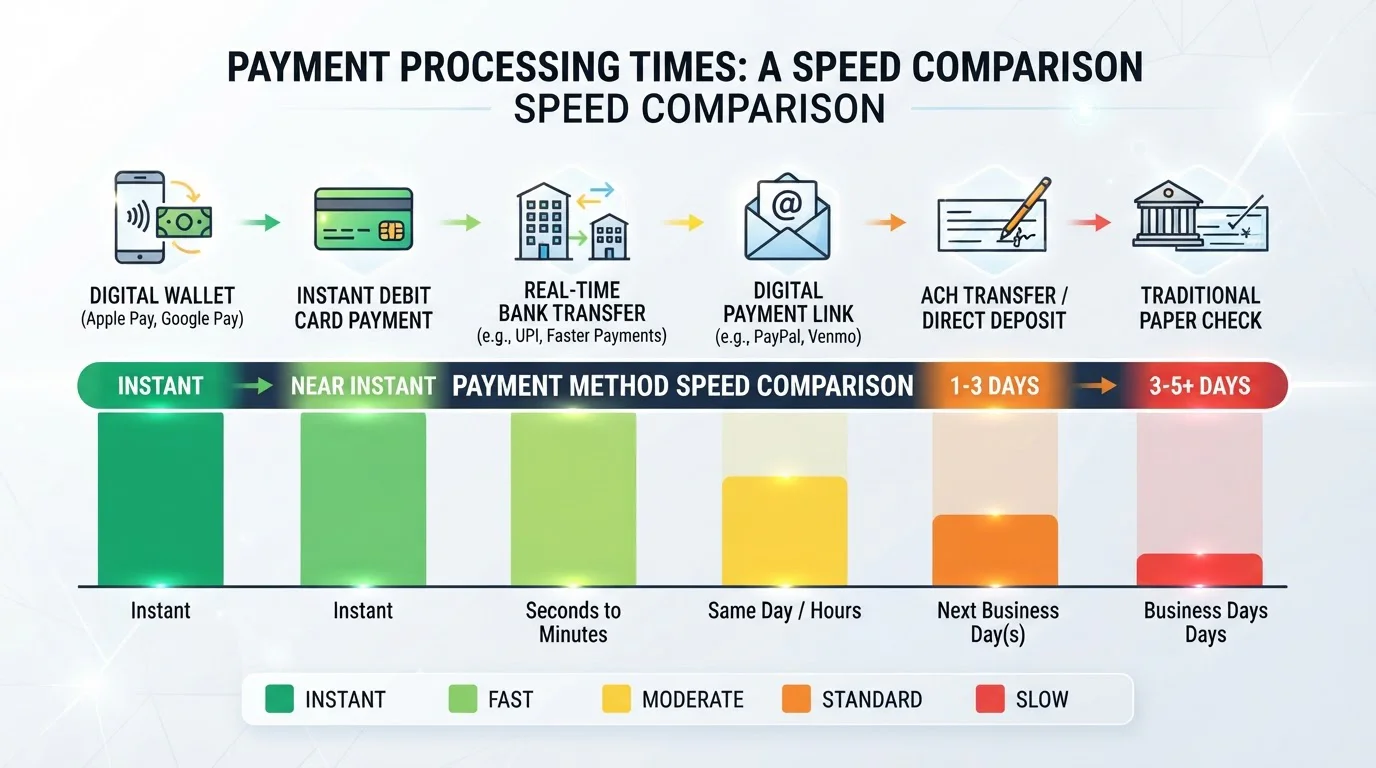
The section here answers the question most players ask before their first deposit: which method gets money in fastest, and which method gets winnings out fastest. The answer depends on whether you prioritize the deposit leg or the withdrawal leg.
Deposits are easy. PayID, Apple Pay, Google Pay, cards (when they’re approved), crypto, e-wallets, and prepaid vouchers all clear in under sixty seconds. Bank transfer is the outlier at one to three business days. If deposit speed is the only criterion, pick PayID — it’s instant, it requires no setup beyond your existing bank account, and it’s free.
Withdrawals are where the gaps open. Crypto clears in under five hours (median). E-wallets clear in zero to two hours. PayID (where supported) clears in one to four hours. Bank transfer takes three to seven business days. Cards rarely support withdrawals, and mobile wallets and prepaid vouchers don’t support withdrawals at all.
The master comparison table below shows all fifteen methods side by side. Deposit speed, withdrawal support yes or no, withdrawal timeframe, typical fees, and minimum withdrawal. This is the reference for choosing a method based on speed and cost.
| Payment Method | Deposit Speed | Withdrawal Support | Withdrawal Timeframe | Typical Fees | Minimum Withdrawal |
|---|---|---|---|---|---|
| PayID | Under 60 seconds | Yes (where supported) | 1–4 hours | Free | A$50–A$100 |
| Bank transfer | 1–3 business days | Yes | 3–7 business days | A$0–A$35 | A$50–A$100 |
| Visa | Instant | Rare | 3–5 business days (rarely supported) | Free (deposit), A$10–A$25 (withdrawal) | A$50–A$100 |
| Mastercard | Instant | Rare | 3–5 business days (rarely supported) | Free (deposit), A$10–A$25 (withdrawal) | A$50–A$100 |
| Bitcoin | Under 30 min (on-chain), under 5 min (Lightning) | Yes | 2–60 min (median sub-5 hours) | A$1–A$10+ (on-chain), near-zero (Lightning) | A$20–A$50 |
| USDT (TRC-20) | 5–20 min | Yes | 5–20 min (median sub-5 hours) | Under A$1 | A$20–A$50 |
| Ethereum | 10–30 min | Yes | 10–30 min (median sub-5 hours) | A$5–A$50+ | A$50–A$100 |
| Litecoin | 5–15 min | Yes | 5–15 min (median sub-5 hours) | Under A$1 | A$20–A$50 |
| Neteller | Instant | Yes | 0–1 hour | Up to 1% | A$50–A$100 |
| Skrill | Instant | Yes | 0–1 hour | Up to 1% | A$50–A$100 |
| MuchBetter | Instant | Yes | 1–2 hours | Varies | A$50–A$100 |
| Apple Pay | Instant | No | — | Free | — |
| Google Pay | Instant | No | — | Free | — |
| Neosurf | Instant | No | — | Free (some operators charge 2–5%) | — |
| Paysafecard | Instant | No | — | Free (some operators charge 2–5%) | — |
The table clarifies which methods support withdrawals and which don’t. Apple Pay, Google Pay, Neosurf, and Paysafecard are deposit-only. Cards rarely support withdrawals. Everything else works both directions.
The withdrawal timeframe column shows the method’s speed after the casino approves the request. Crypto settles in minutes to hours (blockchain confirmation plus operator approval window). E-wallets settle in zero to two hours (operator approval window, near-instant transfer to e-wallet account). PayID settles in one to four hours (operator approval, instant settlement on NPP). Bank transfer takes days.
The fee column shows typical costs. Crypto fees depend on network congestion. E-wallet fees depend on transaction type and currency conversion. Bank transfer fees depend on whether the operator charges a withdrawal fee. Cards and mobile wallets are free for deposits; withdrawals either aren’t supported or cost A$10–A$25.
The minimum withdrawal column shows the floor. Most methods cap at A$50–A$100. Crypto often allows lower minimums (A$20–A$50) because the transaction cost is lower. Methods that don’t support withdrawals show no minimum.
Which payment method is fastest for withdrawals at Australian online casinos in 2026?
Crypto is fastest — Bitcoin, USDT, Ethereum, or Litecoin all clear in under five hours (median) from request to wallet, including the operator’s approval window. USDT on TRC-20 and Litecoin are the cheapest (under A$1 fees). E-wallets are second fastest (Neteller and Skrill in 0–1 hour, MuchBetter in 1–2 hours). PayID is third where supported (1–4 hours). Bank transfer is slowest (3–7 business days).
Why do some payment methods only work for deposits and not withdrawals?
Technical and regulatory reasons. Mobile wallets (Apple Pay, Google Pay) tokenize underlying cards and only support merchant-initiated refunds, not arbitrary payouts. Prepaid vouchers (Neosurf, Paysafecard) are one-way by design — you buy a PIN, redeem it, and the balance moves to the casino, but the system can’t reverse the transaction and send money back to a PIN. Cards rarely support withdrawals because of chargeback risk — if the casino refunds your card, you can still dispute the original deposit with your bank, and the operator loses both the deposit and the withdrawal.
What Happens in January 2027

The Interactive Gambling Amendment (Gambling Reform) Act 2026 commenced on 26 August 2026. The part that matters for payments takes effect on 1 January 2027: banks gain authority to block transactions to offshore gambling operators. The specifics are vague, but the direction is clear. If a transaction routes through an Australian bank and the recipient is a known offshore casino, the bank can decline it.
The practical implications depend on which payment method you use.
Bank-linked methods — exposed. PayID, bank transfers, and card deposits route through Australian financial institutions. If banks implement the block at the transaction level (flagging recipient identifiers, account names, or merchant categories), these methods stop working. Your PayID transfer declines when you try to authorize it, or it bounces back after submission. Your card transaction declines at the network level the same way many credit card transactions decline now. A bank transfer either fails at initiation or gets rejected by a correspondent bank.
The block likely happens through a combination of merchant-category filtering (offshore gambling operators use specific MCC codes) and recipient-name watchlists (banks maintain lists of known offshore casino account names and PayID identifiers). Once a merchant or recipient is flagged, transactions to it decline automatically. Operators respond by rotating receiving accounts — setting up new Australian bank accounts under different entity names, registering new PayID identifiers — and the block becomes a game of cat and mouse. The player experience is unpredictable declines.
Crypto — unaffected. A blockchain transaction from your wallet to a casino’s wallet never enters the Australian banking system. The transaction confirms according to blockchain rules, not domestic banking policy. If you withdraw Bitcoin from Binance to a Curaçao casino, no Australian bank processes that transfer. The January restrictions can’t intercept it.
The vulnerable step is funding your crypto exchange account from your Australian bank. If you transfer AUD from Commonwealth to Binance, then buy Bitcoin and deposit it into a casino, the initial AUD-to-Binance transfer could theoretically face scrutiny. But as of late 2026, no evidence suggests banks are blocking deposits to legitimate crypto exchanges. The risk is speculative, not observed.
E-wallets — depends how you fund them. If you load Neteller, Skrill, or MuchBetter from your Australian bank (via bank transfer or card), that initial funding transaction is vulnerable to the same blocks as PayID and bank transfers. If the bank flags the recipient as a gambling-related payment processor, your transfer declines or bounces.
But once money is in your e-wallet, the casino-to-e-wallet leg bypasses Australian banking. You deposit from Neteller into the casino, you withdraw from the casino back to Neteller, and no Australian bank sees those transactions. The link is severed. The only vulnerable legs are funding the e-wallet (bank to Neteller) and withdrawing from the e-wallet to your bank (Neteller to bank). Both of those transactions read as “Neteller” on your statement, not “offshore casino,” so they’re harder to filter.
If you load your e-wallet from crypto (sell Bitcoin at Binance, withdraw to Neteller) or from another non-bank source, the connection to Australian banking is eliminated entirely. The casino-to-e-wallet transaction bypasses the block, and the Neteller-to-bank withdrawal reads as a generic e-wallet payout.
Prepaid vouchers — unaffected. You buy a Neosurf or Paysafecard voucher at a retail location with cash or EFTPOS, redeem the PIN at the casino, and no bank processes the gambling transaction. The only step involving your bank is the purchase of the voucher itself (if you used EFTPOS instead of cash), and that transaction reads as “7-Eleven” or “Newsagent,” not “offshore casino.” Banks don’t filter purchases of prepaid vouchers at general retailers.
The strategic takeaway: if you rely on PayID, cards, or bank transfer in 2026, assume those methods may not work reliably after January 2027. If you want continuity, set up a crypto wallet or an e-wallet before the restrictions take effect. If you don’t want to deal with crypto or e-wallets, prepaid vouchers keep working for deposits (though you still need another method for withdrawals).
The exact implementation of the banking block won’t be visible until it happens. Banks might start with high-profile offshore operators and expand the blocklist over time. They might implement soft blocks (flagging transactions for review, requiring additional authentication) before hard blocks (automatic declines). The transition will be messy. The safest assumption is that bank-linked methods become unreliable in 2026, and methods that bypass banks remain unaffected.
What happens to my payment methods when the January 2027 banking restrictions start?
Bank-linked methods (PayID, cards, bank transfers) may stop working or decline unpredictably as banks gain authority to block offshore casino payments. Crypto, e-wallets (if funded from non-bank sources), and prepaid vouchers bypass Australian banking and remain unaffected. If you rely on PayID or cards now, set up a crypto wallet or e-wallet before January 2027 to ensure you can still deposit and withdraw.
Choosing the Right Payment Method
Fifteen methods, five priorities. The method that works best depends on what you care about most: speed, privacy, cost, convenience, or continuity after January 2027. No single method wins every category. PayID is fastest for deposits but vulnerable to banking blocks. Crypto is fastest for withdrawals but requires setup. E-wallets balance speed and privacy but add an intermediary. Cards are convenient but deposit-only.
The decision matrix below matches priorities to methods. If you prioritize X, use method Y.
| Priority | Recommended Method | Why |
|---|---|---|
| Fastest deposits | PayID | Under 60 seconds, no setup beyond existing bank account |
| Fastest withdrawals | Crypto (USDT on TRC-20 or Litecoin) | Sub-5-hour median, under A$1 fees |
| Lowest cost | USDT (TRC-20) or Litecoin | Network fees under A$1, free deposits |
| Maximum privacy | Neosurf (deposit) + crypto (withdrawal) | Cash voucher purchase, no bank link, blockchain withdrawal |
| Convenience (no new accounts) | Cards (Visa/Mastercard debit) | Already in your wallet, instant deposits |
| Continuity post-January 2027 | Crypto | Bypasses Australian banks entirely, unaffected by restrictions |
| Balance of speed and privacy | E-wallets (Neteller, Skrill, MuchBetter) | 0–2 hour withdrawals, casino never sees bank details |
| Deposit-only with privacy | Neosurf | Cash purchase, instant deposit, no bank link |
The fastest all-around combination is PayID for deposits, crypto for withdrawals. PayID gets money in faster than anything else. Crypto gets money out faster than anything else. The downside is PayID’s January 2027 risk. If you want speed now and don’t care about disruption in three months, PayID plus crypto works. If you want speed now and continuity later, skip PayID and use crypto for both directions.
The simplest combination for players who don’t want to learn blockchain is PayID (or cards) for deposits, e-wallet for withdrawals. PayID deposits clear in under sixty seconds. Neteller or Skrill withdrawals clear in under an hour. No crypto, no wallet, no exchange account. The trade-off is the January 2027 risk for PayID and the intermediate-account friction for e-wallets.
The most private combination is Neosurf for deposits, crypto for withdrawals. Buy the Neosurf voucher with cash, redeem the PIN, deposit clears instantly with no bank link. Withdraw via Bitcoin or USDT, and the payout lands in your crypto wallet with no intermediary. The trade-off is Neosurf’s A$1,000 daily deposit limit and the requirement to fund a crypto exchange account to convert the withdrawal back to AUD.
The method you should avoid depends on your situation. If you need withdrawals, avoid Apple Pay, Google Pay, Neosurf, and Paysafecard — they’re deposit-only. If you care about cost, avoid Ethereum — gas fees are prohibitive for small withdrawals. If you care about speed, avoid bank transfer — it’s the slowest method by a three-to-seven-day margin. If you care about January 2027 continuity, avoid PayID and cards — they route through Australian banks and face the highest block risk.
The method you already use might be good enough. If your current method deposits instantly and withdraws in under a day, and you’re not concerned about January 2027 disruptions, there’s no reason to switch. The point of this breakdown is knowing which method solves which problem, not replacing a working setup for the sake of change.
Casino Deposit Methods Australia 2026 — Full Comparison
Content created by the «Aussie Cashier» team