
No Verification Withdrawal Casinos for Australians — The Honest Guide 2026
 Available in AU

Twelve offshore operators accept Australian players and defer identity checks past the first withdrawal. Most call it “no verification” but mean “not yet” — documents get requested once you cross a dollar threshold, trigger an AML flag, or win something five figures and up.
The reality splits three ways: crypto-only sites that let you cash out Bitcoin anonymously until you hit 1–2 BTC cumulative, hybrid platforms that accept PayID deposits but ask for a driver’s licence the moment you try to withdraw, and a handful of genuinely deferred-KYC outfits where small-time players can deposit, spin, and cash out under the radar for months. The legal backdrop is messy — Australia’s Interactive Gambling Act bans online casino services outright, so every option here operates offshore under Curacao or Anjouan licenses with zero local consumer protection and no dispute resolution beyond the operator’s own support desk.
The breakdown here names twelve casinos that serve Australians without upfront paperwork, documents the exact thresholds where verification kicks in (CloudBet at $2,200 cumulative deposits, mBit at 1 BTC withdrawals, Stake around $2,000), explains which payment methods truly bypass identity linkage versus which only defer the ask, and surfaces the risks competitors skip — balance freezes under “sole discretion” AML clauses, confiscated winnings when you refuse KYC, and the Curacao licensing reform that’s forcing even “no-KYC” sites to tighten compliance in 2026.
What “No Verification Withdrawal” Actually Means in 2026
Three models run under the no-verification banner. Deferred KYC means you register with an email, play freely, and see a document request pop up at your first cashout or when cumulative activity crosses an internal threshold — this is what most offshore casinos practice. Threshold-based KYC publishes or quietly enforces a dollar or Bitcoin ceiling; stay under it and you’re invisible, breach it and identity checks trigger automatically. True anonymity exists only at a shrinking number of crypto-native sites where email-only registration and blockchain withdrawals keep you pseudonymous unless a compliance officer manually flags your account for source-of-funds review.
The Curacao licensing overhaul that wrapped in mid-2024 replaced the old Antillephone master-license regime with the stricter GCB LOK framework. Anti-money-laundering standards now mandate customer due diligence procedures even for crypto-only operators, which means every Curacao-licensed casino — the majority of options serving Australia — must have KYC infrastructure ready to deploy at their discretion. Some still advertise “no verification” because they don’t ask upfront, but the fine print reserves the right to request documents at any withdrawal, any balance size, any time.
Deferred KYC vs True Anonymity
Deferred KYC looks like no KYC for the first few weeks. You sign up with a Gmail address, deposit 0.05 BTC, play a few hundred spins, and request a A$800 withdrawal. It clears in ten minutes, no questions asked. The operator logs your wallet address, tracks cumulative deposit totals, and runs automated risk scoring in the background. On your fifth withdrawal or when your total deposits hit $2,000–$2,500, the cashout queue freezes and an email arrives asking for a photo of your driver’s licence, a selfie, and proof of address dated within ninety days.
True anonymity requires three conditions: crypto-only deposits and withdrawals (no fiat rail means no bank-account linkage), email-only registration with no phone number, and an operator that genuinely does not collect identity documents unless forced by a regulator or a law-enforcement request. A handful of the casinos covered here — BitStarz at low withdrawal volumes, Wild.io under threshold, mBit below 1 BTC — approach this model but none guarantee it. Every operator reserves the right to demand KYC if they suspect multi-accounting, bonus abuse, or money laundering, and “suspicion” is defined solely by internal risk teams with no published criteria.
When Casinos Trigger Verification (Thresholds Explained)
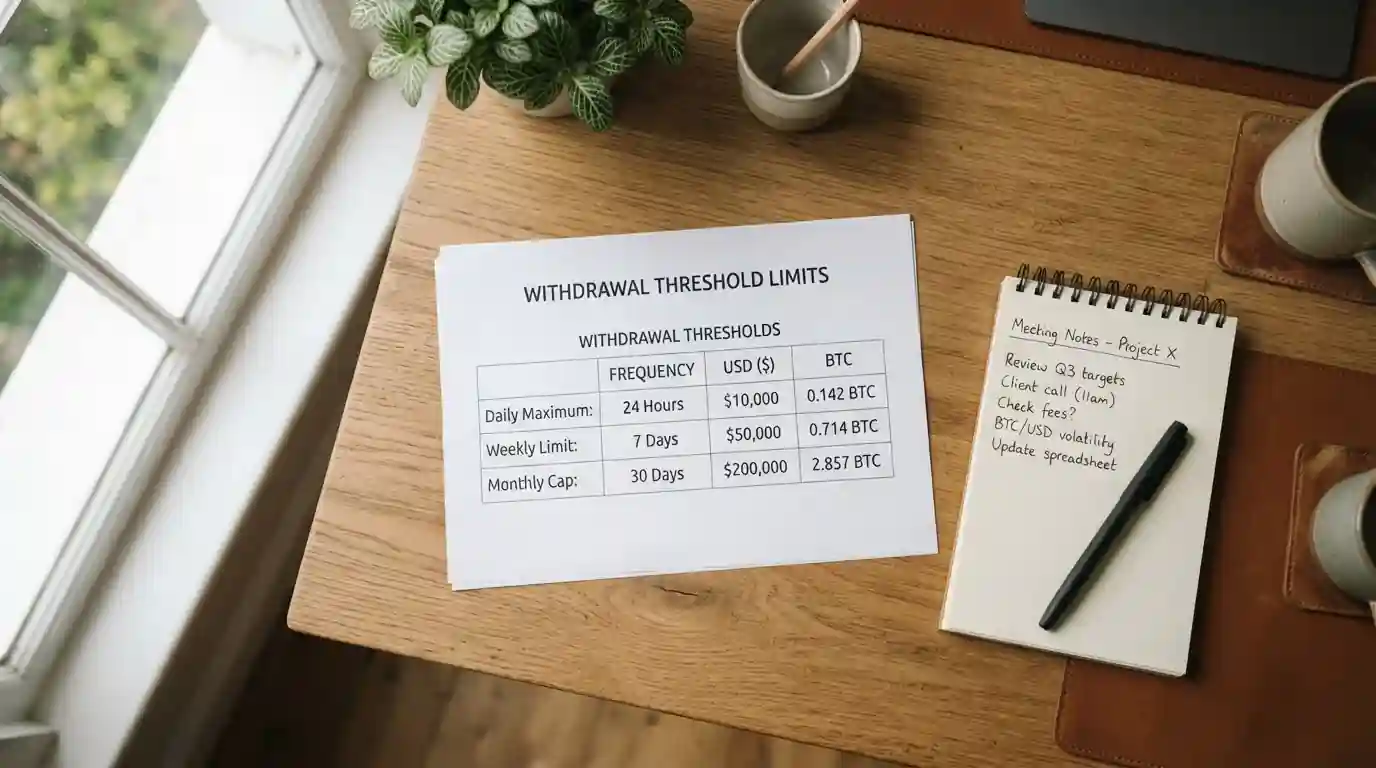
CloudBet publishes $2,200 cumulative deposits as its KYC trigger — one of the few operators transparent enough to state a number. FortuneJack enforces a threshold around $2,500 cumulative activity (deposits plus withdrawals). mBit Casino kicks in KYC at 1 BTC withdrawal, roughly $60,000–$70,000 at late-2026 exchange rates. Stake operates tiered verification: light checks auto-trigger near $2,000 in withdrawals, enhanced source-of-funds scrutiny above $10,000.
The rest keep thresholds unpublished and fluid. BC.Game, Roobet, TrustDice, and 7Bit all practice deferred KYC but don’t disclose the dollar amount where the gate drops. Complaints on player forums suggest Roobet’s threshold is inconsistent — some users report document requests on first A$500 cashout, others sail past A$5,000 before hitting a check. Risk-based algorithms weight factors beyond raw dollar totals: new accounts withdrawing immediately after deposit, VPN use from high-risk jurisdictions, sudden spikes in bet size, and cashouts that exceed deposits by wide margins all shorten the leash before verification fires.
What’s the difference between “no KYC” and “deferred KYC”?
No KYC means the operator never collects identity documents under any circumstances — a model that effectively no longer exists in the regulated space. Deferred KYC means documents aren’t required at signup or first deposit but will be requested at withdrawal or when you cross an activity threshold. Most casinos advertising “no verification” practice deferred KYC, not true no-KYC.
Do crypto casinos really never ask for documents?
Crypto casinos defer verification longer than fiat platforms because blockchain transactions provide pseudonymity without direct bank-account linkage, but every Curacao and Malta license now mandates AML compliance. Operators can and do request documents once cumulative withdrawals exceed internal thresholds — typically 1–2 BTC or equivalent — or if automated risk scoring flags your account. “Never” is rare; “not yet” is the norm.
Top No-Verification Withdrawal Casinos for Australians in 2026
Twelve offshore operators accept Australian players and delay identity checks past the first cashout. The list skews crypto-heavy — blockchain withdrawals process faster than PayID or e-wallets and sidestep the direct bank-account linkage that accelerates KYC triggers on fiat rails. All twelve operate under Curacao or Anjouan licenses with no ACMA approval, which means zero Australian consumer protection, no BetStop coverage, and dispute resolution that ends at the casino’s own support inbox. Withdrawal speeds and KYC thresholds vary sharply; some publish dollar figures, most keep limits opaque and adjust based on account behaviour.
BitStarz — Selective KYC and 10-Minute Crypto Payouts
BitStarz has run under Dama N.V.’s Curacao license since 2014, making it one of the longest-tenured crypto casinos still serving Australian players. The site offers 7,000+ games — slots from Pragmatic Play and BGaming, live dealer tables from Evolution, and provably fair originals — with both crypto (BTC, ETH, LTC, USDT, BCH, DOGE) and fiat support including AUD. Selective KYC means no upfront documents; verification triggers primarily at withdrawal or bonus cashout, but the operator does not request identity checks on every transaction.
Crypto payouts clear in roughly ten minutes with zero fees and no withdrawal caps — a 4.3/5 Trustpilot score across 5,000+ reviews suggests the process works as advertised for most players. The welcome package scales to 5 BTC or €500 plus 180 free spins across the first four deposits, with 40x wagering on bonus winnings. BitStarz accepts Australian registration without geo-blocks, processes AUD fiat deposits via cards and e-wallets, and allows players to switch between crypto and fiat mid-session. For small-to-mid withdrawals under a few thousand dollars, identity checks rarely trigger; larger cashouts or bonus-heavy play bring document requests more reliably.
GoldenCrown — PayID Deposits + Fast Crypto Withdrawals
GoldenCrown operates on a post-2024 Curacao license with 3,000+ pokies, live dealer Evolution tables, and dual-rail payments: PayID for instant AUD deposits from Australian bank accounts, crypto (BTC, ETH, LTC, USDT) for fast withdrawals. The welcome package reaches A$15,000 plus 300 free spins over the first three deposits, with standard 35x wagering on the bonus portion. Minimum withdrawal sits at A$45 for cards and crypto, A$300 for bank transfers; maximum per transaction caps at A$15,000.
KYC is required before the first withdrawal but the operator markets same-day document processing — upload a driver’s licence photo and proof of address, wait 24–48 hours for approval, then crypto cashouts clear in under an hour. This is deferred verification, not no-verification; the difference is timing. You can deposit and play immediately via PayID (funds hit your balance in under sixty seconds), but the first time you request a cashout the withdrawal queue pauses until identity documents clear review. For players willing to front-load the paperwork once, GoldenCrown delivers speed afterward; for those hunting true anonymity, it’s a poor fit because PayID inherently links your real bank account.
Wild.io — Crypto-Only Speed with 9,000+ Games
Wild.io launched in 2022 under Nonce Gaming B.V.’s Curacao license as a crypto-native platform with no fiat rail. The site lists 9,000+ games including slots, live dealer, crash titles, provably fair originals, and a sportsbook, all playable in BTC, ETH, USDT, LTC, or any of fifteen supported coins. The welcome bonus scales to 1.5 BTC (150% match) plus 100 free spins on first deposit, with 35x rollover on the bonus amount. Crypto withdrawals process in roughly ten minutes according to operator claims and third-party reviews.
KYC is deferred until withdrawal or risk threshold — the operator does not publish a dollar or Bitcoin ceiling but reserves the right to request documents at any time under Curacao’s post-2024 AML framework. Wild.io does not accept Australian fiat currency, does not integrate PayID, and has no phone verification. You register with an email, deposit crypto from a non-custodial or exchange wallet, and cash out to the same address. The setup favours pseudonymity for players staying under whatever internal threshold exists, but zero transparency around that threshold makes it a gamble whether your first A$1,000 cashout or your tenth triggers the document ask.
CloudBet — Documented $2,200 Threshold Since 2013
CloudBet operates under Halcyon Super Holdings B.V. in Curacao and has run a crypto sportsbook plus casino since 2013. The platform accepts BTC, ETH, USDT, and twenty-plus altcoins with no fiat option, offers provably fair originals alongside third-party slots and live dealer tables, and runs a no-wagering rewards program instead of traditional match bonuses — cashback and perks with no rollover strings. Withdrawal processing is fast for amounts under the published KYC threshold.
That threshold is $2,200 cumulative deposits, one of the few figures an operator states publicly. Cross it and document requests follow automatically. A documented case from 2022 saw a 38 BTC win voided after the player refused KYC post-payout request, underscoring the risk: “no verification” holds only while you stay under the ceiling, breach it and the operator can freeze or confiscate balances if you don’t comply. CloudBet’s transparency around the $2,200 trigger is rare and useful, but the confiscation precedent is a red flag. Bet Builder and Pulse features make the sportsbook side competitive; the casino library is smaller than newer competitors but provably fair games carry hash verification for outcome checking.
mBit Casino — Bitcoin-Native with 1 BTC Trigger
mBit Casino launched mid-2010s as a pure crypto platform — no fiat rail, no card deposits, BTC/ETH/LTC/USDT/BCH/DOGE only. The game library spans 3,000+ titles including provably fair BGaming slots, live dealer tables, and a sportsbook. The welcome package offers up to 4 BTC (325% match) plus free spins over multiple deposits, with 40x wagering. Crypto cashouts process in under an hour when no KYC check is triggered.
KYC fires at 1 BTC withdrawal cumulative — roughly A$95,000–A$105,000 at late-2026 rates. Stay under that ceiling and you can deposit, play, and cash out anonymously for months. Breach it and documents become mandatory, with a confiscation clause buried in the terms: “balance can be confiscated if KYC not completed within the stipulated timeframe.” Documented cases on nokycme.com show mBit freezing five-figure balances and demanding identity docs under threat of forfeiture. Large winners also report cashouts throttled into installments — a A$50,000 balance paid in A$5,000 weekly chunks, stretching payout over ten weeks. The custodial model means mBit holds private keys, so you trust the operator to honour withdrawals. For small-stakes players cycling under 1 BTC total, mBit delivers on the no-paperwork promise; for anyone chasing a big score, it’s a minefield.
Stake.com — Tiered Verification and High-Profile Backing
Stake operates under Medium Rare N.V. in Curacao and carries the highest brand visibility in crypto casinos — UFC sponsorship, Alfa Romeo F1 partnership, Drake endorsement deal. The platform runs a sportsbook and casino with extensive slots, live dealer from Evolution, and Stake Originals (Plinko, Dice, Mines, Crash) all provably fair. Crypto support spans BTC, ETH, LTC, USDT, and fifteen other coins; fiat rails exist but Australian players typically use crypto to dodge the slower card processing and higher KYC risk.
Tiered KYC auto-triggers around $2,000 in cumulative withdrawals for Level 1 verification (ID and selfie), with enhanced source-of-funds checks above $10,000. The system is aggressive — nokycme.com documents a pattern of five- and six-figure balances frozen at cashout under “sole discretion” AML clauses and VPN violation allegations, with slow or non-existent resolution. Stake’s terms grant the operator unilateral authority to withhold funds pending investigation with no defined timeline. Crypto payouts process fast when KYC is cleared and no flags exist, but the frequency of high-value confiscation cases makes Stake a risky choice for anyone planning withdrawals above four figures.
TrustDice — Provably Fair with Free Faucet
TrustDice runs on a Curacao license and offers 8,000+ games including slots, live dealer, provably fair originals, and a Pachinko lobby. Crypto support covers BTC, ETH, USDT, and twenty-plus coins, with a native TXT token that players can stake for yield. The welcome package scales to 3 BTC (claimed value $90,000) plus 100 free spins, with 40x wagering on bonus winnings. A free crypto faucet lets registered users claim small amounts every few hours — a marketing hook that costs the casino pennies but drives account creation.
KYC is deferred with no published threshold; the operator can request documents at any withdrawal under Curacao’s post-2024 framework. Trustpilot reviews and third-party assessments note bonus terms less favourable than advertised — the 3 BTC package requires max-bet spins at high risk tolerance, and rollover contributions vary by game type. TrustDice accepts Australian players without geo-blocks and processes crypto cashouts within hours when no manual review is triggered, but mixed reviews and opaque KYC triggers place it mid-tier for reliability.
7Bit Casino — PayID + Crypto Hybrid for Aussies
7Bit operates under Dama N.V. (same parent as BitStarz) with a Curacao license and offers 10,000+ games spanning slots, Evolution live tables, and table games. Dual-rail payments support crypto (BTC, ETH, LTC, USDT, DOGE) and fiat including AUD with PayID for instant deposits. The welcome package reaches A$10,800 (325% over four deposits) plus 250 free spins, with 40x wagering on bonuses. Minimum deposit scrapes A$1.20 via Dogecoin, the lowest documented floor among the casinos covered here.
Crypto withdrawals clear in under ten minutes once approved; e-wallet cashouts take 0–24 hours; cards and bank transfers stretch to 1–5 business days. KYC typically triggers at first withdrawal — 7Bit does not publish a cumulative threshold but most players report document requests on the initial cashout regardless of amount. The PayID integration offers convenience (instant AUD deposits from Australian banks) but inherently links your real identity via the bank account, making true anonymity impossible. For players who value speed over anonymity and don’t mind front-loading a KYC check once, 7Bit delivers; for those hunting no-documents play, the hybrid model undercuts the goal.
BC.Game — Native Token Ecosystem with Withdrawal Caps
BC.Game runs on a Curacao license with a large game library (slots, live dealer, provably fair originals, sportsbook), a native BC token for staking and rewards, and a yield vault offering crypto staking returns. Crypto support is extensive — BTC, ETH, USDT, and fifty-plus altcoins. Welcome bonuses vary by promotion, with some campaigns offering up to 780% across deposits. The platform markets itself as crypto-native with no fiat rail.
Withdrawal caps tighten when you win. Standard limits sit at €2,000 daily and €15,000 weekly, but when your account balance exceeds ten times your total deposits, the monthly cap drops from €10,000 to €5,000 — a punitive throttle on winning players documented by third-party reviews. KYC triggers on withdrawal with no published threshold, and nokycme.com records adjudicated confiscation cases where the operator froze balances under AML discretion. The native token ecosystem and DeFi integrations attract crypto enthusiasts, but the anti-winner withdrawal structure and documented balance freezes make BC.Game a poor choice for anyone planning to cash out meaningful winnings.
FortuneJack — 11 Years, $2,500 Threshold, Anjouan License
FortuneJack launched in 2014 and holds an Anjouan Gaming License (ALSI-202411021-FI1), a Comoros Islands jurisdiction with weaker regulatory oversight than post-2024 Curacao. The platform offers 3,120+ games (slots, live dealer, provably fair titles), a sportsbook, and hybrid crypto/fiat support including BTC, ETH, USDT, EUR, and USD. The welcome bonus focuses on free spins via a mission-based system rather than a large match percentage, with loyalty rewards for active players.
KYC triggers around $2,500 cumulative activity (deposits plus withdrawals), a threshold published by the operator and confirmed in third-party analysis. Stay under it and crypto payouts process instantly; breach it and document requests arrive. Anjouan licensing offers less consumer protection than Curacao’s GCB framework and no formal dispute resolution beyond the operator’s internal process. Nokycme.com documents confiscation cases under “predatory contract” clauses including multi-accounting allegations, dormant-account-to-zero fees, and sole-discretion customer-due-diligence holds. FortuneJack’s transparency on the $2,500 threshold is useful, but the weak license and confiscation track record are offsetting risks.
Roobet — RooWards Rakeback but Unpredictable KYC
Roobet operates under TekHou5 Limited’s Curacao license as a crypto-first casino and sportsbook. The game library includes slots, live dealer, and Roobet Originals, with RooWards offering up to 20% rakeback on all wagers — a daily cashback program that rewards volume regardless of outcomes. The welcome bonus scales to $7,500 plus 200 free spins, with 1% fees on fiat deposits (crypto deposits are fee-free). Players must wager deposits 1x before withdrawal, a standard anti-money-laundering requirement.
KYC timing is unpredictable. Complaint forums and third-party reviews report surprise verification requests on first withdrawals as low as A$500, while other users clear A$5,000+ before hitting a check. Geo-restrictions block fifty-plus countries officially, but VPN access is common and the operator rarely enforces blocks until withdrawal. Maximum fiat cashout caps at $10,000 per transaction. Multi-day withdrawal delays pending verification are documented in 2026 reviews, with some players waiting a week or more for KYC approval. RooWards rakeback is a strong value-add for grinders, but inconsistent KYC triggers and slow document processing make Roobet unreliable for anyone prioritising fast, frictionless cashouts.
King Billy — Operational Status Uncertain (Note in Text)
King Billy Casino was founded in 2017 and held an Antillephone N.V. license (8048/JAZ2020-13) under the old Curacao regime. The site offered slots, live dealer, table games, and a tiered VIP program with crypto (BTC, ETH, LTC) and fiat support. Trustpilot showed a 3.6/5 rating as of March 2026 based on player reviews from kingbilly-india.com archives.
Operational status is ambiguous. Independent sources report site closure as of June 2026, but WHOIS records show the domain registered through 2027. It’s unclear whether King Billy restricted access in certain markets (including Australia), underwent licensing transition after Curacao’s 2024 reform, or ceased operations entirely. As of late 2026, the site does not reliably accept new Australian registrations. Players considering King Billy should verify current operational status and licensing before depositing; if the site is inaccessible or unresponsive, it should be treated as inactive.
| Operator | License | KYC Threshold | Withdrawal Speed | Key Feature |
|---|---|---|---|---|
| BitStarz | Curacao (Dama N.V.) | Selective, no published figure | ~10 min (crypto) | 7,000+ games, 4.3/5 Trustpilot, 11+ years |
| GoldenCrown | Curacao | First withdrawal (after doc approval) | ~1 hour (crypto) | PayID deposits, A$15,000 welcome |
| Wild.io | Curacao (Nonce Gaming) | Unpublished, deferred | ~10 min (crypto) | Crypto-only, 9,000+ games |
| CloudBet | Curacao (Halcyon) | $2,200 cumulative deposits | Fast under threshold | Published threshold, 12+ years, 38 BTC confiscation case |
| mBit | Curacao | 1 BTC withdrawal | <1 hour (crypto) | Crypto-only, confiscation clause, throttled large payouts |
| Stake | Curacao (Medium Rare) | ~$2,000 (Level 1), $10,000+ (enhanced) | Fast when cleared | UFC/F1 sponsor, tiered KYC, five-figure freeze cases |
| TrustDice | Curacao | Unpublished, deferred | Hours (crypto) | Free faucet, TXT token staking, 8,000+ games |
| 7Bit | Curacao (Dama N.V.) | First withdrawal typically | <10 min (crypto) | PayID support, A$1.20 min deposit (DOGE), Dama network |
| BC.Game | Curacao | Unpublished, deferred | Fast but capped | Native token, withdrawal caps tighten when winning |
| FortuneJack | Anjouan | ~$2,500 cumulative | Instant under threshold | 11 years, weak license, confiscation cases |
| Roobet | Curacao (TekHou5) | Unpredictable | Slow (multi-day delays) | 20% RooWards rakeback, inconsistent KYC triggers |
| King Billy | Antillephone (pre-reform) | Unknown | Unknown | Uncertain operational status as of 2026 |
How do I know if a no-verification casino is safe or a scam?
Check the license first — post-2024 Curacao GCB licenses and Malta Gaming Authority approvals carry enforced AML standards, while Anjouan and older Antillephone licenses offer minimal oversight. Look for published KYC thresholds (CloudBet $2,200, FortuneJack $2,500) as transparency signals; avoid operators with vague “we may request documents at any time” language and no stated limits. Review third-party complaint sites (nokycme.com, Trustpilot) for patterns of balance freezes, confiscated winnings, or multi-week withdrawal delays. Test with a small deposit and cashout before committing larger sums, and never play at a site that asks for documents upfront but markets itself as “no verification.”

Payment Methods That Enable No-Verification Withdrawals
Payment method determines whether anonymity is possible or merely deferred. Cryptocurrency wallets provide pseudonymous transactions because blockchain addresses carry no inherent link to real-world identity — unless you bought the coins through a KYC exchange, in which case the trail exists one hop back. PayID and bank transfers inherently tie your casino account to a verified bank account bearing your legal name, making true anonymity impossible even if the casino defers identity checks. E-wallets sit in the middle: Skrill, Neteller, and ecoPayz conduct their own KYC, but the casino may defer its own document requests until a cumulative threshold triggers.
Speed and threshold dynamics shift with the rail. Crypto withdrawals process in 10–60 minutes once approved, with KYC typically deferred until cumulative withdrawals cross 1–2 BTC or the fiat equivalent. PayID cashouts are instant on the NPP rail once the casino releases funds, but document requests often fire at the first withdrawal because the bank-account linkage flags higher AML scrutiny. E-wallet payouts take 0–24 hours post-approval and may not trigger KYC until several thousand dollars move, but Skrill and Neteller freeze accounts independently if their own compliance teams flag suspicious activity. Cards are slowest (1–5 business days) and almost always require upfront identity verification because card networks demand cardholder authentication.
Cryptocurrency — True Pseudonymity and 10-Minute Processing
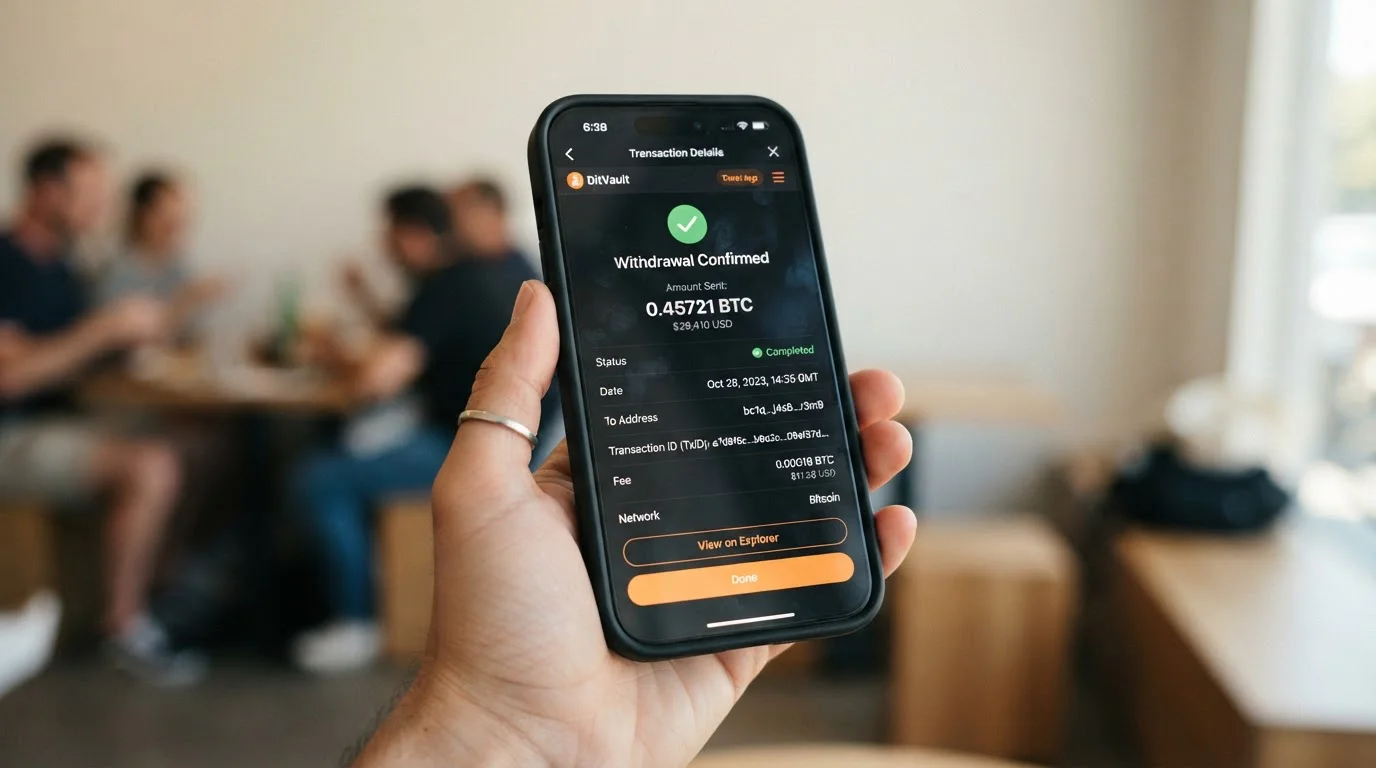
Bitcoin, Ethereum, Litecoin, Tether (USDT), and other cryptocurrencies enable blockchain-based transactions where your casino account connects to a wallet address rather than a bank account. The operator sees the public address (e.g., 1A1zP1eP5QGefi2DMPTfTL5SLmv7DivfNa for Bitcoin) but not your name, physical address, or government ID unless they request documents separately.
Processing speed is the fastest in the industry. Bitcoin withdrawals clear in 10–60 minutes depending on network congestion and the casino’s batching schedule. Ethereum and Litecoin are quicker (5–20 minutes), while stablecoin USDT on Tron or Ethereum networks clears in under ten minutes. Minimum withdrawal limits vary widely: BitStarz has no published crypto minimum, mBit enforces thresholds tied to coin type (0.0005 BTC or equivalent), BC.Game sets 21 USDT as the floor. Maximum limits are either absent or set so high (10+ BTC per transaction) that practical constraints come from KYC triggers, not technical caps.
Anonymity holds only if the wallet you use is non-custodial (you control the private keys) and you acquired the crypto without KYC. Buying Bitcoin on Coinbase, Binance, or any regulated exchange creates an identity trail; withdrawing casino winnings to that same exchange wallet gives the exchange a record of gambling income. Using a non-custodial wallet like Electrum or hardware wallet (Ledger, Trezor) and acquiring crypto peer-to-peer or via no-KYC exchanges preserves pseudonymity, but few players execute this cleanly. Most cashout paths leak identity at some point in the chain.
PayID — Instant Australian Deposits but Identity-Linked
PayID is Australia’s New Payments Platform (NPP) instant-payment identifier, letting you link a mobile number or email to your bank account for real-time transfers. Several offshore casinos serving Australians — GoldenCrown, 7Bit — integrate PayID for AUD deposits, which clear in under sixty seconds with zero fees.
The identity leak is inherent. PayID requires a verified Australian bank account, which means your legal name, address, and financial institution are directly tied to your casino account the moment you deposit. Even if the casino practices deferred KYC and doesn’t ask for a driver’s licence immediately, your real identity is on record via the bank linkage. Withdrawal speed is instant once the casino approves the payout (NPP processes in seconds), but document requests commonly fire at the first cashout because AML systems flag the fiat-to-gambling transaction flow.
Minimum PayID deposits at casinos supporting it typically start at A$20–A$50; minimums for withdrawal sit at A$45–A$100. Maximum per-transaction limits range from A$10,000 to A$15,000 depending on the operator. If anonymity is the goal, PayID defeats it; if speed and convenience within Australia are priorities and you’re willing to accept identity linkage, it’s the best fiat option available offshore.
E-Wallets — Semi-Anonymous Middle Ground
Skrill, Neteller, and ecoPayz act as intermediaries between your bank account and the casino. You fund the e-wallet via bank transfer or card (which triggers the e-wallet’s own KYC), then deposit to the casino using the e-wallet balance. The casino sees the e-wallet transaction but not your underlying bank details unless they request documents separately.
Processing speed sits between crypto and cards: e-wallet deposits are instant, withdrawals take 0–24 hours once approved by the casino. Minimum deposit limits are typically A$20–A$50, minimum withdrawals A$50–A$100, and maximum withdrawals cap around A$10,000–A$15,000 per transaction depending on the casino and the e-wallet provider. Skrill and Neteller charge 1–2% transaction fees on casino deposits in some regions, though many offshore operators absorb the cost.
Anonymity is semi-preserved: the casino may defer its own document request until you cross a cumulative threshold, but Skrill, Neteller, and ecoPayz all enforce mandatory KYC on their platforms. If the e-wallet provider flags your account for suspicious activity — high transaction volume, frequent gambling deposits, sudden spikes in balance — they can freeze your funds and demand enhanced due diligence independent of what the casino does. The two-layer KYC risk (e-wallet provider plus casino) makes e-wallets less reliable for no-verification play than crypto, but faster and more accessible than pure blockchain options for players without existing coin holdings.
Cards and Bank Transfers — Slowest and Always Trigger KYC
Visa, Mastercard, and direct bank transfers are the slowest rails and offer zero anonymity. Card deposits are instant but withdrawals stretch to 1–5 business days as funds move through card-network settlement systems and banking intermediaries. Bank transfers (not PayID, but traditional wire or EFT) take 3–7 business days inbound and outbound.
KYC fires almost immediately. Card payments and bank transfers directly link your legal name, billing address, and financial institution to your casino account, triggering enhanced AML screening. Most offshore casinos request identity documents before processing the first card or bank-transfer withdrawal, regardless of amount. Minimum and maximum limits vary by operator, but card cashouts are often capped at A$5,000–A$10,000 per transaction with multi-day waits between requests.
For players prioritising no-verification withdrawals, cards and bank transfers are non-starters. They combine the worst of all worlds — slowest processing, mandatory identity linkage, and KYC that cannot be deferred.
| Payment Method | Anonymity Level | Processing Speed (Withdrawal) | KYC Trigger Point | Min/Max Limits (Typical) |
|---|---|---|---|---|
| Cryptocurrency (BTC, ETH, USDT) | High (pseudonymous) | 10–60 minutes | 1–2 BTC cumulative or $2,000–$10,000 | Min: 0.0005 BTC or equivalent; Max: 10+ BTC per transaction |
| PayID | None (bank-linked) | Instant (0–24 hours approval) | First withdrawal (identity known via bank) | Min: A$45–A$100; Max: A$10,000–A$15,000 |
| E-Wallets (Skrill, Neteller, ecoPayz) | Medium (casino-deferred, e-wallet KYC required) | 0–24 hours | Casino: $2,000–$5,000 cumulative; E-wallet: enforced KYC | Min: A$50–A$100; Max: A$10,000–A$15,000 |
| Cards (Visa, Mastercard) | None (cardholder ID required) | 1–5 business days | First withdrawal | Min: A$50; Max: A$5,000–A$10,000 per transaction |
| Bank Transfer | None (account holder ID required) | 3–7 business days | First withdrawal | Min: A$300; Max: varies (A$15,000+) |
What payment methods let me withdraw without ID verification?
Cryptocurrency wallets (Bitcoin, Ethereum, Tether, Litecoin) offer the highest anonymity because blockchain transactions are pseudonymous and casinos typically defer KYC until cumulative withdrawals reach 1–2 BTC or several thousand dollars. E-wallets like Skrill and Neteller provide partial anonymity — the casino may defer its own document request, but the e-wallet enforces KYC independently. PayID, cards, and bank transfers all require identity linkage at the first transaction and offer no anonymity.
What’s the fastest no-verification withdrawal method for Australians?
Cryptocurrency withdrawals process in 10–60 minutes for Bitcoin and Ethereum, 5–20 minutes for Litecoin, and under ten minutes for Tether on Tron. PayID withdrawals are instant on the NPP rail once the casino approves the payout (0–24 hours), but PayID inherently links your identity via your bank account. E-wallets clear in 0–24 hours. Cards and bank transfers are slowest at 1–7 business days.

The Australian Legal Reality — Offshore Casinos and the IGA
Australia’s Interactive Gambling Act 2001 prohibits online casino services — pokies, table games, live dealer — from being offered to Australian residents by any operator, domestic or international. The law does not distinguish between licensed offshore platforms and unlicensed rogue sites; all online casino play is illegal to provide under the IGA. Sports betting is legal and regulated by state and territory authorities (Northern Territory, states), but casino products are excluded.
No locally licensed online casinos exist because none are permitted. ACMA (Australian Communications and Media Authority) enforces the IGA by blocking domain access to offshore gambling sites and requesting banks and payment processors refuse transactions to illegal operators. More than 1,000 offshore gambling domains have been blocked since 2017, with new blocks added continuously. The August 2026 Interactive Gambling Amendment introduced additional enforcement powers: ACMA can now instruct financial institutions to block transactions to specific operators, though implementation timelines remain unclear and banks have not yet uniformly refused offshore casino payments as of late 2026.
Why No Locally Licensed Online Casinos Exist in Australia
The IGA’s prohibition on online casino services is explicit. Section 15 of the Act makes it an offence to provide “real-money interactive gambling services” to Australian-based customers, with penalties up to AUD $6.6 million for individuals and $33 million for corporations per violation under updated AML/CTF enforcement rules. Land-based casinos operate under state licenses (Crown Melbourne, The Star Sydney, Treasury Brisbane), but these venues cannot extend their offerings to remote online play under current federal law.
Regulatory reform discussions recur but have not shifted the core prohibition. The 2026 amendment focused on age verification for app downloads, advertising restrictions, and transaction-blocking powers for ACMA, but did not legalise online casino services. No state or territory has lobbied to carve out a local licensing framework for online pokies or table games, and federal appetite for legalisation remains absent. The result is a domestic market with zero legal supply and millions of Australians accessing offshore operators in a grey market the government cannot fully suppress.
ACMA Enforcement — Domain Blocks, Not Player Prosecution
ACMA enforcement targets operators, not players. No Australian resident has been prosecuted for using an offshore casino. The regulator’s toolkit includes domain blocking (ISPs are instructed to refuse DNS resolution for blacklisted gambling sites), payment disruption (requesting banks and card networks decline transactions to known offshore operators), and correspondence with offshore regulators (though Curacao, Malta, and Anjouan rarely cooperate with Australian enforcement requests).
Domain blocking is easily bypassed. VPN use is legal in Australia, and most offshore casinos operate multiple mirror domains to circumvent blocks. Players who find their preferred site inaccessible via direct URL can switch to a .net or .org mirror, use a VPN to mask their location, or access the site via mobile app where available. ACMA lacks the technical capability to block VPN traffic or prevent mirror-site proliferation, so blocking functions as a speed bump rather than a barrier.
The August 2026 amendment empowers ACMA to block financial transactions by instructing banks, card networks, and payment processors to refuse payments to designated offshore operators. Implementation requires coordination with financial institutions, and as of late 2026 there are no public reports of widespread transaction blocking. Crypto payments bypass this mechanism entirely because blockchain transactions occur peer-to-peer with no intermediary that ACMA can compel.
What You Forfeit Using Offshore Sites (Consumer Protection, BetStop, Dispute Resolution)
Australian consumer protection laws do not cover offshore gambling. The Australian Consumer Law (ACL) applies only to goods and services supplied within Australia by Australian-registered entities. Offshore casinos operating under Curacao or Anjouan licenses fall outside ACL jurisdiction, which means no recourse for misleading advertising, unfair contract terms, or failure to pay winnings.
BetStop, Australia’s National Self-Exclusion Register launched in 2023, does not cover offshore operators. Registering with BetStop blocks your access to licensed Australian sports betting sites but has zero effect on offshore casinos because those operators are not integrated into the BetStop system and have no legal obligation to honour the register. Problem gamblers seeking self-exclusion from offshore casinos must contact each operator individually and hope they comply, with no enforcement mechanism if they refuse.
Dispute resolution ends at the casino’s support desk. Licensed Australian betting operators are required to participate in external dispute resolution schemes (e.g., state gambling commissions, industry ombudsmen). Offshore casinos have no such obligation. If an operator refuses to pay a withdrawal, alleges terms-of-service violations, or confiscates your balance under an AML clause, your only recourse is contacting the licensing authority (Curacao Gaming Control Board, Anjouan Gaming Authority). Response times are measured in weeks or months, outcomes favour the operator in the majority of cases, and enforcing a favourable ruling is practically impossible if the operator ignores it.
Can I legally withdraw from a no-verification casino in Australia?
Withdrawing winnings from an offshore casino is not illegal for Australian players under the Interactive Gambling Act — the IGA criminalises providing online casino services to Australians, not using them. No Australian resident has been prosecuted for playing at or withdrawing from an offshore casino. However, offshore operators have no ACMA license and fall outside Australian consumer protection, meaning disputes over withdrawals have no local legal recourse.
Can ACMA block my withdrawal from an offshore casino?
ACMA can block domain access to offshore casinos and request financial institutions refuse deposits to those operators, but cannot directly block a cryptocurrency withdrawal moving from a casino’s wallet to your non-custodial wallet because blockchain transactions are decentralised. PayID and bank-transfer withdrawals move through Australian financial rails where ACMA’s new transaction-blocking powers theoretically apply, but as of late 2026 widespread blocking has not been implemented. Players using crypto face no withdrawal-blocking risk from ACMA; those using fiat rails face theoretical future risk if transaction blocking is enforced broadly.
What Happens If You Refuse KYC or Trigger a Check
Refusing KYC when a casino requests it results in frozen withdrawals and, in many cases, balance confiscation. Every Curacao and Anjouan license mandates AML compliance, which legally empowers operators to withhold payouts until identity verification completes. Terms-of-service clauses grant casinos unilateral authority to freeze accounts, void winnings, and confiscate deposits if you don’t provide documents within a stipulated timeframe — typically 7–30 days from the request.
mBit Casino’s terms state explicitly: “balance can be confiscated if KYC not completed within the stipulated timeframe.” CloudBet voided a 38 BTC win (roughly $2.5 million at time) after the player refused post-withdrawal KYC, citing AML obligations. Stake freezes accounts under “sole discretion” clauses when KYC is triggered but not satisfied, with nokycme.com documenting five- and six-figure balances held for weeks or permanently confiscated. FortuneJack’s contract includes a “predatory” dormant-account clause where inactive balances can be reduced to zero via administrative fees after 180 days, and KYC refusal accelerates this.
The process unfolds predictably. You request a withdrawal, the casino’s AML system flags your account (threshold breach, large win, risk-scoring hit), and an email arrives: “To process your withdrawal, please upload a government-issued ID, a selfie holding the ID, and proof of address dated within ninety days.” Providing the documents clears the hold within 24–72 hours at reputable operators. Refusing or ignoring the request keeps your balance locked. After 7–30 days (operator-dependent), the casino invokes the confiscation clause, closes your account, and keeps the funds. Some operators offer a partial return of deposits minus winnings; others confiscate the entire balance.
Appeals are futile. Curacao Gaming Control Board and Anjouan Gaming Authority rarely overturn operator decisions on KYC refusal because AML compliance is legally mandated. Third-party mediation (e.g., askgamblers.com, casinomeister.com) sometimes negotiates deposit returns but cannot force operators to pay disputed winnings. The legal position is clear: by accepting the terms of service at signup, you agreed to provide identity documents on request, and refusal breaches the contract.
Players who want to avoid this trap have two options: stay under published KYC thresholds (CloudBet $2,200, FortuneJack $2,500, mBit 1 BTC) and cash out frequently in small amounts, or accept that hitting a big win will trigger verification and have documents ready before requesting large withdrawals. The “refuse and hope they pay anyway” strategy fails in 100% of documented cases.

What happens if I refuse to complete KYC when asked?
Refusing KYC results in frozen withdrawals and, in most cases, balance confiscation. Curacao and Anjouan licenses mandate AML compliance, and every offshore casino’s terms grant the operator authority to withhold payouts and confiscate funds if you don’t provide identity documents within the stipulated timeframe (typically 7–30 days). Documented cases show mBit, CloudBet, Stake, and FortuneJack confiscating balances ranging from four to seven figures after players refused or ignored KYC requests. Appeals to licensing authorities rarely succeed.
Bonuses and No-Deposit Offers at No-Verification Casinos
Welcome packages at no-KYC casinos cluster in the A$5,000–A$15,000 range with 100–300 free spins. GoldenCrown offers A$15,000 plus 300 spins over three deposits; 7Bit reaches A$10,800 plus 250 spins across four; BitStarz scales to 5 BTC or €500 plus 180 spins. Wagering requirements sit at 35x–40x on the bonus amount, with slot contributions at 100%, table games at 10–20%, and live dealer often excluded entirely. Maximum bet limits while clearing bonuses range from A$5 to A$10 per spin; breaching these voids the bonus and any winnings derived from it.
No-deposit bonuses are rare and small. TrustDice’s free faucet offers claimable micro-amounts (a few cents in crypto) every few hours, functioning more as a marketing hook than a genuine no-risk trial. A handful of operators run no-deposit free-spins promotions (10–50 spins on selected slots) with 50x–60x wagering on winnings and maximum cashout caps at A$50–A$100, but these require registration and often trigger KYC at the cashout stage regardless of the small amount.
Bonus hunters trigger KYC faster. Operators flag accounts that claim welcome bonuses, clear wagering, and immediately withdraw without further play. Multi-accounting to harvest multiple welcome bonuses is explicitly banned and results in confiscation under terms-of-service clauses. The bonus math rarely favours the player — a A$1,000 deposit with a 100% match and 40x wagering on the bonus requires A$40,000 in total bets to clear A$1,000 in bonus funds, with house edge grinding the expected value negative unless you hit a large win during rollover.
For players prioritising no-verification withdrawals, bonuses add risk: they extend playtime (higher chance of AML flags), lock balances under wagering requirements (cannot withdraw until rollover completes), and attract compliance scrutiny (bonus abuse is a common excuse for KYC requests). Depositing without bonuses and playing at lower volume keeps you under the radar longer.
Crypto Casino Basics — Provably Fair Games and Blockchain Verification
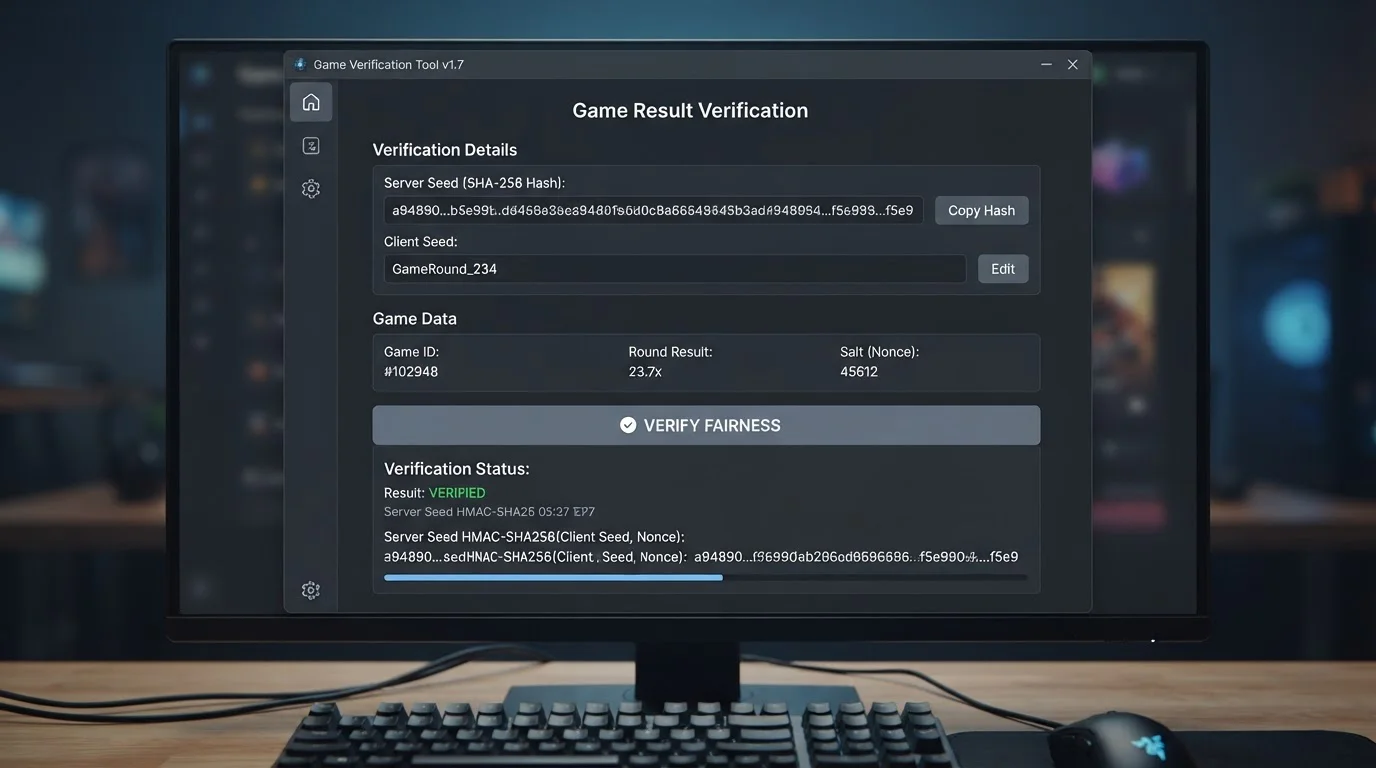
Provably fair gaming lets players verify that game outcomes were not manipulated after the bet was placed. The operator generates a server seed (a random string), the player provides a client seed (another random string), and the two are combined and hashed via SHA-256 or similar algorithm to determine the outcome (e.g., dice roll, card draw, slot reel position). The server seed is published as a hashed value before the bet, and the full unhashed seed is revealed after the round completes, allowing the player to recompute the hash independently and confirm the outcome was not altered post-bet.
Stake Originals (Plinko, Dice, Mines, Crash), BitStarz provably fair slots, TrustDice originals, and BC.Game in-house titles all implement this system. After each bet, the game interface displays the server seed, client seed, nonce (round counter), and the resulting hash. Copy these values into an independent verification tool (many casinos provide one, third-party verifiers exist at provablyfair.io and similar sites) and recompute the hash. If the output matches the result you saw in the game, the round was fair; if not, the operator manipulated the outcome.
Traditional third-party slots from Pragmatic Play, NetEnt, Evolution live dealer, and other major providers do not use blockchain verification. These games rely on certified RNG (random number generation) from independent testing labs like eCOGRA, GLI, and iTech Labs, but the player has no direct cryptographic proof of fairness. Most crypto casinos mix both: provably fair originals for transparency-focused players, and third-party certified slots for variety and brand recognition.
Blockchain transparency applies only to the financial rails and provably fair games. Your deposit and withdrawal transactions are recorded on-chain and visible via blockchain explorers (e.g., blockchain.com for Bitcoin, etherscan.io for Ethereum), showing amounts, timestamps, and wallet addresses. However, your gameplay, bet history, and winnings are stored in the casino’s internal database, not on-chain, because recording every spin on a public blockchain would be prohibitively expensive and slow. If the casino goes offline or refuses to pay, your bet history is not independently recoverable unless you kept screenshots or logs.
How to Identify a Legitimate No-KYC Casino (Red Flags and Green Lights)
License type is the first filter. Post-2024 Curacao GCB licenses under the LOK framework enforce mandatory AML/KYC compliance, 38% of applicants were rejected during the transition, and year-one costs run €130,000–€150,000 including compliance infrastructure. Operators with new Curacao GCB licenses (look for a license number starting with a post-2024 date and issued by the Curacao Gaming Control Board directly, not Antillephone or other sub-licensors) face stricter oversight than the old Antillephone regime. Malta Gaming Authority licenses are stronger still but rare among no-KYC casinos because MGA requires upfront identity verification for all players.
Anjouan licenses (Comoros Islands) offer weak regulatory oversight with minimal consumer protection and no enforced dispute resolution. Operators can obtain an Anjouan license for a fraction of Curacao’s cost and face virtually no compliance audits. FortuneJack holds an Anjouan license; operational history since 2014 provides some track record, but the licensing regime itself is closer to unregulated than legitimate. Unlicensed casinos — those displaying no license information or claiming a license that cannot be verified via the regulator’s public register — should be avoided entirely.
Published KYC thresholds signal transparency. CloudBet states $2,200 cumulative deposits, FortuneJack ~$2,500, mBit 1 BTC — these are specific, verifiable figures. Casinos that say only “we may request documents at any time” without a threshold are less predictable and more likely to spring surprise checks at first withdrawal. Reviewing third-party complaint databases (nokycme.com, casinomeister.com, askgamblers.com, Trustpilot) reveals patterns: balance freezes, confiscated winnings, multi-week withdrawal delays. One complaint is noise; dozens following the same pattern (e.g., Stake’s tiered-KYC freezes, BC.Game’s withdrawal-cap tightening, mBit’s 1 BTC confiscations) are signal.
Test with a small deposit and cashout before committing large sums. Deposit 0.01 BTC or A$100, place a few bets, request a withdrawal, and see whether it processes cleanly or triggers an immediate document request. Legitimate no-KYC casinos clear small withdrawals in minutes to hours with no friction. Sites that hold your first A$100 cashout for “manual review” or demand ID on a test withdrawal are unreliable at scale. Never send documents to a site advertising “no verification” that asks for ID before you’ve even played — this is either a scam or false advertising.
Green lights: operating history of 5+ years (BitStarz since 2014, CloudBet since 2013, FortuneJack since 2014), Trustpilot rating above 4.0 with 1,000+ reviews, published KYC thresholds, post-2024 Curacao license, responsive 24/7 live chat, clean complaint history on third-party mediation sites. Red flags: no license or unverifiable license, operating less than two years, vague KYC terms, Trustpilot below 3.0 or suspiciously perfect 5.0 with few reviews, patterns of confiscated winnings on nokycme.com, multi-week withdrawal delays, domain recently registered per WHOIS.
Curacao’s licensing reform replaced the fragmented Antillephone and Curacao eGaming sub-licensor system with a unified GCB LOK framework enforcing stricter AML/KYC, game fairness audits, and financial segregation requirements. The transition ran through 2024–2026, with a 38% rejection rate among applicants and year-one costs of €130,000–€150,000 per operator including compliance infrastructure, third-party audits, and application fees. Operators holding old Antillephone licenses (identifiable by license numbers like 8048/JAZ2020-13) that have not transitioned to new GCB licenses are in regulatory limbo — either non-compliant, shut down, or operating on expired authorisation.
The reform introduces mandatory CDD (customer due diligence) procedures even for crypto-only casinos, meaning every Curacao-licensed operator now must have KYC infrastructure and can deploy it at their discretion. “No KYC” casinos on new Curacao licenses are more accurately “deferred KYC” because the operator is legally required to collect identity documents when AML risk thresholds trigger. The reform tightens the grey-market space but does not eliminate it; operators simply defer checks longer and hope most players stay under thresholds.
Tax and Winnings — Do You Pay on Offshore Casino Cashouts?
Gambling winnings are not taxable income in Australia for recreational players. Whether you win at a land-based venue, a licensed Australian sports betting site, or an offshore casino, the ATO (Australian Taxation Office) does not treat winnings as assessable income. Professional gamblers who earn the majority of their income from gambling may be assessed differently under trading or business-income rules, but this applies to a tiny fraction of players and requires demonstrating gambling as a primary income source with systematic profit-making intent.
Offshore casino cashouts do not trigger automatic reporting to the ATO. Cryptocurrency withdrawals to a non-custodial wallet occur on-chain with no third-party intermediary that could report the transaction. PayID and bank-transfer withdrawals move through Australian financial institutions, but AUSTRAC (Australian Transaction Reports and Analysis Centre) reporting thresholds for suspicious-matter reports are set at AUD $10,000 per transaction or cumulative suspicious activity, and gambling winnings withdrawn to an Australian bank account are not inherently suspicious under AML/CTF rules.
Capital-gains tax applies to cryptocurrency if the coins appreciate between acquisition and disposal. If you buy 0.1 BTC at $60,000 (A$0.006 per BTC), use it to deposit at a casino, and later withdraw 0.15 BTC when Bitcoin is worth $70,000, the 0.05 BTC gain is subject to CGT. However, calculating this across dozens of casino deposits and withdrawals is complex, and enforcement is minimal for amounts under five figures. The ATO has no direct visibility into offshore casino play unless you declare it or a financial institution reports large transfers.
The practical takeaway: recreational players do not owe income tax on casino winnings, offshore or domestic, but large crypto holdings appreciated since purchase may incur CGT if you convert to fiat. Keeping records of cryptocurrency purchase prices and casino withdrawal amounts is prudent if balances are substantial, but most players at the A$500–A$5,000 withdrawal level face zero tax liability.
Do I pay tax on winnings from offshore no-verification casinos in Australia?
Gambling winnings are not taxable income for recreational players in Australia under ATO rules, whether the source is a land-based casino, a licensed Australian betting site, or an offshore casino. Professional gamblers who derive the majority of their income from gambling may face different treatment, but this applies to very few players. Cryptocurrency gains (appreciation between purchase and withdrawal) may incur capital-gains tax, but gambling winnings themselves are tax-free for recreational play.
Fast Payout Casinos Australia 2026 — Instant Withdrawal Guide
Content created by the «Aussie Cashier» team