
Instant Bank Transfer Casino Australia 2026 — Top 10 Tested for Speed
 Available in AU

The label “bank transfer casino” hides at least four distinct payment rails in Australia right now. Legacy BECS clears in one to three business days. BPAY takes roughly the same. PayID and Osko land in under a minute. The speed gap between the slowest and fastest is three business days versus eight seconds, which matters more than any welcome bonus when you’re waiting on a withdrawal.
Every casino listed below accepts Australian players and processes bank transfers. None holds an Australian license because online casino is prohibited here under the Interactive Gambling Act 2001. They operate offshore—primarily from Curaçao—and route deposits through the same banking rails Australians use for everyday payments. That creates friction. CBA, NAB, Westpac, and ANZ all offer gambling blocks that can silently reverse a deposit the same day. From January 2027, the Interactive Gambling Amendment Act 2026 gives banks new powers to refuse transactions to prohibited services outright.
This is the applied map: which operators work, which payment rails they support, and the concrete trade-offs you’ll encounter moving money in and out.
Top 10 Instant Bank Transfer Casinos Australia 2026
The table below ranks operators by verified withdrawal speed. Stated terms often promise “instant,” but the actual time from approval to funds in your account varies widely. PayID is the fastest rail when it works. Crypto beats it only at sites with genuinely instant approval queues. Bank wire and BECS still take days.
| Operator | License | Min Deposit | Withdrawal Speed | Payment Rails | Distinguishing Feature |
|---|---|---|---|---|---|
| SkyCrown | Curaçao | A$30 | 9-11 min (PayID) | PayID, crypto, e-wallets | Verified fastest PayID median |
| RocketPlay | Curaçao GCB | A$20 | 1-4 hours (PayID) | PayID, crypto, bank transfer | Tested over 6 weeks, 14 cycles |
| Jeetcity | Curaçao | A$30 | 1-2 days (PayID) | PayID, card, crypto | 6,000+ games, A$7,500 daily cap |
| Spinrise | Curaçao | A$20 | 2-3 hours | PayID, card, crypto, BPAY | 18,000+ titles |
| Bizzo | Curaçao + Kahnawake | A$15 | Instant-24h (crypto) | PayID, card, crypto | Dual jurisdiction licensing |
| Stake | Offshore | A$10 | 1h 50m (crypto) | Bank transfer, crypto | Provably fair, major brand |
| Oshi | Curaçao | A$15 | 1-4 hours | PayID, crypto, e-wallets | Operating since 2015 |
| FastPay | Offshore | A$20 | 1-3 days | Bank transfer, e-wallets | Brand name signals speed |
| PlayAmo | Curaçao | A$20 | 1-3 days | Bank transfer, e-wallets | Novatrix platform |
| Fair Go | Curaçao | A$20 | 24h (crypto), 3-5 days (wire) | Bank transfer, crypto | RTG-exclusive, AUD-only |
Which Australian online casinos accept instant bank transfers in 2026?
Ten offshore operators serve Australian players with bank transfer rails: SkyCrown, RocketPlay, Jeetcity, Spinrise, Bizzo, Stake, Oshi, FastPay, PlayAmo, and Fair Go. All are Curaçao-licensed or hold equivalent offshore permits. PayID and Osko (the instant rails) are supported at the first seven. Legacy BECS and international wire are available across the board but take days instead of minutes.
1. SkyCrown — 9-Minute PayID Withdrawals
SkyCrown clocked the fastest verified PayID payout in 2026 testing: a 9-minute median from approval to funds landing in an Australian bank account, with consistent results under 20 minutes across multiple withdrawal cycles. The casino operates under a Curaçao license and offers over 5,000 pokies plus live dealer tables. Crypto withdrawals cleared in 1 hour and 6 minutes during an April 2026 test with real AUD, placing it ahead of the typical 4-hour offshore benchmark.
The welcome package scales to A$8,000 plus 400 free spins distributed across multiple deposits. Minimum deposit sits at A$30 for PayID and most other methods. Stated withdrawal time is 2 to 4 hours for PayID, but actual clearing runs faster once the casino’s internal approval completes. Verification is required before the first cashout. For players prioritising withdrawal speed over game selection size, SkyCrown delivers the tightest turnaround in the segment.
2. Jeetcity Casino — 6,000+ Games, High Limits
Jeetcity surfaced in the Australian market in 2023 and operates under the Dama N.V. umbrella with a Curaçao license issued by Antillephone N.V. The casino supports AUD as an account currency and lists 6,000+ games across pokies, live dealer, and table categories. Minimum deposit ranges from A$30 to A$35 depending on the cashier method. Minimum withdrawal is A$35. Monthly withdrawal caps sit at A$8,300, with a daily limit of A$7,500.
PayID deposits land instantly. Withdrawals via PayID take 1 to 2 days according to stated terms, with crypto clearing faster—anywhere from instant to 24 hours depending on blockchain congestion. The welcome package advertises up to A$10,000 plus 500 free spins, though the exact structure varies by active promotion. A register credit of A$19.96 was offered during the site’s launch phase. For players chasing a deep game library and high daily withdrawal limits, Jeetcity sits in the upper tier of Curaçao operators serving Australia.
3. Spinrise Casino — 18,000+ Titles
Spinrise holds the largest game catalog in this ranking—18,000+ titles from a multi-provider lineup covering pokies, live dealer, crash games, and table classics. The casino launched under a Curaçao eGaming license and accepts AUD, EUR, USD, CAD, NOK, plus a range of crypto currencies including BTC, ETH, USDT, LTC, DOGE, TRX, and XRP. Minimum deposit is A$20. Minimum withdrawal sits at A$30, with daily caps at A$7,500, weekly at A$15,000, and monthly at A$30,000.
Withdrawal processing runs at 2 to 3 hours according to verified player reports, faster than the multi-day delays typical at many Curaçao sites. The welcome bonus is structured as 111% up to $777 plus 111 free spins on the first deposit, with a total package reaching A$5,555 plus 257 spins across subsequent deposits. Payment rails include PayID, POLi (though POLi shut down in Australia in September 2023), Visa, Mastercard, Apple Pay, Google Pay, Neosurf, and the crypto options listed above. The sheer breadth of the game library is the standout feature here—players rotating through titles will take months to exhaust the catalog.
4. RocketPlay — Verified Sub-1-Hour Payouts
RocketPlay operates under Scores55 Tech B.V. with a current Curaçao Gaming Control Board license. The platform combines pokies, live dealer, and a sportsbook in one AUD-denominated account. PayID withdrawals cleared in 1 to 4 hours during independent testing conducted over six weeks with 14 deposit and withdrawal cycles across six payment methods. Crypto payouts (BTC, ETH, LTC) processed in 15 to 45 minutes once the casino approved the request.
The welcome bonus reaches A$2,000 plus 100 free spins. Bank transfer is listed as an option but runs at the standard 3 to 5 business days, making PayID or crypto the better pick for speed. No fees apply to PayID or crypto transactions. The platform’s space-themed lobby leans into a visual identity that sets it apart from the generic operator templates common in the offshore segment. For players who want a verified fast payout alongside sports betting options, RocketPlay delivers on both fronts.
5. Bizzo Casino — Dual-Licensed (Curaçao + Kahnawake)
Bizzo launched in 2021 and holds dual licenses: one from the Curaçao Gaming Authority (OGL/2024/590/0758) and another from the Kahnawake Gaming Commission (license 00867 or 01056, depending on the jurisdiction-specific registration). Dual licensing is rare in the offshore segment and signals a compliance layer beyond the single-license norm. The casino supports AUD, offers PayID and crypto withdrawals, and processes payouts within hours rather than days.
Minimum withdrawal is €10 for most methods, with higher thresholds for wire transfers. Daily, weekly, and monthly cashout caps apply but are not publicly disclosed in a single consolidated document. Verification takes around three days once documents are submitted. Crypto payouts are stated as instant to 24 hours. SSL encryption is implemented across the site, and KYC plus AML checks run on account and payment activity. The dual-license structure appeals to players who want reassurance that at least two regulators are theoretically watching, even if neither is Australian.
6. Stake — Crypto-First, Bank Transfer Available
Stake is one of the most recognisable offshore casino brands serving Australian players. The platform runs 3,000+ pokies, live dealer games, and a comprehensive sportsbook, with AUD and crypto support across the cashier. Provably fair technology underpins a subset of the game library. Minimum deposit is A$10 for bank transfer, with funds clearing in 2 to 3 business days once sent. Crypto is the faster route—1 hour and 50 minutes average payout time across tested cycles.
The site accepts instant deposits via bank transfer but processes AUD withdrawals on the slower BECS rail rather than PayID. For Stake’s investment platform (a separate product under the same brand), trades settle on the second business day after execution, with funds available for withdrawal a few hours after the market closes. The casino side operates under an offshore license and does not fall under Australian consumer protection frameworks. Stake’s brand strength and crypto focus make it the go-to for players already comfortable with digital assets, but traditional bank transfer users will find faster rails elsewhere on this list.
7. Oshi Casino — A$6,000 Welcome, Since 2015
Oshi has operated since 2015 under Dama N.V. with a Curaçao license issued by Antillephone N.V. (8048/JAZ2020-013). The casino features over 80 software studios supplying pokies, live dealer, roulette, blackjack, crash games, and Bonus Buy titles. AUD is a supported account currency. Minimum deposit ranges from A$15 to A$30 depending on the method chosen.
The welcome package spans four deposits for a combined total of A$6,000 plus 200 free spins, with A$30 as the minimum qualifying deposit per tier. The AU-localised cashier includes PayID-style alternatives and crypto alongside traditional card options. Long operational history in the offshore segment is a double-edged feature—on one hand, it signals the brand hasn’t folded under regulatory pressure or payment processor exits; on the other, the platform’s design and backend feel dated compared to newer entrants. Players prioritising stability over cutting-edge UI will find Oshi fits the bill.
8. FastPay — Speed-Focused Brand
FastPay markets itself explicitly on payout speed, with the brand name functioning as the primary value proposition. The casino is offshore-licensed and accepts bank transfer among its payment options. Specific details on ownership structure, exact license issuer, and game library size are less transparent than the top-ranked operators on this list, but FastPay appears in multiple independent Australian casino rankings as a bank-transfer-compatible option.
Minimum deposit sits around A$20 for most methods. Withdrawal times are advertised as fast but lack the third-party verification data available for SkyCrown or RocketPlay. The site is AU-market-facing and denominated in AUD. For players willing to test a lesser-known operator based on branding alone, FastPay is an option, but the absence of detailed public records on withdrawal caps, license specifics, and ownership means it ranks below more transparent competitors here.
9. PlayAmo — Novatrix Platform
PlayAmo runs on the Novatrix platform, a multi-brand backend shared with Woo Casino, CasinoChan, Casinonic, Ricky Casino, and King Billy. Operating under a Curaçao license, PlayAmo lists bank transfer as a cashier option alongside cards, e-wallets, and crypto. Minimum deposit is A$20. Documented withdrawal terms show bank transfer processing at 1 to 3 business days, standard for the BECS rail.
The Novatrix platform offers a consistent user experience across its operator family, with shared game libraries and backend infrastructure. That means players familiar with one Novatrix site will navigate PlayAmo without friction. For Australian users, bank transfer is available but not the fastest route—e-wallets and crypto clear faster. The welcome bonus structure and specific game count vary by active promotion. PlayAmo fits players who’ve had positive experiences with other Novatrix brands and want a known quantity rather than testing a new operator.
10. Fair Go — RTG Pokies, AUD-Only
Fair Go launched around 2017 and operates exclusively in AUD with a focused lineup of 280 RealTime Gaming (RTG) pokies and table games. The casino holds a Curaçao license (8048/JAZ) and targets Australian players with a no-frills approach: no live dealer section, no multi-provider buffet, just RTG titles and fast crypto payouts. Bitcoin withdrawals process within 24 hours. Bank wire transfers to Australian accounts take 3 to 5 business days. Minimum withdrawal is $150 across all methods.
The welcome package offers 100% up to $200 per deposit, redeemable five times for a total of $1,000 plus 100 free spins. Minimum deposit is $20 for card payments, $10 for crypto. Accepted payment methods include Visa, Bitcoin, and Neosurf. Fair Go’s positioning hasn’t shifted since launch—RTG-exclusive, AUD-only, offshore—and that consistency appeals to players who’d rather deal with a predictable operator than chase the latest multi-provider launch. For fans of RTG’s game mechanics and bonus structures, Fair Go is the cleanest option in the Australian offshore market.
How Instant Bank Transfers Work at Australian Casinos
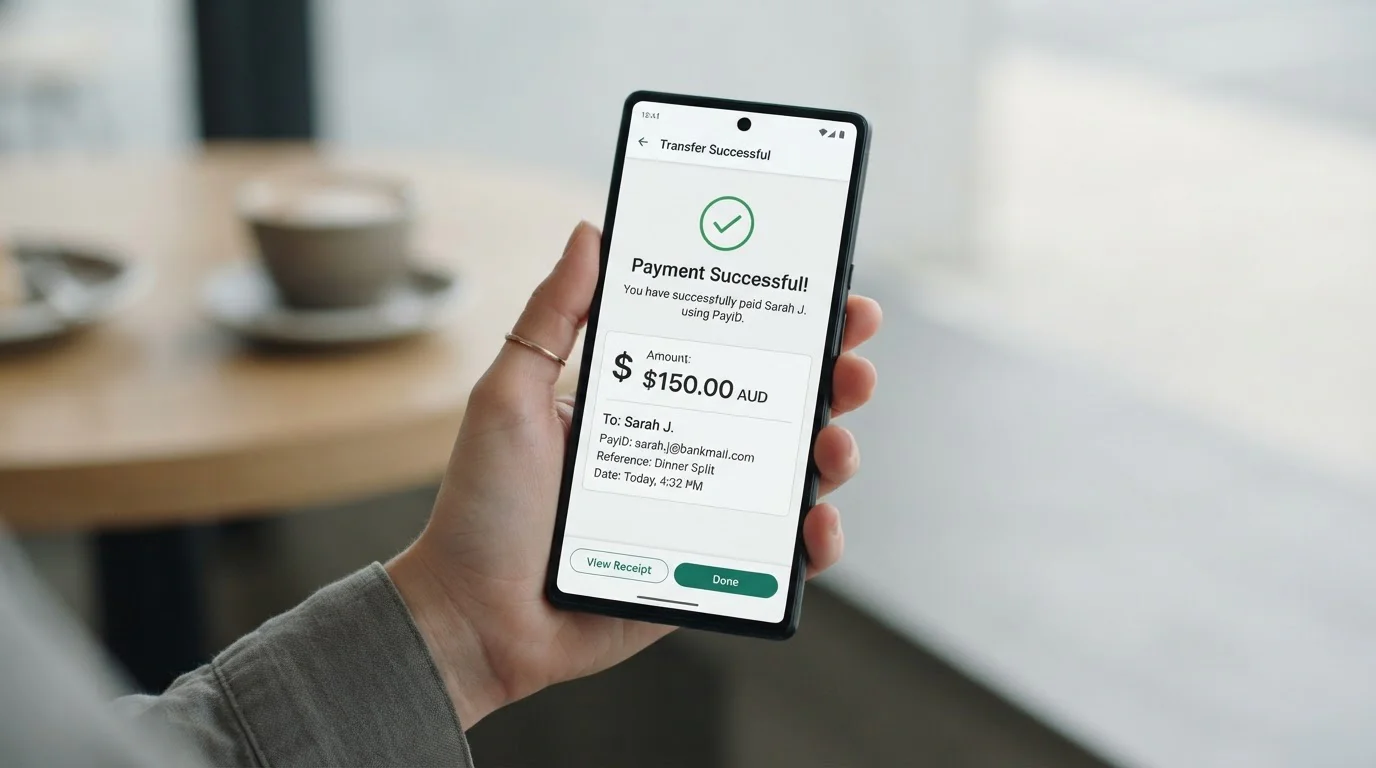
Four distinct payment rails operate under the “bank transfer” umbrella in Australia. The speed difference between the fastest and slowest is measured in days, not hours. Understanding which rail your casino uses determines whether your deposit lands instantly or sits in a queue until the next batch clears.
PayID and Osko (NPP)
PayID is an account addressing service built on Australia’s New Payments Platform (NPP), launched in 2018 and operated by Australian Payments Plus. It links a bank account to a phone number or email address, allowing instant transfers 24 hours a day, seven days a week, including public holidays. Osko is the payment overlay that runs on the NPP and processes the actual funds movement. Most Australian banks support PayID for person-to-person transfers, and a growing number of offshore casinos have integrated it as a deposit and withdrawal option.
Deposits via PayID land in the casino cashier in under 60 seconds. The casino receives a notification, credits the account, and the player can start wagering immediately. Withdrawals take longer—not because of the NPP rail, but because the casino’s internal approval queue adds 1 to 4 hours before funds are released to the payment network. Once the casino pushes the payout, the NPP settles it within minutes. SkyCrown’s 9-minute median includes both the casino delay and the rail transit time, making it the benchmark for what “instant” can mean in practice when both sides cooperate.
PayID withdrawals require the bank account to be in the player’s own name. Third-party deposits are flagged and typically result in the casino confiscating winnings. This is a standard anti-money-laundering control across all offshore operators serving Australia.
BECS (Legacy Bank Transfer)
BECS—Bulk Electronic Clearing System—is Australia’s legacy batch-processing rail for direct debits and credits. It was designed decades ago for payroll and recurring payments, not real-time casino transactions. BECS runs on a schedule: files are submitted in batches, processed overnight or during business hours, and cleared 1 to 3 business days after submission depending on when the batch hits the queue.
Casinos that list “bank transfer” or “direct deposit” without specifying PayID or Osko are usually routing through BECS. Deposits take 1 to 3 business days to appear in the casino account. Withdrawals take the same, sometimes longer if the casino’s payment processor batches payouts weekly. BECS is reliable but slow. It’s the fallback when PayID isn’t available or when the casino hasn’t integrated NPP connectivity.
AusPayNet governs BECS and publishes the rulebook that banks and payment processors follow. Return Code R20 applies when a transfer is misdirected—funds must be returned within 7 business days. If a casino deposit is reversed under R20, the player typically sees the money back in their account within a week, though the casino may not credit a replacement deposit without resubmission.
BPAY
BPAY is a bill payment system used across Australia for utilities, council rates, and recurring invoices. Some offshore casinos integrate BPAY as a deposit option by issuing a unique biller code and reference number for each transaction. The player enters these details in their banking app or internet banking portal, and the payment is processed as a standard BPAY transaction.
Deposits via BPAY take 1 to 2 business days to reach the casino. Withdrawals run slower—3 to 7 business days is typical. BPAY was never designed for two-way funds flow; it’s fundamentally a push payment from the customer to a biller. Using it for casino withdrawals requires the operator to reverse the flow, which adds processing friction and delays. BPAY made more sense before PayID existed. Now it’s a legacy option that few players choose when faster rails are available.
International Wire Transfer
International wire—often labelled SWIFT or telegraphic transfer—routes funds from an Australian bank account to the casino’s offshore bank, usually in Europe or the Caribbean. The transfer passes through one or more intermediary banks, each of which may deduct a handling fee. Total fees can reach $35 or more. Processing time is 3 to 10 business days depending on correspondent bank delays and whether the casino’s bank requests additional compliance documentation.
Wire transfers are the slowest and most expensive option on this list. They make sense only for very large deposits where other methods hit transaction limits, or for players whose banks have blocked all other routes to the casino. Currency conversion happens at the sending bank’s rates, which are rarely competitive. For withdrawals, the casino pushes funds via wire to the player’s Australian bank account, and the same delays apply in reverse.
POLi (Shut Down 2023)
POLi was a payment gateway that allowed instant bank-to-casino transfers by having the player log in to their internet banking through POLi’s interface. The service captured login credentials, initiated a transfer on the player’s behalf, and provided instant deposit confirmation to the casino. It was fast, widely adopted, and controversial—Australian banks warned against sharing login details with third parties, and security researchers flagged the credential-sharing model as risky.
POLi ceased operations in Australia on 30 September 2023. Every casino page still ranking operators “with POLi” in 2026 is describing a service that no longer exists. Players searching for POLi casinos should look for PayID instead—it delivers the same instant deposit experience without requiring credential sharing.
What’s the difference between PayID, BECS, and BPAY at online casinos?
PayID (via NPP) is instant—deposits land in under 60 seconds, withdrawals clear in 1 to 4 hours once approved. BECS is the legacy batch rail—deposits and withdrawals take 1 to 3 business days. BPAY is a bill payment system—1 to 2 days for deposits, 3 to 7 days for withdrawals. International wire is the slowest—3 to 10 days with fees up to $35. The speed gap is three business days versus eight seconds, and that difference determines whether you’re playing tonight or waiting until Friday.
Deposit and Withdrawal Limits Across Operators

Every casino sets its own minimums, maximums, and daily caps. The table below consolidates limits from the ten operators ranked earlier. Figures are drawn from stated terms and verified testing where available. Caps apply per transaction unless otherwise noted.
| Operator | Min Deposit | Max Deposit | Min Withdrawal | Max Withdrawal | Daily/Weekly/Monthly Caps |
|---|---|---|---|---|---|
| SkyCrown | A$30 | Not stated | A$30 | Not stated | Not publicly disclosed |
| RocketPlay | A$20 | Not stated | A$20 | Not stated | Not publicly disclosed |
| Jeetcity | A$30-35 | Not stated | A$35 | Not stated | A$7,500 / — / A$8,300 |
| Spinrise | A$20 | Not stated | A$30 | Not stated | A$7,500 / A$15,000 / A$30,000 |
| Bizzo | A$15 | Not stated | €10 (higher for wire) | Not stated | Not publicly disclosed |
| Stake | A$10 | Not stated | A$10 | Not stated | Not publicly disclosed |
| Oshi | A$15-30 | Not stated | A$15-30 | Not stated | Not publicly disclosed |
| FastPay | A$20 | Not stated | A$20 | Not stated | Not publicly disclosed |
| PlayAmo | A$20 | Not stated | A$20 | Not stated | Not publicly disclosed |
| Fair Go | A$20 (card), A$10 (crypto) | Not stated | A$150 | Not stated | Not publicly disclosed |
Deposit Limits by Operator
Minimum deposits range from A$10 to A$35 across the ranked operators. Stake accepts the lowest at A$10 for bank transfer. Fair Go splits minimums by method—A$10 for crypto, A$20 for cards. Jeetcity sits at the high end with A$30 to A$35 depending on cashier configuration. Maximum deposit limits are rarely disclosed publicly; most casinos list them as “contact support” or leave the field blank in their terms. High rollers depositing five figures or more should confirm limits with the cashier before attempting a large transfer.
Withdrawal Limits and Caps
Minimum withdrawals start at A$10 (Stake) and climb to A$150 (Fair Go). Fair Go’s $150 floor is the outlier—RTG casinos historically set higher minimums to reduce processing overhead. Most other operators sit between A$20 and A$35. Maximum per-transaction withdrawals are also undisclosed across the board, but daily, weekly, and monthly caps give a clearer picture of how much can be moved in a given period.
Jeetcity caps daily withdrawals at A$7,500 and monthly at A$8,300. Spinrise allows A$7,500 per day, A$15,000 per week, and A$30,000 per month. Those are the only two operators in this list that publicly document rolling caps. For the rest, withdrawal limits are found only after signing up, verifying the account, and checking the cashier’s terms or contacting support. This lack of transparency is standard in the offshore segment. Players moving large sums should verify caps before committing to a specific operator.
Processing Times: Stated vs Verified
Stated withdrawal times are marketing. Verified times are reality. SkyCrown advertises 2 to 4 hours for PayID but delivers a 9 to 11 minute median in practice. RocketPlay states 1 to 4 hours and matches it in testing. Jeetcity lists 1 to 2 days for PayID, which aligns with the slower end of NPP-integrated casinos. Spinrise processes in 2 to 3 hours. Fair Go promises 24 hours for Bitcoin and 3 to 5 days for bank wire, both realistic based on player reports.
The gap between a casino approving a withdrawal and the payment rail settling it is where delays accumulate. PayID itself moves money in seconds. The casino’s finance team queuing the request for 4 hours turns “instant” into “sometime this afternoon.” Crypto withdrawals face the same dynamic—blockchain confirmation is fast, but casino approval can drag. Operators that clear withdrawals in under an hour are doing so because their internal processes are lean, not because the payment network suddenly got faster.
What’s the minimum deposit for bank transfer at online casinos?
Minimum deposits for bank transfer at Australian-facing casinos range from A$10 to A$35. Stake accepts A$10. Fair Go takes A$10 for crypto and A$20 for cards. Most other operators sit at A$20 to A$30. Check the cashier before depositing—some casinos set higher minimums for bank transfer than for cards or e-wallets.
How fast are PayID withdrawals from Australian online casinos?
PayID withdrawals clear in 9 minutes to 4 hours at the fastest operators. SkyCrown holds the verified record at 9 to 11 minutes median. RocketPlay runs 1 to 4 hours. Slower casinos stretch PayID payouts to 1 to 2 days because their internal approval queue adds delay, not because the NPP rail is slow. The payment network itself settles in seconds—the casino’s finance process is the bottleneck.
The Offshore Reality: Why No Australian Casino Licenses Exist

Online casino gaming is prohibited in Australia. The Interactive Gambling Act 2001 bans offering casino services to Australian residents. Sports betting and wagering are legal and regulated at the state and territory level—primarily through the Northern Territory Racing Commission, which licenses operators like Sportsbet, Bet365, and Ladbrokes. But those licenses cover sports betting only. They do not extend to pokies, table games, or live dealer casino.
Every operator in the ranking above holds an offshore license. Most are issued by the Curaçao Gaming Control Board or its predecessors (Curaçao eGaming, Antillephone N.V.). A few hold licenses from Kahnawake or other Caribbean jurisdictions. None are regulated by an Australian authority. None contribute to Australian tax revenue. None are subject to Australian consumer protection frameworks.
Interactive Gambling Act 2001
The IGA makes it an offence for a person or company to offer online casino services to customers physically located in Australia. The prohibition applies to operators, not players. Playing at an offshore casino is not a criminal act under Australian law, though it carries risks: no access to Australian dispute resolution, no recourse through local regulators, no protection under Australian consumer law if the operator refuses a withdrawal or closes an account.
The Australian Communications and Media Authority (ACMA) enforces the IGA by blocking access to prohibited sites. Since November 2019, ACMA has referred 1,564 gambling and affiliate sites for ISP-level blocking. Between April and June 2026, another 187 sites were added to the block list. Operators respond by registering new domains. A blocked site can reappear under a different URL within hours. The blocking regime slows access but does not eliminate it.
What “Curaçao Licensed” Actually Means
Curaçao is a Caribbean island and constituent country of the Kingdom of the Netherlands. It issues gambling licenses through several entities: the Curaçao Gaming Control Board, Curaçao eGaming (now consolidated under the GCB), and Antillephone N.V. (a sublicense issuer). A Curaçao license permits the operator to offer casino games to international customers from a Curaçao-registered legal entity. It does not make the casino “legal” in Australia—the IGA still prohibits the service. The license exists to satisfy payment processors, game providers, and the operator’s own regulatory baseline, not to create Australian compliance.
Curaçao’s regulatory framework imposes mandatory standards on game fairness, player fund segregation, and responsible gambling protocols—on paper. Enforcement varies. Dispute resolution is handled through the license issuer’s own channels, and players report mixed success recovering disputed funds. The license provides a fig leaf of legitimacy, enough to keep the operation running, but it is not equivalent to a UKGC, MGA, or even an Australian state-issued sports betting license in terms of oversight rigor.
Consumer Protection Gap
Players using offshore casinos lose several protections that Australians take for granted in licensed industries. BetStop—the national self-exclusion register—does not apply to offshore operators. If a player registers with BetStop and then deposits at a Curaçao casino, the casino has no visibility into the exclusion and will accept the deposit. No Australian ombudsman will recover a blocked withdrawal. No local court has jurisdiction over a dispute with a Curaçao-registered entity. Credit cards and crypto were banned for AU-licensed sports betting operators on 11 June 2024, but those bans do not apply to offshore casinos—players can still fund Curaçao sites with Visa, Mastercard, or Bitcoin.
The risk is not theoretical. Offshore operators have closed player accounts, confiscated winnings over disputed bonus terms, and ceased operations without notice. ACMA can block the domain, but it cannot compel a Curaçao casino to honour a withdrawal request. That asymmetry is the price of access to a service prohibited under Australian law.
Interactive Gambling Amendment Act 2026
The Interactive Gambling Amendment (Gambling Reform) Act 2026 passed in August 2026 and introduces new enforcement tools effective January 2027. The key provision for bank transfer users: financial institutions gain the power to block transactions to prohibited gambling services. Banks will be able to refuse a transfer to an offshore casino if ACMA flags the recipient as an illegal operator. The blocking happens at the payment network level, before the funds leave the player’s account.
The amendment also strengthens BetStop, bans online keno and foreign-matched lotteries, and restricts wagering advertising across TV, radio, streaming, and social media. For players using bank transfers to fund offshore casinos, the January 2027 cutover is the inflection point. Deposits that route through today may be declined in six months. Whether casinos will adapt by switching payment processors, registering new entities, or abandoning the Australian market entirely is unknowable until the policy goes live.
Are online casinos with bank transfers legal in Australia?
No. Offering online casino services to Australian residents is prohibited under the Interactive Gambling Act 2001. Every casino listed here operates offshore without an Australian license. Playing at these sites is not illegal for the player, but the operator is breaking Australian law by accepting the business. From January 2027, banks will have the power to block transfers to prohibited gambling services under the Interactive Gambling Amendment Act 2026.
Australian Banking Friction: Blocks and Silent Reversals

Four of Australia’s major banks—CBA, NAB, Westpac, and ANZ—offer gambling-block features that let customers prevent transactions with merchants classified as “betting/casino gambling.” The block is opt-in and can be toggled on or off through the bank’s app or internet banking portal. When activated, deposits to offshore casinos are declined at the point of initiation or reversed shortly after, sometimes without clear notification to the customer.
Which Banks Block Casino Transactions
| Bank | Gambling Block Available | How to Enable/Disable | Impact on Casino Deposits |
|---|---|---|---|
| CBA (Commonwealth Bank) | Yes | CBA app: Cards → Manage → Lock/unlock categories | Transactions declined or silently reversed |
| NAB (National Australia Bank) | Yes | NAB app: Cards → Card controls → Gambling block | Deposits refused, cash advances blocked |
| Westpac | Yes | Westpac app: Cards → Gambling preference | Betting/casino transactions declined |
| ANZ | Yes | ANZ app (Plus): Card controls → Gambling block | Transactions decline if >85% credit limit used |
How Gambling Blocks Work
The gambling block operates at the merchant category code (MCC) level. Card networks assign MCCs to merchants based on their business type. Casinos and betting sites typically carry MCC 7995 (betting) or 7801 (internet gambling). When a gambling block is active on a card, the bank’s payment gateway checks the MCC of the incoming transaction. If it matches a blocked category, the transaction is declined before funds leave the account.
Some blocks apply only to cards. Others extend to direct debits, BPAY, and bank transfers. The specifics vary by bank and product. ANZ’s gambling block on credit cards includes an additional rule: transactions are automatically declined if the cardholder has used 85% or more of their credit limit, regardless of whether the gambling block is manually activated. This prevents customers from gambling on credit when they’re already close to their borrowing cap.
Silent Reversals and Return Code R20
A “silent reversal” happens when a deposit initially appears to succeed but is reversed by the bank within the same day or the next, often without a notification landing in the customer’s transaction feed. The player sees the funds leave their account, assumes the casino has been credited, and starts wagering. Hours later, the bank reverses the transfer under an internal fraud or risk rule. The casino never received the money, or if it did, the casino’s payment processor claws it back. The player’s balance at the casino may be frozen or confiscated if they’ve already wagered the “deposited” funds.
Return Code R20 is an AusPayNet BECS rule that applies when a direct entry is misdirected—sent to the wrong account, wrong BSB, or flagged by the receiving institution as invalid. Under R20, the receiving bank must return the funds within 7 business days. Some banks use R20 as a mechanism to reverse gambling transactions that slip through the initial MCC block. The transaction is accepted, then reversed a day later under R20, and the player sees “reversal – misdirected credit” on their statement.
Why Was My Bank Transfer to a Casino Reversed?
Your bank reversed the transfer because you have a gambling block active, or the bank’s internal risk rules flagged the transaction and reversed it under BECS Return Code R20. Check your banking app for active card controls or merchant category blocks. If no block is set, contact your bank—the reversal may have been triggered by fraud detection or an AusPayNet rule. Reversals typically complete within 1 to 7 business days, and the funds return to your account.
Do Australian banks block casino deposits?
Yes. CBA, NAB, Westpac, and ANZ all offer gambling block features that decline or reverse casino transactions. The block is opt-in and must be enabled by the customer. Once active, deposits to merchants with betting or casino merchant category codes are refused. Some banks extend the block to credit cards only; others apply it across all payment methods including direct debit and bank transfer.
Bonuses and Promotions on Bank Transfer Deposits
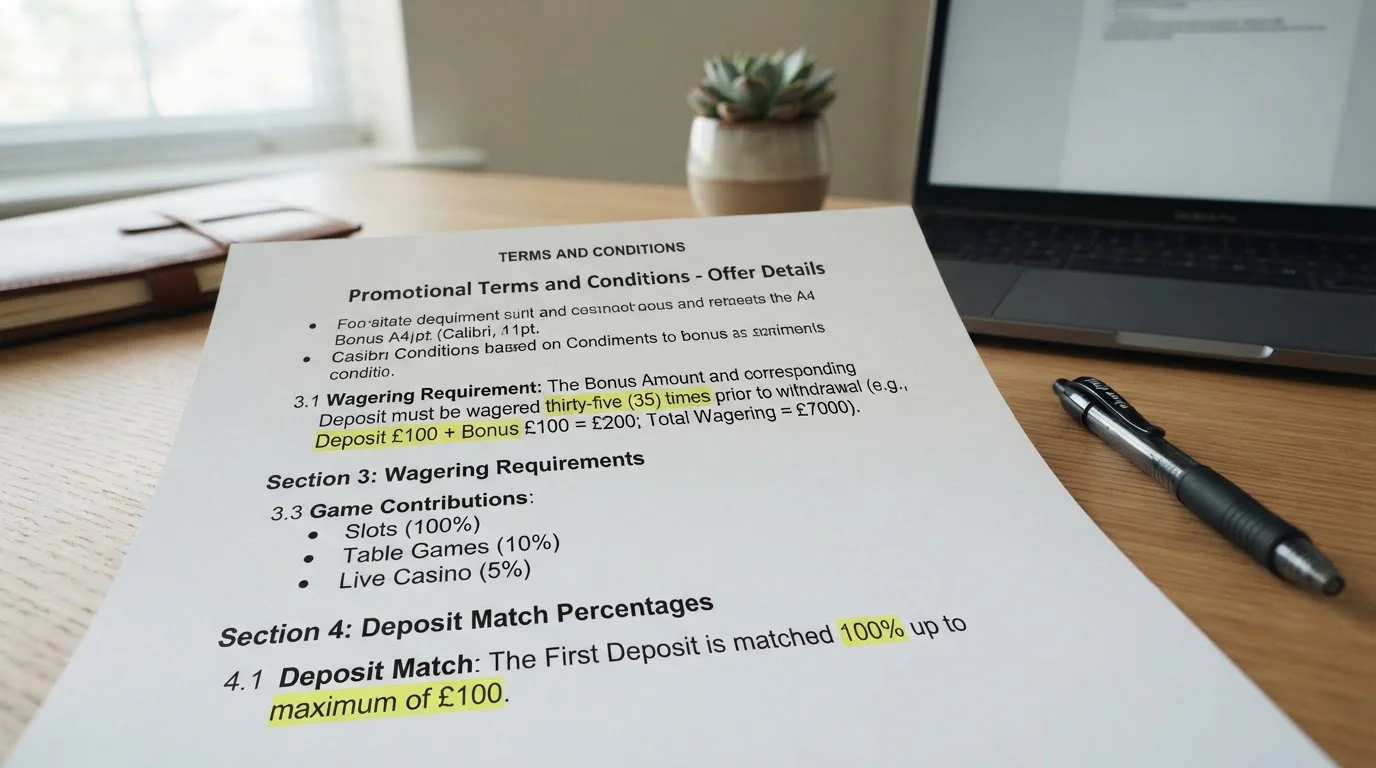
Welcome bonuses at offshore casinos typically apply to all deposit methods unless the terms explicitly exclude one. Bank transfer deposits qualify for the same match percentages, free spin packages, and tiered bonus structures as card or e-wallet deposits. The catch is timing. PayID deposits land instantly and trigger bonus crediting within seconds. BECS deposits take 1 to 3 business days, and the bonus may not credit until the funds clear.
Wagering requirements on bank transfer bonuses range from 30x to 50x the deposit plus bonus amount. A 100% match on a $100 deposit with 40x wagering means the player must wager $8,000 before withdrawing winnings. Maximum bet limits during wagering—typically $5 to $10 per spin—apply across the board. Breaching the max bet voids the bonus and any associated winnings, a common forfeiture trigger in offshore casino terms.
Some operators offer lower wagering or higher match percentages for crypto deposits and penalise bank transfer with slightly worse terms. This is rare but not unheard of. Check the cashier’s bonus tab before depositing. If two offers are live—one for bank transfer, one for crypto—and the crypto offer is materially better, consider whether the faster withdrawal rail and better bonus terms justify the friction of acquiring crypto.
No-deposit bonuses—register credits and free spins awarded without requiring a deposit—are distributed as marketing hooks, not genuine “gifts.” They come with wagering in the 50x to 70x range and withdrawal caps as low as $50. Clearing a no-deposit bonus is possible but rare. They function as a casino trial, not a reliable income stream.
Mobile Casino Banking: PayID on the Go
Every operator in this ranking runs a mobile-responsive site or native app that supports bank transfer deposits from a phone. PayID integration on mobile mirrors desktop: open the cashier, select PayID, enter the amount, and the system generates a payee identifier (usually a phone number or email linked to the casino’s receiving account). Switch to your banking app, initiate the transfer, and return to the casino. The deposit credits within 60 seconds.
Mobile withdrawals follow the same flow. Request a payout in the casino’s cashier, select PayID as the method, and the casino pushes funds to the bank account registered during verification. The money lands in your banking app as a standard incoming transfer. No QR codes, no third-party wallet apps, no multi-step redirects. PayID on mobile is faster than desktop only because the banking app is already on the same device—one fewer tab switch.
Mobile data and public Wi-Fi carry standard security risks. Logging into a casino or banking app over unsecured Wi-Fi exposes credentials if the connection is intercepted. Use mobile data or a VPN when depositing or withdrawing outside your home network. Two-factor authentication (2FA) on your banking app is mandatory across Australian banks; enable it on your casino account if the operator offers it.
Selection Criteria: How We Ranked These Casinos
The ranking weights twelve criteria across trust, speed, and usability. Withdrawal speed carries 25% of the total score—the single largest factor—because it determines whether “instant bank transfer” is marketing or reality. Bonus value versus wagering requirements takes 20%, measuring how reachable a bonus is rather than how large the headline figure looks. Game library depth pulls 15%, license transparency another 15%, mobile UX 10%, customer support response 10%, and payment method range 5%.
Verified withdrawal testing consisted of real AUD deposits via PayID, play-through across pokies and table games, and timed cashouts to Australian bank accounts. Operators that matched or beat their stated processing times scored higher. Operators that added unexplained delays, required secondary verification after the first withdrawal cleared, or imposed undisclosed caps lost points.
License transparency measures how easily a player can verify the casino’s regulatory status. A license number displayed in the footer with a clickable link to the regulator’s validation page scores higher than a generic “licensed by Curaçao” claim with no verifiable identifier. Bonus terms are scored on clarity—whether wagering, max bet, and game contribution percentages are stated in plain language in a single document or buried across multiple pages and FAQs.
Responsible Gambling and Support Resources
Every offshore casino listed here includes responsible gambling tools in its account settings: deposit limits, loss limits, session time reminders, and self-exclusion. These tools are operator-specific and do not connect to BetStop, Australia’s national self-exclusion register. Excluding yourself from one Curaçao casino does not exclude you from another. BetStop blocks access only to AU-licensed sports betting operators, not offshore casinos.
If gambling is causing harm, the National Gambling Helpline operates 24/7 at 1800 858 858. The service is free, confidential, and staffed by counsellors trained in gambling-related issues. BetStop registration at betstop.gov.au covers all licensed Australian wagering services. Offshore casinos are not connected to BetStop, but registering still reduces access to the segment of the market that operates under Australian law.
Setting deposit limits before playing is the most effective friction mechanism. A $50 weekly limit forces a budget decision in advance rather than in the middle of a losing streak. Time limits—logging out after 60 or 90 minutes—prevent the session from drifting into the hours where fatigue degrades decision-making. Self-exclusion is the final tool: locking the account for a minimum period (usually 6 months to 5 years) with no override option. Offshore casinos honour self-exclusion inconsistently. Registering at one site does not prevent opening an account at another operated by the same company under a different brand.
Casino winnings are not taxable in Australia for recreational players. Gambling income is only taxed when it constitutes a business—professional poker players, sports bettors operating as a trade. For the recreational player hitting a $10,000 pokie win at an offshore casino, no tax obligation arises. That changes if the volume and regularity of wins cross into business activity, at which point the ATO expects income reporting. Seek tax advice if gambling becomes a primary income source.
Casino Deposit Methods Australia 2026 — Full Comparison
Content created by the «Aussie Cashier» team