
$1 Deposit Pokies in Australia: What That Single Coin Really Gets You in 2026
 Available in AU
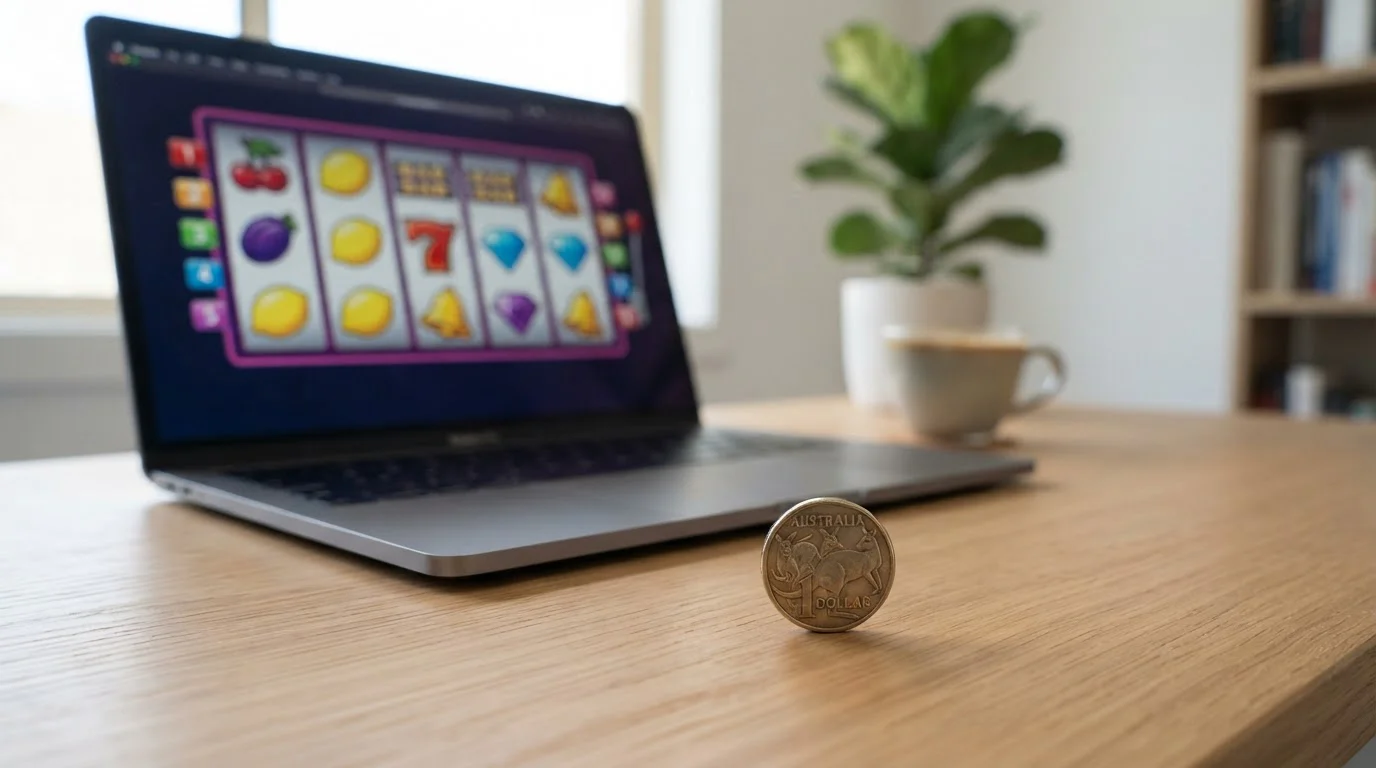
A dollar. That’s the hook plastered across half the low-deposit casino pages an Aussie punter will land on when they type “$1 minimum deposit pokies” into a search bar. Slide a single gold coin into the cashier, the pitch goes, and the whole reel-spinning circus opens up. It reads well on a landing page. It survives contact with an actual cashier screen less often than those pages would like you to believe.
Here’s what a dollar genuinely does in the Australian pokies market of 2026, stripped of the marketing gloss. On a slot with a 10-cent minimum spin, one dollar is ten pulls of the lever. Ten. If the reels are cold — and they usually are, because the house edge doesn’t take smoko — that dollar is gone in under a minute. No welcome bonus fires, because almost every welcome offer wants at least ten dollars before it wakes up. No free spins land in your account. You’ve bought yourself a very short test drive, and that’s the honest ceiling of the exercise.
That doesn’t make the $1 deposit worthless. It makes it a specific tool for a specific job: kicking the tyres on a new site before you trust it with real money. The trouble is that most guides sell it as a budget strategy for winning, which it plainly isn’t, and they bury the part where the advertised dollar quietly becomes a ten or twenty at the payment step. The review does the opposite. Every operator below is measured against what its cashier actually accepts, not what its homepage banner shouts.
One more thing worth saying up front, before anyone deposits anything. Every real-money online pokies site an Australian can reach is offshore. None hold an Australian licence, because Australian law does not issue one for online casino play. What that means for your money, your recourse and your bank account come 2027 is covered in full further down. Read it. It matters more than any bonus figure.
The $1 Pokies Deposit Reality in Australia — What That Dollar Actually Buys You
Type any variant of “$1 deposit pokies” into a search engine and you’ll get a wall of sites promising the same thing: real-money pokies, unlocked for the price of a servo lolly. The phrasing shifts — “$1 minimum deposit,” “$1 dollar deposit pokies,” “pokies with $1 min deposit,” “online pokies with $1 or less deposit” — but the promise is identical. The reality underneath it is more textured.
Start with the mechanics of a genuine one-dollar deposit. It exists, but it lives at the margins. A handful of sites will let a dollar through on specific rails — usually cryptocurrency or a voucher method, occasionally a narrow promotional window — while the same site quietly enforces a ten- or twenty-dollar floor on PayID and cards. The “$1” that headlines the page is frequently the best-case figure available through one channel, not the standard minimum you’ll meet at the cashier. Log in, open the deposit screen, and the number you see there is the number that counts. The banner is advertising; the cashier is the contract.
Then there’s the question nobody selling you a $1 deposit wants to answer directly: what does a dollar do once it’s in? Pokies bets scale by the spin. The cheapest slots start around a cent or two per line, but most mainstream titles from the big studios set their practical minimum spin at ten or twenty cents once you account for active paylines. Do the arithmetic. One dollar at twenty cents a spin is five spins. At ten cents, ten. That’s not a session. That’s a coffee-length flirtation with the reels, and if a bonus feature doesn’t trigger in those few spins — the odds of which are exactly as long as they sound — your balance reads zero and the cashier is inviting you back for more.
This is where the “$1 deposit” framing quietly misleads. It’s sold as a way to stretch a small bankroll across an evening of play. It isn’t. A dollar is a sample, not a session. The honest use case is narrow and specific: you’ve found a new offshore site, you’re not yet sure it pays out or behaves, and you want to move a trivial sum through its deposit and withdrawal plumbing before committing anything you’d miss. For that, a dollar is perfect. For entertainment value across a Friday night, it’s a myth, and a persistent one.
The sites that push the $1 angle hardest tend to be the ones with the least to offer beyond the hook. The stronger offshore operators — the ones with deep game libraries and payout track records — mostly set their minimums at ten or twenty dollars and don’t pretend otherwise. Ten dollars has become the de facto “sweet spot” across the market: low enough to be casual, high enough to unlock a welcome bonus and last more than a minute. The genuine $1 tier is real, but it’s a fringe feature, and the sites leaning on it as their main selling point are usually selling the sizzle because the steak is thin.
Can you really deposit just $1 at Australian online pokies sites, or is that just marketing?
Sometimes yes, mostly it’s marketing. A few offshore sites accept a literal one-dollar deposit through crypto or vouchers, but the majority advertise “$1” while their cashier enforces a ten- or twenty-dollar floor on PayID and cards. Always check the deposit screen after logging in, not the homepage banner.
Offshore Casinos That Accept Low Deposits from Australians — The Real Minimum Breakdown

Every site below targets Australian players and operates under an offshore licence. None are licensed in Australia — the law doesn’t permit it — so the standard consumer protections you’d expect from a local operator don’t apply. What follows is an honest mapping of what each cashier actually enforces versus what the marketing claims. The table comes first, then the breakdowns.
| Operator | License | Advertised Min | Actual Min | PayID? | Welcome Bonus | Withdrawal Min | Withdrawal Speed |
|---|---|---|---|---|---|---|---|
| Royal Reels | Curaçao 365/JAZ | A$10 | A$10 | Yes | A$500 + 50 FS + A$10 no-deposit | A$50 | Under 2 hours (PayID) |
| The Pokies | Offshore (stated frameworks) | A$20 | A$20–A$30 | Yes | A$500 + 100 FS | A$50 | 1–3 hours (crypto) |
| Betzillo | Curaçao 8048/JAZ | A$20 | A$20 | Mixed reports | A$1,500 + 60 FS + A$10 no-deposit | Not stated | Same-day (PayID reported) |
| DragonSlots | Curaçao | A$15 | A$15 | Yes | A$2,000–A$10,000 (sources vary) + 250 FS | Not stated | Standard offshore |
| Bizzo | Curaçao | A$15 | A$15 | Yes | A$2,500 + 125 FS | Not stated | Standard offshore |
| Kingmaker | Curaçao | A$15 | A$15 | Yes | A$5,000 + 50 FS | Not stated | Standard offshore |
| HellSpin | Offshore (ACMA warning) | A$20 | A$20 | Yes | A$300 + 100 FS + 10 no-deposit FS | Not stated | Standard offshore |
| SkyCrown | Curaçao (OGL/2023/176/0095) | Not advertised as $1 | A$20–A$30 estimated | Yes | A$8,000 + 400 FS (5 deposits) | Not stated | Fast (reported) |
| Neospin | Curaçao-class | Not advertised as $1 | A$30 | Yes | A$11,000 + 300 FS | Not stated | Standard offshore |
| Slots Gallery | Curaçao-class | Not stated | Not stated | Likely | Multi-deposit package | Not stated | Standard offshore |
| Oliver | Curaçao-class | Not stated | Not stated | Likely | A$2,250 + 300 FS | Not stated | Standard offshore |
| Axe | Curaçao-class | Not stated | Not stated | Likely | A$1,500 + 50 FS | Not stated | Standard offshore |
The pattern is clear. Royal Reels sits lowest at ten dollars and actually honours it. Most others cluster between fifteen and thirty. Nobody in this table genuinely operates at the one-dollar floor the search-term ecosystem keeps promising. The three at the bottom — Slots Gallery, Oliver, Axe — have thinner public data; they’re included for completeness but approach them knowing you’re working from less transparent information than the top nine.
Royal Reels — Fast PayID Payouts, A$10 Banking Floor
Royal Reels is operated by Digibrite SRL under a Curaçao Gaming Control Board licence, number 365/JAZ. The site launched somewhere between 2021 and 2023 depending on which source you trust, and it’s been building a reputation around PayID payout speed rather than a massive bonus ceiling. The library sits between 2,290 and 5,000 pokies plus live dealer tables — enough variety that you’re not cycling through the same thirty slots by lunchtime.
The actual deposit floor is ten dollars, and that minimum applies across methods. PayID withdrawals clear in under two hours on a verified account, which is competitive even by offshore standards. The welcome package is a A$10 no-deposit chip, fifty free spins, and a 100 per cent match up to A$500 on a first deposit. The wagering terms follow the usual offshore pattern — expect somewhere in the 30–40x range — but at least the site doesn’t hide what it’s asking. For players who value withdrawal speed over sheer bonus size, this is the entry point.
The Pokies (ThePokies114) — A$20 Minimum, A$50 Withdrawal Floor
The Pokies runs across multiple numbered mirror domains, of which “ThePokies114” is one of the current iterations. It’s a long-standing brand in the Australian-facing offshore space, and it knows its market. Payment rails include Visa, Mastercard, PayID, and crypto. The actual minimum deposit is A$20, though some sources cite card minimums at A$30. The withdrawal floor is A$50, which is standard but worth noting — you can get in cheap, but you can’t cash out small.
The welcome bonus is a 100 per cent match up to A$500 plus 100 free spins on a qualifying first deposit. Crypto withdrawals clear in one to three hours, which is the real selling point here. PayID deposits are typically instant and free. The site states it follows “applicable regulatory frameworks” and runs third-party audits, but let’s be plain: it’s not Australian-regulated, and if something goes wrong, there’s no ACCC complaint line to ring. It’s offshore, it behaves like offshore, and it’s been doing so reliably enough that the brand keeps respawning across mirrors.
Betzillo — 6,000 Pokies, Sportsbook, A$1,500 Bonus (A$20 Real Minimum)
Betzillo operates under Curaçao licence 8048/JAZ and combines a casino with a sportsbook covering AFL, NRL and global markets. The casino side carries between 4,100 and 6,000 pokies from Pragmatic Play, BGaming, Nolimit City, Evolution, and others. The practical minimum deposit is A$20, though some sources report the site also supports crypto-only paths. PayID availability is reported on most pages but contradicted on at least one; verify inside the cashier before you commit.
The welcome package reaches A$1,500 across multiple deposits at 40x wagering. Additionally, Betzillo throws in a A$10 no-deposit chip, a A$50 free sports bet, and sixty free spins with no wagering attached to the spins or the free bet. That last bit is unusual and worth flagging — most offshore sites bury free-spin wins under turnover requirements, so a no-wagering structure is a marginal edge. The site launched recently enough that it’s still advertising an “Early Bird” promo as of mid-2026. Treat it as a newer entrant and approach accordingly.
DragonSlots — 7,000+ Games, A$15 Minimum (2024 Launch)
DragonSlots came online in 2024 or 2025 — sources differ — under a Curaçao Gaming Control Board or Curaçao eGaming licence. The distinguishing pitch is the size of the no-download library: more than 7,000 pokies, which is genuinely large even by offshore standards. The practical minimum deposit is A$15. The welcome bonus is advertised anywhere from A$2,000 plus 250 free spins up to A$6,400 or even A$10,000 depending on which affiliate page you read, which suggests either flexible tiering or sloppy affiliate copy. Either way, expect multi-deposit structures and wagering in the 35–50x range.
The site was built for newcomers to the offshore space, with a simplified onboarding flow and broad payment coverage. PayID support is confirmed. The operator is young — less than two years old at the time of writing — so there’s less payout track record to judge against than the older names on this list. If you’re the cautious type, deposit small and test a withdrawal before you load in more.
Bizzo Casino — A$15 Minimum, AU$2,500 + 125 Free Spins
Bizzo holds a Curaçao licence and operates with a practical A$15 minimum deposit. The welcome package tops out at AU$2,500 plus 125 free spins across a multi-deposit structure. PayID support is present. The site positions itself as a balanced option — not the biggest bonus, not the lowest minimum, not the flashiest library — just a clean middle-of-the-road offshore play.
There’s less public chatter about Bizzo than some of the louder brands on this list, which can read two ways: either it’s quietly competent, or it’s not generating enough traffic to surface many complaints. The A$15 floor makes it accessible without being a pure gimmick. Wagering terms aren’t publicised prominently, so dig into the T&Cs before you claim anything.
Kingmaker — AU$5,000 Bonus on an A$15 Floor
Kingmaker operates under a Curaçao licence and offers one of the highest welcome ceilings in the low-deposit peer set: AU$5,000 plus fifty free spins. The practical minimum deposit is A$15. Payment support includes crypto and PayID. The high bonus-to-minimum ratio is the hook here — fifteen dollars unlocks access to a five-grand package, though the usual offshore wagering reality applies: that five thousand is not five thousand you can withdraw, it’s five thousand in bonus credit with rollover attached.
Public specifics on withdrawal speed and game library size are thinner than for the more established brands. The operator leans heavily on the large bonus figure to stand out in a crowded market. If you’re bonus-hunting and you understand the turnover maths involved, Kingmaker is worth a look. If you value operational transparency and detailed T&Cs over sheer headline numbers, you might find the data gaps frustrating.
HellSpin — A$20 Minimum, ACMA Formal Warning on Record
HellSpin is operated by TechOptions Group B.V. and holds an offshore licence (Curaçao-class). The site offers a A$300 welcome bonus plus 100 free spins and an additional ten no-deposit free spins. The practical minimum deposit is A$20. PayID is supported. The game library and payment flow are standard for a mid-tier offshore operator.
Here’s what sets HellSpin apart: it’s named in an Australian Communications and Media Authority formal warning. ACMA identified TechOptions Group B.V. as the provider of prohibited interactive gambling services to Australian customers and marked the site as blocked after continued contravention. That doesn’t mean you can’t reach it — geo-blocks leak like sieves, and mirrors pop up faster than regulators can list them — but it does mean you’re dealing with an operator that’s been formally told to stop serving Australians and chose to keep going anyway.
Use HellSpin as a concrete example of the offshore risk model. If something goes wrong — a disputed payout, a frozen account, a bonus clawback you think is unfair — you have zero Australian recourse. No ombudsman. No consumer protection bureau. The ACMA warning is public record, which makes HellSpin a useful case study in what “offshore and unlicensed in Australia” actually looks like when enforcement starts.
SkyCrown Casino — 10,000+ Pokies, Fast PayID, A$8,000 Welcome Package
SkyCrown is run by SkyCrown Gaming N.V. from Willemstad, Curaçao, under a Curaçao Gaming Authority licence (number OGL/2023/176/0095 or 365/JAZ depending on the source). The site launched in 2022 or 2023 and has built a reputation around two strengths: a massive game library and a smooth PayID flow. The catalogue ranges from 5,000 to 10,400 games depending on how you count — pokies, live tables, crash titles — and the mobile lobby includes granular filters that actually work, which is rarer than it should be.
The welcome package climbs to A$8,000 plus 400 free spins spread across five deposits, though some pages cite A$3,000 plus 120 spins in different structures. The practical minimum deposit isn’t advertised at the one-dollar level and appears to sit around A$20 to A$30 based on cashier screenshots from reviewers. SkyCrown consistently ranks as the “best PayID flow” among Australian-facing offshore operators in comparative reviews, which means the deposit and withdrawal plumbing works without friction most of the time. For bonus hunters who don’t mind multi-deposit structures, the eight-grand ceiling is competitive.
Neospin — AU$11,000 Bonus (But A$30 Minimum, Not $1)
Neospin operates under an offshore Curaçao-class licence and positions itself as the premium end of the low-deposit market, which is a contradiction in terms but here we are. The practical minimum deposit is A$30, the highest here table. The welcome package is the largest advertised ceiling across the peer set: AU$11,000 plus 300 free spins. PayID support is confirmed. The game library leans toward high-RTP slots, and multiple review sites single out Neospin’s pokie selection as notably stronger than competitors on return-to-player metrics.
The A$30 floor disqualifies Neospin from any genuine “$1 deposit” conversation, but it’s included here because it keeps appearing on those lists anyway. If you’re hunting the largest bonus structure and you’re not fussed about the absolute lowest deposit threshold, Neospin delivers. If you typed “$1 deposit pokies” because you genuinely want to test a site for a dollar, this isn’t it.
Slots Gallery — Loyalty Program and a Clean Lobby
Slots Gallery holds an offshore Curaçao-class licence and appears at the top of some 2026 Australian rankings based on loyalty program strength and interface cleanliness rather than bonus size or minimum-deposit gimmicks. Public data on exact deposit floors and withdrawal speeds is sparser than for the brands above. The welcome package is structured across multiple deposits, but specific figures aren’t consistently reported across sources.
What gets mentioned repeatedly is the loyalty/VIP framework. If you’re the type who sticks with one site and grinds through tiers rather than bonus-hopping across operators, Slots Gallery is built for that. For players chasing the absolute lowest deposit floor or the highest transparency on cashier mechanics, the data thinness is a limitation.
Oliver Casino — AU$2,250 + 300 Free Spins (Limited Public Data)
Oliver Casino operates under an offshore Curaçao-class licence. The welcome package is advertised at AU$2,250 plus 300 free spins, which is a high free-spin count relative to the match amount. Public specifics on deposit minimums, withdrawal floors, PayID support, and game library size are thinner than for the other operators in this table. That doesn’t necessarily signal a problem — plenty of smaller offshore sites operate quietly without generating review volume — but it does mean you’re working from less information when you decide whether to register.
If you land on Oliver through a search and the bonus structure appeals, verify the cashier minimums and payment rails inside the account dashboard before depositing, not from a landing page. Treat it as a lesser-known option where the headline bonus is the selling point and the operational details require first-hand confirmation.
Axe Casino — Crypto-Friendly, AU$1,500 Welcome
Axe Casino holds an offshore Curaçao-class licence and is positioned as a crypto-friendly option within the Australian-facing offshore market. The welcome package is AU$1,500 plus fifty free spins. Payment rails emphasise cryptocurrency alongside standard methods. Public data on exact deposit minimums, PayID availability, and withdrawal speeds is moderate — enough to confirm it exists and accepts Aussies, not enough to build a full operational profile without hands-on testing.
Crypto-friendly tends to mean faster cashouts and looser KYC on the way in, but heavier verification when you try to withdraw. If you’re comfortable with Bitcoin or altcoin deposits and you want an offshore operator that doesn’t make crypto a second-class payment tier, Axe is on the shortlist. If you’re a fiat-and-PayID player, there are more transparent options higher up this table.
PayID, Cards, and Crypto — Which Payment Methods Accept $1 Pokies Deposits
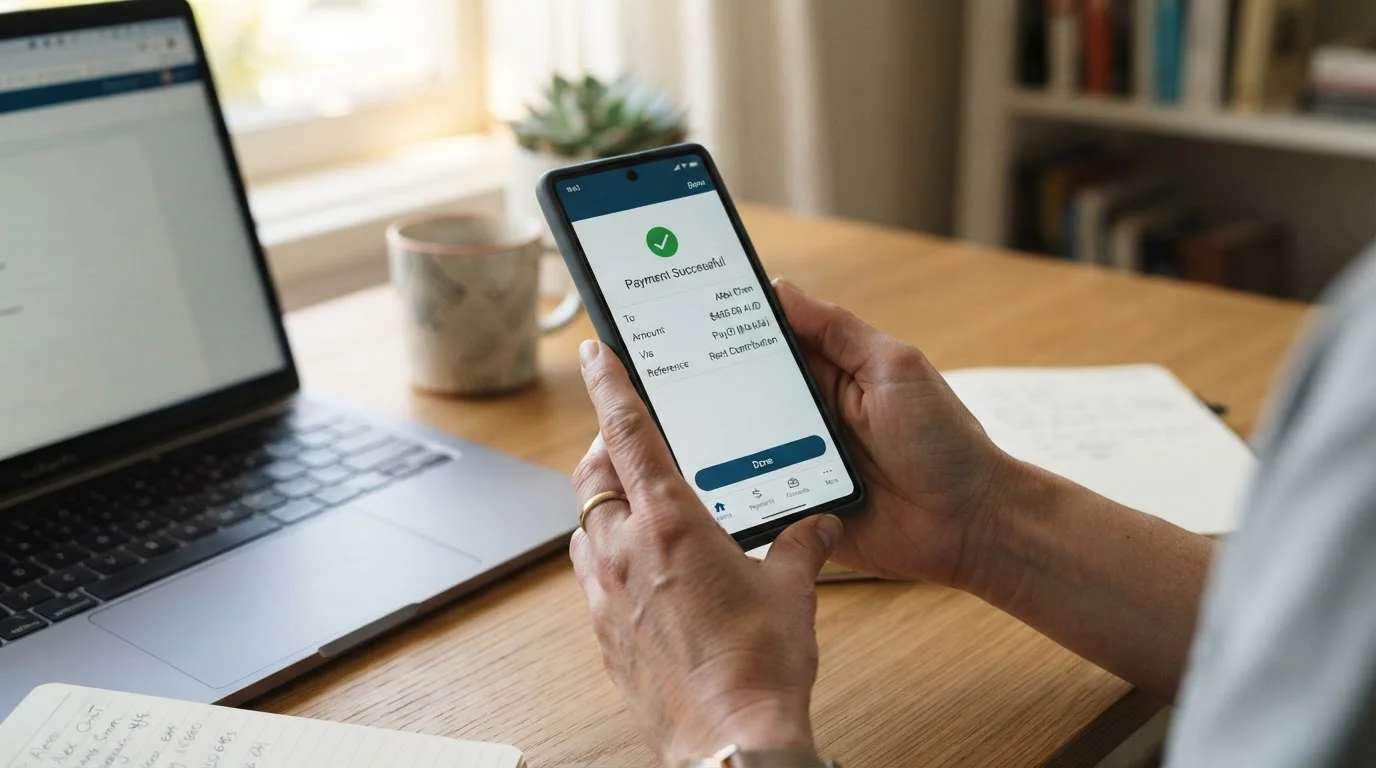
The payment method you pick determines whether a dollar deposit is technically possible or a fantasy. Most offshore operators set different minimums per rail, and the gap between what PayID enforces and what a voucher or crypto path allows can be the difference between “$1 deposit pokies” being real or pure SEO bait.
| Payment Method | Typical Minimum | Speed (Deposit) | Speed (Withdrawal) | Fees | Operator Availability |
|---|---|---|---|---|---|
| PayID / Osko | A$10–A$20 | Instant | Minutes to hours | Usually free | High (most sites) |
| Credit / Debit Card | A$10–A$30 | Instant | 1–5 days | ~3% processor fee common | High (Visa/MC standard) |
| Cryptocurrency | A$1–A$25 | Minutes | 1–3 hours | Network fee only | Medium-high (growing) |
| POLi | A$10+ | Instant | N/A (deposit only) | Free | Declining (being phased out) |
| Neosurf / Paysafecard | A$10+ (voucher denominations) | Instant | N/A (deposit only) | None on deposit | Medium |
| Bank Transfer | A$10–A$50 | Hours to 1 day | 1–3 days | Varies | Medium |
The table makes the core tension obvious. PayID and cards — the two methods most Australian players actually use — sit at ten dollars or higher across the board. Crypto is your best technical shot at a true one-dollar deposit, but even there the network fee can eat half the dollar before it lands, and many sites still set their crypto floor at ten or twenty. Vouchers come in fixed denominations, so unless you’re buying a custom-value Neosurf voucher, you’re starting at ten. The literal $1 deposit exists in the cracks, not the mainstream.
PayID and Osko — Instant but Rarely $1
PayID is the payment rail most offshore casinos push hardest when they’re chasing Australian traffic. It runs on the New Payments Platform, links your bank account to a mobile number or email, and moves money in seconds without handing over card details. The pitch is clean: no third-party wallet, no PSP middleman, just your bank’s security and an instant balance top-up.
The catch for anyone searching “$1 deposit pokies” is that PayID minimums cluster between ten and twenty dollars per operator. Some sites go as low as five in promotional windows, but five is still five times what the search term promises. The infrastructure itself doesn’t impose a floor — you could theoretically send a dollar through PayID — but the casinos do, presumably because the cost of processing a payment and maintaining the account makes a dollar deposit uneconomical.
Royal Reels enforces a ten-dollar PayID minimum. The Pokies sits at twenty. Betzillo is reported at twenty, though one source suggests the site might route around it via crypto. SkyCrown and Neospin are higher still. If your mental model of a “$1 deposit site” involves tapping PayID in your banking app and sliding in a gold coin, the model doesn’t match the market. PayID is instant and convenient, but it’s a ten-dollar rail at minimum, and often more.
Withdrawals via PayID are the real selling point. Sites that support PayID cashouts typically clear them in under two hours, sometimes faster. Royal Reels quotes sub-two-hour PayID withdrawals as a headline feature. The Pokies pushes its crypto speed but supports PayID as well. For players who value payout speed over deposit flexibility, PayID is the right tool. For players genuinely hunting a one-dollar entry threshold, it isn’t.
Credit and Debit Cards — A$10+ Minimum in Practice
Visa and Mastercard are universally supported, which makes them the default for players who don’t want to set up a new payment method. The minimum deposit on cards sits at ten dollars on the low end and thirty on the high end, depending on the operator. The Pokies is cited at a thirty-dollar card floor on some sources, twenty on others. Betzillo lists twenty. Most of the rest cluster around ten to fifteen.
Cards are instant on the way in and slow on the way out. Deposits land in seconds. Withdrawals take one to five business days, assuming the casino processes them promptly, which offshore operators are not contractually obliged to do on any fixed timeline. Card deposits also attract processor fees, typically around three per cent, which the operator sometimes absorbs and sometimes passes through. Check the deposit confirmation screen before you finalise; if a ten-dollar deposit is costing you ten-thirty, the thirty cents is the processor clip.
The other card consideration is bank blocking. As of 2026, most Australian banks still let card transactions through to offshore gambling sites, but the Interactive Gambling Amendment Act 2026 hands banks the legal framework to block payments to prohibited services starting 1 January 2027. How widely that gets enforced is speculative as of mid-2026, but if you’re relying on a card as your primary deposit method into offshore sites, understand that the rail might not be reliable much longer.
Cryptocurrency — Your Best Shot at a True $1 Deposit
Crypto is the only payment method where a literal one-dollar deposit is technically and economically plausible, and even then it’s marginal. Bitcoin, Litecoin, Tether, and other coins move peer-to-peer with no bank middleman, which means there’s no institutional entity to enforce a floor. The operator can set the minimum wherever it likes, and a few sites do let a dollar through on crypto rails.
The practical barriers are the network fee and the exchange-rate slippage. Send a dollar of Bitcoin and the network fee might be fifty cents, leaving you with fifty cents of playable balance once it lands. Stablecoins like Tether (USDT) or USDC on cheaper networks can reduce that friction, but you’re still burning a chunk of the dollar in transit unless you’re sending a larger sum and the fee gets amortised across it. Most offshore operators set their crypto minimums at ten or twenty-five dollars for this reason: anything below that and the fee-to-value ratio looks ridiculous.
Crypto withdrawals are the fastest in the offshore space. One to three hours is standard. The Pokies quotes one to three hours for crypto cashouts. Betzillo supports crypto. SkyCrown, Neospin, Bizzo, Kingmaker, Axe — all have crypto rails. The speed advantage is real, which is why crypto-native players tolerate the fee structure and the KYC friction that comes when you try to withdraw.
If you’re genuinely committed to testing a site for a dollar and you’re comfortable handling a wallet, crypto is the path. Just understand you’re spending half the dollar to move the other half, and the game selection available to a fifty-cent balance is performance art, not a session.
POLi, Neosurf, and Paysafecard — Voucher and Direct Bank Rails
POLi is a direct bank-transfer method that was widely used in the Australian offshore space for years. It’s now being phased out as banks and regulators tighten compliance, and fewer operators support it in 2026 than did two years ago. Where it still exists, the minimum is typically ten dollars. POLi is deposit-only; you can’t withdraw via it.
Neosurf and Paysafecard are prepaid voucher methods. You buy a voucher at a retail outlet or online, get a code, and enter the code at the casino cashier. Vouchers come in fixed denominations — ten, twenty, fifty, a hundred — so the idea of a one-dollar Neosurf deposit is structurally impossible unless you’re buying a custom-value voucher online, which most retail channels don’t offer. Vouchers are also deposit-only. To cash out, you’ll need to link a different method.
The voucher methods appeal to players who don’t want to link a bank account or card to an offshore site. You’re trading convenience for privacy. The minimums are determined by the voucher denominations, not the casino, so a “$1 deposit” via voucher is a non-starter unless you’re buying the smallest denomination available and that denomination happens to be small, which it generally isn’t.
Which payment methods let you deposit $1 for pokies in Australia?
Cryptocurrency is the only realistic path for a true one-dollar deposit, but network fees consume a significant chunk of the dollar in transit. PayID and cards enforce ten- to thirty-dollar minimums across almost all operators. Vouchers come in fixed denominations, typically starting at ten dollars.
The Law and the Risk — Playing $1 Pokies Under the Interactive Gambling Act 2001

Every offshore casino an Australian can reach operates outside Australian law. Not “in a grey area.” Outside it. The Interactive Gambling Act 2001 draws a bright line: providing online casino services — pokies, blackjack, roulette, baccarat, live dealer tables — to a person in Australia is a criminal offence for the operator. Advertising those services in Australia is prohibited. Playing them as an individual is not criminalised, but that’s a narrower safety net than most people assume.
What the IGA Actually Says About You as a Player
The Act makes it illegal to provide the service, not to use it. You will not be prosecuted for depositing twenty dollars at an offshore pokie site and spinning reels. That’s been the enforcement stance since 2001, and nothing in the 2026 amendments changes it. But “not criminalised” is not the same as “legal,” and it’s certainly not the same as “protected.”
When you deposit at an offshore site, you’re entering a contract governed by the laws of Curaçao or Malta or Anjouan or wherever the operator is licensed, not Australian consumer law. If the operator refuses to pay out, you have no Australian recourse. The ACCC doesn’t take offshore gambling complaints. There’s no ombudsman, no external dispute resolution scheme, no fund-segregation guarantee. You’re trusting the operator and its offshore regulator to behave, and if they don’t, your options are limited to arguing with customer support and posting on forums.
BetStop, the national self-exclusion register, does not cover offshore sites. If you’ve self-excluded in Australia and you’re still able to register at an offshore casino, that’s not a breach of your self-exclusion — it’s a demonstration that offshore operators are not plugged into Australian regulatory infrastructure, because they’re not allowed to be.
The 1 January 2027 Enforcement Shift — Payment Blocking Explained
The Interactive Gambling Amendment (Gambling Reform) Act 2026 was assented on 26 August 2026. It doesn’t change what’s legal — online casinos were already prohibited under the 2001 Act. What it changes is enforcement, and the relevant commencement date is 1 January 2027.
From that date, the amendments grant the ACMA and Australian banks the framework to block payments to designated offshore gambling services. The mechanics look like this: ACMA identifies a site as a prohibited service, issues a formal direction, and Australian payment service providers are instructed to block transactions to that operator. You try to deposit, the payment declines, and your bank’s fraud-prevention system might flag it as an attempted payment to a blocked merchant.
How widely this gets enforced depends on how aggressively ACMA designates sites and how thoroughly banks implement the blocks. Some offshore operators will slip through because they haven’t been listed yet. Some will pivot to crypto-only cashiers. Some will close to Australian traffic entirely. The point is that from January 2027 onward, any deposit you make to an offshore casino is being moved through a financial system that’s actively being configured to stop you, and the reliability of card and PayID rails is no longer guaranteed.
HellSpin is a preview of how this works in practice. ACMA issued a formal warning identifying TechOptions Group B.V. as the operator and marking HellSpin as blocked after continued contravention. The site is still reachable from Australia as of mid-2026 — geo-blocks are trivial to bypass, and mirrors pop up faster than ACMA can list them — but it’s on the record as a prohibited service. If your bank implements the payment blocking comprehensively, a deposit attempt to HellSpin after 1 January 2027 might bounce.
Why “Curaçao Licensed” Means Zero Australian Protection
Every operator in the table earlier holds an offshore licence, typically from Curaçao. Curaçao’s licensing regime is not comparable to a Tier 1 European regulator like the UKGC or MGA in operational rigour, but it’s also not a complete fiction — Curaçao licensees are subject to audits, gaming fairness checks, and administrative oversight by the Curaçao Gaming Control Board or Curaçao Gaming Authority depending on which sub-licence they hold.
What a Curaçao licence does not do is give you standing under Australian consumer law. If you dispute a payout, you escalate through the operator’s internal complaints process, then to the Curaçao regulator’s dispute mechanism. That process is conducted in English, it’s remote, and it’s slow. The regulator can compel the operator to pay if it finds in your favour, but compliance relies on the operator valuing its licence more than the disputed payout. For large, established operators, that calculation usually works in your favour. For smaller sites with thin margins, it’s a coin flip.
Australian banks classify offshore gambling transactions as high-risk. Some banks have started declining them preemptively, even before the 2027 commencement date. Commonwealth Bank, NAB, Westpac, and ANZ all have policies that let them refuse to process payments to offshore gambling sites at their discretion. If you deposit successfully today and your bank declines your next deposit tomorrow, that’s not a site problem — it’s a bank-policy shift, and there’s no override mechanism.
The ACMA Record — HellSpin and What Happens When Operators Are Warned
HellSpin, operated by TechOptions Group B.V., received a formal ACMA warning for supplying prohibited interactive gambling services to Australian customers. After continued contravention, the site was marked blocked. That makes HellSpin a useful case study for what the enforcement framework actually does and, more importantly, what it doesn’t do.
A formal warning does not make the site inaccessible. HellSpin is still reachable via direct URL, via mirrors, via VPN, via referral links embedded in affiliate pages. The block is advisory; it tells banks and ISPs that the site is prohibited, and it gives them legal cover to refuse transactions or DNS requests. But it doesn’t magically erase the site from the internet, and it doesn’t stop players from getting there if they’re determined.
What the warning does is strip away any illusion of legitimacy. You’re not dealing with a misunderstanding or a grey area. You’re dealing with an operator that was formally told to stop serving Australians and kept going. If your deposit doesn’t land, if your withdrawal is denied, if your account is frozen, you have zero Australian recourse because the operator is acting in contravention of Australian law by accepting your business in the first place. The Curaçao licence still stands, so you can escalate through that channel, but the dispute starts from a weaker position because the service you’re disputing is one the operator was already told not to provide.
The ACMA register is public. If a site you’re considering has a formal warning on record, that’s not a recommendation to avoid it — plenty of offshore operators are on the list and function fine — but it is a requirement to understand the risk before you deposit. Treat the warning as the baseline disclosure: this operator is unlicensed in Australia, it’s operating in defiance of a regulator’s direction, and anything that goes wrong is on you.
Is it legal to play $1 deposit pokies in Australia?
Playing at offshore pokies sites is not criminalised under the Interactive Gambling Act 2001, but the sites themselves operate illegally by providing the service to Australians. You won’t be prosecuted, but you have no Australian consumer protection, no ACCC recourse, and from 1 January 2027, your bank may block deposits under new enforcement provisions.
Bonuses, Wagering, and the $1 Trap — Why Your Dollar Unlocks Nothing

Look at any welcome bonus on the operators above. Royal Reels offers A$500. The Pokies gives A$500. Betzillo dangles A$1,500. SkyCrown climbs to A$8,000. Neospin tops out at A$11,000. Those numbers sit next to headlines that scream “$1 deposit pokies,” and if you’re not reading the fine print, the implication is obvious: deposit a dollar, unlock thousands.
It doesn’t work that way. Welcome bonuses have qualifying thresholds, and those thresholds are almost never one dollar. Royal Reels’ A$500 match requires a deposit to trigger. The Pokies’ A$500 bonus is structured as a match, meaning you deposit an amount, they match it up to the cap, and the match requires a minimum deposit to activate — typically ten or twenty dollars. Betzillo’s A$1,500 package is spread across multiple deposits at 40x wagering, and the first deposit that qualifies is not a dollar. SkyCrown’s A$8,000 is across five deposits. Neospin’s A$11,000 ceiling is multi-tiered.
The pattern is universal. The headline bonus and the “$1 deposit” claim live on the same page, but they’re not connected. A literal one-dollar deposit gets you a one-dollar balance. No bonus fires. No free spins land. The dollar you deposited is the dollar you’re playing with, and once it’s gone — which at ten or twenty cents a spin happens inside a minute — the cashier is asking for more.
The no-deposit bonuses are a partial exception. Betzillo offers A$10 no-deposit. Royal Reels gives A$10 plus fifty free spins without a deposit. HellSpin throws ten free spins at you before you fund anything. Those genuinely require zero dollars in, and they’re designed exactly for the use case the “$1 deposit” framing suggests: test the site without committing money. The catches are win caps, wagering requirements, and game restrictions, but at least the math is honest — you’re getting a free sample, and you know it’s a sample.
Wagering requirements on the match bonuses sit between 30x and 50x in the Australian offshore market. Betzillo is 40x. If you deposit twenty dollars and claim a twenty-dollar match, you’ve got forty dollars of bonus balance and a 1,600-dollar turnover requirement before you can withdraw. That’s not forty dollars you can cash out. It’s forty dollars of ammunition to chase the turnover target, and the house edge across those spins is working against you the whole way.
any time a site calls a bonus a “gift” or a “reward,” put it in quotes and do the arithmetic. Bonuses are not charity. They’re a leverage mechanism to keep you spinning past the point where the house edge has extracted the value back. For players who understand the rollover math and treat bonuses as extended playtime rather than free money, they’re fine. For players who think a “$1 deposit” unlocks a “A$5,000 gift,” they’re a trap.
Can you claim a welcome bonus with only a $1 deposit?
No. Almost all welcome bonuses require a ten- to thirty-dollar minimum deposit to activate. No-deposit bonuses exist and genuinely require zero dollars, but they come with win caps and steep wagering. A literal one-dollar deposit gets you one dollar of playable balance, nothing more.
What You Can Actually Play for $1 — Pokies, RTPs, and the Spin Math

Assume you’ve found a site that lets a dollar through the cashier — crypto path, promotional window, whatever. You’ve got a one-dollar balance. Now what?
Pokies bets scale by the spin. The absolute cheapest slots on an offshore site start around one or two cents per payline, but activating enough lines to make the paytable functional pushes the realistic minimum spin to ten or twenty cents. Do the division. A dollar at twenty cents is five spins. At ten cents, ten spins. That’s your session. If the first few spins hit, you’ve got a few more pulls. If they don’t, you’re reading the deposit screen again inside ninety seconds.
The game libraries on these sites range from a few hundred titles to over ten thousand, but the accessibility of those games at the one-dollar balance level is a different question. High-volatility slots with expensive bonus-buy features are functionally off-limits — you don’t have the bankroll to survive the swings. Progressive jackpots require maximum-bet spins to qualify for the jackpot pool, and max bet on most progressives is dollars per spin, not cents. What you’re left with is low-volatility, low-minimum-bet classic slots and a handful of modern video slots that let you spin lean.
The game providers most offshore operators lean on — Pragmatic Play, NetEnt, Play’n GO, BGaming, Nolimit City, Evolution — all offer configurable RTP settings on their slots. The same game can ship at 96.5 per cent, 95.5 per cent, or 94.5 per cent RTP depending on which version the operator picks. The artwork is identical. The features are identical. The long-run return is two percentage points different. Across the broader offshore market tested, RTP on accessible pokies ranges from roughly 88 per cent at the worst end to 99 per cent at the best, with the industry average sitting near 95.7 per cent.
The 10-Spin Reality — Gameplay at 10c Minimum Bets
Ten spins. That’s what a dollar buys at a dime per pull, and it’s the high end of what’s realistic for ultra-low-stake play. Five spins at twenty cents. Three spins at thirty-three cents if the site lets you bet that granularly, which most don’t. The spin count sounds pathetic because it is pathetic, but it’s also honest arithmetic, and honesty is in shorter supply than spin counts when the “$1 deposit pokies” pitch is being made.
The base-game hit frequency on a modern video slot sits somewhere between fifteen and thirty per cent depending on the game’s design. That means one in four to one in seven spins returns something, even if the return is less than the spin cost. Bonus features trigger every hundred to three hundred spins on average for medium-volatility games. At ten spins, your chance of seeing a bonus round is roughly three to ten per cent. You’re not playing for features. You’re playing to see whether the reels look trustworthy and whether the site feels responsive. That’s the ceiling.
If you hit a decent line win in those ten spins and your balance climbs to two or three dollars, you’ve extended the session. Maybe twenty spins now. Thirty if you drop the bet to five cents and the game allows it. But the expected value is still negative — the house edge is grinding you down on every pull — so the session ends the same way it started: at zero. The question is whether it takes one minute or five.
High-RTP Pokies Worth Your Dollar
If you’re committed to stretching a dollar as far as physics and probability allow, pick high-RTP games and bet the minimum the paytable permits. The RTP gap between a 98 per cent slot and a 94 per cent slot is four cents returned per dollar wagered. Over ten spins that’s forty cents of difference in expected value, which when your starting bankroll is one dollar, is material.
| Pokie Title | Provider | RTP | Min Bet | Volatility | Notes |
|---|---|---|---|---|---|
| Mega Joker | NetEnt | 99% (Supermeter mode) | A$0.10–A$0.20 | Low-medium | Classic 3-reel, needs Supermeter engagement |
| Blood Suckers | NetEnt | 98% | A$0.25 | Low-medium | Vampire theme, steady returns, dated graphics |
| Jackpot 6000 | NetEnt | 98.8% (Supermeter) | A$0.10 | Low | Another classic 3-reel, simple mechanics |
| 1429 Uncharted Seas | Thunderkick | 98.6% | A$0.10 | Low-medium | Better visuals, expanding wilds, smooth |
| Starmania | NextGen | 97.87% | A$0.10 | Low-medium | Space theme, 10 paylines, frequent small hits |
None of these are flashy. High-RTP slots skew toward older designs and simpler mechanics because the operator’s margin is thinner, so they’re not subsidising expensive animations and licensed IP. But if your goal is session length per dollar rather than spectacle, these are the picks.
The catch is that not every offshore operator carries every high-RTP game, and even when they do, the RTP setting might not be the headline figure. Pragmatic Play’s Wolf Gold, for example, is commonly cited at 96 per cent RTP, but some operators configure it at 94 or 95 per cent. Unless the site publishes an RTP register — and most offshore operators don’t — you’re guessing which version you’re playing.
Pragmatic Play, NetEnt, and the RTP Tiers Operators Don’t Advertise
Pragmatic Play is the 800-pound gorilla of the offshore pokies market. Their slots are in nearly every lobby an Australian can reach: Gates of Olympus, Sweet Bonanza, The Dog House, Wolf Gold, Starlight Princess, Big Bass Bonanza. They’re recognisable, they’re reliable, and they come in three flavours.
Pragmatic ships its games at three RTP tiers: roughly 96.5 per cent, 95.5 per cent, and 94.5 per cent. The operator picks which version to deploy. The paytable, the artwork, the features, the bonus mechanics — all identical. The only difference is the long-run return, and the only way you’d know is if the operator publishes the setting or you infer it from a statistically significant sample size, which no casual player ever will.
NetEnt does the same. Play’n GO does the same. Most major providers offer configurable RTP because different regulatory markets mandate different disclosure standards, and operators like the flexibility to adjust margin without changing the game’s face. For the player, this means the RTP figure you see cited on a review site is best-case, not guaranteed, and the game you’re actually spinning might be returning two per cent less without you knowing.
When your bankroll is one dollar, a two per cent RTP difference matters. At 96.5 per cent you expect to retain 96.5 cents after a dollar of total wagers. At 94.5 per cent it’s 94.5 cents. The house is taking an extra two cents per dollar. Over a ten-spin, one-dollar session, that’s a twenty-cent difference in expected outcome. It won’t show up in ten spins — variance swamps everything at that sample size — but the structural difference is real, and it stacks against you.
How much can you actually win from a $1 deposit on pokies?
Theoretically, unlimited — a single max-payout spin can hit. Practically, a dollar gives you five to ten spins at most, and the odds of triggering a high-paying feature in that window are under ten per cent. Expect to lose the dollar, not multiply it.
Withdrawing Your Wins — The A$50 Floor and the Low-Deposit Asymmetry
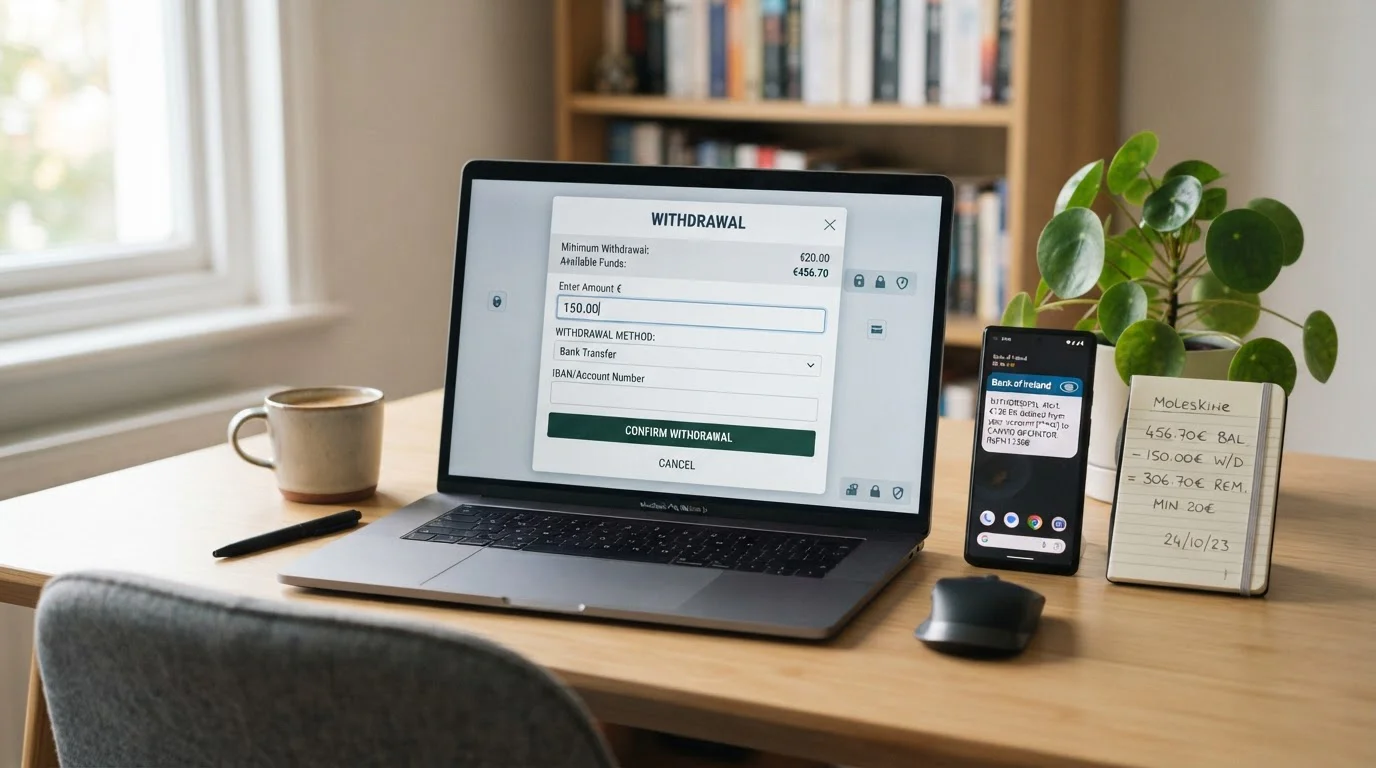
You’ve deposited small. Maybe a dollar, maybe ten, maybe twenty. You’ve spun through it, caught a lucky streak, and now you’re sitting on sixty or eighty dollars. Time to cash out. That’s when the withdrawal minimum becomes relevant, and it’s rarely symmetrical with the deposit floor.
The Pokies enforces a fifty-dollar withdrawal minimum. Royal Reels lists fifty. Most offshore operators sit between fifty and a hundred. You can deposit ten or twenty, but you can’t withdraw ten or twenty. The structure is asymmetrical by design: the barrier to entry is low, the barrier to exit is higher, and the gap between them is where small winners get trapped into playing down their balance because cashing out isn’t an option yet.
Withdrawal speed varies by method. Crypto is fastest — one to three hours on sites that process promptly. PayID runs minutes to a few hours on operators that handle it well. Cards take one to five business days. Bank transfers are slower still. But speed is irrelevant if you’re below the minimum. Sixty dollars at a fifty-dollar floor means you can request a withdrawal. Forty-five dollars means you can’t. You’re stuck playing, and the house edge is working on you every spin until you either cross the threshold or drain it back to zero.
KYC verification adds another layer. Most offshore operators let you deposit without proof of identity, but they require it before your first withdrawal. Passport or driver’s licence, proof of address, sometimes a selfie holding your ID. The verification process can take hours or days depending on the operator’s backlog and how closely your documents match their requirements. Until you’re verified, the withdrawal request sits pending, and for players who deposited impulsively and didn’t read the terms, the surprise can feel like a bait-and-switch.
The “$1 deposit pokies” framing sells the entry point but hides the exit constraints. You can test a site for a dollar. You can deposit ten and play for an hour. But unless you run that ten-dollar deposit up to fifty or a hundred, you’re not cashing out — you’re either depositing more to reach the threshold or playing the balance back down. The asymmetry is structural, it’s deliberate, and it’s consistent across the offshore market. Know it before you deposit.
What is the minimum withdrawal at $1 deposit pokies casinos?
Typically A$50 to A$100, regardless of how small your deposit was. You can deposit ten dollars but not withdraw ten dollars. The structure is asymmetrical — low deposit floors encourage entry, high withdrawal floors trap small balances into continued play.
What happens to my deposits when the new enforcement rules start on 1 January 2027?
Australian banks gain the framework to block payments to ACMA-designated offshore gambling sites. Some deposits may decline. Crypto becomes the more reliable rail if card and PayID blocking expands. The law does not criminalise you as a player, but it does aim to cut the payment pipes.
New Casinos, Mobile Play, and When $1 Makes Sense
The offshore market aimed at Australians churns constantly. New Curaçao licences appear monthly, operators rebrand, mirrors launch, old domains go dark, and the affiliate ecosystem shifts the spotlight to whichever site is paying the best referral commission this quarter. Keeping track of every new entrant is a full-time job, and most of them aren’t worth the attention.
New $1-Friendly Casinos Launched 2024–2026
DragonSlots launched in 2024 or 2025 and positions itself around a 7,000-game library and a simplified onboarding flow. The A$15 minimum puts it in the low-deposit band without pretending to be a true dollar site. Early reviews lean positive on game selection, thin on payout track record because the operator is young.
Betzillo is another recent entrant, combining casino and sportsbook under a Curaçao 8048/JAZ licence. The A$20 minimum is standard, the 40x wagering is steep, but the no-wagering free spins and free bet add marginal value. It’s too new to have a multi-year payout reputation, which makes it a calculated risk rather than a known quantity.
The pattern with new offshore casinos is predictable: aggressive bonuses, looser terms for the first few months, then a gradual tightening as the operator builds a player base. If you’re chasing the best bonus-to-deposit ratio and you’re comfortable being an early adopter, new sites are the hunting ground. If you value operational stability and verified payout timelines, stick with the older names until the new ones have survived a year.
Mobile Pokies — Same Minimums, Smaller Screen
Every offshore operator worth listing runs a mobile-responsive site or a dedicated app. The minimums don’t change. Royal Reels is still ten dollars on mobile. The Pokies is still twenty. The game libraries are the same — HTML5 slots play identically whether you’re on a 27-inch monitor or a six-inch phone screen. The cashier flow is the same. Mobile isn’t a separate product; it’s the same product rendered on a smaller viewport.
The friction points on mobile are UI and payment. Some sites make the deposit screen harder to navigate on a phone than it needs to be, burying the method picker or the amount field under three taps when it should be one. PayID works beautifully on mobile because you’re already in your banking app half the time anyway. Cards work fine. Crypto is clunkier because wallet interfaces aren’t optimised for phone keyboards, and a mistyped address sends your deposit into the void.
If you’re testing a site with a small deposit, mobile is fine. If you’re managing a larger bankroll or tracking bonus wagering, a desktop screen is less painful. The minimums are the same either way.
The One Scenario Where $1 Deposits Are Worth It
Testing new operators before committing real money. That’s the scenario. Not building a bankroll. Not stretching a budget across a weekend. Not hunting jackpots. Testing.
You’ve found an offshore site. The homepage looks clean, the bonus sounds appealing, the reviews are mixed or thin, and you’re not sure whether the cashier works or the withdrawals actually process. Slide in the smallest amount the site will accept — if that’s a dollar, fine; if it’s ten, that’s still small enough to be disposable — and run it through the deposit-play-withdrawal loop. Verify the payment lands. Spin through enough balance to see whether the RTP feels in the right range and the games load without glitches. Request a small withdrawal and see whether KYC verification is handled professionally or whether the support team ghosts you.
If everything works, you’ve paid a dollar or ten to vet the operator. If it doesn’t work — the deposit disappears, the games crash, the withdrawal is denied for nonsense reasons — you’ve paid a dollar or ten to avoid a larger mistake. That’s the value. It’s due diligence, not entertainment, and it’s the only honest framing of a “$1 deposit” that holds up under scrutiny.
The moment you start thinking a dollar is a session, or a strategy, or a pathway to winnings, the math stops working. A dollar is a test token. Use it as one.
Minimum Deposit Casinos Australia 2026 — $1, $5, $10 Sites
Content created by the «Aussie Cashier» team