
Same Day Payout Casinos Australia 2026: Real Speed Tests & Payment Method Breakdown
 Available in AU

Getting paid today, not next week. That’s the bar offshore casinos serving Australian players claim to clear, but “same day” ranges from twenty minutes to twenty-four hours depending on who runs your KYC and which payment rail you pick. PayID clears in under an hour when the casino approves fast. Bitcoin takes ten to sixty minutes once the blockchain confirms. eWallets batch-process, so four to eight hours midweek is typical.
No Australian-licensed casino exists—online casino games remain illegal to provide under the Interactive Gambling Act 2001, amended August 2026. Every operator listed here holds a Curaçao license or no license at all, operates offshore, and accepts Aussie players in a regulatory gray area. Playing is legal. Providing is not. Consumer protection doesn’t exist.
The list below covers which offshore operators actually deliver same-day cashouts to Australian accounts in 2026, which payment methods make that possible, and how to structure your first withdrawal so approval happens in hours instead of days. Tested timeframes, not promises.
What “Same Day Payout” Actually Means in 2026
The phrase sounds binary—paid today or not—but same-day withdrawal spans a spectrum from sub-fifteen-minute crypto on a verified account to end-of-business-day eWallet transfers pending manual review. Two clocks run: casino approval time and payment settlement time. Marketing calls both “instant.” Reality separates them.
The Two Clocks: Approval Time vs Settlement Time
Casino approval is the internal process: identity verification, source-of-funds check if the amount triggers AML thresholds, bonus wagering confirmation, fraud screening. On a first withdrawal this can stretch to seventy-two hours if documents sit in a queue. Repeat cashouts on verified accounts clear in under an hour because the checks are already done. Payment settlement is the technical leg—how long the chosen rail takes to move money from the casino’s account to yours. PayID settles in under sixty seconds once approved. Bitcoin needs ten to sixty minutes for network confirmations. Bank transfers take one to five business days.
“Instant withdrawal” usually means the payment rail is fast, not that approval is automatic. A casino advertising instant crypto payouts still runs KYC the first time. The crypto transaction itself completes in minutes; the approval stage beforehand determines whether you’re paid in one hour or one day.
Same Day ≠ Instant: Realistic Hour Ranges
Same day covers three bands. Sub-one-hour withdrawals happen with PayID or crypto on verified accounts at operators that batch-approve requests every thirty minutes. One-to-four-hour cashouts are typical for PayID on a first withdrawal with documents already uploaded. Four-to-twenty-four-hour timeframes apply to eWallets, weekend requests, or first withdrawals where KYC sits pending manual review.
Neospin’s PayID average of twenty-two minutes over fourteen tested withdrawals is the fastest verified benchmark in current research. Sky Crown’s Bitcoin test cleared in one hour six minutes from request to wallet. Wild Tokyo claims “instant” but doesn’t define whether that’s approval or settlement. Goldenbet cites ten minutes, Slots Gallery fifteen, Rolling Slots thirty—all post-approval, not end-to-end.
First Withdrawal vs Repeat Cashouts
Your first cashout triggers the full verification cycle. Expect documents requested: photo ID, proof of address dated within three months, sometimes a selfie holding your ID or a payment method screenshot. Uploading everything before you deposit cuts approval time from days to hours. On verified accounts, repeat withdrawals skip the document stage and clear faster—often in under an hour if you pick a fast method and withdraw during business hours Australian Eastern Time.
What does “same day payout” actually mean at Australian online casinos?
Same-day payout means the casino approves your withdrawal and the payment settles in your account within twenty-four hours of the request, typically between one and four hours for PayID or crypto on verified accounts. It’s not instant—approval takes minutes to hours, and settlement adds seconds (PayID) to an hour (Bitcoin). First withdrawals often stretch to twenty-four hours due to KYC processing.
Payment Methods Ranked by Speed

Not all rails move at the same speed. PayID uses the New Payments Platform, live twenty-four-seven, settling in under sixty seconds network-side. Crypto depends on blockchain congestion—Solana averages fifty-four seconds, Bitcoin ten to sixty minutes. eWallets batch transactions, so four-to-twenty-four-hour windows are standard. Cards and bank transfers don’t qualify as same-day capable at offshore casinos serving Australia.
The 2026 Interactive Gambling Amendment adds payment blocking from January 2027. Banks will be required to prevent transfers to operators on ACMA’s prohibited list. PayID and domestic bank transfers face disruption. Crypto bypasses the financial system entirely, so blocking doesn’t touch it. If you’re chasing same-day speed past 2027, crypto becomes the only rail immune to regulatory interference.
| Method | Settlement Time (Post-Approval) | Typical Approval Impact | Fees | 2027 IGA Payment-Blocking Risk | Best For |
|---|---|---|---|---|---|
| PayID | 1–4 hours | Low (repeat); 24h (first) | None | High—bank blocking starts 1 Jan 2027 | Verified accounts, fast domestic transfers |
| Crypto (BTC/ETH/USDT/SOL) | 2–60 minutes (blockchain-dependent) | Low (repeat); 24h (first) | Network fees ($0.50–$5) | None—bypasses banking system | Players avoiding IGA blocking, fastest settlement |
| eWallets (Skrill/Neteller/Payz) | 4–24 hours | Low (repeat); 24–48h (first) | 0–2% depending on operator | Moderate—indirect via bank linkage | Players shielding bank details from casino |
| Bank Transfer (BSB/account) | 1–5 business days | Moderate | None | High—bank blocking starts 1 Jan 2027 | Not same-day capable |
| Cards (Visa/Mastercard) | 1–5 business days | Moderate | Rare for withdrawals | High—subject to banking restrictions | Deposits only; withdrawals rare at offshore casinos |
Which payment method is fastest for same-day withdrawals in Australia—PayID, crypto, or eWallets?
Crypto (USDT TRC-20 or Solana) is fastest for settlement—under five minutes once approved. PayID is fastest end-to-end for verified accounts—one to four hours from request to bank account. eWallets take four to twenty-four hours. For first withdrawals, all three stretch to twenty-four hours due to KYC approval, so the method matters less than completing verification early.
Top 10 Same-Day Payout Casinos for Aussies

Every operator here is offshore—Curaçao-licensed or unlicensed, not regulated by any Australian authority. Playing is legal under the IGA (the law targets providers, not players), but there’s no recourse if a dispute arises. ACMA blocks sites on a rolling basis; access can vanish without notice. Speeds listed are post-approval unless stated.
| Operator | License | Fastest Method | Realistic Timeframe | Min Withdrawal (A$) | Standout Feature |
|---|---|---|---|---|---|
| Neospin | Curaçao (Hollycorn N.V.) | PayID | 22 min avg (14 tests) | 30 | Fastest verified PayID benchmark |
| Sky Crown | Curaçao (Hollycorn N.V.) | Bitcoin | 1h 06m (tested Apr 2026) | 30 | Real-money test published |
| VegasNow | Curaçao (Hollycorn N.V.) | Crypto/eWallet | <24h post-approval | Not stated | 7-level VIP with Vegas trip prize |
| Wild Tokyo | Likely Curaçao | PayID/Crypto | “Instant” (claimed) | Not stated | Cited in 10+ TOP-5 guides |
| Goldenbet | Likely Curaçao | PayID/Crypto | 10 min (claimed) | Not stated | Consistent TOP-5 ranking |
| Slots Gallery | Likely Curaçao | PayID/Crypto | 15 min (claimed) | Not stated | Pokies-focused |
| Rolling Slots | Likely Curaçao | PayID/Crypto | 30 min (claimed) | Not stated | Pokies-focused |
| Wincrown | Tobique Gaming (Novatrix SRL) | PayID | 1–24h post-approval | Not stated | Tobique license No. 0000002 |
| Casea | Curaçao OGL/2024/161/0191 | Crypto | 1–24h post-approval | Not stated | Brand-new 2026 launch |
| CoinPoker | Licensed (jurisdiction unstated) | Crypto-only | Minutes to hours | Not stated | Poker-first, fiat-free |
Neospin: Fastest PayID Average at 22 Minutes
Operated by Hollycorn N.V. under a Curaçao Gaming Control Board license, Neospin entered the Australian market around 2025 and holds the fastest verified PayID timeframe in current testing—twenty-two minutes average across fourteen withdrawals according to vipnovel.com’s real-money review. That’s request to bank account, not just approval. The site ranks first in esports.gg’s withdrawal speed comparison with the note “clear number one choice if you want the fastest withdrawals.”
Eight thousand titles, mostly pokies, plus live dealer tables. Welcome package stretches to A$10,000 over five deposits with one hundred free spins, forty-times wagering. Crypto payouts take one to three hours post-approval. Minimum withdrawal A$30. Twenty-four-seven support. The twenty-two-minute figure isn’t a best-case claim—it’s a tested average, which makes Neospin the benchmark for PayID speed until someone publishes faster verified data.
Sky Crown: Verified 1-Hour Bitcoin Withdrawals
Hollycorn N.V. again, Curaçao-licensed, with a published real-money test that’s rare in this space. Skycrownplaytime.com deposited A$300 on 14 April 2026, withdrew A$1,200 via Bitcoin on 22 April, and the BTC landed in one hour six minutes. That’s the full cycle—request, approval, blockchain confirmation. Most casinos cite best-case; Sky Crown has a dated test with a named amount and a wallet screenshot.
Seven thousand games, A$8,000 welcome bonus plus four hundred free spins across four deposits. PayID withdrawals take two to four hours according to competitor analysis. Minimum deposit A$20, minimum withdrawal A$30. Thirty-plus payment methods listed. The site claims A$4.7 million paid to players in five months, unverified. Crypto clears in ten minutes typical, up to three days for cards. Ranked fourth by CardPlayer with a 9.7/10 rating.
VegasNow: 24-Hour Crypto Cashouts and Diamond Club VIP
Hollycorn N.V. operation, Curaçao-licensed. A$8,000 welcome bonus plus five hundred free spins, forty-times wagering. Twelve thousand-plus games cited by reflecthealth.uk. PayID and crypto both supported; crypto and eWallet withdrawals clear within twenty-four hours post-approval per the same source. Ranked number one by CardPlayer (10/10), though vegasnowreview.com calls it a scam—reputation is mixed and requires independent verification before depositing.
The standout is the seven-level Diamond Club VIP program with an A$50,000 Las Vegas trip as the top-tier prize. Physical travel prizes are unusual for offshore operators, most of whom cap rewards at cashback and reload bonuses. Whether the trip actually materializes is unverified. AUD accounts, no conversion fees. Launched late 2025 or early 2026 based on review dates.
Wild Tokyo: “Instant” Payouts on Verified Accounts
License unstated, likely Curaçao. Welcome bonus 250% up to A$5,300 plus six hundred free spins. PayID and crypto supported. Moviemaker.com cites Wild Tokyo as paying “instantly,” without defining whether that’s approval or settlement time. The site appears in TOP-5 fast-payout rankings across ten-plus Australian casino guides in 2026, so consistency of citation suggests real player traffic and verifiable speed, even if the exact hour range isn’t published.
Pokies and live dealer focus. Minimum withdrawal and license details not specified in available sources. The “instant” claim likely refers to crypto settlement post-approval rather than end-to-end, which would still place Wild Tokyo in the sub-one-hour band for repeat verified cashouts. First-time players should expect twenty-four-hour KYC processing.
Goldenbet: 10-Minute Withdrawals Cited
Likely Curaçao-licensed based on offshore operator norms. Ranks second in multiple TOP-5 lists (muddyrivernews.com, moviemaker.com). Moviemaker.com cites “within 10 minutes” as the payout timeframe. Bonus details and minimum withdrawal not specified in search results, which suggests limited front-end transparency—common for smaller offshore brands.
PayID and crypto support inferred from ranking context. Pokies-focused. Ten-minute post-approval settlement is plausible for USDT TRC-20 or Solana but unlikely for Bitcoin. If accurate, Goldenbet would rival Neospin for speed, but the absence of detailed testing (unlike Neospin’s fourteen-withdrawal average or Sky Crown’s published BTC test) means the claim is unverified. Treat as fast but confirm on first cashout.
Slots Gallery: 15-Minute Pokies Cashouts
Likely Curaçao-licensed. Ranks third in multiple TOP-5 guides. Moviemaker.com cites “within 15 minutes” withdrawal time. Name implies pokies specialization. PayID and crypto support inferred. Operator, license number, bonus structure, and minimum withdrawal not detailed in available sources.
Fifteen-minute post-approval is realistic for fast crypto (Solana, USDT TRC-20) but stretches credibility for PayID unless the casino batch-approves every fifteen minutes and the player withdraws during that window. More likely the fifteen-minute figure is best-case crypto on a verified account. Lack of published testing or operator transparency is a yellow flag—Slots Gallery appears frequently in guides but offers little verifiable detail.
Rolling Slots: 30-Minute Standard Timeframe
Likely Curaçao-licensed. Ranks fourth in multiple TOP-5 lists. Moviemaker.com cites “within 30 minutes.” Pokies-focused, PayID and crypto inferred. Thirty-minute post-approval is conservative and realistic for both crypto (any blockchain) and PayID on a verified account, which makes Rolling Slots’ claim more credible than sub-fifteen-minute figures without testing to back them.
Operator, license, bonus, and minimum withdrawal details not specified. The thirty-minute band is wide enough to absorb blockchain congestion (Bitcoin slow block) or batch approval delays, so players are less likely to experience a timeframe miss. Conservative marketing is a minor credibility signal in an industry where “instant” often means “eventually.”
Wincrown: PayID Same-Day with Tobique Gaming License
Operated by Novatrix SRL under Tobique Gaming Commission e-gaming license No. 0000002. Tobique is an offshore regulator, not Australian. Domain winscrown.com (also wincrown.com per search variance). Launched or re-branded 2025–2026. Welcome bonus 250% up to A$5,000 (or €5,000 depending on currency) plus four hundred free spins. AUD accounts, PayID deposits and withdrawals, ten-tier VIP loyalty structure.
PayID cashouts range one to twenty-four hours post-approval according to payid-online-casino-au1.com. The wide band suggests first withdrawals stretch to twenty-four hours while verified accounts clear faster. Multi-product platform—casino, pokies, sportsbook under one login per heartbeatlyfe.com. Ranked second by CardPlayer (9.9/10). Tobique license is a step above unlicensed but carries no Australian consumer protection.
Casea: Brand-New 2026 Launch with Curaçao License
Operated by Stable Tech N.V., Curaçao eGaming license OGL/2024/161/0191, launched 2026. Welcome bonus 250% up to A$4,500 plus 350 free spins. Seven thousand-plus games from one hundred-plus providers. AUD accounts, PayID, POLi, and crypto supported. Casino plus sportsbook hybrid.
Ranked third by CardPlayer (9.8/10). Being a 2026 launch means limited player history—speed claims are unverified by independent testing, and dispute-resolution track record doesn’t exist yet. Fast crypto payouts emphasized in reviews, but no hour-range published. New casinos sometimes process faster because player volume is low and support queues are short; they also fold or rebrand more often than established operators. Curaçao license OGL/2024/161/0191 is verifiable, which is more transparency than some offshore brands offer.
CoinPoker: Poker-First, Crypto-Only, IGA-Proof
Licensed poker room (specific jurisdiction not stated; likely Curaçao or Costa Rica based on crypto-poker norms). Domain coinpoker.com. Confirmed as “licensed, operational poker room” by adventuregamers.com. Poker-first platform with rakeback and 3-Bet Club programs. Crypto-only payouts—no fiat banking, no PayID, no cards.
Ranked fifth by CardPlayer (9.5/10). The crypto-native model makes CoinPoker immune to January 2027 IGA payment blocking because it never touches the Australian banking system. Premium membership benefits cited but not detailed. Niche audience—poker players who already hold crypto and want fast cashouts without KYC friction (though some KYC is still required under AML norms). Not a casino in the slots-and-live-dealer sense; table games are poker variants only.
How to Get Paid Today: Optimization Checklist

Same-day payout is structurally possible at these operators, but hitting that window requires setting up verification and payment method before you need to cash out. First-time players who upload documents after requesting withdrawal add twenty-four to seventy-two hours to the cycle. Choosing a slow method adds days. Withdrawing while bonus wagering is incomplete locks the request until turnover clears.
Complete KYC Before You Deposit
Identity verification happens eventually—delaying it only pushes the friction to withdrawal time when you’re watching the clock. Upload photo ID (passport or driver’s license), proof of address (utility bill, bank statement, government letter dated within three months), and a selfie holding your ID if the site requests one. Some operators ask for payment method verification: a screenshot of your PayID-linked bank account or a photo of your card with middle digits masked.
Submitting documents at signup means the casino processes them while you’re playing, not after you’ve requested cashout. On verified accounts, repeat withdrawals skip the document stage and clear in under an hour if you pick a fast method. Neospin, Sky Crown, Wild Tokyo, and others state that KYC delays first cashouts but not subsequent ones. Frontloading verification is the single biggest controllable factor in hitting same-day speed.
Choose the Right Payment Method
PayID and crypto are the only methods clearing same-day post-approval. eWallets stretch to four-to-twenty-four hours. Bank transfers take one to five business days. Cards are rare for withdrawals at offshore casinos due to banking restrictions.
If you’re chasing sub-four-hour cashouts, deposit and withdraw via the same method—most casinos require withdrawal to the method used for deposit as an AML control. Depositing with a card and trying to withdraw via PayID triggers manual review and delays approval. Pick PayID or crypto at signup, use it for both legs, and the rail stays fast.
Crypto requires a wallet—Exodus, Trust Wallet, or a hardware wallet like Ledger. Setting one up takes ten minutes. USDT TRC-20 is fastest for stablecoins (five minutes, low fees under one dollar). Solana averages fifty-four seconds. Bitcoin takes ten to sixty minutes depending on network congestion. Once the wallet is ready, crypto withdrawals bypass the Australian banking system entirely, which matters after January 2027 when IGA payment blocking starts.
Understand Bonus Wagering Impact
A A$500 welcome bonus with forty-times wagering means you need A$20,000 in total bets before withdrawal is unlocked. At A$2 per spin, that’s ten thousand spins. At sixty spins per hour (one per minute with loading time), that’s 166 hours of play. Even at higher stakes—A$10 per spin—clearing forty-times on A$500 takes thirty-three hours of continuous play.
Slots contribute 100% to wagering. Table games contribute 10–20% or are excluded entirely, so clearing the same requirement on blackjack takes five to ten times longer. If you’re optimizing for same-day cashout, either skip the bonus (deposit without claiming it, so winnings are immediately withdrawable) or pick the smallest bonus with the lowest wagering multiplier. Some operators offer 20x or 25x wagering instead of 40x—that cuts clearing time in half.
Withdrawing before wagering is complete either cancels the bonus and locks the withdrawal until you opt out, or the request sits pending until turnover clears. Neither outcome is same-day. If fast cashouts matter more than bonus value, play without one.
Time Your Withdrawal Request
Casinos batch-approve withdrawals—some every thirty minutes, others once per shift. Requesting at 2 a.m. Australian Eastern Time when support is minimal means your request sits in the queue until the next business-hours batch. Requesting mid-morning on a weekday gives the best chance of same-day approval.
Weekends add delays. Many offshore operators run skeleton crews Saturday and Sunday, so manual KYC reviews and fraud checks stretch to Monday. If you’re cashing out Friday night, expect settlement Monday or Tuesday unless you’re on a verified account where approval is automated.
Public holidays—Australian and the operator’s home jurisdiction—can pause processing. Curaçao-licensed casinos observe Curaçao holidays, not Australian ones. PayID and crypto settle 24/7 once approved, but approval itself depends on staff availability.
How long does KYC verification take for a first withdrawal at offshore casinos?
KYC verification on a first withdrawal takes twenty-four to seventy-two hours if documents are uploaded after the request, or one to six hours if documents were submitted at signup and pre-approved. Verified accounts skip the document stage on repeat cashouts, reducing approval time to under one hour.
Do bonus wagering requirements delay same-day withdrawals?
Yes. Withdrawing before wagering is complete either locks the request until turnover clears or cancels the bonus and voids associated winnings. Forty-times wagering on a A$500 bonus requires A$20,000 in total bets, taking hours to days depending on stake size. To achieve same-day cashouts, deposit without claiming a bonus or choose offers with 20–25x wagering instead of 40x.
The Legal Reality: Offshore Casinos and Australian Law

Every casino listed here operates outside Australian jurisdiction. No state, territory, or Commonwealth regulator licenses online casino games. The Interactive Gambling Act 2001 prohibits providing online pokies, roulette, blackjack, live dealer, and other casino games to persons physically in Australia. Operators targeting Aussie players do so from offshore—Curaçao, Malta, unlicensed—and breach the IGA by doing so.
What the Interactive Gambling Act Says
The IGA makes it illegal to provide online casino services to Australian residents. The law targets operators and advertisers, not players. Playing at an offshore casino is legal for Australians under the Act. No fine, no penalty, no criminal liability. But legality for the player doesn’t mean safety. Offshore operators aren’t subject to Australian consumer law. If a dispute arises—withheld withdrawal, voided winnings, account closure—there’s no ombudsman, no tribunal, no regulator to file a complaint with.
ACMA enforces the IGA by blocking sites at the ISP level. Eight illegal gambling sites were blocked in recent actions per sigma.world reporting. Access can vanish overnight. Operators rebrand or move domains to evade blocks, but there’s no guarantee the site you’re playing at today will be reachable tomorrow.
2026 Reforms: Payment Blocking Starts January 2027
The Interactive Gambling Amendment (Gambling Reform) Act 2026—No. 72, registered 28 August 2026—adds teeth to enforcement. From 1 January 2027, Australian banks must block payments to operators on ACMA’s prohibited list. PayID, direct bank transfers, and card deposits will fail at the network level if the recipient is a designated illegal operator. Withdrawals face the same block—if you’ve cashed out via PayID and the operator gets added to the prohibited list before settlement, the transfer bounces.
eWallets like Skrill and Neteller are indirectly affected because they link to Australian bank accounts. Crypto bypasses the banking system entirely, so blocking doesn’t touch it. Bitcoin, Ethereum, USDT, Solana—none of these flow through ACMA-regulated rails. If you’re planning to play at offshore casinos past 2027, crypto becomes the only payment method immune to regulatory disruption.
Playing vs Providing: Where the Line Is
You can play. They can’t provide. That’s the line the IGA draws. Hollycorn N.V., Novatrix SRL, Stable Tech N.V.—all the operators covered here are breaking Australian law by serving you. You’re not breaking the law by playing at their sites. But the lack of player-side penalties doesn’t create consumer protection. Offshore operators can refuse to pay, alter terms, close accounts, and there’s no Australian regulator to escalate to.
Some offshore casinos honor withdrawals and run clean. Others stall KYC, void winnings on technicalities, or fold and rebrand under new names. Reputation data exists—trustpilot, askgamblers, casinomeister—but it’s not regulated dispute resolution. If an operator refuses to pay, your recourse is leaving a bad review, not filing with a tribunal.
No Australian License = No Consumer Protection
Licensed casinos in jurisdictions with strong regulation—UK, Malta, Sweden—offer deposit limits, self-exclusion registries, dispute resolution, and mandated reserves to cover player balances. Curaçao licenses require none of that. Tobique Gaming Commission operates from a First Nations reserve in Canada with minimal oversight. Unlicensed operators have no regulator at all.
When you deposit at VegasNow, Sky Crown, or Wincrown, your money sits in an account you can’t verify. If the operator folds, goes insolvent, or exits the market, player balances aren’t insured. There’s no compensation scheme. You lose the funds. That’s the trade-off for access: fast withdrawals when they pay, zero protection when they don’t.
Are same-day payout casinos legal for Australian players in 2026?
Playing at offshore same-day payout casinos is legal for Australian residents—the Interactive Gambling Act 2001 targets providers, not players, and no law criminalizes playing at offshore sites. However, all listed operators are illegal under the IGA (they provide unlicensed casino games to Australians), and playing carries no consumer protection. ACMA blocks sites, and from 1 January 2027 banks will block payments to prohibited operators.
Common Withdrawal Delays and How to Avoid Them

Even casinos that process fast can stretch a same-day cashout to seventy-two hours if something triggers manual review. Incomplete documents, active bonus wagering, weekend requests, and payment method mismatches are the common friction points. None of these are hidden traps—they’re predictable and avoidable.
Incomplete KYC Documents
Requesting withdrawal before uploading ID and proof of address guarantees delay. The casino puts your cashout on hold, emails a document request, and waits for you to respond. If you upload a blurry photo, an expired ID, or a proof of address older than three months, they reject it and request again. Each round adds twenty-four to forty-eight hours.
Avoiding this: Upload clear, in-date documents at signup. Passport or driver’s license photo page, full color, all corners visible. Utility bill or bank statement dated within ninety days, showing your name and address matching the account registration. Some operators request a selfie holding your ID next to your face—awkward, but it’s an AML standard. Submitting everything upfront means the casino processes verification while you’re playing, not after you’ve requested cashout.
Active Bonus Wagering
If you’ve claimed a bonus and haven’t cleared the wagering requirement, withdrawal is locked until turnover completes or you forfeit the bonus. Casinos don’t advertise this loudly—terms mention it, but players miss it. You request A$500 cashout, the site shows “pending,” and days later support explains you’re still thirty percent short of wagering and the request won’t process until you finish.
Avoiding this: Check your bonus progress before withdrawing. Most casinos show wagering completion as a percentage in your account dashboard. If you’re at seventy percent, you know roughly how much more turnover is needed. If you don’t want to finish the wagering, forfeit the bonus and any winnings tied to it, then withdraw your deposited funds. Or skip bonuses entirely—deposit without claiming one, and every dollar won is immediately withdrawable.
Weekend and Holiday Processing
PayID and crypto settle 24/7 once approved, but approval itself depends on staff availability. Requesting withdrawal Friday night means the manual review might not happen until Monday morning. Verified accounts with automated approval skip this, but first-time cashouts or large amounts (typically over A$5,000) trigger manual checks regardless of account status.
Avoiding this: Withdraw Monday through Thursday, mid-morning to early afternoon Australian Eastern Time. That’s business hours for most offshore operators, so approval queues are active. If you’re cashing out Friday, expect settlement Monday unless you’re on a verified account at an operator that batch-approves automatically.
Payment Method Mismatch
AML regulations require casinos to pay out via the method used for deposit. Depositing with a Visa card and requesting PayID withdrawal triggers a compliance check. The casino either rejects the request or asks you to withdraw to the card first (which takes three to five days) before switching to PayID on the next cashout.
Avoiding this: Use the same method for both deposit and withdrawal. If you want PayID speed, deposit via PayID. If you’re optimizing for post-2027 immunity to IGA payment blocking, deposit via crypto and withdraw via crypto. Switching methods mid-flow adds friction and delays.
Can I withdraw casino winnings the same day I deposit in Australia?
On a verified account with no active bonus wagering, withdrawing the same day you deposit is possible if you pick a fast method (PayID, crypto) and win enough to meet the minimum withdrawal (typically A$20–30). First-time players face KYC processing, which adds twenty-four to seventy-two hours, so same-day cashout after first deposit is unlikely unless documents were pre-approved.
Why do some casinos advertise “instant” withdrawals but take 24 hours to pay?
“Instant” usually refers to payment settlement time (how fast the rail moves money once approved), not casino approval time (KYC, fraud checks, bonus clearance). A casino advertising instant crypto payouts still runs internal checks that take one to seventy-two hours on first withdrawal. Repeat cashouts on verified accounts clear faster because approval is automated or minimal.
Game Types and Same-Day Withdrawals
Same-day payout applies to winnings from all game types—pokies, table games, live dealer. The game you played doesn’t affect withdrawal speed; the payment method and account verification status do. Slots dominate Australian offshore casino traffic, so most operators emphasize pokie selection in marketing, but blackjack, roulette, baccarat, and live dealer winnings cash out on the same rails at the same speed.
One indirect effect: bonus wagering. Slots contribute 100% to wagering requirements. Table games contribute 10–20% or are excluded. If you’ve claimed a bonus and played blackjack, clearing wagering takes five to ten times longer than playing pokies, which delays the point at which withdrawal unlocks. Beyond that, game type is irrelevant to payout speed. A A$1,000 win on Lightning Roulette clears in the same timeframe as A$1,000 on a pokie, assuming the same method and verification status.
What Changes After January 2027
Payment blocking is the enforcement mechanism the 2026 IGA reforms add. Banks become gatekeepers. ACMA maintains a prohibited-operator list, and financial institutions must prevent transfers—deposits and withdrawals—to any entity on that list. The blocking applies at the network level: your PayID transfer to a prohibited casino fails before it leaves your account. A withdrawal from that casino to your bank bounces before it arrives.
The mechanism mirrors what the UK implemented under the Gambling Act 2005 and what Sweden enforces under Spelinspektionen. Banks receive the prohibited list, match transactions against it, and reject those that hit. False positives happen—legitimate payments blocked because an account number resembles a prohibited one—but the banks carry no liability for over-blocking, so they err cautious.
For players, this means PayID and direct bank transfers to offshore casinos stop working once the operator lands on ACMA’s list. Some operators will evade by changing payment processor names or using shell accounts, but that’s a cat-and-mouse game with no guarantee of success. eWallets face indirect blocking: Skrill and Neteller link to Australian bank accounts, so funding an eWallet to deposit at a blocked operator requires a non-bank method (crypto, cash, international wire), and withdrawing from the eWallet back to your Australian account works, but the loop is friction-heavy.
Crypto remains unaffected. Bitcoin, Ethereum, USDT, Solana—none of these touch the banking system ACMA regulates. A blockchain transaction from your wallet to a casino, or from a casino to your wallet, has no intermediary for ACMA to block. This is why offshore operators serving markets with strong payment blocking (UK, Sweden, Australia post-2027) increasingly push crypto: it’s the only rail regulators can’t shut down without banning cryptocurrency itself, which no major jurisdiction has done.
If you’re playing at offshore casinos past January 2027 and want reliable payment access, setting up a crypto wallet and learning how to move USDT or Bitcoin becomes non-optional. PayID might still work at operators not yet on ACMA’s list, but access is conditional and revocable. Crypto access is structural—there’s no central point to block.
The Real Cost of “Free” Bonuses
Offshore casinos market welcome bonuses as gifts: 250% match, four hundred free spins, A$8,000 across five deposits. The word “free” appears in every promotion. Nothing is free. Bonuses are player acquisition costs, and the operator structures terms to ensure most players either forfeit the bonus or spend far more clearing it than they’d have lost playing without one.
Forty-times wagering on a A$500 bonus means A$20,000 in total bets. At a 96% RTP—typical for slots—expected loss on A$20,000 turnover is A$800. You’ve “won” a A$500 bonus by accepting an expected A$800 loss. The house edge guarantees this math over volume. Individual sessions vary—variance delivers wins and losses—but aggregated across thousands of players, the bonus costs more than it pays.
The structure is deliberate. Casinos set wagering high enough that most players quit before clearing it, forfeiting the bonus and any winnings tied to it. Those who do clear it have generated enough turnover that the operator profits even after paying out. It’s not a scam—it’s disclosed in the terms—but calling it a “gift” or “free money” is marketing, not math.
If you’re optimizing for same-day withdrawals, bonuses are friction. Wagering locks withdrawals until cleared. Clearing takes hours to days depending on stake and game choice. The “gift” costs you time, expected value, and withdrawal speed. Depositing without claiming a bonus means every dollar won is immediately withdrawable. That’s faster, cleaner, and over volume, cheaper.
Some players chase bonuses as entertainment value—they’re paying for extended playtime, not profit. That’s rational if the entertainment is worth the cost. If the goal is profit and fast cashouts, skip the bonus. Deposit, play, win, withdraw. No turnover requirement, no lock-in, no hidden math working against you.
Crypto Wallet Setup for First-Timers
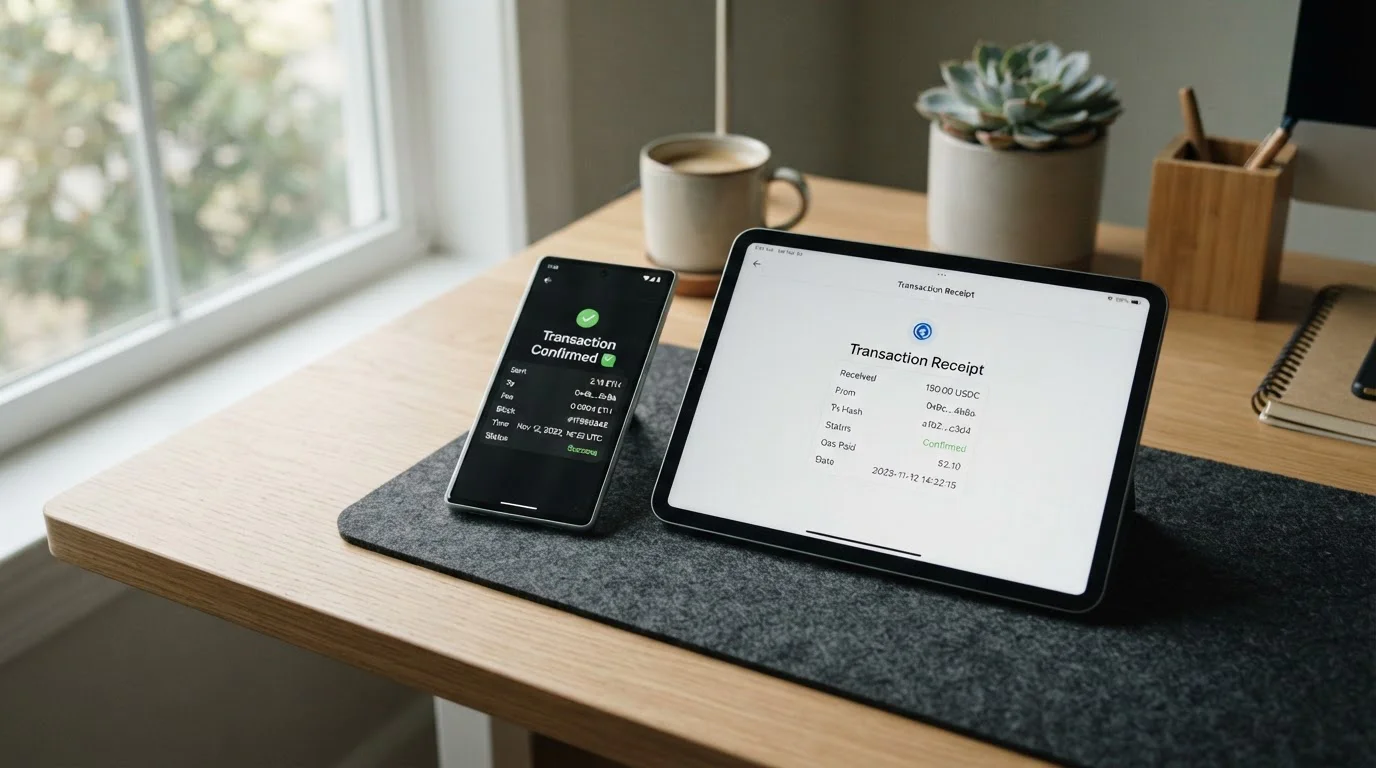
If you’ve never used crypto, the concept sounds complex: wallets, private keys, blockchain addresses, network fees. The setup is simpler than it sounds. Ten minutes gets you from zero to ready-to-deposit.
Step one: choose a wallet. For Australian players at offshore casinos, a mobile or desktop software wallet is enough. Exodus and Trust Wallet are beginner-friendly, support Bitcoin, Ethereum, USDT, and Solana, and run on iOS, Android, Windows, and macOS. Both are non-custodial, meaning you control the private key—the casino can’t freeze your wallet, and the wallet provider can’t block your transactions.
Step two: install and secure it. Download from the official site (exodus.com or trustwallet.com)—not a random app store search result, which could be a fake. During setup, the wallet generates a twelve- or twenty-four-word recovery phrase. Write it on paper, store it somewhere safe (not a cloud document, not a screenshot), and never share it. The recovery phrase is the master key to your wallet. Anyone with it controls your funds. No recovery phrase backup means if you lose your device or forget your password, the funds are gone permanently. No customer support can recover them.
Step three: buy crypto. The wallet app usually has a “buy crypto” button linking to a third-party exchange (MoonPay, Simplex, or similar). You can buy Bitcoin or USDT directly with a credit card or bank transfer. Fees are higher than buying on a dedicated exchange (Binance, Coinbase, or Kraken), but convenience matters for a first purchase. Alternatively, create an account on an Australian-friendly exchange like Binance, buy crypto there, and withdraw it to your wallet address.
Step four: deposit at the casino. The casino shows a deposit address (a string of letters and numbers) and a QR code. Copy the address or scan the QR. In your wallet, paste the address, enter the amount, select the correct network (USDT exists on multiple blockchains—TRC-20, ERC-20, BEP-20—make sure the network matches what the casino listed or the funds send to a void), and send. Transaction time: seconds to minutes depending on network. Cost: under a dollar for USDT TRC-20 or Solana, five to twenty dollars for Bitcoin depending on network congestion.
Step five: withdraw from the casino. When you cash out, the casino asks for your wallet address. Open your wallet, find your Bitcoin or USDT address (it’s in the “receive” section), copy it exactly, and paste it into the casino’s withdrawal form. Double-check the address—one wrong character sends funds to a black hole. Submit, wait for approval, and the crypto lands in your wallet within minutes. From there you can hold it, send it elsewhere, or sell it back to fiat on an exchange and withdraw to your bank.
The first time feels unfamiliar. After one deposit-and-withdrawal cycle, it’s routine. And starting January 2027 when PayID blocking hits, crypto becomes the only frictionless payment rail for offshore casino play in Australia.
Withdrawal Limits and VIP Fast-Track
Minimum withdrawals sit around A$20 to A$30 at most offshore operators—low enough that casual players can cash out small wins without waiting to hit a threshold. Maximum withdrawals per transaction vary widely. Some casinos cap at A$5,000 per day, others A$10,000 per week, a few have no published limit for crypto. Large cashouts get split across multiple transactions or days, and anything over A$10,000 usually triggers enhanced due diligence: source-of-funds requests, video verification calls, multi-day approval windows.
VIP programs offer higher limits and faster processing. Neospin, Sky Crown, VegasNow, and Wincrown all run tiered loyalty structures where climbing the levels unlocks perks: A$20,000 daily limits instead of A$5,000, dedicated account managers, priority withdrawal queues. Reaching those tiers requires volume—tens of thousands in deposits and wagering over weeks or months. For recreational players depositing a few hundred dollars, standard limits apply.
The fast-track pitch is real but conditional. VIP players report sub-one-hour approvals on withdrawals that would take standard accounts six to twenty-four hours, but becoming VIP means gambling enough that the house edge has already extracted far more than the faster cashouts save you. Chasing VIP status for withdrawal speed is backwards unless you were already planning to wager that volume.
Testing Methodology You Can Replicate
Vipnovel.com’s fourteen-withdrawal test of Neospin is the gold standard in current research: they deposited real money, wagered through, requested PayID cashouts at different times of day and days of the week, recorded request-to-settlement time for each, and published the average. That’s replicable, transparent, and verifiable in a way that “we tested these casinos” claims without data are not.
You can run the same test. Deposit A$50 via PayID at the casino you’re evaluating. Play through the deposit once (most casinos require one-times turnover as an AML control even if you didn’t claim a bonus). Request withdrawal back to the same PayID account. Note the timestamp of the request in your casino account history and the timestamp of the incoming transfer in your bank app. Subtract. That’s your end-to-end time.
Repeat across three to five cashouts: one midweek morning, one midweek evening, one weekend. Average the times. That average is your realistic expectation for that operator on that method. If the casino advertises “instant” and your average is four hours, you’ve verified the marketing claim against reality. If your average matches Neospin’s twenty-two minutes, you’ve confirmed the operator delivers.
Testing costs the deposit amount plus expected loss (4% of wagered amount at 96% RTP), so A$50 deposited and played once costs roughly A$2 in house edge. That’s cheaper than depositing A$500 without testing and discovering on your first real cashout that “instant” means twenty-four hours. Small test deposits de-risk large ones.
When Same-Day Isn’t Fast Enough
Same-day payout solves the “waiting a week for winnings” problem, but it doesn’t solve the “I need cash in the next hour” problem. Pokies aren’t ATMs. If you’re gambling with money you need for rent, bills, or expenses in the next few days, the house edge will eventually drain it, and same-day cashout speed won’t save you.
The math is unforgiving. A 96% RTP means for every A$100 wagered, expected return is A$96. Variance delivers wins and losses in individual sessions, but over volume the house edge grinds. If you deposit A$500, play long enough, and request withdrawal, the expected balance at that point is less than A$500 minus the house edge on total turnover. Same-day processing gets that reduced amount to your account faster, but it doesn’t make gambling a reliable way to convert time into money.
Offshore casinos market themselves as entertainment, and that framing is accurate. Same-day payouts make the experience less frustrating—winning and waiting a week to access the money kills the dopamine hit—but they don’t change the underlying math. The house always wins over volume. Fast cashouts just mean you get your remaining funds back quickly when you decide to stop.
Red Flags and Exit Signals
Fast payouts lose their value if the operator refuses to pay at all. Several warning signs indicate an offshore casino is higher-risk than the average Curaçao-licensed operator.
Unclear ownership. If the casino’s website doesn’t name the operating company, license number, and regulator, that’s a red flag. Hollycorn N.V., Novatrix SRL, Stable Tech N.V.—these are named entities traceable to Curaçao or Tobique registers. A casino hiding who owns it is planning to rebrand or vanish when disputes pile up.
No license information. “Licensed and regulated” without naming the regulator or showing a license number is meaningless. Curaçao licenses carry a validation seal linking to the eGaming registry. Malta licenses show the MGA badge with a verifiable license number. If the casino claims licensing but won’t specify where, assume unlicensed.
Terms that void winnings on technicalities. Reading the withdrawal terms before depositing reveals whether the operator is structured to pay or to stall. Clauses voiding winnings if you bet over a certain stake while clearing a bonus, or if you played a “forbidden game” not listed anywhere obvious, or if you made a deposit from a joint account—these are designed to manufacture refusal reasons.
Delayed or ignored KYC requests. Uploading documents at signup and hearing nothing for a week, then requesting withdrawal and being told “documents are still under review,” then uploading additional documents and getting the same response—classic stalling. Legitimate casinos process KYC within forty-eight hours. Multi-week KYC loops are the operator hoping you reverse the withdrawal and lose the balance.
“Bonus abuse” accusations on first cashout. If you’ve followed the terms, cleared wagering, and played normally, and the casino accuses you of bonus abuse or multi-accounting on your first withdrawal, that’s an exit signal. Withdraw whatever they’ll pay, avoid depositing again, and leave reviews warning others.
No offshore casino is zero-risk. Curaçao-licensed operators can and do refuse payouts, void winnings, and close accounts. The goal is to spot the highest-risk operators before depositing and to recognize when an operator you’re playing at crosses into high-risk behavior mid-stream. Fast payouts matter only if the operator actually pays.
Fast Payout Casinos Australia 2026 — Instant Withdrawal Guide
Content created by the «Aussie Cashier» team