
Casinos That Accept Visa in Australia: Tested Payment Reality for 2026
 Available in AU

Visa remains the default payment card for most Australians, so it’s no surprise players reach for it first when funding a casino account. The question isn’t whether Visa “works” in theory—it’s which operators actually process your deposit without a decline, how fast a withdrawal really lands back on your card, and what your bank does when it sees the transaction code.
In 2026, the offshore casino market for Australian players is crowded with brands claiming instant payouts and seamless Visa integration. Behind that marketing sits a messier reality: your card type matters, your bank’s internal gambling policy matters, and most “instant” Visa withdrawals take three business days because the operator uses a standard refund path instead of the faster Visa Direct technology.
The list here maps which casinos accept Visa from Australian players, breaks down the payment mechanics operators don’t advertise, and closes the gap between what you’re promised and what actually happens when you click Deposit or Withdraw.
Can I use my Visa card at online casinos in Australia?
Yes, Visa debit cards work at most offshore casinos serving Australian players. Visa credit cards are trickier—Australian banks increasingly block or restrict gambling transactions on credit, coding them as cash advances with immediate interest. No online casino is licensed in Australia under the Interactive Gambling Act 2001, so all accessible operators are offshore entities holding Curaçao, Malta, or Cyprus licenses.
Top Visa Casinos for Australian Players in 2026
The operators below accept Visa deposits from Australians and have verified payment infrastructure that clears transactions without systematic declines. All are offshore; none hold an Australian license because none can under current law. Licenses, withdrawal methods, and bonus structures come from independent testing and operator disclosures as of early 2026.
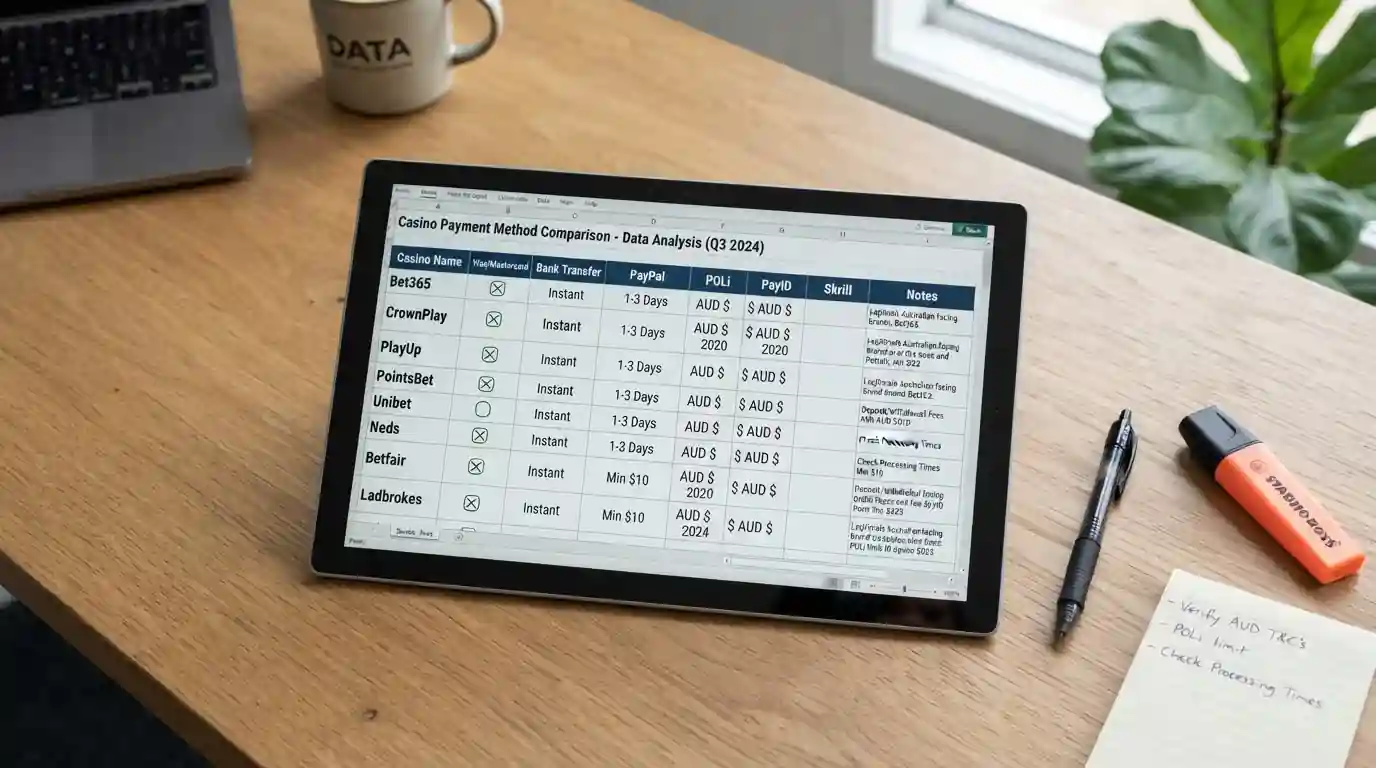
| Operator | License | Withdrawal Method | Min Deposit | Welcome Bonus |
|---|---|---|---|---|
| PlayZilla | Curaçao 8048/JAZ | Standard refund (3+ days), crypto | A$20 | 100% to A$500 + 200 FS |
| Neospin | Curaçao 8048/JAZ2019-015 | Crypto/bank/e-wallet only (not card) | A$30 | 100% to A$10,000 + 100 FS |
| SkyCrown | Curaçao 8048/JAZ2019-015 | Visa refund (2-5 days), crypto | A$30 | Up to A$4,000 + 400 FS |
| Rocket | Curaçao 1668/JAZ | Crypto, PayID (not card) | A$20 | 150% to A$1,500 + 150 FS |
| Rolletto | Curaçao | Standard refund, crypto | A$20 | Varies |
| Kingdom | Curaçao | Standard refund, crypto | A$20 | 200% to €500 |
| Safe | Curaçao | Standard refund, crypto | A$20 | Up to A$4,000 + 1200 FS |
| Robocat | Curaçao | Standard refund, crypto | A$20 | 100% to $550 + 200 FS |
| Smash | Curaçao | Standard refund, crypto | A$20 | Varies |
| WildFortune | Curaçao | Standard refund, crypto | A$20 | Varies |
| Slotornado | Curaçao | Standard refund, crypto | A$20 | Varies |
| 7Bit | Curaçao | Crypto primary, card secondary | A$20 | Varies |
| Stone Vegas | Curaçao | Standard refund, crypto | A$20 | Varies |
| BetFlare | Curaçao | Standard refund, crypto | A$20 | Varies |
The table makes one thing clear: Visa Direct (the 30-minute push-to-card method) is essentially absent. Standard card refunds take 2-5 business days, and several operators have abandoned Visa withdrawals entirely in favour of crypto or e-wallets. If withdrawal speed matters, crypto consistently outperforms cards.
PlayZilla Casino
PlayZilla is operated by Rabidi N.V. out of Curaçao under Antillephone license 8048/JAZ. The company also runs a handful of other brands targeting European and Australian markets, and the platform itself has been around long enough to accumulate a track record beyond launch hype.
The welcome structure is 100% up to A$500 plus 200 free spins and one “Bonus Crab”—a gamified loyalty mechanic that isn’t common across competitors. Wagering sits at 35 times the combined deposit and bonus amount, which effectively means you’re clearing around 70 times the bonus portion alone. Maximum bet while the bonus is active: A$7.50. The pokies library is deep, north of 5,000 titles, with heavy representation from Pragmatic Play and NetEnt.
Visa deposits are processed through a third-party payment handler; Mastercard is explicitly confirmed, and Visa is implied under the “card” category. Minimum deposit A$20. Withdrawals via bank transfer take 3-10 business days. Crypto withdrawals, despite the site’s “instant” claims, took three full business days in documented testing. PlayZilla sits on the ACMA blocklist, so access from Australia requires a mirror domain or VPN.
Neospin Casino
Neospin is run by Hollycorn N.V., company number 144359 in Curaçao, under Antillephone license 8048/JAZ2019-015. The brand leans into crypto-savvy Australian players with neon UI and a stacked promo budget, but once you get past the shopfront, the same questions apply: does the cash leave the cashier when you ask for it?
The welcome package builds to A$10,000 over five deposits, with 40 times wagering on most portions. The headline figure looks generous; the arithmetic underneath it says more. All bonus dollars carry a A$10 maximum bet restriction. Visa and Mastercard handle deposits only—minimum A$30—but withdrawals must go out via crypto, bank transfer, or e-wallet. You cannot withdraw back to your card.
In testing, crypto withdrawals (USDT or Bitcoin) cleared in under 24 hours after the first KYC approval. Subsequent withdrawals were faster. Bank transfer minimum is A$500, and realistically takes 5-10 business days. Neospin enforces a 3x deposit turnover rule on all funds, even without a bonus, as part of anti-money-laundering compliance. The site is on the ACMA blocklist.
Daily withdrawal cap hovers around A$10,000; monthly cap around A$60,000. For Australians, the cleanest workflow is buying crypto on a local exchange, depositing and playing in crypto, then withdrawing in the same currency. This sidesteps bank transfer delays and the A$500 minimum.
SkyCrown Casino
SkyCrown holds Curaçao license 8048/JAZ2019-015 and markets itself with a royal theme and a tighter-than-average user interface. The welcome offer spreads across five deposits for a combined A$4,000 plus 400 free spins, each tier unlocked with a promo code (KNG1, WLF2, 3DRG, VGS4, and a fifth). Wagering requirement: 40 times.
Visa is accepted for both deposits and withdrawals. In documented testing, a A$50 Visa deposit landed instantly. A A$150 Visa withdrawal cleared on day three—not instant, but within the advertised 2-5 day window for standard card refunds. Crypto withdrawals moved faster, clearing in 3-7 hours across multiple tests. Bank transfer is available but carries a A$3,000 minimum, making it impractical for casual players.
SkyCrown supports over ten cryptocurrencies and runs AUD as a primary account currency, so you’re not constantly converting. Minimum deposit A$30. The platform hosts more than sixty game collections sorted by theme (Egyptian mythology, Megaways formats, etc.), which makes browsing less tedious than scrolling a single alphabetical wall.
For players who want Visa withdrawals to actually work—not just be listed as an option—SkyCrown is one of the few that processes them without forcing you onto crypto or e-wallets.
Rocket Casino
Rocket Casino (also marketed as RocketPlay depending on geo-targeting) operates under Curaçao license 1668/JAZ via Antillephone N.V. A Kahnawake-licensed variant exists but the Curaçao version is more common for Australian players. The welcome offer varies by source: 150% up to A$1,500 plus 150 free spins on some affiliate listings, A$500 match on others. Verify against the live cashier before claiming.
The platform carries 3,000 to 5,000 titles from Pragmatic Play, BGaming, and Play’n GO. Visa is accepted for deposits. For withdrawals, the site pushes PayID and crypto as faster alternatives. PayID cashouts are advertised under 24 hours; crypto typically clears within the same window. Minimum deposit A$20.
Rocket stands out for integrating Australian-specific payment methods—PayID and POLi—alongside Visa, giving you multiple rails if one fails. The downside: Visa withdrawals are not offered, so if you deposit by card, you’re withdrawing by another method.
The operator has built a reputation around high-limit players and fast crypto payouts. If you’re comfortable with crypto workflows, Rocket delivers. If you need to withdraw back to your Visa card, this isn’t the platform.
Rolletto Casino
Rolletto launched in 2020 under a Curaçao license and has carved out a mid-tier position in the offshore market. The exact license number isn’t prominently disclosed in marketing materials, which is common for operators prioritising brand over regulatory detail. Casino.guru assigns it a 6.0 out of 10 safety index—below average compared to competitors like PlayZilla (8.9) or SkyCrown.
The welcome bonus structure varies by promotion; no fixed package is advertised consistently across affiliate channels. Visa deposits are accepted. Withdrawals follow the standard card refund path (3-5 days) or crypto. Minimum deposit A$20.
Rolletto’s game lobby is described in testing as “tighter” and faster-loading than many competitors, with a pokies-heavy catalogue and a cleaner filter system. The lower safety rating reflects weaker dispute resolution mechanisms and less transparent ownership disclosure compared to higher-rated offshore platforms.
For players prioritising operational slickness over regulatory transparency, Rolletto fits. For those who weight licensor credibility and dispute track record higher, platforms with stronger third-party ratings offer more confidence.
Kingdom Casino
Kingdom Casino operates under a Curaçao license, exact series unspecified in public materials. The welcome offer is 200% up to €500—note the Euro denomination, which means Australian players pay foreign exchange conversion on both the deposit and any bonus clearing. Visa deposits are accepted; minimum presumed A$20 based on market standard.
The 200% match percentage is higher than most competitors (typically 100%-150%), but the lower cap (€500 translates to roughly A$850 at typical exchange rates) means the absolute bonus ceiling isn’t as generous as platforms offering A$1,500 or A$4,000 maximums in AUD.
Withdrawals follow the standard Visa refund route or crypto. Kingdom scores a 9.6 rating on some aggregator lists, placing it in the upper tier for user satisfaction and payout reliability. Limited independent testing data exists in publicly available sources, so player reviews carry more weight here than for operators with documented test results.
Safe Casino
Safe Casino’s defining feature is its bonus cap: up to A$4,000 plus 1,200 free spins, among the highest in the Australian offshore market. The offer is AUD-denominated, so no foreign exchange fees eat into the bonus value. Curaçao license presumed based on operator clustering in the market.
Visa deposits accepted, minimum A$20. Withdrawals via standard card refund (3-5 days) or crypto. The platform scores a 9.5 rating on some lists, suggesting solid operational reliability and payout speed.
The high bonus cap attracts attention, but the same wagering requirements apply as elsewhere—typically 35x to 40x the bonus amount, with maximum bet restrictions (A$7.50 to A$10) while the bonus is active. Clearing A$4,000 at 40x wagering means A$160,000 in total bets. At 96% RTP across the pokies library, expected house edge over that volume is around A$6,400. The bonus is a high-variance gamble, not a gift.
For players with larger bankrolls who plan to play high volume anyway, Safe’s bonus structure offers more runway. For casual players depositing A$50, the standard 100% match offers better proportional value.
Robocat Casino
Robocat operates under a Curaçao license with a robotic/tech branding theme. Welcome bonus: 100% up to $550 plus 200 free spins. Currency denomination varies by source; verify whether the $550 cap is AUD or USD before claiming to avoid an unwelcome exchange rate surprise.
Visa accepted for deposits, minimum A$20. Withdrawals via standard refund or crypto. The platform scores a 9.4 rating on aggregator lists, placing it in the reliable mid-tier. Game library and payment speed are described as competitive but not standout—Robocat doesn’t lead any specific category but covers the expected feature set without major gaps.
The tech theme extends to UI design, with a cleaner, less “Vegas glitz” aesthetic than older offshore brands. For players tired of gold coins and flashing lights, Robocat’s visual approach is less fatiguing. Operationally, it’s a solid middle-of-the-pack choice.
Smash Casino, WildFortune Casino, Slotornado Casino
These three operators share a pattern: they rank highly on australiavisacasino.com specifically for Visa payment compatibility and issuer handling. Smash takes the top position, WildFortune second, Slotornado third. All three hold Curaçao licenses (exact series not disclosed in aggregator listings).
What distinguishes them from competitors is fewer reported bank declines. Australian players depositing with Commonwealth Bank or Westpac Visa debit cards—the two issuers most aggressive about blocking offshore gambling—report higher success rates at these three operators than at other offshore platforms. This suggests the payment processors they use either code transactions in a way that slips under bank risk filters, or they’ve negotiated issuer relationships that reduce friction.
Welcome bonuses, game libraries, and withdrawal speeds aren’t publicly detailed in the same depth as for PlayZilla or Neospin. The value proposition here is transactional reliability: your Visa deposit is more likely to clear without a decline.
For players who’ve been declined at other casinos and suspect their bank is the blocker, these three are worth testing first.
7Bit Casino
7Bit is an older brand in the offshore space, originally positioned as a Bitcoin casino and later adding fiat rails. It holds a Curaçao license and maintains a crypto-first identity, with Visa accepted as a secondary deposit method.
The dual positioning means 7Bit’s crypto infrastructure is more mature than its card processing. Crypto deposits and withdrawals are instant to near-instant; card refunds follow the standard 3-5 day path. Minimum deposit A$20.
The welcome bonus and game library vary by promotion cycle. 7Bit’s strength is its track record—several years of continuous operation without major payment scandals or unresolved player complaints accumulating in public forums. For players who value longevity and operational stability over the newest features, 7Bit’s age is an asset.
If you plan to use Visa for deposits but crypto for withdrawals, 7Bit’s hybrid model fits cleanly. If you need to withdraw back to your card, the platform supports it but doesn’t prioritise it.
Stone Vegas and BetFlare
Stone Vegas and BetFlare round out the top-tier offshore platforms accepting Visa from Australian players. Both hold Curaçao licenses, appear in the top 16 on chardarwins.com, and process standard Visa deposits without systematic declines. Minimum deposit A$20, withdrawals via standard refund or crypto.
Neither brand leads in any specific category—game count, bonus size, withdrawal speed—but both clear the baseline for operational competence. Stone Vegas adopts a “Vegas” aesthetic (less common among offshore brands targeting Australians, who lean toward cleaner modern designs). BetFlare’s branding is minimal, prioritising function over theme.
For players selecting a casino based on non-payment factors (specific game provider, tournament schedule, VIP program structure), both platforms offer Visa as a reliable deposit rail. For players prioritising payment method performance above all else, the brands listed earlier offer clearer advantages.
Visa Card Types That Work at Australian Online Casinos
Not all Visa cards are treated equally by Australian banks or offshore casino payment processors. The card type determines how the transaction is coded, whether your bank allows it, and—critically—whether you can withdraw back to the same card you deposited from.
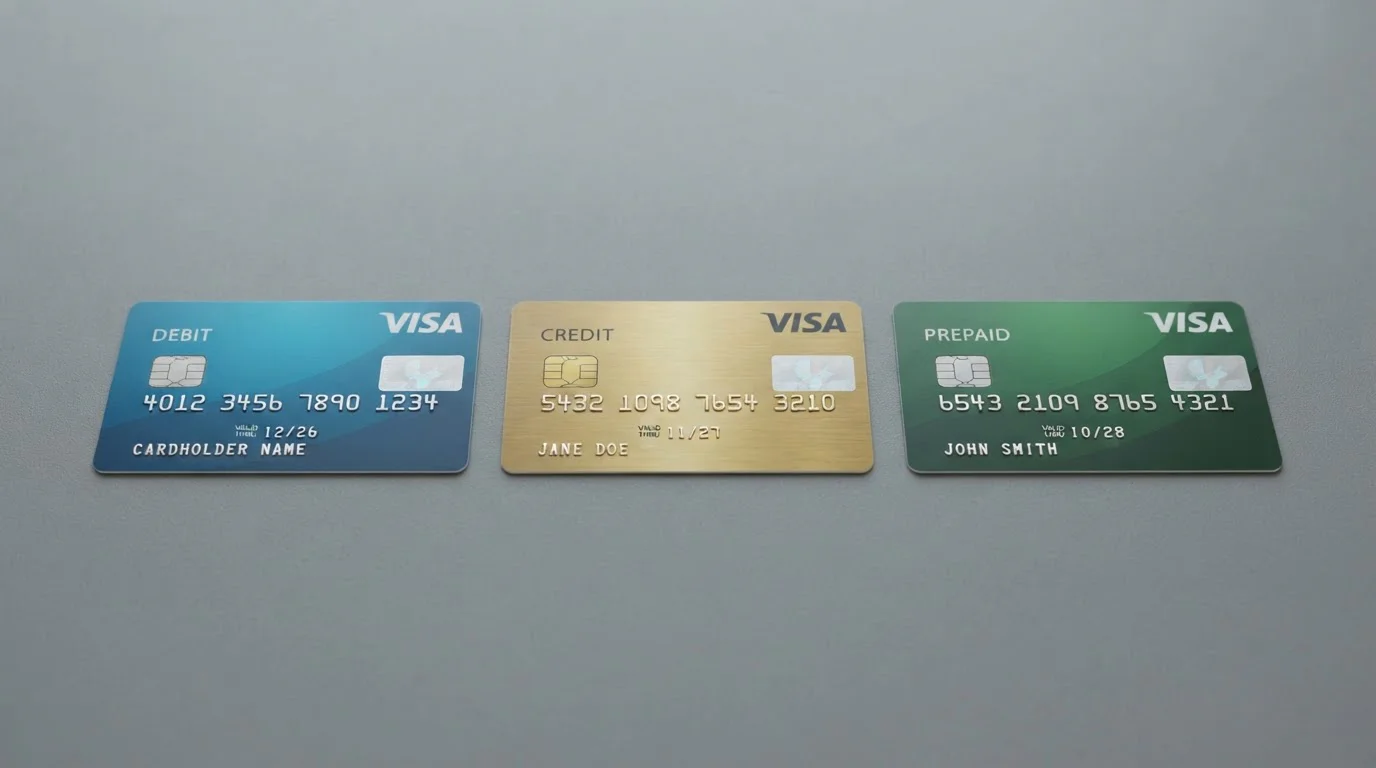
Visa Debit Cards
Visa debit draws directly from your linked bank account and is the most widely accepted card type at offshore casinos serving Australian players. Deposits clear instantly once your bank approves the transaction. Withdrawals via standard card refund take 2-5 business days and land back in the same account the card pulls from.
Australian banks treat debit gambling transactions more leniently than credit. The transaction is coded as merchant category code (MCC) 7995—”betting and casino gambling”—but because you’re spending your own money rather than borrowing, most banks allow it to proceed without intervention unless you’ve manually activated a gambling block feature.
Commonwealth Bank is the exception. CBA applies stricter filters to offshore gambling merchants even on debit, and players report higher decline rates than at NAB, Westpac, or ANZ. The decline isn’t universal, but if your CBA debit deposit fails on the first attempt, try a smaller test amount (A$20 instead of A$100) to see if transaction size is triggering the block.
Visa debit is the cleanest card type for Australian casino players: deposits work, withdrawals work, and your bank is less likely to intervene.
Visa Credit Cards
Visa credit is where Australian banking policy gets restrictive. Under regulatory pressure and responsible gambling initiatives, the big four banks—Commonwealth, NAB, Westpac, ANZ—have all tightened or outright blocked gambling transactions on credit cards.
When a gambling transaction is allowed, it’s usually coded as a cash advance, not a purchase. That means three things happen that don’t happen on a normal credit card purchase.
Immediate interest accrual. Your credit card’s interest-free period (typically 55 days) doesn’t apply to cash advances. Interest starts the day the transaction posts, at the cash advance rate—usually 19.99% to 22.99% per annum.
Cash advance fee. Your bank charges 2.5% to 3.5% of the transaction amount as a flat fee. Deposit A$100, pay A$3 in fees before you spin a single reel.
No rewards points. Cash advances don’t earn frequent flyer points, cashback, or any other card rewards.
ANZ has a published policy: gambling transactions are declined if you’ve used 85% or more of your credit limit, or if the transaction would push you to 85% or above. That’s an explicit, documented rule. The other banks apply similar thresholds but don’t disclose the exact percentage publicly.
For Australian players, the bottom line is simple: Visa credit costs more than Visa debit, and many offshore casinos won’t process credit deposits at all due to issuer decline rates. Use debit.
Visa Prepaid and Gift Cards
Visa prepaid cards (branded as Visa Gift Cards or reloadable prepaid Visas) work for deposits at most offshore casinos. The payment processor sees a valid Visa card number and processes the transaction. Minimum deposit thresholds apply the same as for debit (A$10 to A$30 typical).
The limitation surfaces on withdrawal. You cannot withdraw back to a prepaid Visa card. When you request a Visa withdrawal, the operator initiates a transaction reversal or refund back to the funding source—but prepaid cards are one-way instruments. The issuer of the prepaid card doesn’t support inbound “push” payments from merchants, only outbound spending.
What happens instead: the casino’s payment processor refunds the amount to the bank account or e-wallet you used to originally load the prepaid card. If you bought a Visa gift card with cash at a retail outlet and never linked it to a bank account, you’re stuck. The withdrawal cannot complete via that card.
The workaround: if you deposit with a prepaid Visa, plan to withdraw via crypto, bank transfer, or e-wallet. Set up one of those methods in the casino cashier before your first withdrawal request to avoid delays.
Prepaid Visas offer privacy (no direct link to your main bank account) and spending control (preloaded balance caps losses), but they’re not a complete solution. Deposits one-way, withdrawals another.
Can I withdraw to a prepaid Visa card?
No. Prepaid Visa cards support outbound spending but not inbound refunds or deposits. When you request a Visa withdrawal from a casino, the payment processor attempts to reverse the original transaction back to the funding source. Prepaid card issuers block these inbound pushes, so the withdrawal fails or routes to the bank account originally linked to the prepaid card. Use crypto, e-wallet, or bank transfer for withdrawals if you deposited via prepaid.
How Australian Banks Handle Visa Gambling Transactions
Australian banks code offshore casino transactions with MCC 7995—the Visa merchant category for betting and casino gambling. What happens next depends on your issuer, your card type, and how much of your credit limit you’ve used.

Commonwealth Bank Policies
Commonwealth Bank applies the strictest filtering of the big four. Credit card gambling transactions are almost universally blocked or coded as cash advances (immediate interest, 2.5%-3% fee). Debit card transactions to offshore casinos are allowed more often than credit, but CBA’s risk algorithms flag “high risk” merchants more aggressively than competitors.
Players report that smaller test deposits (A$20) clear more reliably than larger amounts (A$100+). The theory: CBA’s filters use transaction size as a risk signal, and amounts under A$30 slip through while larger sums trigger manual review or automatic decline.
CBA offers a “gambling block” feature you can activate in the app. Once enabled, all transactions coded MCC 7995 are hard-blocked at the network level. The feature is opt-in, not default, so if you haven’t manually activated it, your declines are coming from CBA’s internal risk filters, not a gambling-specific block you asked for.
For Australian players banking with CBA, the practical advice is: use Visa debit, start with a small test deposit, and have a backup payment method (crypto or e-wallet) ready if the card declines repeatedly.
NAB and Westpac Approaches
National Australia Bank and Westpac take a more moderate stance. Both banks allow debit card gambling transactions in most cases. Credit card gambling is restricted but not universally blocked—transactions are coded as cash advances (immediate interest, fees apply), and both banks offer opt-in gambling block features similar to CBA’s.
NAB’s gambling support page describes the block as covering “sports betting, casino games, lottery tickets, online gambling, cash advances, and credit card transfers.” The block is voluntary; you have to request it. Without the block active, NAB processes MCC 7995 transactions unless your account has other flags (suspected fraud, overdrawn, or near credit limit).
Westpac’s “Gambling Block” works the same way: opt-in via the app or by calling 132 032. The block prevents transactions at merchants classified as betting or casino gambling. Westpac’s wording makes clear this is an assistance tool, not a default restriction—”if you need extra care in relation to your gambling and the banking services we provide.”
For players with NAB or Westpac, Visa debit clears reliably. Visa credit is allowed but expensive (cash advance treatment). If you want to block yourself from gambling transactions, you have to activate the feature manually.
ANZ Credit Limit Rules
ANZ has the most transparent published policy: gambling transactions are declined if you’ve used 85% or more of your credit limit, or if the transaction would take you to 85% or above. This applies specifically to credit cards, not debit.
The threshold is hard-coded. If your credit limit is A$10,000 and your balance is A$8,600 (86%), a A$100 gambling deposit will decline. Pay down your balance below 85%, and the same transaction will clear—still coded as a cash advance, still hit with immediate interest and a fee, but not blocked outright.
ANZ also offers an opt-in gambling block feature via the ANZ Plus app for Visa debit cards and digital wallets. The block works at the card level, not the account level, so you can block one card and leave another open if you hold multiple.
For ANZ customers using Visa credit, keep utilization under 85% if you want gambling transactions to process. Better yet, use Visa debit and avoid cash advance fees entirely.
| Bank | Credit Card Policy | Debit Card Policy | Gambling Block Feature | Workaround |
|---|---|---|---|---|
| Commonwealth Bank | Blocked or cash advance (strict) | Allowed, high decline rate | Opt-in | Use debit, small test deposits, backup method ready |
| NAB | Cash advance (moderate) | Allowed | Opt-in | Use debit to avoid fees |
| Westpac | Cash advance (moderate) | Allowed | Opt-in | Use debit to avoid fees |
| ANZ | Declined if ≥85% limit used | Allowed | Opt-in (debit/digital wallet) | Keep credit utilization <85%, or use debit |
Why did my Visa deposit get declined at an online casino?
Declined Visa deposits at offshore casinos usually trace to one of four causes: (1) your bank blocked the transaction (Commonwealth Bank is strictest), (2) you’re using Visa credit near or above 85% of your limit (ANZ’s published threshold, others similar), (3) the casino’s payment processor flagged your card as high-risk due to past chargebacks or fraud signals, or (4) incorrect card details. Try a smaller amount (A$20), switch to Visa debit if you’re using credit, or use an alternative method (crypto, e-wallet).
How to Deposit with Visa at Australian Online Casinos
Visa deposits at offshore casinos follow a standard flow. The operator’s payment processor checks your card details, requests authorization from your bank via the Visa network, and either approves or declines the transaction in real time. The whole process takes 5 to 30 seconds.
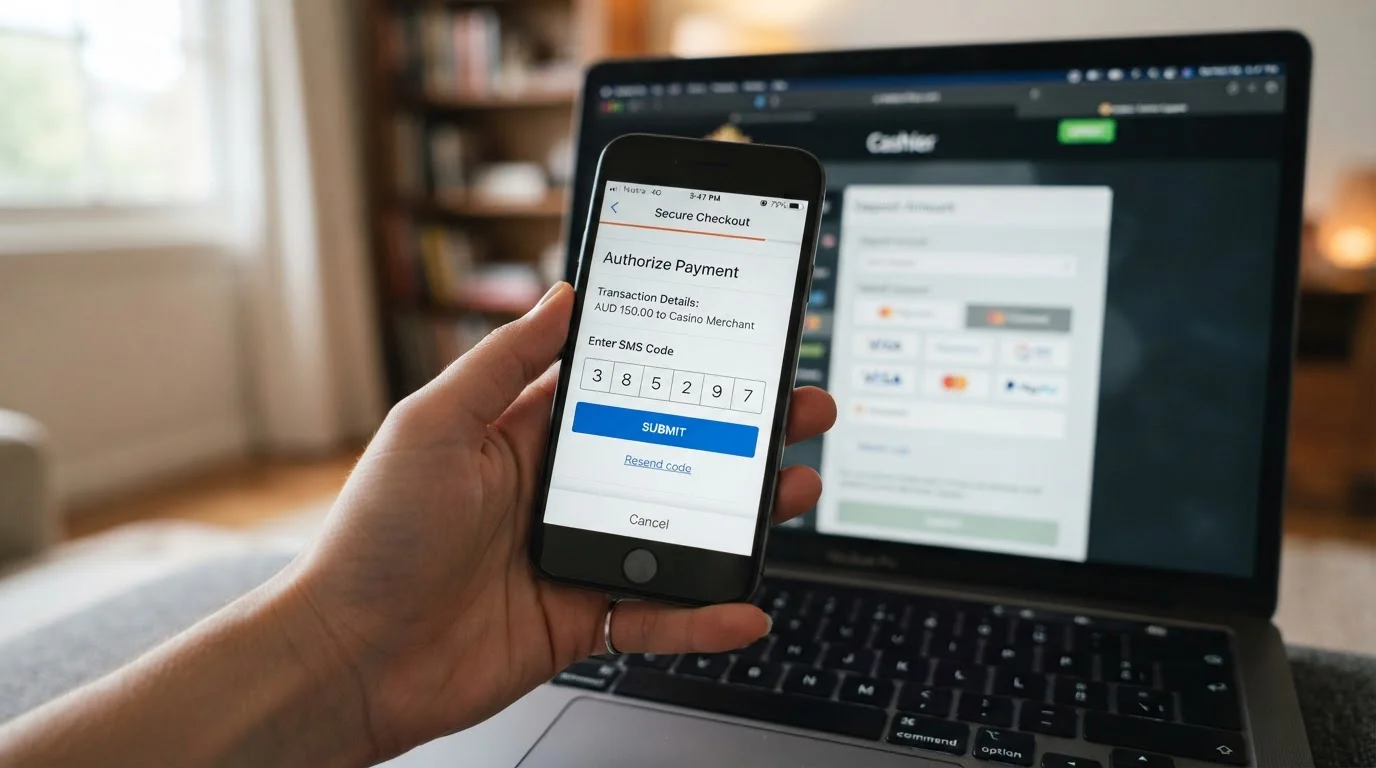
Step-by-Step Deposit Process
Start with the cashier. Log into the casino and open the cashier or deposit page — most platforms place the link in the top-right corner of the screen or under the account menu.
Select Visa or “Credit/Debit Card” as the payment method. Some cashiers list Visa explicitly; others group it under “Card” alongside Mastercard.
Enter your card details. The form asks for card number (16 digits), expiry date (MM/YY), CVV (3-digit code on the back), and cardholder name exactly as it appears on the card. Some processors also ask for your billing address (the address linked to the card in your bank’s records).
Choose your deposit amount. Minimum deposits range from A$10 to A$30 depending on the casino. Maximum deposits vary widely; most platforms cap individual transactions at A$1,000 to A$5,000 but let you make multiple deposits without a daily ceiling.
Complete 3D Secure authentication. After you click Deposit, a new window or overlay opens asking you to verify the transaction. This is “Verified by Visa” (3D Secure). Your bank sends a one-time code via SMS to your registered mobile number, or you approve the transaction in your bank’s app. Enter the code or approve in the app, and the transaction completes.
Funds appear instantly. Once your bank approves the transaction, the balance lands in your casino account within seconds and you can start playing.
If the deposit fails, the most common reasons are: bank decline (check your card type and issuer policies above), insufficient funds, incorrect card details (typo in the card number or CVV), or the payment processor’s fraud filter flagging your card. Most casinos show a generic “transaction declined” message without specifying which party rejected it.
3D Secure and Transaction Security
3D Secure is Visa’s two-factor authentication protocol. When you deposit, the casino’s payment processor sends a request to your bank asking “does this cardholder authorize this transaction?” Your bank responds by sending you a one-time SMS code or pushing an approval request to your mobile banking app. You confirm, and the transaction proceeds.
This step prevents someone who has your card number from making a deposit without also having access to your phone. It’s a friction point—adds 15-30 seconds to the process—but it works. Card-not-present fraud (online transactions where the physical card isn’t swiped) dropped significantly after 3D Secure became mandatory in most markets.
The downside: if your phone is out of reach or your bank’s SMS delivery is slow, the authentication window can time out (usually 3-5 minutes). The deposit fails, and you have to start over. Keep your phone handy when depositing.
All reputable offshore casinos use SSL encryption (the padlock icon in your browser’s address bar) to secure the connection between your device and their server. Your card details are encrypted in transit and never stored in plain text on the casino’s servers—they’re tokenized by the payment processor and stored as a reference ID instead.
Still, you’re handing your card details to a third-party payment processor operating on behalf of an offshore entity. Check that the casino’s domain matches the URL in your browser (phishing sites mimic legitimate casino URLs with slight variations). If the URL looks wrong or the SSL certificate is missing, don’t enter your card details.
Common Deposit Failures and Fixes
“Transaction declined” with no further detail. This is your bank blocking the transaction. Check: (1) Are you using Visa credit near your limit? ANZ blocks at 85%, others similar. (2) Is your issuer Commonwealth Bank? CBA declines offshore gambling more than NAB/Westpac/ANZ. (3) Did you activate a gambling block feature in your banking app? If yes, deactivate it or use a different card.
“Card not supported” or “Payment method unavailable.” The casino’s payment processor doesn’t have a rail for your card’s issuing bank, or your card type (corporate card, some prepaid variants) isn’t accepted. Try a different Visa card or switch to an alternative method (crypto, bank transfer).
“3D Secure authentication failed.” You didn’t enter the SMS code in time, or the code was incorrect. Check your phone for the SMS (sometimes delayed by 30-60 seconds), re-enter carefully, and try again. If SMS isn’t arriving, check with your bank that international SMS is enabled on your mobile service.
“Insufficient funds.” Your account balance or available credit is too low to cover the deposit plus any bank fees. Check your balance, add funds, or deposit a smaller amount.
Multiple failed attempts lock your card. After 3-5 consecutive declines in a short window, some banks temporarily freeze your card as a fraud-prevention measure. Call your bank to unlock it, or wait 1-2 hours and try again.
What’s the minimum Visa deposit at Australian-friendly casinos?
Most offshore casinos accepting Visa from Australian players set minimum deposits between A$10 and A$30. A$20 is the most common threshold. A few platforms (typically higher-end or VIP-focused) start at A$50, but those are outliers. If you’re testing a new casino or trying to trigger a small bonus, A$20 covers entry at almost every operator in the market.
Visa Withdrawals and Real Payout Speeds
Offshore casinos market “instant withdrawals” prominently, but Visa card payouts rarely live up to that claim. The gap between advertising and reality comes down to two technical pathways—Visa Direct and standard card refunds—and most operators use the slower one.

Visa Direct vs Standard Card Refunds
Visa Direct is Visa’s push-to-card service. When an operator processes a Visa Direct withdrawal, they send funds directly to your card in real time, the same way a person-to-person payment works. The money lands in your account in 30 minutes to 2 hours.
The catch: Visa Direct requires your card-issuing bank to support inbound push payments from gambling merchants. Most Australian banks *technically* support Visa Direct for some merchant categories but block or restrict it for MCC 7995 transactions. Commonwealth Bank, Westpac, NAB, and ANZ all maintain internal policies on which merchant types can push funds to their cardholders, and offshore casinos sit in the “restricted” or “unsupported” bucket more often than not.
The result: Visa Direct withdrawals are rare in the Australian offshore casino market. When a casino advertises “instant Visa withdrawal,” verify in the terms whether they mean Visa Direct (genuinely fast) or standard refunds (marketing spin).
Standard card refunds are the fallback, and the method most operators actually use. Instead of pushing money to your card, the casino’s payment processor initiates a transaction reversal—the same type of refund you’d get if you returned a purchase to a retailer. Your bank sees it as a credit adjustment to your account, processes it through their standard refund queue, and posts it 1-5 business days later.
Three days is typical. In documented testing, SkyCrown’s Visa withdrawal of A$150 cleared on day three. PlayZilla’s crypto withdrawal (marketed as instant) also took three full business days. The operator approves the withdrawal on their end within a few hours, but the banking system’s refund pathway adds the delay.
Standard refunds are reliable—your money arrives—but calling them “instant” is a stretch.
| Withdrawal Method | Typical Speed | Tested Example | Prerequisites |
|---|---|---|---|
| Visa Direct | 30 min – 2 hours | Rare in AU market | Issuer must support push-to-card for gambling merchants |
| Standard Visa refund | 2-5 business days (typically 3) | SkyCrown A$150 cleared day 3 | None beyond KYC |
| Crypto (BTC, USDT) | 0-24 hours after approval | Neospin under 24h after first KYC; SkyCrown 3-7h | Crypto wallet address |
| Bank transfer | 3-10 business days | Realistic 5-10 days | Min A$500 typical; bank account details |
| E-wallet (MiFinity, eZeeWallet) | 1-24 hours | Varies by platform | E-wallet account |
If withdrawal speed is your priority, crypto consistently outperforms Visa. If you want your money back on the same card you deposited from, standard Visa refunds work but take 3 days on average.
First Withdrawal KYC Delays
Every offshore casino requires identity verification before processing your first withdrawal. This is Know Your Customer (KYC) compliance, driven by anti-money-laundering regulations in the casino’s licensing jurisdiction.
The operator asks for photo ID (passport, driver’s license, or national ID card), proof of address (utility bill, bank statement, or government letter dated within the last 3 months), and, if withdrawing to Visa, card verification — a photo of the front of your card (middle 6 digits obscured, CVV covered) to prove you own the card the deposit came from.
Upload these documents in the casino’s KYC section (usually under Account or Settings). The review team processes them in 24-72 hours. Some casinos move faster—Neospin approved KYC documents overnight in testing—but 48 hours is the safe assumption.
Your first withdrawal doesn’t start processing until KYC is approved. If you request a withdrawal on Monday and upload documents Tuesday, and KYC clears Thursday, the withdrawal clock starts Thursday. Add 3 days for Visa refunds, and you’re looking at the following Monday or Tuesday before funds land.
Subsequent withdrawals are faster. Once KYC is complete, repeat withdrawals process without document review. Neospin’s crypto withdrawals cleared in under 24 hours after the first approval; SkyCrown’s Visa payouts followed the standard 3-day refund timeline without additional holds.
The takeaway: plan for 5-7 days total on your first withdrawal (KYC review + payout processing). After that, expect the withdrawal method’s normal speed.
Why Some Casinos Don’t Offer Visa Withdrawals
Several operators in the table above—Neospin, Rocket, others—accept Visa deposits but route withdrawals through crypto, bank transfer, or e-wallets only. Why?
Issuer decline rates. Australian banks decline inbound gambling transactions at higher rates than outbound. A Visa deposit (you pushing money to the casino) is an outbound transaction from your bank’s perspective and usually clears. A Visa withdrawal (the casino pushing money back to you) is an inbound transaction, and banks treat those as higher risk. Commonwealth Bank and Westpac are particularly aggressive about blocking inbound pushes from offshore gambling merchants.
When an operator processes 100 Visa withdrawal requests and 30 of them bounce due to issuer blocks, they’re left managing customer complaints, payment processor fees on failed transactions, and regulatory scrutiny over funds that left the casino but didn’t reach the player. It’s cheaper and cleaner to route withdrawals through crypto (no bank intermediary) or e-wallets (different MCC code, lower decline rate).
Payment processor agreements. Some Visa payment processors offer deposit-only rails for gambling merchants. The processor connects your bank to the casino for inbound payments but doesn’t offer the reverse flow. The casino can’t add Visa withdrawals even if they want to—their processor doesn’t support it.
Chargeback risk. When a player loses money, some file a chargeback with their bank claiming the transaction was unauthorized. Visa’s chargeback process favours cardholders, and gambling transactions are high-risk from the merchant’s perspective. By limiting Visa to deposits only, the casino contains chargeback exposure—they accept the risk on inbound transactions but don’t create new liability on outbound ones.
For players, the practical outcome is: Visa works reliably for deposits, less reliably for withdrawals. If you want to withdraw back to your card, verify the casino supports it *before* you deposit. If Visa withdrawals aren’t listed in the cashier, you’re withdrawing by another method.
How long do Visa withdrawals take at Australian online casinos?
Visa withdrawals at offshore casinos serving Australian players typically take 2-5 business days via the standard card refund pathway. Three days is the most common outcome in documented testing. “Instant” Visa withdrawal marketing usually refers to the operator approving your request within hours, not the funds landing in your account instantly. Visa Direct (true 30-minute payouts) is rare because most Australian banks restrict push-to-card payments from offshore gambling merchants. Crypto withdrawals consistently clear faster (0-24 hours after KYC approval).
What’s the difference between Visa Direct and standard card refunds?
Visa Direct is a real-time push-to-card payment that lands in 30 minutes to 2 hours, but it requires your card-issuing bank to support inbound pushes from the merchant’s category code (MCC 7995 for gambling). Most Australian banks restrict or block this for offshore casinos. Standard card refunds are transaction reversals processed through the bank’s refund queue, taking 2-5 business days (typically 3). Most offshore casinos use standard refunds even when they advertise “instant” withdrawals, because Visa Direct isn’t available due to issuer policies.
Fees, Costs, and Hidden Charges
Depositing and withdrawing with Visa isn’t always free. Three parties can charge fees—the casino, your bank, and the payment network—and the costs stack if you’re not paying attention.

Casino Processing Fees
Most offshore casinos don’t charge a fee on Visa deposits. The operator absorbs the payment processor’s interchange fee (typically 1.5%-3% of the transaction value) as a cost of doing business.
Withdrawals are where fees appear. Some casinos charge 2.5%-5% on Visa card withdrawals, deducted from the amount you request. Withdraw A$100, receive A$95. This fee is disclosed in the cashier terms, usually in fine print under the withdrawal method.
Other casinos waive fees on the first 1-3 withdrawals per month, then charge a flat fee (A$5-A$10) or percentage on additional withdrawals. The fee structure varies by platform, and it’s not always prominently advertised.
The workaround: use crypto or e-wallet for withdrawals when possible. Crypto withdrawals almost never carry casino-side fees, and e-wallet fees (when present) are typically lower than card fees.
Bank Charges on Credit Card Gambling
If you deposit with Visa credit instead of Visa debit, your bank treats the transaction as a cash advance. Two charges hit immediately.
The cash advance fee is 2.5%-3.5% of the transaction amount, charged as a flat fee. Deposit A$100, pay A$2.50 to A$3.50 before you even reach the reels.
The cash advance interest runs at 19.99%-22.99% per annum (varies by issuer), starting the day the transaction posts. There’s no interest-free period on cash advances — interest accrues daily until you pay the balance in full.
Example calculation: you deposit A$100 with Visa credit; your bank charges a 3% cash advance fee (A$3); your cash advance interest rate is 21% p.a., or 0.0575% per day; you pay off the balance 30 days later; interest accrued is A$100 × 0.0575% × 30 days = A$1.73; total cost: A$3 + A$1.73 = A$4.73.
If you leave the balance unpaid for a full billing cycle (55 days typical), interest climbs to A$3.16, and the total cost hits A$6.16. Compare that to Visa debit, which costs A$0 in bank fees.
The takeaway: Visa credit deposits are expensive. Use Visa debit.
Foreign Exchange Fees
Most offshore casinos operate under companies registered in Curaçao, Malta, or Cyprus, and many hold merchant accounts in euros or US dollars. When you deposit A$100 AUD, the payment processor converts it to the casino’s currency, applies the exchange rate, and passes it through.
Your bank also charges a foreign transaction fee on the AUD side—typically 2.5%-3.5% of the transaction value. Even if the casino displays your balance in AUD, the underlying transaction routes through a foreign merchant account, and your bank treats it as an international purchase.
Example:
- You deposit A$100.
- The casino’s merchant account is in EUR.
- The payment processor applies an exchange rate (say, 1 AUD = 0.61 EUR) and converts A$100 to €61.
- Your bank charges a 3% foreign transaction fee on the AUD side: A$3.
- Total cost: A$3.
This fee appears as a separate line item on your bank statement: “foreign transaction fee” or “international transaction fee.” It’s easy to miss if you’re not looking for it.
Some Australian banks waive foreign transaction fees on specific cards (typically premium or travel-focused cards). Check your card’s fee schedule. If foreign transaction fees apply, crypto deposits avoid them entirely—Bitcoin and USDT don’t route through currency conversion or bank intermediaries.
Reserve Bank Surcharge Reform 2026
On 1 October 2026, the Reserve Bank of Australia’s new surcharging rules took effect. Merchants can no longer charge credit or debit card surcharges that exceed the cost they actually pay to process the transaction.
Before the reform, some merchants (including offshore casino payment processors) added 3%-5% surcharges to card payments, well above the 1.5%-2% they paid in interchange fees. The reform caps surcharges at the merchant’s actual cost.
For Australian players, this means card deposit fees at offshore casinos *should* drop if the casino was applying excessive surcharges. In practice, most offshore operators don’t charge deposit fees at all (they absorb the cost), so the reform’s impact is minimal on the deposit side.
Withdrawal fees—where casinos do charge players—aren’t directly covered by the Reserve Bank’s merchant surcharge rules because those fees are charged by the casino, not passed through from a card network. So the 2.5%-5% withdrawal fees some casinos apply remain unchanged.
| Fee Type | Who Charges | Typical Amount | When It Applies | How to Avoid |
|---|---|---|---|---|
| Casino deposit fee | Offshore casino | Rare (usually A$0) | Almost never | — |
| Casino withdrawal fee | Offshore casino | 2.5%-5%, or A$0 first 1-3/month | Visa withdrawals at some operators | Use crypto or e-wallet |
| Cash advance fee | Your bank | 2.5%-3.5% | Visa credit deposits only | Use Visa debit |
| Cash advance interest | Your bank | 19.99%-22.99% p.a. daily | Visa credit deposits only | Use Visa debit |
| Foreign transaction fee | Your bank | 2.5%-3.5% | All offshore casino transactions | Use crypto, or card with no FX fee |
| Reserve Bank surcharge cap | Merchant/processor | Capped at actual cost (1.5%-2%) | 1 Oct 2026 onward | Rarely applied to deposits anyway |
Do Australian banks charge fees for online casino Visa deposits?
Australian banks don’t charge standard purchase fees on Visa debit deposits to offshore casinos—they’re treated as regular debit transactions with no fee. Visa credit deposits are different: banks code them as cash advances, charging a 2.5%-3.5% cash advance fee plus immediate interest at 19.99%-22.99% p.a. with no interest-free period. Additionally, all offshore casino transactions (debit or credit) typically incur a 2.5%-3.5% foreign transaction fee because the merchant account is outside Australia. Use Visa debit instead of credit to avoid cash advance costs.
Bonuses and Promotions with Visa Deposits
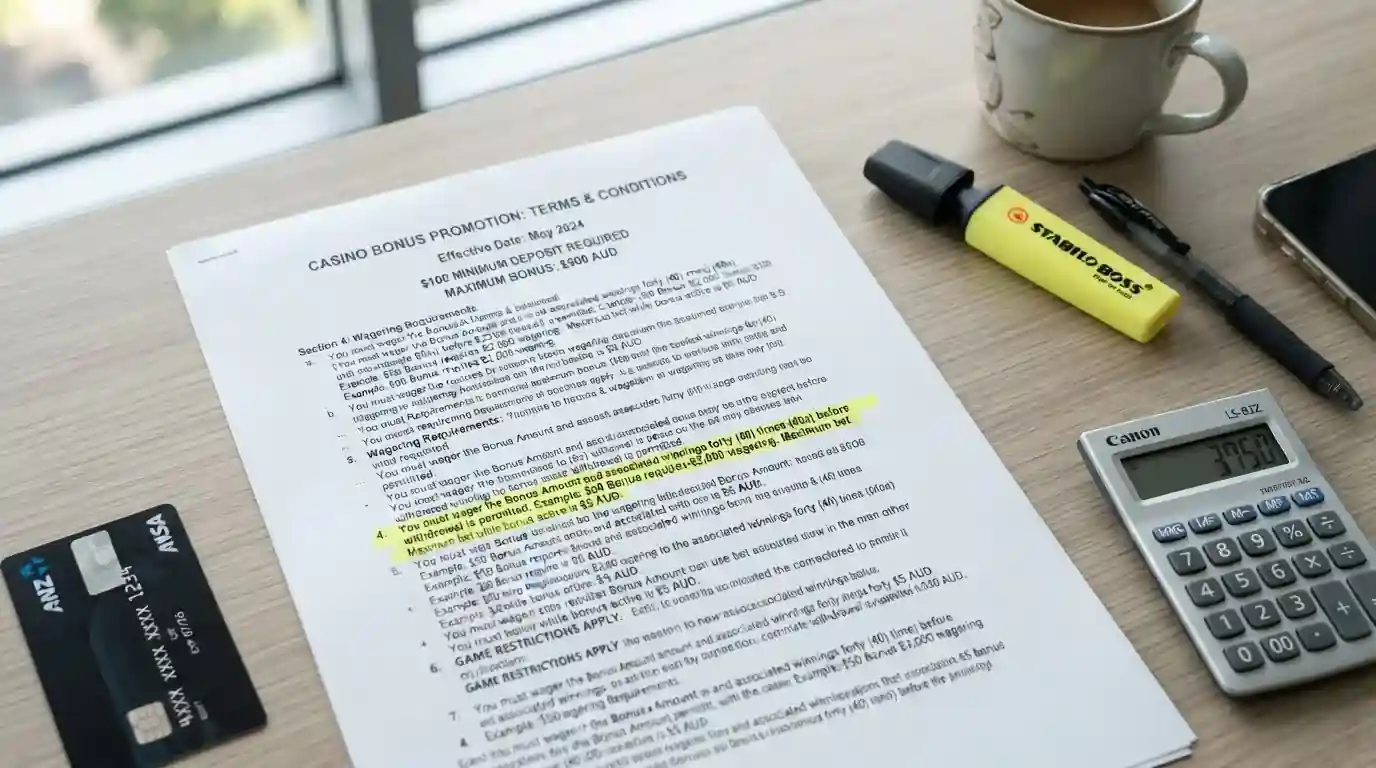
Offshore casinos structure welcome bonuses as deposit matches—100% to 200% of your first deposit, up to a cap—plus free spins. Visa deposits qualify for these bonuses the same way crypto or bank transfer deposits do. No payment method is excluded.
The bonus terms matter more than the headline figure. A 100% match up to A$500 sounds straightforward until you read the fine print: 40 times wagering requirement, A$10 maximum bet while the bonus is active, 10-day expiry, and 30% of games excluded from clearing. Clearing A$500 at 40x wagering means A$20,000 in total bets. At 96% RTP, expected house edge over that volume is A$800—more than the bonus itself.
Bonuses are high-variance gambles, not free money. If you hit a big win early and clear the wagering before your balance drains, you walk away ahead. If you don’t, the house edge over 40x wagering volume eats the bonus and a chunk of your deposit.
For players planning to play high volume anyway, the bonus adds runway. For casual players depositing A$50 for an hour of entertainment, declining the bonus and playing with no wagering restrictions is often the cleaner choice.
One Visa-specific quirk: some offshore casinos restrict bonuses on card deposits if they suspect bonus abuse (players depositing, claiming a bonus, then immediately withdrawing after minimal play). The restriction isn’t common, but if you see “Visa deposits not eligible for this promotion” in the terms, that’s why. Crypto deposits face fewer restrictions because chargebacks aren’t possible, so the casino’s risk is lower.
Game Selection and Mobile Compatibility
Offshore casinos accessible to Australian players in 2026 carry game libraries ranging from 1,000 to 6,000+ titles, with pokies (slots) making up 70%-80% of the catalogue. Pragmatic Play, NetEnt, Play’n GO, and BGaming dominate supplier lists. Live dealer tables—blackjack, roulette, baccarat—come from Evolution Gaming on most platforms.
Payment method doesn’t affect game access. Whether you deposit with Visa, crypto, or bank transfer, you’re playing the same library. Some operators restrict certain high-RTP games (98%-99% return-to-player) from bonus wagering, but that’s a bonus-term restriction, not a Visa restriction.
Mobile compatibility is near-universal. Every platform listed here runs in mobile browsers (Safari on iOS, Chrome on Android) without requiring an app download. The cashier works the same way on mobile as on desktop: select Visa, enter card details, complete 3D Secure authentication via SMS or banking app, and deposit. Withdrawals follow the same flow.
A handful of operators offer native apps (downloadable from their site, not from the App Store or Google Play—Apple and Google both prohibit real-money gambling apps in their AU stores). The apps are browser wrappers with a shortcut icon; they don’t change functionality or payment options. Most players stick with the mobile browser version.
One practical note: 3D Secure authentication on mobile can hiccup if your phone switches between browser and banking app. Some banks send the SMS code while others push an in-app notification. Keep your banking app updated and your phone unlocked during deposit to avoid timeouts.
Is it safe to use Visa at offshore casinos?
Visa deposits at offshore casinos are encrypted via SSL and authenticated via 3D Secure (SMS code or app approval), so your card details are protected in transit. The risk isn’t technical—it’s regulatory and operational. Offshore casinos operate outside Australian jurisdiction, so if a dispute arises (funds not credited, withdrawal denied, bonus terms disputed), you have limited recourse. Curaçao licenses offer lighter oversight than Malta or UK licenses. Use operators with track records (established 2+ years), third-party safety ratings (Casino.guru, Trustpilot), and documented payout histories. Never deposit more than you can afford to lose, and verify withdrawal methods work before depositing.
Alternatives to Visa for Australian Players

Visa isn’t the only deposit method, and for withdrawals, it’s often not the fastest. Offshore casinos serving Australian players support a range of alternatives, each with trade-offs.
Cryptocurrency (Bitcoin, USDT, Ethereum): Fastest deposit and withdrawal method. Crypto transactions bypass banks entirely, so there’s no issuer to decline the payment and no MCC 7995 code to trigger blocks. Deposits are instant once the blockchain confirms (typically 10-30 minutes for Bitcoin, under 5 minutes for USDT on Tron or Ethereum). Withdrawals clear in 0-24 hours after casino approval, often within a few hours.
The downside: you need a crypto wallet and a way to buy crypto. Australian exchanges (CoinSpot, Swyftx, BTC Markets) let you buy Bitcoin or USDT with AUD via bank transfer or card, but that adds a step. Exchange fees (0.5%-1% typical) and blockchain network fees (varies by coin and network congestion) cut into your deposit slightly. For players comfortable with crypto workflows, it’s the cleanest payment rail—no bank, no declines, fast withdrawals.
PayID and POLi: Australian bank-to-bank instant payment systems. Some offshore casinos (Rocket, SkyCrown) integrated PayID, which lets you transfer AUD directly from your bank account to the casino’s Australian merchant account in seconds. No card involved, no foreign transaction fees, no MCC 7995 gambling code.
The catch: PayID integration is rare among offshore casinos because setting up an Australian merchant account is difficult for Curaçao-licensed operators. When it’s available, it’s fast and cheap (usually no fees). When it’s not, you’re back to cards or crypto.
Bank transfer: Works for both deposits and withdrawals but slow. Deposits take 1-3 business days to clear; withdrawals take 3-10 business days. Minimum deposit and withdrawal amounts are higher than cards (A$100-A$500 typical). Bank transfer is the fallback when everything else fails, but it’s not a first choice for speed or convenience.
E-wallets (MiFinity, eZeeWallet, Jeton): Middle ground between cards and crypto. Deposits are instant; withdrawals clear in 1-24 hours, faster than Visa but slower than crypto. You fund the e-wallet via bank transfer or card, then transfer from the e-wallet to the casino. It adds a step but bypasses some bank restrictions because the e-wallet transaction isn’t coded as gambling—it’s coded as a transfer to a financial service.
E-wallet fees vary; some charge 1%-2% on deposits or withdrawals. The benefit is smoother processing—fewer declines than direct card deposits, faster payouts than Visa refunds.
For most Australian players, the decision tree is short. Comfortable with crypto? Use Bitcoin or USDT — fastest and cleanest. Not comfortable with crypto but want speed? Use Visa debit for deposits, crypto or e-wallet for withdrawals. Need to withdraw back to the same method you deposited from? Use Visa debit and accept the three-day payout speed. Bank keeps declining your Visa? Try PayID if the operator supports it, or switch to an e-wallet.
Why do some casinos only accept Visa for deposits, not withdrawals?
Casinos that accept Visa deposits but not withdrawals do so because Australian banks block inbound push payments from offshore gambling merchants at higher rates than outbound deposits. When a casino processes a Visa withdrawal, it’s pushing money back to your card, and Commonwealth Bank, Westpac, and others flag these inbound transactions as high-risk MCC 7995 gambling flows and decline them. Failed withdrawals create customer complaints and payment processor fees, so operators route withdrawals through crypto, e-wallets, or bank transfer instead—methods with lower decline rates. Additionally, some Visa payment processors only offer deposit-only rails for gambling merchants, so the casino can’t add withdrawals even if they want to.
Responsible Gambling and Player Protection
Offshore casinos operate outside Australian regulatory oversight, which means the protections Australian-licensed bookmakers must provide—self-exclusion registers, mandatory spend limits, cool-off periods—aren’t enforced. You’re relying on the operator’s voluntary policies and the light-touch requirements of Curaçao or Malta licenses.
Most offshore platforms offer basic responsible gambling tools: deposit limits (daily, weekly, monthly), loss limits, session time reminders, and self-exclusion (temporary or permanent account closure). These tools are opt-in—you have to activate them in your account settings. They’re not applied by default.
Australian banks’ gambling block features (described earlier) offer another layer of control. If you activate a gambling block on your Visa card via your bank’s app, the block applies across all merchants coded MCC 7995, not just one casino. It’s a harder lockout than the operator’s self-exclusion because you’d have to contact your bank to reverse it, not just log into a casino account.
For players concerned about spending control, setting up blocks and limits *before* depositing is more effective than relying on willpower in the moment. Once the balance is in your casino account, the friction to withdraw is higher than the friction to keep playing.
KYC verification—the document upload required before your first withdrawal—serves two purposes. First, it satisfies anti-money-laundering regulations in the casino’s licensing jurisdiction. Second, it creates a friction point that slows impulsive withdrawals. Some players see this as an annoyance; others see it as a cooling-off period that prevents them from immediately redepositing winnings.
Do I need to verify my identity before withdrawing to Visa?
Yes. All offshore casinos require KYC (Know Your Customer) verification before processing your first withdrawal, regardless of payment method. You’ll upload photo ID (passport or driver’s license), proof of address (utility bill or bank statement dated within 3 months), and sometimes a photo of your Visa card (middle digits obscured, CVV covered). The review takes 24-72 hours. Subsequent withdrawals process without re-verification unless the casino flags your account for additional checks. First-time withdrawal timelines: KYC approval (1-3 days) + Visa refund processing (2-5 days) = 5-7 days total.
—
What Actually Works: Visa Reality Check for Australian Players
Visa deposits clear reliably at offshore casinos serving Australian players. Withdrawals are where the promise breaks down—most operators use standard card refunds that take three business days, not the “instant” payouts marketing teams claim, and several don’t support Visa withdrawals at all.
Use Visa debit to avoid cash advance fees. Expect 3-day withdrawal times via standard refunds. Verify the casino supports Visa withdrawals before you deposit if getting money back onto your card matters. For speed, crypto outperforms cards every time.
Casino Deposit Methods Australia 2026 — Full Comparison
Content created by the «Aussie Cashier» team